How The Real Cereal Co. Is Strategizing Around Simplicity

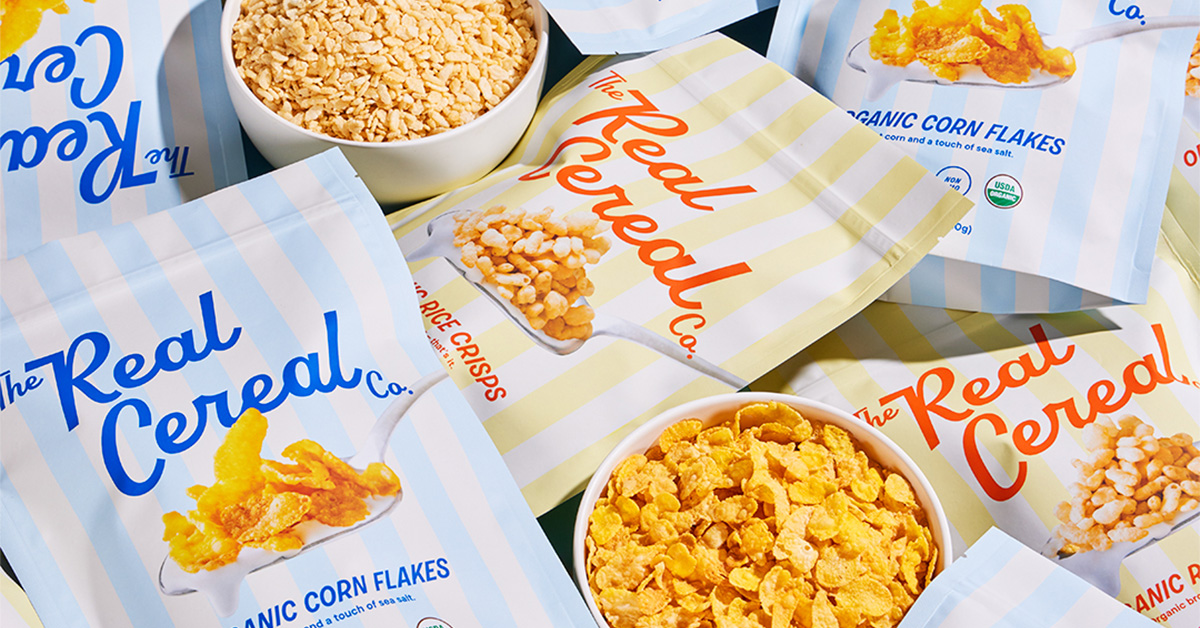
While the cereal category has undergone a transformation over the past few years, bringing novel ingredients, protein and keto-friendly creations into the set, some of those tenets are now washing away in favor of simplicity.
Launched online in 2022, The Real Cereal Company’s 2-SKU minimal ingredient cereal line is gaining momentum, having tripled its distribution footprint over the past year with a trajectory that will bring the brand into even more conventional, mass and natural retailers nationwide throughout 2025. According to co-founder Tom Binder, despite the new entrants of the past decade he saw plenty of whitespace not yet being filled.
“The market is huge. We’re speaking about 2.7 billion boxes of cereal sold per year in the U.S. – 290 million Americans consume cereal per year,” he emphasized. “But the traditional brands are just being traditional, staying the same, and all the new brands trying to reinvent what cereal is or made from.”
Rather than align itself with a trend or a specific dietary need, Binder wanted to replicate the nostalgia he grew up on with clean and simple ingredients. The brand’s Organic Corn Flakes are made with organic, non-GMO corn grits and sea salt while its Organic Rice Crisps contain only organic brown rice, retailing for about $5.99 to $6.99 per 8-serving pouch.
“We’re on a journey to not reinvent cereal, but bring it back to what it was – making it clean and simple,” Binder stated. “Why do you need more than corn in your cornflakes? Why do you need more than rice in your Rice Krispies and so many other ingredients you can’t pronounce? And, especially, why do you need so much sugar?”
Production to Packaging
In addition to lengthy ingredient lists and excess additives, Binder was frustrated by the bag-in-a-box packaging, and subsequent packaging waste, that had become a signature of the breakfast staple. However, he couldn’t find a single cereal co-manufacturer that would embrace a new format so, from the start, the team gathered up angel investment and opened its own production facility in L.A. where it now packs flakes and crisps in pouches made from 43.5% post-consumer recycled materials.
That investment has given the brand a lot of flexibility and a high level of control over all aspects of the product, Binder explained, including the quality and branding where it has embraced a “retro-modern” look and kept its front-of-pack simple with only a few key callouts. The Real Cereal Company has kept its team structure simple with three full-time members including Binder, co-founder and CEO Daniel Abramovich and VP of Operations Jerry Wiener.
Binder noted that the company does not have plans to put its facility to use as a co-manufacturer, highlighting that maintaining its top-nine-allergen-free certifications would make that a difficult proposition.
Racing To Retail
Despite getting its start online, Binder emphasized that Real Cereal’s growth strategy is rooted in retail expansion and it quickly expanded with a debut at Erewhon. He noted that “people don’t really buy cereal online,” with the exception of Magic Spoon, but believes the brand’s surge in demand was due to the pandemic when it was still selling DTC-only and was able to quickly build a strong base of subscribers to maintain.
“It’s very hard to run a serial business online while trying to be affordable,” he said. Once Real Cereal had garnered some initial results in retail, Binder took that data and pitched regional retailers across the country including Mother’s Market, Central Market and Lassens, until it notched about 300 doors.
At that point, the company raised about $2 million in VC capital led by L.A.-based Rainfall, among others, which allowed it to onboard with broker Green Spoon Sales. With Green Spoon steering sales, and UNFI and KeHE making its deliveries, the brand has tripled its footprint to about 800 doors including Harris Teeter, The Fresh Market, Bristol Farms and a range of independent and specialty stores.
Binder said it is also gearing up for larger chain rollouts in 2025, highlighting its in review with Publix and Whole Foods, among others, and is working to secure a permanent spot on Sprouts shelves after participating in its three-month-long discovery program. But beyond its current pipeline, Binder has an eye on “the big guys” like Walmart, Target, Meijer and Kroger.
“When you compare us to the other new brands of cereal, there’s a lot of education needed to explain to the consumer why he needs to buy cereal made of chickpeas or any other new ingredient, but the average consumer… knows Corn Flakes, knows what Rice Krispies are, [and understands] this is just a better version of it,” Binder said. ”We have an easier entrance to the conventional area… and we want to prove that the consumer today is not only the natural consumer… there’s a change in the consumer across the board.”