How Simek’s Is Capitalizing On The Clean Label Frozen Wave

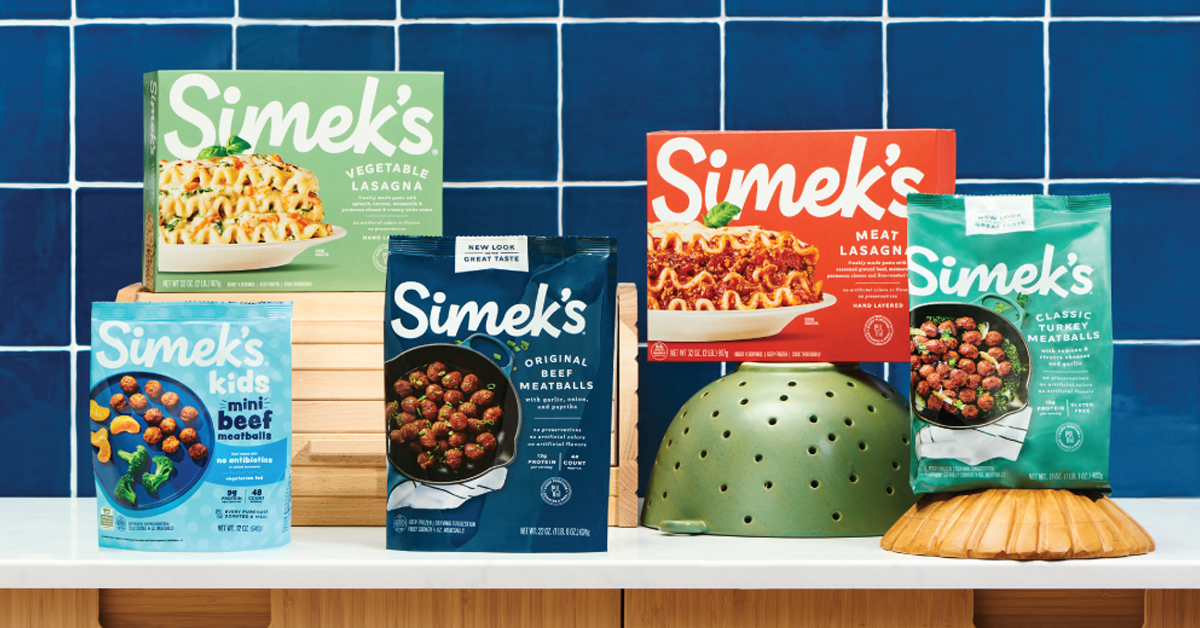
Simek’s is riding the clean protein, premium, convenient meal solutions wave. After more than 50 years in business, the frozen food brand rolled out nationally at Whole Foods in May and has since grown its footprint to over 6,500 stores across the U.S. While it evolved out of a Minnesota retail storefront selling ready-to-eat meals, aligning its business model and product assortment for long-term retail success has been an ongoing effort.
“We always lead through the lens of letting our consumers guide us,” CEO Lindsey Hickey told Nosh. “Back when we had our retail stores, consumers loved our products, but they wanted to make mealtime easy, and going to a secondary store to pick up groceries does not make it easy.”
As Simek’s shifted to wholesale distribution, Hickey said it reduced the lineup and realigned the product’s value proposition to “optimize” the items. That was about 13 years ago and included cleaning up its ingredient labels and removing synthetic ingredients. Those attributes are now top of mind for consumers, but were barely a conversation within the conventional channel where the brand began its journey in grocery.
The recipes have not changed since, Hickey emphasized, stating that the brand prides itself on quality above all else in a lineup that now includes eight varieties of frozen meatballs and six different frozen entrees. She worked to refine its portfolio, putting many of the retail store’s heaviest hitters first. But she also had to make some risky decisions as the company worked to focus on core competencies for growing the brand’s physical footprint, including cutting its steaks program, a hallmark of the retail business.
“We kind of drew a line in the sand, and knew we’re not going to be everything to everyone,” Hickey said “Let’s just do a few things, but do especially well, especially now that we’re going into grocery [which is so] different than when you have your own stores [where] you can have hundreds of SKUs and put them where you want – it operates so differently.”
Simek’s recently began regrowing its product portfolio however, adding an antibiotic-free, animal welfare certified meatball line in both classic and kid formats to help support its launch into Whole Foods. The brand also recently introduced a new gluten-free turkey meatball.
When Hickey came on board, the brand was only sold in about 200 doors spanning its home region of Minnesota and Wisconsin. Now having achieved a national footprint, she attributed Simek’s continued success to being extremely data-focused. Hickey said with each new door, the team will then take a step back and make sure they are posting strong velocities and continuing to deliver on shelf.
“We are a small, privately-held, family-owned company, and so we’re really strategic with the decisions that we make with our growth. For us, it’s not about getting out there and getting in every door that we can, it’s about the right doors, and then the doors that we’re going to just be able to over-deliver on.”
The brand’s main focus for the years ahead is elevating its mission. That includes increasing its Plastic Neutrality efforts and heightened messaging about its “hyperlocal approach” to fighting hunger via a partnership with Feeding America; through that agreement, Simek’s donates a meal to the community for every product sold, directly where the purchase occurred: “That way, we’re supporting the communities that are supporting our brand,” Hickey said.
While Simek’s has taken a “strategic” approach to its brand building efforts, distribution strategy and product assortment for more than the past decade, the evolution and recent premium wave sweeping across the frozen category has been a boon for business.
The frozen meal set is currently worth over $13 billion, per Circana data from January. But newer entrants like Saffron Road and Blue Zones Kitchen continue to help raise the stakes, prioritizing clean ingredient, minimally-processed meal solutions in a category previously packed with emulsifiers, preservatives and other additives.
“The category as a whole has done a really good job of not only changing that perception, but also just bringing better products to market,” Hickey said. “That’s something that improves [the category] collectively. It’s good for all, and it forces everybody to keep raising their own bar… That’s our focus – there can be premium in frozen, and in the past that wasn’t really a thing.”