New Third-Party Data Shows Eclipse Non-Dairy Whole Milk Is Good for the Planet, and Your Coffee
Third-Party HowGood Analysis Reveals Eclipse’s Low-Resource Ingredients Deliver a Significantly Lower Environmental Footprint Than Conventional Dairy and Leading Plant-Based Milks
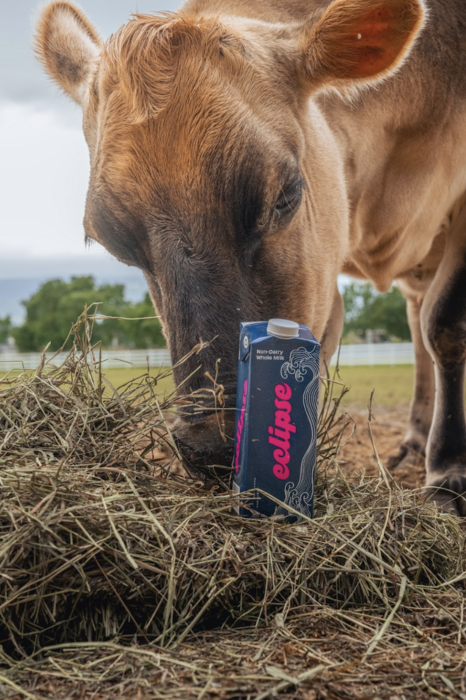
ALAMEDA, Calif., — On World Milk Day, a holiday that celebrates one of the world’s most universal beverages, Eclipse Foods is redefining what milk can look like, and what it can do for the planet.
Today, Eclipse is releasing the results of a third-party sustainability analysis by HowGood, the leading food industry sustainability intelligence platform, confirming that Eclipse’s Non-Dairy Whole Milk delivers strong environmental performance compared with conventional dairy milk and leading plant-based milk categories across major environmental metrics. The assessment evaluated Eclipse Non-Dairy Whole Milk across multiple sustainability indicators using HowGood’s product impact methodology and category benchmarks. Eclipse is also launching a new interactive impact page, giving consumers and partners a transparent, data-driven look at what makes their milk different.
Plant milks vary widely in their environmental impact, and many rely on water-intensive crops that carry significant costs at scale. Eclipse chose differently, building around fava beans and cassava: lower-water crops that deliver the same creamy taste, full texture, and fat content as whole milk, with a substantially smaller footprint.
The third-party HowGood analysis confirms the strategy is working. Eclipse Non-Dairy Whole Milk was assessed against category benchmarks across major environmental metrics:
Greenhouse gas emissions: 0.198 kg CO2e/kg versus 1.72 kg CO2e/kg for whole milk — up to 88% lower emissions
Blue water usage: 29.32 L/kg versus 107.67 L/kg for whole milk and 816.42 L/kg for almond milk — significantly lower than both
Land occupation: 0.044 ha/mt versus 0.094 ha/mt for whole milk and 0.070 ha/mt for oat milk — less land required than both
Balanced performance across impact categories: Eclipse delivers lower emissions than whole milk, lower blue water usage than whole milk, almond milk, and soy milk, and lower land occupation than whole milk and oat milk
“From the very beginning, we built Eclipse around the belief that what goes into a product matters as much as how it tastes,” said Thomas Bowman, CEO and Co-Founder of Eclipse Foods. “These results from HowGood validate what we’ve always known: by choosing the right ingredients, we can deliver a product that’s delicious and genuinely better for the planet. World Milk Day feels like the perfect moment to share this with the world.”
As consumers increasingly seek products that align with their values, Eclipse Non-Dairy Whole Milk offers a choice that doesn’t require compromise—proof that the future of milk can be both delicious and sustainable.
Eclipse was co-founded in 2019 with the mission to create a more sustainable, healthy, ethical, and delicious food system. To learn more about Eclipse or purchase Eclipse’s Non-Dairy Whole Milk, visit their Amazon shop or eclipsefoods.com.
About Eclipse Foods
Eclipse Foods is the leader in non-dairy products that are indistinguishable from conventional dairy. In 2019, Co-Founders Aylon Steinhart and Thomas Bowman launched Eclipse with a mission to create non-dairy products that require no sacrifice on taste, texture, or functionality for the consumer. Eclipse’s ice cream is available for foodservice in 3-gallon tubs, as an ice cream mix for scoop shops, and as a soft serve mix. Expanding its innovative portfolio, Eclipse launched its next-level creamy Non-Dairy Whole Milk in April 2025, a milk alternative crafted to replicate dairy’s rich taste and performance in any fancy beverage or just your daily cup o’ Joe.
About HowGood
HowGood is an independent sustainability research company and SaaS platform that powers large-scale product carbon footprinting for the global food and beverage industry. The company’s database — the largest of its kind — contains more than 90,000 agricultural emission factors drawn from over 600 vetted data sources and 18+ years of supply chain research. HowGood’s methodology is third-party verified by Carbon Trust and aligned with leading reporting frameworks including the Greenhouse Gas Protocol, GRI, CDP, SBTi, and ISO standards.
For More Information:
Learn More

Stay Informed. Stay Competitive.
Become an Insider to unlock exclusive CPG insights, data, education, and industry exposure for food & beverage leaders.

Industry Analysis
Context behind the headlines

Data & Reports
Category performance & trends

On-Demand Education
Expert-led video courses
Explore the Nombase CPG Database
Head to Nombase to learn more about the tagged companies and their offerings.


Top news
- SPONSORED POST