Alter Eco Slashes Costs, Headcount and Emissions As Cocoa Prices Soar

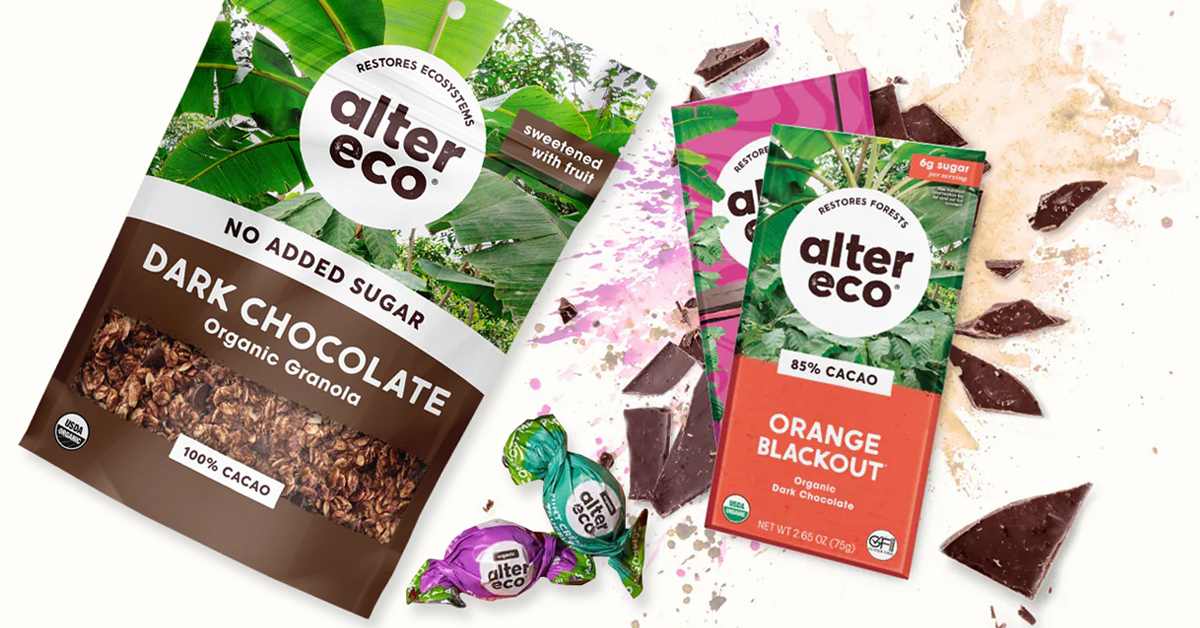
Under the direction of CPG industry veteran Keith Bearden, Fairtrade, regenerative bean-to-bar chocolate company Alter Eco slashed $1 million in supply chain costs while significantly reducing its headcount, navigating an unprecedented spike in cocoa prices and making a deeper push beyond the natural channel.
Bearden first joined Alter Eco’s board in 2022 while it was still under the ownership of NextWorld Evergreen (NWE). Drawing from his past experience at CPGs like Yogi Tea International, he said he made many recommendations to improve the business, but only a few were executed.
Then, NWE decided it was looking to sell the brand, so Bearden said he rallied some investors, teaming up with Trek One Capital, which was essentially a family office at the time, and created “a little sponsorship fund” to buy the brand. Alongside the transaction, Bearden became CEO.
Since then, he said he has “turned the organization upside down.” First, cutting the internal team from about 28 individuals to five without eliminating any functions, but rather outsourced and “fractionalizing” marketing, ecommerce and most sales roles: “We get a lot more coverage for less money, to be honest,” he said.
The company maintains an internal sales admin that supports its agency partner with samples, building sales decks and more. Trek One provides the back office functions including finance and human resources, and the five-person brand team handles all customer-facing logistics as well as orders, production planning, scheduling, forecasting, tradeshow strategy and other functions. Bearden acknowledged that the company’s previous structure was a byproduct of its startup days.
Simplifying The Startup Structure
“[Startups] build their network around [themselves], and this one started in San Francisco, so their 3PL was a group out of Oakland,” Bearden said. “They took them when they were small and they stayed with them 22 years later. Now we’re not small, and all of our chocolates are manufactured in Switzerland, so they were coming through the Panama Canal all the way to Oakland, Calif., and 60% of our sales are on the East Coast. Oh, and we’re also climate neutral, so we were paying offsets every time something moved.”
Alter Eco moved its warehouse to Columbus, Ohio, in January 2024, cutting down the product’s automotive transit footprint to “a whopping 10 miles by truck.” Bearden explained that it now moves from the production facility and out of Europe by boat and barge, arriving at a port on the East Coast where it is then moved by train to Ohio.
“We reduced our carbon scope three carbon emissions by 54% and saved $1 million in cost,” Bearden proclaimed, adding that the shift also accelerates inventory lead times. “Now, from the time it leaves the factory until it gets to us is usually about 22 to 24 days where it used to be 45 days to 50 days.”

Supply Woes and Skyrocketing Prices
Alter Eco’s beans are primarily sourced from Ecuador, Peru and the Dominican Republic, and while current cocoa supply chain challenges stem from the plantations in West Africa, that doesn’t mean they have been immune to the woes of the volatile commodity market, which skyrocketed from about $3,800 per ton to over $13,000 in less than a month in April 2024.
Bearden said a seven-ton shipment of its beans were hijacked on its way from one of its cooperative farms to the port, adding, “It’s more expensive than the drug trade now.”
He has heard reports that speculators were “walking through the jungles with suitcases of cash,” looking to buy up West African cacao at the source and driving futures prices higher. Some farmers have turned to Bitcoin payments on the belief the coin is more stable than local currencies and has a potential to increase in value. Canadian chocolate brand Mid-Day Squares told Nosh earlier this year that embracing the coin was its only means to secure supply amid the high pricing environment.
Bearden had hoped the commodity prices would come down for the 2024/2025 crop season since yields were up. Prices did drop in range with his expectation of about $6,000 per ton in October, but by December 2024, the cost of a ton of cocoa was back to $13,000.
“That is not because the crop wasn’t available; it’s because speculation, trading control of the exports, all the news – it’s no different than oil. “They’ll say, ‘oh, rain’s coming to West Africa,’ and the prices will drop $1,000. Then they’ll say, ‘oh, two farms went offline because of whatever,’ and the price will jump up $1,500. There’s no rhyme or reason to the movement –
$6,000 swing in two months – there’s no justification for that.”
Alter Eco was spared from the initial price spike in early 2024, he said, since it has strong relationships with its farmers and had pre-financed a lot of its supply. But the company outpaced growth expectations, leading it to need more beans.
“We pre-finance a lot of what we buy so they don’t have to play the speculation market. But we got hit with [that big price swing] by August and September because we were starting to run out of beans. We grew almost 20%, and the market grew like 4% to 4.5%. We consumed a lot more beans than we had anticipated, which is great, but [also] I can’t call up UNFI and say, ‘Hey, I’m doing a price increase next week.’”
The brand has been forced to take “massive price increases,” Bearden said, particularly after the added pressure of the global, 10% reciprocal tariff rate imposed by the Trump Administration had been factored in: “In the CPG industry in general, you’re lucky if you make 10%. Slapping a 10% tariff on all of our goods – I can’t absorb that.”
But Bearden said he can justify the price of the product based on the value it delivers to the consumer. Now that the company is making an even bigger push into the conventional market, he still believes there’s white space for the regenerative organic, bean-to-bar, plastic-neutral chocolate company to capture consumers.
“I told the investors as I came in [that] with all the price increases we’re going to have to do, we may get smaller before we get bigger again,” he said. “Some consumers may walk away; some retailers may walk away. But you know what? That’s okay, because I’m not going to sell the products and lose money. That’s not sustainable. No matter how much good we’re doing in the world, if you can’t be profitable, you can’t sustain that good.”
Explore the Nombase CPG Database
Head to Nombase to learn more about the tagged companies and their offerings.




![[Exclusive]: Leaven Foods Rises with TIME Best Inventions Honor as It Seeks to Scale Sourdough](https://d2azl42aua8mom.cloudfront.net/wp-content/uploads/2026/10/14180815/Leaven-970-150x150.png)