CPG Week: The C-Store Opportunity
Episode 109
In this episode:
In this episode:
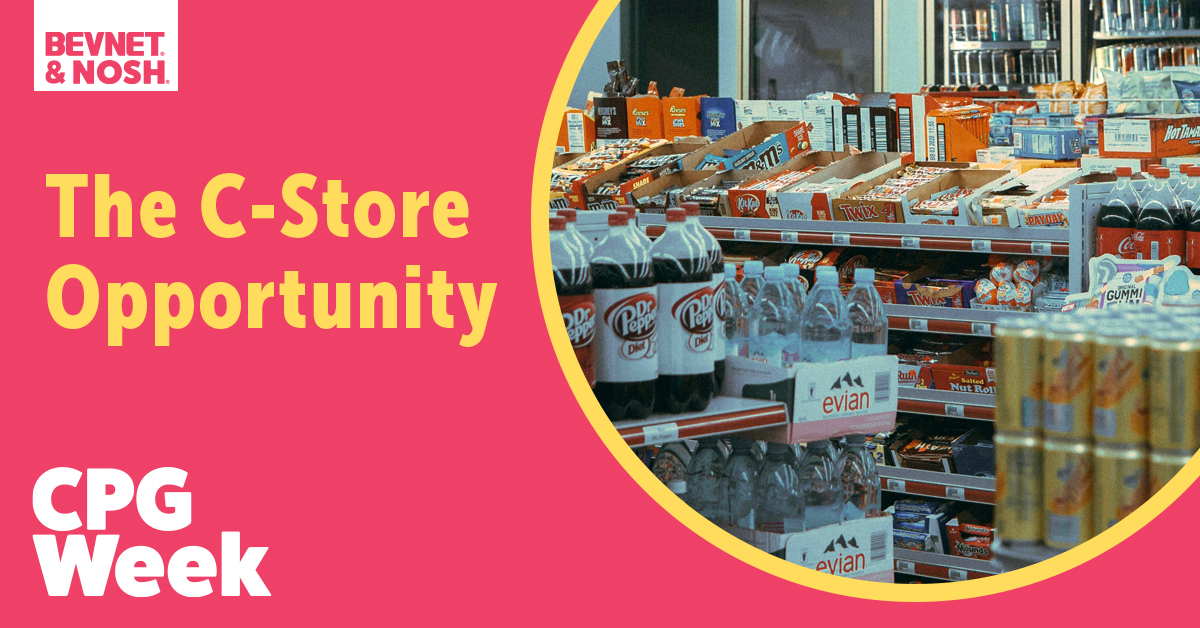
Who doesn’t want a personal vending machine in their garage? The CPG Week talks about poppi’s recent publicity stunt and the backlash that has ensued before exploring how the CPG industry is evolving with convenience stores.
A recent CoBank report highlighted how foodservice is making an impact with consumers in c-stores. The CPG Week team explores how the channel is offering fresh opportunities and new challenges to food and beverage brands.
Show Highlights:
0:30 – There have been a lot of opinions about poppi’s vending machine marketing campaign that launched during the Super Bowl last weekend. The CPG Week team gives its takes.
4:15 – Senior reporter Brad Avery explains what he learned from a recent CoBank report about foodservice in the convenience channel. The group discusses how CPG brands are evolving with a shift in consumer buying behavior in the channel.
7:00 – How are next-generation brands adjusting strategy to better align with how consumers are using c-stores as food destinations as opposed to just a snack stop while filling the gas tank?
9:20 – Operating in the convenience channel is different than grocery retail. How are CPG operators prioritizing their distribution to meet a brand’s target audience? What does this mean for the larger food and beverage companies?
13:15 – The team discusses how the evolution of convenience stores towards better-for-you brands represents a recent shift in consumer behavior.
About CPG Week
CPG Week is the podcast that explores the latest happenings in the consumer packaged goods industry. Join our seasoned reporting team as they dish out the week’s stories in quick, easy-to-digest episodes. Catch up on the top headlines of the week, dive into exclusive insights with the BevNET and Nosh teams, and set yourself up to make more informed business decisions. Tune in to stay up-to-date on the latest developments in the dynamic world of packaged food and beverage.
New episodes are released every week. Send us comments and suggestions anytime to cpgweek@nosh.com.
Show Highlights:
On this episode of CPG Week, the team explores how the convenience channel is offering fresh opportunities and new challenges to food and beverage brands.
Episode Transcript
Note: Transcripts are automatically generated and may contain inaccuracies and spelling errors.
[00:00:05] Monica Watrous: Welcome to the CPG Week podcast by BevNET and Nosh, your source for the latest food and beverage industry news. I'm Monica Watrous, Managing Editor of Nosh, here with my co-hosts, Brad Avery and Lukas Southard. If you're enjoying the show, please subscribe on your listening platform of choice. On the podcast today, we are discussing CPG and C-Stores. But first, Poppy pissed off a few peeps this week after shipping custom vending machines costing an estimated $25,000 each to 32 high-profile and wealthy influencers ahead of its second Super Bowl appearance. Some found that stunt to be out of touch, especially among its everyday loyal consumers. What do we think about that?
[00:00:53] Brad Avery: What's interesting is that it seems like everyone was talking about these vending machines as opposed to the actual ad, whereas last year we were all talking about the ad. But I do kind of understand the somewhat backlash that Poppy's getting over this because $800,000, which was the total amount that they reportedly invested in these vending machines, is not an insignificant amount of money. And it seems like a very strange, way to use this vending machine idea as opposed to, I saw someone talk about maybe putting them on college campuses, which might provide a little bit more visibility to the type of consumer base that this brand is looking to harness.
[00:01:35] Lukas Southard: Well, you make a point, Lucas, that last year everyone was talking about their ad, and part of it was that the ad was a surprise. It came together very last minute. It's been a full year of Poppy enjoying mainstream popularity for the most part. So- Popularity? Uh-huh. So now there's some backlash starting as some influencers felt that the upper echelon of online influencers were getting some preferential treatment with these vending machines, and it gave a sense of favoritism or privilege.
[00:02:13] Brad Avery: Now in saying all this, I did see a story in Adweek this morning, and it is Tuesday, saying that Poppy is basically just lent those vending machines to the influencers. communications director said that they were in fact loaners and The appliances still belong to poppy and quote were never intended for one-time use I'm still trying to figure out what one-time use for a vending machine is especially a $25,000 vending machine, but it does seem that poppy is walking this back a little bit sensing that there is some backlash on social platforms saying that this was not the the best marketing stunt that they could have done.
[00:03:00] Lukas Southard: I will admit to being a little surprised at this controversy flaring up because it's one of those things where sometimes you hear about social media backlash and you're not really sure how much there is to it if it's just a few people are upset. But this does seem to have really rifled some feathers. And I'm not exactly sure why, but whether it speaks to overall Anger towards influencer culture as it is existing today and reaching a critical mass or whether it's just the natural outcome of a brand reaching this level of fame and growth that eventually you get the people who are angry with you no matter what you do. It does make a lot of sense though that these are not Intended to be permanent gifts to these influencers that they're just sort of for video I have to imagine one time use just means that they assume that hey Here's a vending machine shoot one video with it. Never use it again. It disappears and that's $800,000 for one little viral stunt So I'm hoping that they'll get these and distribute them out into the world where they can be used daily by numerous people
[00:04:10] Monica Watrous: Well, you know a good place for a poppy vending machine? A convenience store. Ooh.
[00:04:16] Justin Kendall: Yeah. How about that segue?
[00:04:20] Monica Watrous: Brad, you recently wrote about convenience stores and the evolution or rise of food service as a destination creating factor for this channel. Can you tell us more?
[00:04:34] Lukas Southard: Yes. So there was an interesting report by CoBank this month about the rise of food service in convenience stores to a point that it's almost blurring the lines of these channels. Effectively, after COVID, there was a huge foot traffic plummet in C-stores for obvious reasons. And now as things recover and inside sales at C-stores reach $327.6 billion as of 2023, food service and hot food, fresh meal deals is gaining a lot more traction and becoming a real destination for consumers. So when we talk about C-Stores again, and remember, we're talking about gas stations as well, consumers stop, go for gas, and they decide to go grab a slice of pizza. This is coming as consumer package sales are kind of sliding. So it's a shift in what consumers are using convenience stores for.
[00:05:33] Monica Watrous: I think the offerings just improved so much over the past decade or so. And certainly as people bought fewer cigarettes and tobacco products or maps, things that gas stations were known for.
[00:05:45] Lukas Southard: Cokes and smokes.
[00:05:46] Monica Watrous: Cokes and smokes. These operators really had to evolve their offerings to keep up to the point where, you know, it's not just those petrified hot dogs that you see rolling on a, on a machine for hours, but some actual pretty decent food that has now made convenience stores a real threat to quick service and fast food restaurants.
[00:06:08] Lukas Southard: Right. The report talks a little bit about that, where quick service restaurants, like say your Panera Breads, are seeing more competition from the local convenience shop.
[00:06:20] Brad Avery: And that's not even accounting for I think the opportunities you see at like roadside rest stations where like the gas station and the quick serve restaurant or fast food restaurant are kind of like intermingled together. And then you're also seeing that crossover into the CPGs space. So for those of us here in New England with Dunkin Donuts, like they have a whole line of RTD coffees and stuff that they distribute through Coca-Cola that is kind of part of this almost co-branded experience that the quick serve service restaurant, fast food space is blending into the C stores and vice versa. And so I think that is something that CPG brands are kind of adapting to and evolving to create more opportunity for themselves.
[00:07:08] Lukas Southard: So I know we don't like to throw too many numbers at the listener, but here's a few key metrics to really underline what we're talking about. CPG brands inconvenience fell 2.4%. That's negative 2.4% dollar sales in Q3 of 2024 according to Circona. However, food service now makes up 26.9% of all in-store sales for the channel, up 1.3% year over year. So over a quarter of in-store sales and convenience is food service. And the rest are condoms. No.
[00:07:47] Monica Watrous: But, you know, I mean, that decline is interesting. And I think there are some different ways that we can unpack that. One of them being we are seeing a rise in private label at the C-Store, which is a really interesting development when you think about all the 7-Eleven products that are unique to 7-Eleven stores, as well as Casey's and some of these other national chains. I believe Wawa is in on it, too. It's creating more competition for national brands as well as startup brands who are trying to gain a foothold in the convenience store channel.
[00:08:17] Lukas Southard: And we do see some chains that have really embraced next-gen emerging brands. Casey's just held an innovation summit and announced that they're bringing in 13 brands from that summit to have a permanent place on the shelf. I believe HealthAid Kombucha was part of that and a few other next-gen food and beverages. 7-Eleven's been on the cutting edge of this for years.
[00:08:38] Monica Watrous: Yes, with its Brands with Heart program.
[00:08:40] Lukas Southard: Always bringing in new brands. I think we're also seeing CPG brands have to just adjust their strategy to adapt to this. One thing that instantly came to mind when I saw this report that I had a conversation with Celsius CEO John Fieldley back in the fall, and he was telling me then about how they were partnering with Casey's to do a meal deal. Buy a slice of pizza, get a Celsius. These brands have to carve out some of these relationships with the retailers in order to adapt to how the consumers are using the store.
[00:09:15] Monica Watrous: That's a really good point. If the money is in food service, then find a way to align with food service.
[00:09:21] Brad Avery: And to go along with this idea of adjusting CBG brands, adjusting to the opportunity in C stores, at least from the beverage perspective, it's not just like, Oh, we should devote more resources there because operating in that channel is different than operating in. natural grocery or even conventional grocery, and it requires a different kind of distribution model that can be difficult for some of these emerging brands. So I recently talked to Hunter Coconuts, a coconut water brand, and although they have some good distribution in C-stores and are in a lot of 7-Elevens, Their founder, Gregory Lowe, told me that they have seen by looking at their sales numbers that it's just easier and it makes more sense for them to work through and focus a lot of their resources at the Natural Grocery Channel. When you're operating towards convenience, you have to work with a lot more DSDs, and it is a little bit more of a patchwork distribution, and especially for beverage, that can be very difficult if you have to work with multiple distributors in a certain region or a certain market to have enough of a footprint in the C-store, it doesn't really work out in dollars and cents, whereas if you just have a couple natural grocers that are all using Kahi or UNFI, it can make more sense for those smaller brands.
[00:10:47] Monica Watrous: Yeah, so from the National Association of Convenience Stores, or NACS, we know that there are 152,396 C-Store locations across the country as of the latest count, and the majority of those are single-store operators. So to make significant headway into this channel requires, to your point, Lucas, a patchwork of distribution relationships.
[00:11:12] Lukas Southard: It's also worth noting that this is a channel that can be very dominated by the big guns. But we're also seeing the conglomerates adapt to this changing atmosphere. KDP recently launched a Snapple Zero Sugar Peach Tea for its dispensed offerings at 7-Eleven. Innovating around the dispenser is going to be something we probably see a lot more of. And unfortunately for startups, it's pretty hard to get into those dispensers. But for the ones that are already there, seeing new flavors, zero sugar offerings, attempts to give something different than what's been there for decades.
[00:11:51] Monica Watrous: And we're also seeing that in the kitchen, right? So branded ingredients like Hormel pepperoni on pizzas at C-Stores, things like that. So finding ways to be part of the food service program versus competing with it. And to your point, Brad, legacy brands are more advantaged when it comes to this channel. We've also seen the C-Store channel as a reason behind some M&A activity over the past few years. JM Smucker cited the C-Store distribution opportunity when it bought Hostess brands. And Hormel Foods expanded its C-Store penetration when it bought Planters and Corn Nuts brands. And that was a way that they were able to get in to the kitchen with the Hormel pepperoni. So it's an important channel. Brad, you and I have both been to the NAC's show a number of times. We know it's a big show for food brands. There are a lot of smaller upstart CPGs that are exhibiting at that show and trying to increase their exposure to this channel. Brands know that it's all about finding the consumer and being there for them wherever they shop. And if it is a consumer rolling into a convenience store before heading to work, especially now that we know that so many more people are returning to offices, then maybe they'll grab a breakfast sandwich and an energy drink or a little snack for later while they're in the store.
[00:13:16] Lukas Southard: NACS is like the id of America.
[00:13:22] Brad Avery: Oh, I'm so excited to go. I really need to experience it.
[00:13:26] Lukas Southard: It's the raw primal instinct of what an American wants. It's all your cigarettes, and your gasoline, and your- Alcohol. All together. And I actually do have a point with this, because when we see the convenience store actually evolving, I think that does speak to something pretty major. We saw convenience really be the one dragging its feet on health and wellness. they focus on what is selling. And health and wellness, even though it was doing big numbers in grocery and especially in natural, it wasn't at the level of what a convenience shopper buys. And that's starting to change. We're seeing that revolution take shape. We're seeing the higher quality ingredients, as you've mentioned a few times, Monica. And we're seeing the way that American consumers shop and what they want change. So convenience source changing is a pretty big deal, I think, in that sense.
[00:14:26] Monica Watrous: I feel like the next show is like the antithesis to Expo West.
[00:14:30] Lukas Southard: Absolutely. One hundred percent.
[00:14:32] Brad Avery: They should do a back to back, you know, like do Expo West. And then everyone's like, OK, I'm tired of like the plant based whatever and like the functional ingredients. I just want to go and have some cokes and smokes. Yeah.
[00:14:44] Lukas Southard: You know, like, why not? Yeah, it's the devil being like, come on, go try the cigarettes. Take a Juul. They're giving them away. Oh, so many vapes.
[00:14:51] Brad Avery: Well, it's like when you like, you like have a run and then they give you beer at the end. It's like, okay, you've done, you've accomplished your good thing for the day. It's like, all right, now just like put some trash in your body and really enjoy it.
[00:15:00] Lukas Southard: Expo West, you go, we're going to be talking about it a lot for the next month. You go, you get all your organic foods. Everything's completely natural. No seed oils. You go to NACS and it's like, we're going to pour the canola oil down your throat.
[00:15:17] Monica Watrous: With a chaser of red dye three.
[00:15:19] Lukas Southard: Absolutely.
[00:15:22] Brad Avery: To go back to that point about this opportunity for better for you snacks and drinks in the C-Store space, I've talked to a couple of different energy brands, energy shot brands over the last year, Magic Mind and Ketone IQ, that are both trying to get more of a footprint in C-Stores. And they have seen that once they are in the door and they are on the counter next to like a 5-Hour Energy or some of those other more sugary kind of energy shots, they're doing really well and they are competing well in that space. And so I think that can be representative for whether it's a better for you snack or better for you energy drinks there. There is a lot of opportunity to succeed in the C store. It's really about just getting in there and getting that placement and really driving your consumers into that space to find you.
[00:16:16] Monica Watrous: Yeah, and I think to Brad's point earlier, having partnerships with the retailer, finding ways to align with their food service offerings is going to be an important part of your C-Store strategy. Got to get a vending machine from Poppy in there too.
[00:16:35] Brad Avery: If you're willing to pay $25,000 for it, you know? I guess they're loaners, so they might be on sale.
[00:16:42] Monica Watrous: What are they going to do with those machines? They've got to do something with those machines.
[00:16:45] Brad Avery: The shipping alone has got to be crazy just to get them to people's doors.
[00:16:49] Monica Watrous: I know. For a one-time use. Oh, man, Poppy.
[00:16:52] Brad Avery: They're big, too. They're big. You see pictures of them.
[00:16:54] Monica Watrous: They're very big. Yeah, they're full-size vending machines.
[00:16:55] Brad Avery: They're not like a traditional, like, you know, whatever, like three feet wide. They're like five feet wide.
[00:17:01] Monica Watrous: I aspire to be the kind of influencer that somebody wants to send me a vending machine
[00:17:05] Brad Avery: It would be cool to have a vending machine in your house.
[00:17:08] Monica Watrous: That you didn't have to, like, pay for. Yeah, for sure. That you didn't have to pay per transit. Like, you don't, you don't have to, like, put money in to get what you want.
[00:17:17] Brad Avery: And someone comes and restocks it for you.
[00:17:19] Monica Watrous: Yes.
[00:17:20] Lukas Southard: Entirely full of ranch-flavored ChapStick.
[00:17:23] Monica Watrous: Oh, yeah, obviously. All right, well, here are some other notable bits of news from the week. How are baby food companies adjusting to California packaging regulations? Why liquid death is withdrawing from the United Kingdom? And the inside scoop on Uptime Energy's acquisition of Rise Brewing. For these stories and more, become an insider at BevNET and Nosh. That wraps up this edition of CPG Week by BevNET and Nosh. Thank you to our audio engineer, Joshua Pratt, our director is Mike Schneider, and our designer is Aaron Willette. If you enjoyed the podcast, please subscribe on your listening platform of choice, and we will see you next time.
About CPG Week
CPG Week is the podcast that explores the latest happenings in the consumer packaged goods industry. Join our seasoned reporting team as they dish out the week’s stories in quick, easy-to-digest episodes. Catch up on the top headlines of the week, dive into exclusive insights with the BevNET and Nosh teams, and set yourself up to make more informed business decisions. Tune in to stay up-to-date on the latest developments in the dynamic world of packaged food and beverage.
New episodes are released every week. Send us comments and suggestions anytime to cpgweek@nosh.com.
Stay Informed, Stay Competitive
Unlock the articles, expert interviews, and data reports that power the food and beverage industry. Join our community and stay ahead with exclusive insights from BevNET and Nosh.