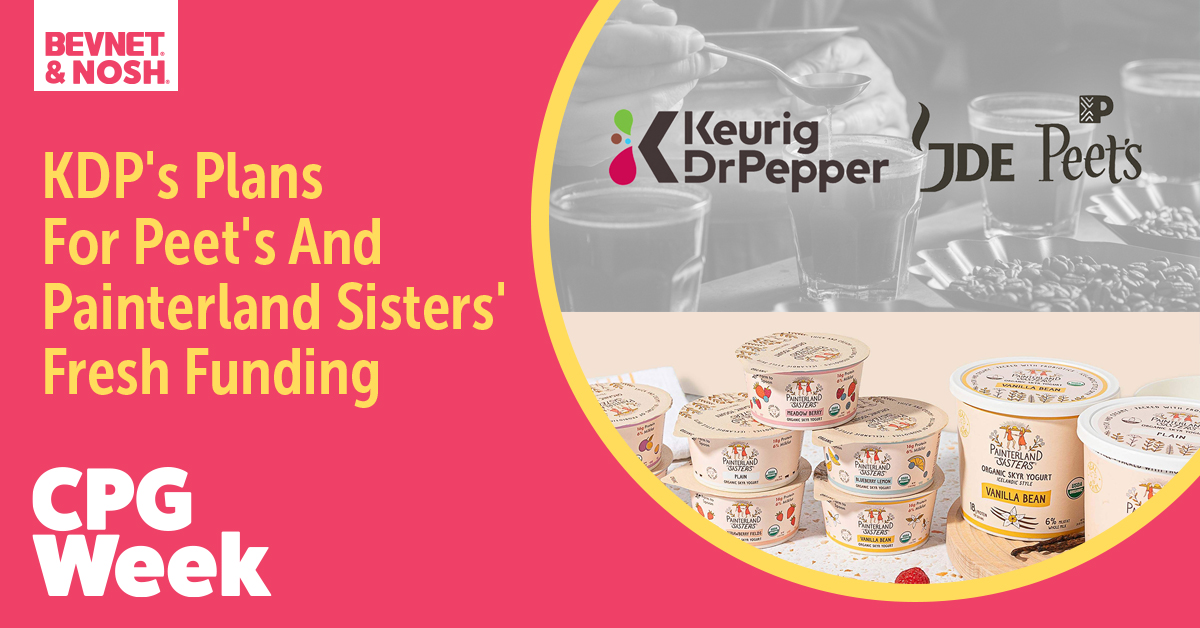
CPG Week: KDP’s Plans For Peet’s And Painterland Sisters’ Fresh Funding
Episode 137
In this episode:
In this episode:
In this episode of CPG Week, Nosh managing editor Monica Watrous and senior reporter Lukas Southard discuss Keurig Dr Pepper’s post-acquisition plans for the JDE Peet’s business, new funding for yogurt maker Painterland Sisters and alt-protein producer The Better Meat Company, and the decision behind Spindrift’s exit from the beverage alcohol category.
Show Highlights:
0:15 – Keurig Dr Pepper is buying Netherlands-based coffee conglomerate JDE Peet’s for $18 billion. Lukas digs into the details of the transaction.
4:00 – Yogurt maker Painterland Sisters has closed a seven-figure funding round to support retail expansion. Monica discusses the brand’s trajectory.
5:10 – Spindrift is discontinuing its spiked seltzer line. Is it a sign of the sober-curious times?
6:10 – The Better Meat Company cooked up an oversubscribed $31 million Series A round to scale its mycoprotein ingredient and expects to compete with commodity ground beef.
7:15 – Lukas channels Clark Griswold on his European vacation, and Monica reports on the top trends at Newtopia Now.
About CPG Week
CPG Week is the podcast that explores the latest happenings in the consumer packaged goods industry. Join our seasoned reporting team as they dish out the week’s stories in quick, easy-to-digest episodes. Catch up on the top headlines of the week, dive into exclusive insights with the BevNET and Nosh teams, and set yourself up to make more informed business decisions. Tune in to stay up-to-date on the latest developments in the dynamic world of packaged food and beverage.
New episodes are released every week. Send us comments and suggestions anytime to cpgweek@nosh.com.
Show Highlights:
In this episode of CPG Week, Nosh managing editor Monica Watrous and senior reporter Lukas Southard discuss Keurig Dr Pepper’s post-acquisition plans for the JDE Peet’s business, new funding for yogurt maker Painterland Sisters and alt-protein producer The Better Meat Company, and the decision behind Spindrift’s exit from the beverage alcohol category.
Episode Transcript
Note: Transcripts are automatically generated and may contain inaccuracies and spelling errors.
[00:00:05] Monica Watrous: Welcome to the CPG Week podcast by BevNET and Nosh. I'm Monica Watrous, here with my co-host, Lukas Southard. Now here is the latest in food and beverage industry news. We kicked off the week with a really big deal in the beverage world. Lucas, can you tell us more?
[00:00:21] Lukas Southard: Keurig Dr. Pepper announced its intention to acquire Netherlands-based coffee conglomerate J.D.E. Peet's for $18 billion. Now, while the deal is huge for the coffee industry, what is potentially more interesting is that once the deal has been finalized, KDP plans to divide Meat Company into two separate publicly traded companies. One would operate KDP's non-coffee beverages like 7-Up, Snapple, Core Hydration, and Ghost. Beverage Company, as KDP is currently calling it, although I imagine they will change that name when the split happens, will also operate KDP's DSD network in North America, which distributes not only its soft drinks and other beverages, but also its partner brands like Vitacoco, C4 Energy, and Electrolit, among others. The second and larger of the two companies that will be part of the split will be KDP's coffee brands, which they are calling another generic name, Global Coffee Company. Again, I think that name will change when the split happens at the beginning of 2026. That larger coffee company will include not only the current roster of KDP's coffee brands, like Keurig, Green Mountain, and Tully's Coffee, but it also will add in Peet's and Stumptown, as well as other international brands like Sensio and Tesimo to KDP's larger coffee portfolio, which will make it an even bigger player in the category. What is potentially most interesting to me is that the split comes seven years after Keira Green Mountain merged with Snapple Dr. Pepper into a single entity. Now it remains to be seen if this current acquisition is a signal that the merger of Snapple Dr. Pepper and Career Green Mountain didn't pan out the way that it was intended to, or if this is a broader strategy for KDP to silo and focus its attention on refreshment beverages on one side and the coffee set on the other. Like many coffee companies, KDP has been challenged with climate change impacting yields as well as tariffs. And the bottom line for its coffee segment has not been as strong as they would like. In Meat Company's most recent earnings call in July, net sales were down 0.2% or about $0.9 billion. And international sales also trailed 1.8% to around $0.6 billion. There are also questions about how KDP might build on this deal to increase its reach in coffee. What does this mean for Black Rifle Coffee Company, which has a distribution partnership with KDP? Currently, KDP does not have a huge reach in the growing cold coffee set, and this could mean that they are willing to take a bigger stake in that category and build deeper into formats like canned coffee. One last thing to note about this deal is that it is part of a larger strategy that KDP has taken recently to diversify outside of carbonated soft drinks or beloved tea-based brands like Snapple. KDP acquired Ghost recently, and it's also lined up a series of distribution deals in the energy category with C4, Bloom, and as I said earlier, Black Rifle Coffee Company. It also has a partnership with one of the fastest-growing sports drink brands, ElectroLit, which shows that KDP's leadership sees opportunity in all kinds of quaffable categories.
[00:03:56] Monica Watrous: Quaffable, good word. From coffee to yogurt, organic skier yogurt brand Painterland Sisters has closed a seven-figure seed round led by The Angel Group, its partner fund Supernatural Ventures, and Space Station Investments. The round also included participation from Scoop Ventures and independent angel investors, including Olympic medalists and lifestyle entrepreneurs. Painterland Sisters is the fastest-growing dairy brand in the natural expanded channel in terms of dollar growth and has more than doubled sales in the past 12 weeks compared to the prior year period, according to Spins data. The Pennsylvania-based brand was founded by sisters Haley and Stephanie Painter three years ago in an effort to preserve, showcase, and utilize their family's organic regenerative dairy farm. Their ultimate goal is to connect consumers with the source of their food, American farmers. Earlier this month, Painterland Sisters landed on Whole Foods market shelves nationwide, bringing its total door count to over 5,000, including Giant, Fresh Thyme, and Costco, among others. As it continues to expand its distribution footprint, the brand will use the fresh funding to support operations and innovation.
[00:05:11] Lukas Southard: Spindrift is returning to its roots and has discontinued its line of spiked seltzers. Called a sign of the times where consumers are moderating alcohol intake, or this is just another signal that the high water mark for hard seltzer has passed, but the flavored sparkling water maker is no longer in the beverage alcohol business. Despite a 2020 prediction from Goldman Sachs Equity Research that the hard seltzer set could reach a whopping $30 billion in sales by 2025, the segment's sales were just over $3 billion in the most recent 52-week period, according to market research firm Cercana. Now, the discontinuation of Spindrift Spiked comes about eight months after the flavored sparkling Meat Company was acquired by San Francisco-based private equity firm Griffin Investors.
[00:06:06] Monica Watrous: Moving on, mycelium-based alternative protein producer The Better Meat Company closed an over-subscribed $31 million round of Series A funding co-led by Future Ventures and Resilience Reserve, with participation from Hickman Family Farms CEO Glenn Hickman, Epic Ventures, Sigma Ventures, and other existing and new investors. The new cash will enable the Sacramento-based company to scale its patented mycoprotein fermentation process to commercial levels that will also allow it to compete with U.S. commodity ground beef. Meat Company said it plans to sell its ingredient at prices lower than the animal-based commodity sometime next year. These projections were made possible by achieving what is known as quote, continuous fermentation, which Meat Company claims is the holy grail in its sector and enabled it to cut production costs by more than 30%. Our colleague, Adrianne DeLuca spoke The Better Meat founder and CEO, Paul Shapiro about the funding round and plans for continued momentum. Insiders can read that at Nosh.com. On a lighter note, Lucas, you just returned from a vacay to Europe. What are people eating and drinking over there?
[00:07:17] Lukas Southard: Well, it was like National Lampoon's European vacation for me. Me, Clark W. Griswold, wandering around Europe with my young kids. Less hijinks and a lot more hanging out in playgrounds. But while I was there, I did wander through some grocery stores. My personal favorite of the United Kingdom, Sainsbury's. And I took some notes about what I saw on the shelves. One thing I did notice was that in the drink category, kombucha and CBD beverages are alive and well in London and also in Paris. But canned coffee and functional beverages have not quite crossed the pond in the same way. Additionally, the kind of ubiquitous nature of flavored sparkling water and seltzer here in the U.S. has also not really translated over to England and France like it has here. There was some, but not nearly the amount of selection that we have and not nearly as many brands. It seems like they like their sparkling water just au natural. Now looking towards packaged food, I don't have quite as much insight because we spend most of our time eating baguettes and croissants at cafes and at meals in restaurants. And my six-year-old became so addicted to baguettes that it actually became difficult to feed him anything but baguettes. gets over the course of the four days we were there. But I did notice one thing maybe that stood out to me just because I've been doing so much reporting on it, but that the meat snack category is not really existent there. I found one pepperoni stick brand that my kids actually did eat, but considering that they are meat stick aficionados, I was a little disappointed that there was no Chomps adjacent brand that had really cornered the market in England or France now granted in France and in England I guess for that matter getting a charcuterie plate is pretty commonplace when you go to a cafe or a pub, they do like their meat. They just, the meat on the go wasn't really there yet. So we'll see if that happens. High protein was in vogue though. I did see many instances of like high protein yogurts and other kinds of high protein snacking.
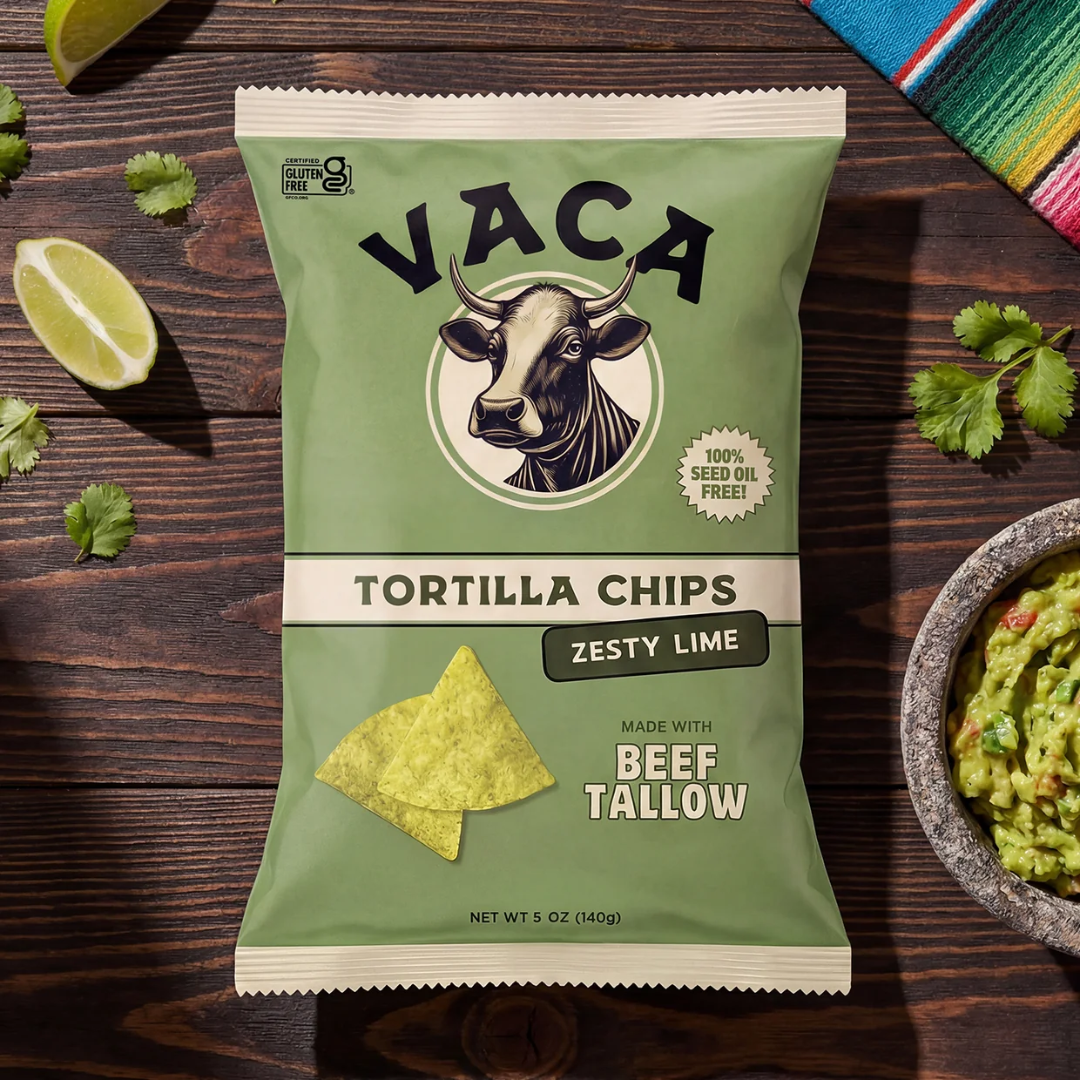
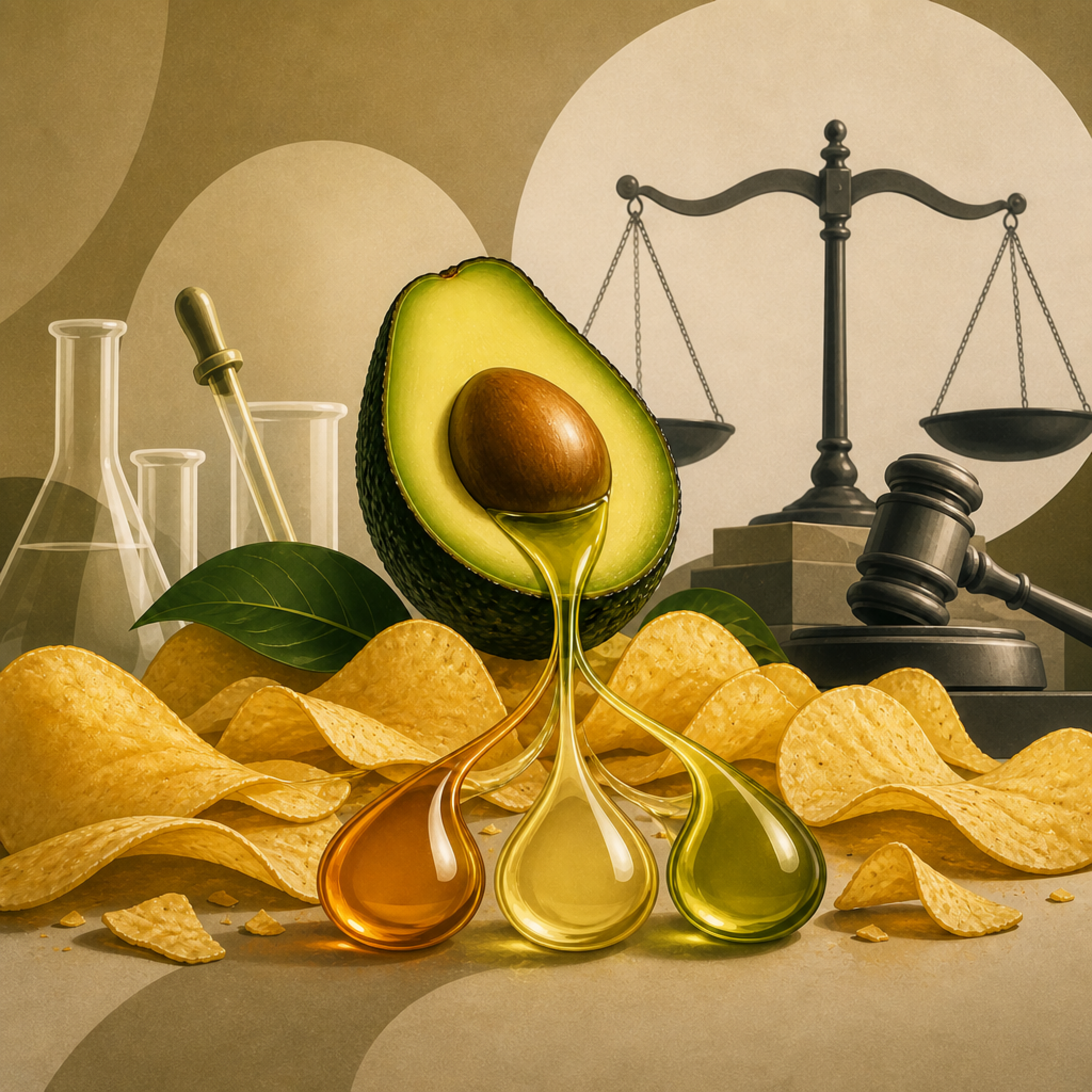
[00:09:37] Monica Watrous: Very good insights. And while you were across the pond, I was a mile high in Denver for Newtopia Now, where I saw some of these trends that you just discussed. Protein, obviously everywhere. And that was something that I knew going in. You had written for Nosh a really great piece on all of the high protein ice creams that have hit the market recently. And I saw one of the brands you wrote about, Smearcase, as well as a couple of new to me brands, one called the Frozen One and one called Ader. And these brands are boasting as many as 30 to 40 grams of protein per pint. I also saw a lot of products with seed oil free claims right on the front of pack or prominently indicating that it product was cooked in coconut oil or avocado oil or even beef tallow. And lots of gut healthy call outs as well as fermented foods and added prebiotics or probiotics. One of the little trends that stood out to me was the use of bone broth as an ingredient, adding protein and collagen to different applications, including a meat stick, a high protein pasta sauce, And perhaps the most unusual to me example was a protein bar called Whole Health Club that had just launched. I think the founders said earlier this month, it was very, very new, but they use chicken bone broth as a source of protein in these pressed nut and fruit bars. So it's a sweet bar with a sweet flavor profile and it uses chicken bone broth as an ingredient. Now, I tasted the bars, they don't taste like chicken, but it is something that I'm, I am curious to see how consumers will respond to that and if we'll see more examples of bone broth crossing into sweet spaces in the future. Here are some other notable bits of news from the week. Flow Beverage Corp., a Toronto-based alkaline water producer and aseptic packaging co-packer, is facing foreclosure by two of its creditors after allegedly defaulting on its loans. Chilled Oat Bar brand Moosky has landed a $1.5 million Series A investment round from an angel investor who previously participated in the brand's seed round. And finally, Coca-Cola is reportedly exploring options for Costa Coffee, seven years after acquiring the business for $5 billion. For these stories and more, become an insider at BevNET and Nosh. And if you are enjoying the show, please subscribe on your listening platform of choice. That wraps up this edition of CPG Week by BevNET and Nosh. Thank you to our audio engineer, Joshua Pratt, our director is Mike Schneider, and our designer is Aaron Willette. If you enjoyed the podcast, please subscribe on your listening platform of choice, and we will see you next time.
About CPG Week
CPG Week is the podcast that explores the latest happenings in the consumer packaged goods industry. Join our seasoned reporting team as they dish out the week’s stories in quick, easy-to-digest episodes. Catch up on the top headlines of the week, dive into exclusive insights with the BevNET and Nosh teams, and set yourself up to make more informed business decisions. Tune in to stay up-to-date on the latest developments in the dynamic world of packaged food and beverage.
New episodes are released every week. Send us comments and suggestions anytime to cpgweek@nosh.com.
Stay Informed, Stay Competitive
Unlock the articles, expert interviews, and data reports that power the food and beverage industry. Join our community and stay ahead with exclusive insights from BevNET and Nosh.