CPG Week: Have We Hit Peak Protein? Plus, A Private Brands Boom
Episode 140
In this episode:

In this episode:
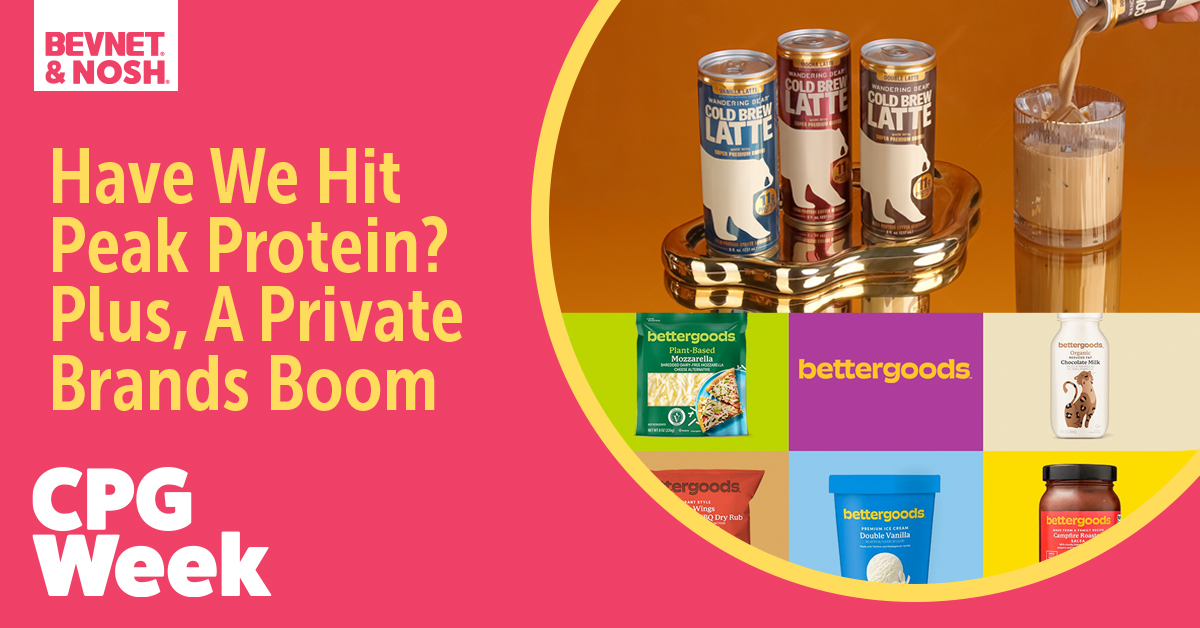
In this episode of CPG Week, Nosh managing editor Monica Watrous and senior reporter Brad Avery analyze the evolution of private label from off-brand to on-trend. The podcasters also discuss recent examples of the protein craze in Wandering Bear’s new latte line and Brami’s lupini bean-based pasta. Additionally, the hosts dig into British mixer brand Fever-Tree’s partnership with Molson Coors and an interesting new innovation in the frozen aisle.
Show Highlights:
0:15 – Grocer retailers are beefing up private label assortments with a focus on protein, global flavors and premium positioning. Monica explains how consumer perceptions of store brands are changing.
3:15 – Cold brew coffee maker Wandering Bear is leaning into the protein craze. Brad highlights the strategy behind the latest launch.
5:00 – Can America’s obsession with protein drive mainstream adoption of the lupini bean. Italian food company Brami believes so.
6:30 – British mixer brand Fever-Tree is benefiting from its partnership with Molson Coors. Brad breaks down the deal.
8:05 – Brad and Monica discuss functional ice cubes and the return of RC Cola (What? It never left?).
About CPG Week
CPG Week is the podcast that explores the latest happenings in the consumer packaged goods industry. Join our seasoned reporting team as they dish out the week’s stories in quick, easy-to-digest episodes. Catch up on the top headlines of the week, dive into exclusive insights with the BevNET and Nosh teams, and set yourself up to make more informed business decisions. Tune in to stay up-to-date on the latest developments in the dynamic world of packaged food and beverage.
New episodes are released every week. Send us comments and suggestions anytime to cpgweek@nosh.com.
Show Highlights:
In this episode of CPG Week, Nosh managing editor Monica Watrous and senior reporter Brad Avery analyze the evolution of private label from off-brand to on-trend. The podcasters also discuss recent examples of the protein craze in Wandering Bear’s new latte line and Brami’s lupini bean-based pasta. Additionally, the hosts dig into British mixer brand Fever-Tree’s partnership with Molson Coors and an interesting new innovation in the frozen aisle.
Episode Transcript
Note: Transcripts are automatically generated and may contain inaccuracies and spelling errors.
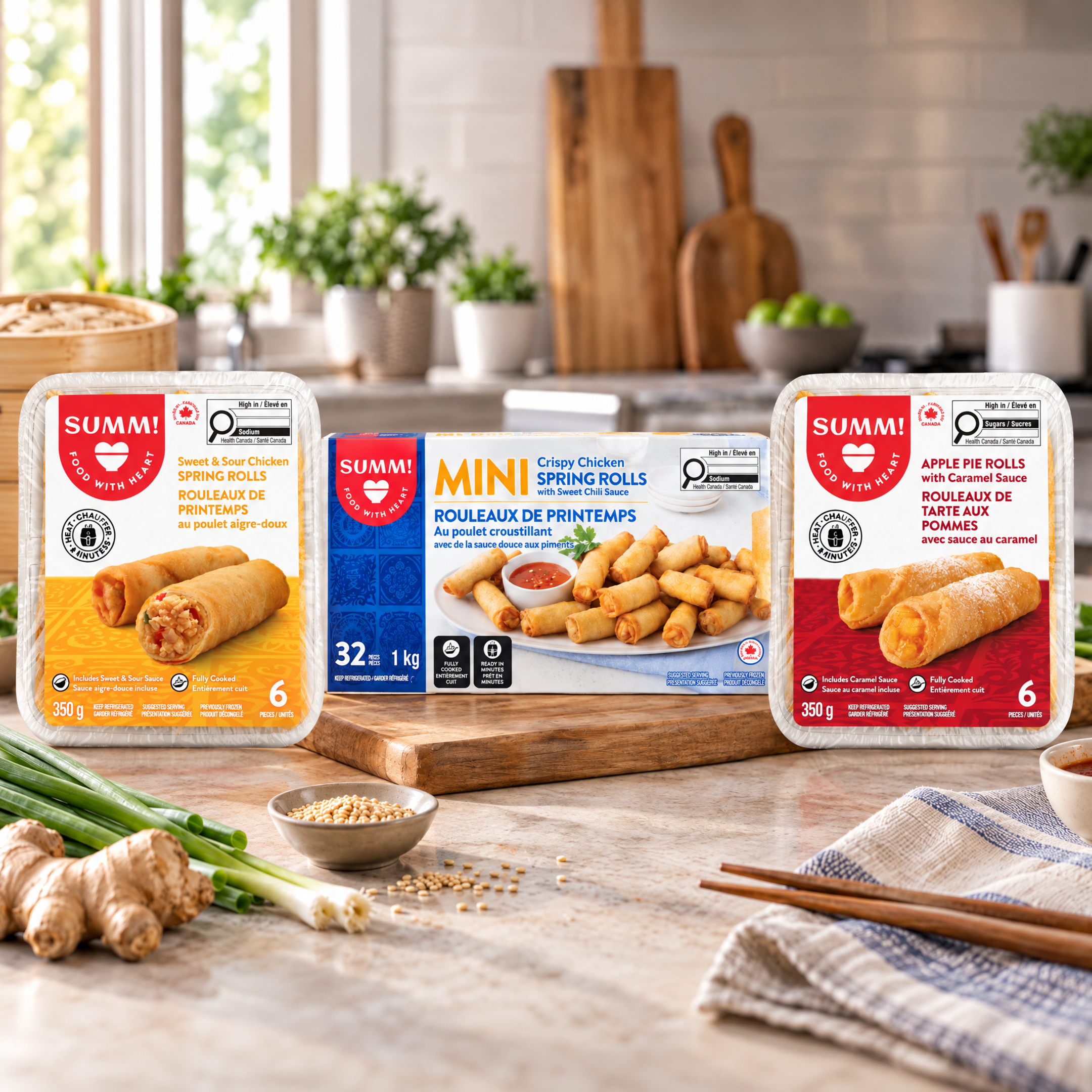
[00:00:05] Monica Watrous: Welcome to the CPG Week podcast by BevNET and Nosh. I'm Monica Watrous, here with my co-host, Brad Avery. Now here is the latest in food and beverage industry news. Grocery retailers are beefing up private label assortments with a focus on protein, global flavors, and premium positioning, according to a new report from FMI, the Food Industry Association. 86% of retailers surveyed said they plan to moderately or significantly increase private brand investment in the next two years, identifying opportunities to align offerings with today's consumer trends. Value and price remain primary drivers of private label purchases, However, specialty and better for you items are seen as key to building shopper loyalty. Appealing to younger consumers is also a top priority among retailers surveyed who cited removing artificial dyes and slimming down ingredient statements as strategies for retaining relevance and competing with national brands. Retailers reported private brands account for less than a quarter or about 22.3% of total store dollar share. And they are seeking to increase that to an average of 25.6% during the next two years. While continued economic uncertainty is seen as a tailwind, retailers are emphasizing in-store and online marketing to accelerate private brand performance. Nearly 85% of private brand assortments are available online. And last year, private brand online sales grew 5.2%. Private brand products can be found in nearly 90% of households, per the report. More than half of grocery shoppers responding to the survey indicated an increase in private brand buying over the past year.
[00:01:54] Brad Avery: We've been tracking this trend for a few years now. And it was only recently that a number of major retailers, including Target, Walmart, CVS, all rolled out new or some for the first time private label lines. with a lot of next-generation products. It's not just your typical store-brand cereal anymore. It's next-generation flavors like turmeric snacks.
[00:02:17] Monica Watrous: That's right. Private label has gone from off brand to on trend and better goods by Walmart is a great example of this. This is a value retailer that's known for its everyday low prices and they built out this new line that's focused on premium and better for you attributes and global flavor profiles that aren't seen in a lot of other store brand type offerings.
[00:02:42] Brad Avery: Well, it also seems like a long time overdue that we see this modernized branding come to the store brand, that we see these different flavors, cleaner label, because it's always been treated as a bit of a cheap product.
[00:03:00] Monica Watrous: Absolutely. I think consumer perceptions are changing. I think Aldi and Trader Joe's has done a lot of work in creating store brand products that have made their stores into retail destinations.
[00:03:13] Brad Avery: While you mentioned protein, cold brew coffee producer Wandering Bear has found its next big innovation, and that is a line of dairy lattes with 11 grams of protein from an ultra-filtered skim milk. The line is launching with three flavors, vanilla, mocha, and double latte as a Whole Foods exclusive this month. It's a big leap for Wandering Bear, which other than a short-lived foray into plant-based milks, it has exclusively sold black coffee. Now, they do offer flavored black coffee, but this is an attempt at a more mainstream play and also keeping their North Star of a coffee shop experience. Founder Matt Bachman told us that that is the key goal with all of their innovations. And it also bucks some recent trends, including sunflower oil as a means to achieve the proper mouthfeel that the company believes is essential to that quality.
[00:04:06] Monica Watrous: This just goes to show that there is nowhere protein can't go. And as another example, this week I saw instant mashed potatoes enhanced with added protein. So I think we've reached the peak.
[00:04:19] Brad Avery: Well, it's not as though there aren't other coffee brands in the market doing protein forward products. Super Coffee, obviously, and then there's also Slate and a few others that are also going after this need state. What I thought was interesting is that Matt Bachman told us that Wandering Bear never set out to do a protein product. They wanted to do a latte and this was the best way for them to do it while maintaining a low sugar calorie count. And in the time between when they started working on this and today when they're launching it, the protein trend boomed. And definitely whether we're at a ceiling or not is to be determined
[00:04:58] Monica Watrous: Well, that brings us to our next question, which is can America's obsession with protein drive mainstream adoption of the lupini bean? Italian food company Brahmi believes so. The company's protein pasta innovation is gaining traction equally across channels, including conventional retailers like Walmart and Costco. Founder Aaron Gotti spoke with Nosh this week about his discovery of the lupini bean, which he likened to Italian edamame, and his brand's quest to incorporate the legume into more American diets. Brahmi's two-ingredient pastas, made with just lupini bean and semolina durum wheat flour, offer 21 grams of protein and 9 grams of fiber per serving. This year, the brand expanded nationally with Whole Foods, Walmart, Target, and is now in six regions of Costco. Additionally, the product has already outpaced its sales goals for its first Costco rotation threefold.
[00:05:54] Brad Avery: Now, Brahmi is a brand that specializes in the lupini bean. They have also sold a pickled lupini bean product. And so this pasta is a line extension.
[00:06:06] Monica Watrous: And Aaron told our colleague, Adrianne DeLuca, that the pasta was really more of an accessible pathway for American consumers. Some people thought the pickled lupini beans were a little briny. kind of a little strange, and they were a little bit polarizing, but this pasta product has a lot more mainstream appeal.
[00:06:29] Brad Avery: Well, shifting gears, British mixer brand Fevertree's partnership with Molson Coors is out the gate and off to a roaring start, so says the company. CEO Tim Worolo noted that the results for the first half of the year largely reflect the legacy of Fevertree's standalone model, but they're now in the process of transitioning to an exclusive deal with Molson that covers sales, distribution, and production that they are ambitious and very optimistic about. Warlow called it ideal for Fevertree's rate of sale and noted that the production localizing manufacturing into the U.S. is going to be safeguarding Fevertree from rising tariffs and freight shipping costs. He cast the Molson deal as a revenue growth multiplier as Molson's footprint of over 400 independent distributors servicing over 500,000 accounts is primed to scale and rapidly increase velocities for the mixer brand.
[00:07:29] Monica Watrous: It partnership makes sense to me and I actually had some fever tree ginger beer in a cocktail over the weekend.
[00:07:35] Brad Avery: And ginger beer is one of their top products and they're also diversifying. Oh, their tonic is also one of their top sellers. They are expanding into other premium soft drinks. They're really leaning into the mocktail occasion and the flexibility of having a product that can be consumed on its own or as a mixer as it was initially intended.
[00:07:54] Monica Watrous: As we've discussed on this podcast multiple times, it's so important to have that optionality for consumers as they increasingly reduce their intake of alcohol. On a lighter note, functional ice cubes are here. A new startup called Roxy Supercube is introducing a line of frozen cubes packed with ingredients such as collagen, biotin, l-theanine, zinc, and magnesium. What do you think about that, Brad?
[00:08:20] Brad Avery: Supercube, isn't that what they lock Superman in in Superman 2? Yeah, it's got kryptonite in it as well. I'm very curious to learn more about this. This is actually kind of funky and cool, and I am very curious to see how they position this in the market, and also what the distribution's like, the, you know, go cold chain with ice cubes.
[00:08:42] Monica Watrous: Yeah, I'm not sure if it's actually shipped frozen or if it's something that you can freeze.
[00:08:49] Brad Avery: Well, you know who actually has the answer to our questions? Who? Is our colleague Shauna Golden. She wrote a story on BevNET, Wellness on the Rocks. I will say these look quite nice. They're colorful, they're vibrant, and they're clearly leaning towards a very premium occasion. And they've got flavor as well. So this is really more of a drink mix flavor additive type of play.
[00:09:13] Monica Watrous: Part of me wants to know why hasn't anyone done this before? It's a good question. I also wonder if you can use the Super Cube in a glass of RC Cola. RC Cola, are you old enough to remember that?
[00:09:28] Brad Avery: I'm aware of it. I don't really have it.
[00:09:31] Monica Watrous: Well, the brand is launching its first advertising campaign in 40 years. That might be why I haven't had it. I didn't even know it was still around. The tagline is not a soft drink, just a damn good cola.
[00:09:45] Brad Avery: There's plenty of people out there who probably grew up drinking it.
[00:09:47] Monica Watrous: Like me. Are you interested in trying it again now? I am. I think that there is something to be said for nostalgia in this moment. And people are looking for brands that they grew up drinking, eating, wearing, watching, all the things that were fixtures of their childhood. And they want it in a more modern format.
[00:10:06] Brad Avery: I'm excited to see where this goes and whether there's more innovation or more marketing on the coattails of this.
[00:10:13] Monica Watrous: Maybe even some prebiotics.
[00:10:15] Brad Avery: I'll give it a try.
[00:10:17] Monica Watrous: Probably not. Here are some other notable bits of news from the week. Has an Israeli startup cracked the code on a clean label alternative to eggs? Miele Food Tech has introduced a single ingredient pea protein that replaces eggs in bakery applications. Global food and beverage conglomerate Hain Celestial reported a disappointing fourth quarter as it embarks on a product renovation review and significant SKU rationalization program. And finally, LaCroix sparkling water maker, National Beverage Corp, struggled to meaningfully grow in the first quarter with dollar sales rising only 0.3% to just under $331 million. For these stories and more, become an insider at BevNET and Nosh. And if you're enjoying the show, please subscribe on your listening platform of choice.
[00:11:06] Monica Watrous: That wraps up this edition of CPG Week by Bevhna and Nosh. Thank you to our audio engineer, Joshua Pratt, our director is Mike Schneider, and our designer is Aaron Willette. If you enjoyed the podcast, please subscribe on your listening platform of choice, and we will see you next time.
About CPG Week
CPG Week is the podcast that explores the latest happenings in the consumer packaged goods industry. Join our seasoned reporting team as they dish out the week’s stories in quick, easy-to-digest episodes. Catch up on the top headlines of the week, dive into exclusive insights with the BevNET and Nosh teams, and set yourself up to make more informed business decisions. Tune in to stay up-to-date on the latest developments in the dynamic world of packaged food and beverage.
New episodes are released every week. Send us comments and suggestions anytime to cpgweek@nosh.com.
Stay Informed, Stay Competitive
Unlock the articles, expert interviews, and data reports that power the food and beverage industry. Join our community and stay ahead with exclusive insights from BevNET and Nosh.