CPG Week: David’s Goliath Raise and Big Papi’s Big Bet on Rum
Episode 124
In this episode:

In this episode:
This week, the podcast team discusses big moves by protein bar startup David, plus industry reactions to the Make America Healthy Again (MAHA) Commission’s recent report on ultraprocessed foods, fermented foods maker Cleveland Kitchen’s recent capital raise, and a former slugger’s new spirits venture.
Show Highlights:
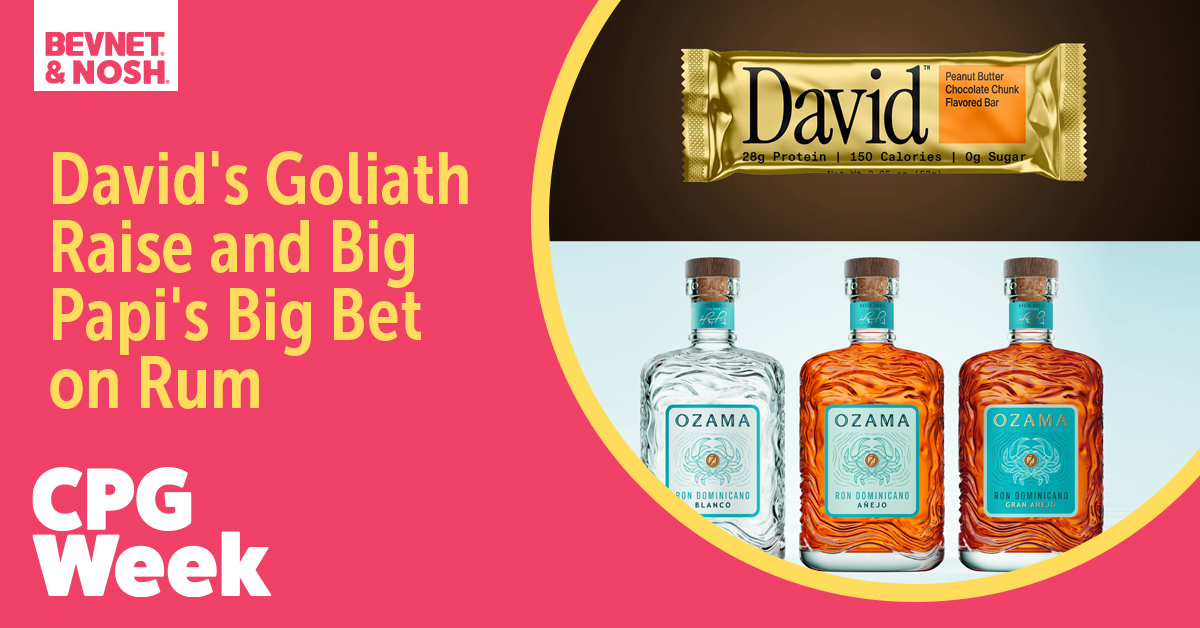
0:15 – Protein bar brand David has raised $75 million in a Series A funding round and acquired its ingredient supplier Epogee. Nosh managing editor Monica Watrous unpacks the startup’s massive moves less than a year since its launch.
2:55 – Senior reporter Brad Avery sheds light on the Make America Healthy Again Commission’s recent report targeting ultraprocessed foods as a key contributor to children’s chronic health issues, as well as various industry reactions to the findings.
4:15 – Cleveland Kitchen has raised $2.9 million in new funding. Monica shares how the fermented foods manufacturer plans to build on continued momentum in the year ahead.
6:00 – Brad explains why retired Hall of Famer David “Big Papi” Ortiz is launching a rum brand.
7:45 – Hear how Joyburst’s CEO turned a lawsuit into a sampling opportunity and which beverage brands are embracing a nostalgic summer flavor.
About CPG Week
CPG Week is the podcast that explores the latest happenings in the consumer packaged goods industry. Join our seasoned reporting team as they dish out the week’s stories in quick, easy-to-digest episodes. Catch up on the top headlines of the week, dive into exclusive insights with the BevNET and Nosh teams, and set yourself up to make more informed business decisions. Tune in to stay up-to-date on the latest developments in the dynamic world of packaged food and beverage.
New episodes are released every week. Send us comments and suggestions anytime to cpgweek@nosh.com.
Show Highlights:
This week, the podcast team discusses big moves by protein bar startup David, plus industry reactions to the Make America Healthy Again (MAHA) Commission’s recent report on ultraprocessed foods, fermented foods maker Cleveland Kitchen’s recent capital raise, and a former slugger’s new spirits venture.
Episode Transcript
Note: Transcripts are automatically generated and may contain inaccuracies and spelling errors.
[00:00:05] Monica Watrous: Welcome to the CPG Week podcast by BevNET and Nosh. I'm Monica Watrous here with my co-host Brad Avery. Now here is the latest in food and beverage industry news. Protein bar brand David has raised $75 million in a Series A round and is acquiring one of its ingredient suppliers. The funding round was led by Green Oaks with participation from Velour Equity Partners. David previously raised $10 million prior to launching in September in a seed round led by co-founder Peter Rahal. And now the company is acquiring Epi-G, which is the supplier of a modified plant-based oil that reduces calories from fat and is used in all of their bars. Acquiring Epi-G will allow David to scale and control its supply chain so it can, quote, move faster, according to Ray Hall. David has been criticized for its use of modified ingredients that are not easily recognizable to consumers, including EPG, the hero ingredient that Epi-G produces. And Rahal, whose former brand, RX Bar, tapped into clean label trends and the paleo diet, contends that David is not here to make another snack, but to advance nutrition. And the products have notably 28 grams of protein, 150 calories, and zero grams of sugar per bar.
[00:01:25] Brad Avery: Making a move this quickly to acquire its ingredient supplier shows a lot of confidence and is curious given this is a brand that hasn't even been on the market for a year.
[00:01:35] Monica Watrous: Yes, it's a new brand, but Rahal has a lot of experience and credibility in this space. For context, he founded RxBar and sold that brand to Kellogg, now Kellanova, for $600 million within five years of launching. So he obviously has a lot of knowledge in the protein bar category, a lot of operational expertise, and a reputation. Now, the product, again, is very different than RxBAR. They even doubled down on artificial ingredients in the formulations recently. And so it'll be interesting to see if Rahal can strike gold a second time and if this product has the same kind of staying power and traction that his first brand did.
[00:02:19] Brad Avery: Now, EPG is a plant-based oil, correct?
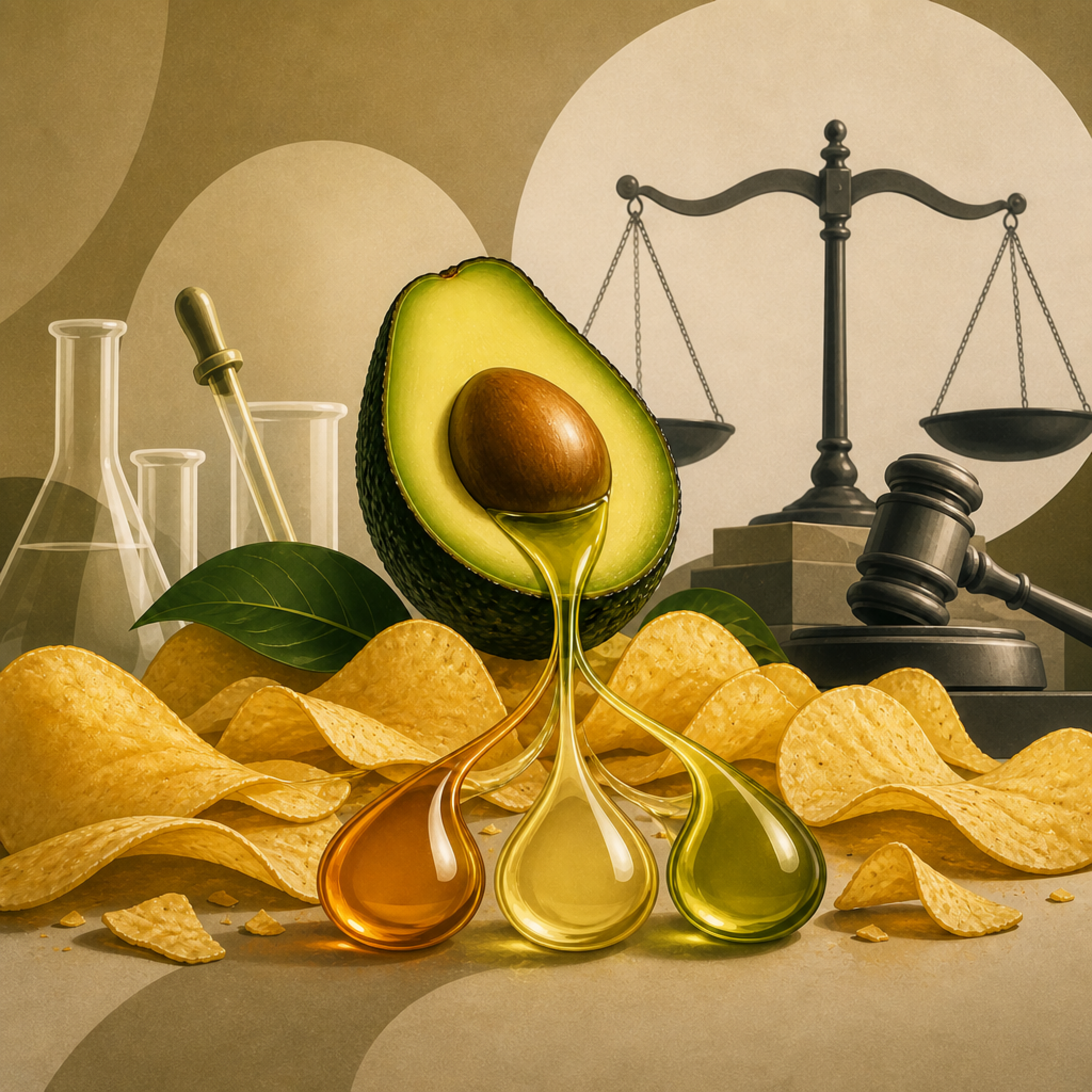
[00:02:23] Monica Watrous: EPG is a plant-based fat source that cuts 92% of calories for each unit of fat replaced and replicates the taste and texture in a lot of different kinds of applications. At least that's how the ingredient is billed on Epi-G's website, but it's non-GMO. It is plant-based. It is listed on the ingredient deck of a David Barr as modified plant fat.
[00:02:52] Brad Avery: The Make America Healthy Again Commission filed its inaugural report on Thursday, unsurprisingly pointing the blame at food dyes, ultra-processed foods, and environmental toxins for driving rising rates of chronic disease in children. The report suggested 70% of the U.S. food industry is made up of ultra-processed foods, leading to a, quote, depletion of micronutrients and dietary fiber, while increasing sugar and carbohydrate consumption. Now, reactions to the report are mixed. Daniel Fabrikant, the CEO of the Natural Product Association, said that the report paints a, quote, dismal picture of children's Healthy Again utilizes a lot of hyperbole while speaking to a lack of trust that many Americans have in institutions like the Dietary Guidelines of America. One point that Fabrikant made is that there's always a need to demonize something in the conversation when talking about health, whether it's sugar and salt or now seed oils and ultra-processed foods, as we are calling them. It's also worth noting that Fabrikant recently appeared on a panel discussion hosted by the Maha Commission earlier this month, where he seemed receptive to a lot of the ideas alongside CBG industry executives like Bill Weiland and Bill Moses.
[00:04:06] Monica Watrous: Is kimchi considered an ultra-processed food?
[00:04:09] Brad Avery: I don't think so. I believe it's pretty natural.
[00:04:11] Monica Watrous: Okay, good. Good news for Cleveland Kitchen then. The fermented food slinger has raised $2.9 million in equity funding according to a filing with the U.S. Securities and Exchange Commission. Cleveland Kitchen, formerly known as Cleveland Kraut, markets a range of sauerkrauts, kimchi, pickles, dressings, and marinades that are sold in 14,000 grocery stores and food service accounts across the country. The brand generated $41 million in sales last year and is anticipating continued strong double-digit growth supported by new distribution and investments in marketing and operations. In 2022, the company secured $19 million in a Series A round using part of the proceeds to purchase Sonoma Brinery and relocate its pickle production operations from California to Ohio while expanding its facility and workforce there.
[00:05:05] Brad Avery: This is a brand that's been around for over a decade now, and it's fascinating to see them helping to mainstream ingredients like this in the U.S. market and to continue looking at this fermented space, especially as you suggested earlier with the Maha Commission and the rising demand for natural alternatives. And fermentation certainly seems to be one of those areas where you can point to something that's a natural process.
[00:05:31] Monica Watrous: Absolutely. It's associated with gut-friendly benefits as well. And Cleveland Kitchen is actually the number one brand for kimchi and sauerkraut, according to Spins. So the brand is really positioned to capitalize on all of these big consumer trends we've been discussing, and we're excited to see what happens next.
[00:05:50] Brad Avery: Well, the Cleveland Guardians are currently second in the AL Central Division, and the Red Sox are not doing too hot this year, and I'm sure they're longing for the days of Big Poppy. Unfortunately, David Ortiz is now busy starting a rum brand. I was able to speak with the retired Hall of Famer earlier this month about the launch, which was announced this week. Osama Rum comes in a Blanco, an Anejo, and a Grand Anejo variety, and Ortiz has a personal investment in more of a hands-on role. The company's based out of the Dominican Republic, and that was something that was very important for Ortiz. He said he wanted to create jobs locally, employ people, and have a direct impact. Now, The Slugger is no stranger to the CPG industry. He's lent his name, or his nickname rather, to a number of products over the years, including a cannabis brand and a salsa. But this is something that he is an owner in and taking a hands-on role. It was also admittedly exciting for me, being from Boston, to be able to interview Ortiz. And as he said, he's kind of the designated hitter for this brand, working with a CEO side-by-side. Have you tried it yet? Not yet. Waiting on samples to come in, but I'm excited. And of course, it will be launching in the Northeast market first. So we'll be up here around Boston and New England the first to get a chance to see it in liquor stores.
[00:07:16] Monica Watrous: Very nice. It seems like usually celebrities go for the tequila route. So to see a rum brand coming from a Hall of Famer is an interesting move.
[00:07:23] Brad Avery: Well, he's from the Dominican Republic. It's an natural decision to want to go for rum. And rum in the market has been a little down in comparison to other spirits, as you suggested, tequila is way up. So I think there is an element of differentiation here as well as a personal piece.
[00:07:42] Monica Watrous: On a lighter note, Brad Woodgate, founder and CEO of functional beverage brand Joyburst, decided to turn a lawsuit into a sampling opportunity. Woodgate posted a video to LinkedIn last week showing him being served at the Canadian brand's offices. While it may not have been welcomed news, Woodgate offered the server a joy burst for the road. No word yet on what the lawsuit is regarding, though it's not the first time the brand has been hit this year. In January, they became subject of a class action case alleging the brand uses synthetic ingredients in violation of its clean label claims.
[00:08:16] Brad Avery: Yeah, I reached out to Brad on LinkedIn. I thought it might be best to extend the Olive Branch from one Brad to another to learn a little bit more about what's going on. So he seemed receptive and I'm hoping to talk to him soon. Maybe we'll find out what that lawsuit is alleging and also just how he thought to turn this into a sampling opportunity. Always be closing. Always be closing, exactly. Well, Monica, the temperature is heating up and what's your favorite summer dessert? Frozen margarita? Okay, pretty close to what I was going to say, which is I've always loved Bomb Pops or Rocket Pops, depending on where you're from, the red, white, and blue popsicles. Well, a lot of other people are as well, and more and more brands, particularly in beverage, are embracing this flavor. And Pepsi Co's Bubbly is the latest with a cherry, lemon, and raspberry flavor for the summer. Prime's sports drink Rocket Pop flavor was certainly one of the bigger ones to come out in recent years and help popularize the trend. And there's been numerous energy drinks. Also coming is First Form, a sports nutrition brand, launching an RTD energy drink with Anheuser-Busch as a partner. And they just announced their debut inaugural lineup of flavors, which includes Screamin' Freedom, also a cherry, lemon, and raspberry. It's nostalgia. Exactly.
[00:09:39] Monica Watrous: And patriotism. Here are some other notable bits of news from the week. Seal the Seasons is off to a hot start ahead of summer with three key team members promoted across the organization alongside a new strategic partnership with its longtime packaging supplier. Fresh Direct is going IRL. The tri-state-focused online grocer is opening its first brick-and-mortar store in New York. The pop-up location is scheduled to stay open through the end of the year, with a selection of seasonal favorites, local products, and Fresh Direct's signature fresh groceries. And finally, the Federal Trade Commission voted on Thursday to dismiss allegations that PepsiCo gave, quote, unfair pricing advantages to a major retailer while raising prices for its competitors. For these stories and more, become an insider at BevNET and Nosh. And if you're enjoying the show, please subscribe on your listening platform of choice. That wraps up this edition of CPG Week by BevNET and Nosh. Thank you to our audio engineer, Joshua Pratt. Our director is Mike Schneider, and our designer is Aaron Willette. If you enjoyed the podcast, please subscribe on your listening platform of choice, and we will see you next time.
About CPG Week
CPG Week is the podcast that explores the latest happenings in the consumer packaged goods industry. Join our seasoned reporting team as they dish out the week’s stories in quick, easy-to-digest episodes. Catch up on the top headlines of the week, dive into exclusive insights with the BevNET and Nosh teams, and set yourself up to make more informed business decisions. Tune in to stay up-to-date on the latest developments in the dynamic world of packaged food and beverage.
New episodes are released every week. Send us comments and suggestions anytime to cpgweek@nosh.com.
Stay Informed, Stay Competitive
Unlock the articles, expert interviews, and data reports that power the food and beverage industry. Join our community and stay ahead with exclusive insights from BevNET and Nosh.