CPG Week: Cannabis, Kava & The Fancy Food Show
Episode 78
In this episode:
In this episode:
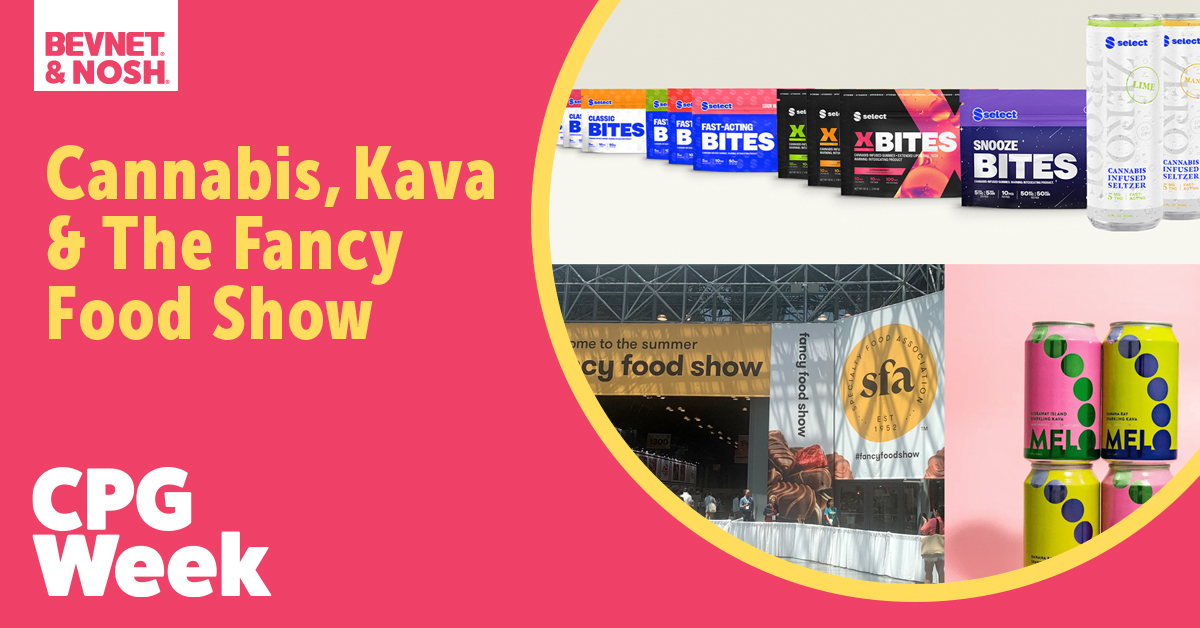
In a jam-packed episode, the CPG Week podcast covers a lot of ground from cannabis to kava with a healthy recap of the Specialty Food Association’s Summer Fancy Food Show from earlier in the week.
To start, senior reporter Brad Avery explains the big news out of the cannabis industry as Curaleaf announced it was entering hemp-derived THC with edibles and beverages available in a new DTC store. Nosh managing editor Monica Watrous and senior reporter Lukas Southard review some of the innovative products and trends they saw in New York City this week at Summer Fancy Food. The team wraps up talking about kava beverages and why the category’s future seems to be intertwined with the slightly more controversial kratom ingredient.
Show Highlights:
0:30 – Curaleaf, marijuana cultivator and dispensary company, is moving into the hemp-derived THC market by launching a new DTC website: thehempcompany.com. Not only could this shake up the regulatory environment but is a statement by a leading cannabis industry stakeholder.
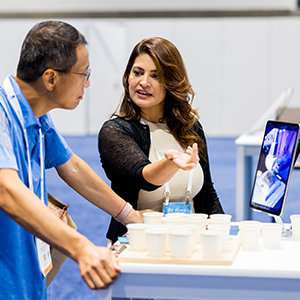
3:30 – Amid the cheese and hot sauce, Monica and Lukas discuss what they saw and tasted while wandering the aisles of the Summer Fancy Food Show. Lukas talks about a brand pairing savory biscuits with adult beverages while Monica snacked on the latest entrant in the freeze-dried trend.
7:10 – The team discusses how texture and experiential snacking are driving innovation by many brands across a multitude of categories including jerky, frozen desserts, sweets and convenience meals.
13:30 – Lukas explains what he learned while reporting on the kava category and why its future as a functional, non-alcoholic alternative is linked to another mood-altering ingredient, kratom.
About the CPG Week
CPG Week is the podcast that explores the latest happenings in the consumer packaged goods industry. Join our seasoned reporting team as they dish out the week’s stories in quick, easy-to-digest episodes. Catch up on the top headlines of the week, dive into exclusive insights with the BevNET and Nosh teams, and set yourself up to make more informed business decisions. Tune in to stay up-to-date on the latest developments in the dynamic world of packaged food and beverage.
New episodes are released every week. Send us comments and suggestions anytime to podcast@nosh.com.
Show Highlights:
On this episode of CPG Week, the team talks about what was seen and tasted at the Summer Fancy Food Show as well Curaleaf’s move into hemp and the uphill battle for functional beverage ingredient kava.
Episode Transcript
Note: Transcripts are automatically generated and may contain inaccuracies and spelling errors.
[00:00:05] Monica Watrous: Welcome to the CPG Week Podcast by BevNET and Nosh, your source for the latest food and beverage industry news. I'm Monica Watrous, Managing Editor of Nosh, here with my co-hosts, Brad Avery and Lukas Southard. If you're enjoying the show, please subscribe on your listening platform of choice. On the podcast today, we're discussing fancy food and kava culture. But first, THC goes DTC? Brad, what's the buzz there?
[00:00:35] Brad Avery: Yes, so Cureleaf, which is one of the leading cannabis cultivators and dispensaries, is getting into the DTC business with hemp-derived THC products. They're launching their own select and zero-proof brands, which are now being sold online as of this week on TheHempCompany.com. They're delivering to 25 states and Washington, D.C., and also through DoorDash.
[00:00:59] Lukas Southard: It's not really surprising, Brad. I've heard for a while now from my various sources in the Hemp Drive THC category that DoorDash has been quietly moving into delivering these products.
[00:01:13] Brad Avery: It's not so quiet anymore, it seems.
[00:01:15] Lukas Southard: It's definitely not so quiet. Cure Relief being a bit of a powerhouse. This is pretty big news, I think.
[00:01:23] Brad Avery: It's a big step forward for this category that we've been seeing so much momentum behind the hemp-derived Delta 9 products. Obviously, there's a lot of regulatory issues still going on with this space. A lot of states are looking to tamp down on these products or at least rein them in if others want to see them banned. So there's a real question of doing this now. Does this just give more weight that says, hey, this is here. It's established. It can't go away now. The genie's out of the bottle. Or do states still go after this? Curaleave being a very big name in the legal regulated cannabis market.
[00:02:05] Lukas Southard: I would imagine this is similar to what we saw in the last year with Total Wine & More and other bigger Bev Alk retailers starting to carry THC or hemp drive THC products in that it's kind of one of those situations where the category has gotten big enough and there's enough demand amongst consumers that These larger companies are willing to just get into it and say, okay, policymakers, if you're not going to make a quick decision or make a decision that helps this industry grow in the right ways, we're going to start leading by carrying these products and sending a DTC because there's enough people asking for it.
[00:02:49] Brad Avery: I think you also have to look at it just from Curaleaf's business and what it means for them, making this extension into D2C and their own private label brands. These select and zero-proof brands, they're offering a variety of products, including snooze bites. There's some drinks here. There's a cannabis-infused seltzer. They're also going bigger in this space. It's not just a matter of, okay, what's this mean for regulatory? It means what it's mean for who's controlling this category in this industry, you know, from the edible and beverage perspective. Careleaf is going hard here now.
[00:03:26] Monica Watrous: Looking forward to drinking this one in as it develops and moving on to the Fancy Food Show. Lucas and I just returned from New York for a very fancy few days in the Javits Center eating and drinking all of the premium gourmet things, lots of cheese, so much hot sauce.
[00:03:47] Brad Avery: I was going to ask you, do you make it to the cheese wheel zone? Because that's always my favorite part of that show.
[00:03:51] Lukas Southard: I always make a spin through the Italian and French area just to grab as much cheese and charcuterie as I can before my stomach hurts.
[00:04:01] Brad Avery: I've mastered the drive-by, walk-by, just grab one of those toothpicks with a little cheese on it and just grab it. Don't talk to them. That looks good. Oh, yes.
[00:04:11] Monica Watrous: Yeah, I did not make it to the cheese wheels. I barely made it out of this section called Debut District. It was the showcase for all of the startups, first-time exhibitors, and incubators. And I spent, I think, a good seven hours there on Monday, catching up with friends, looking at the new-new. I have a lot of fun products that I'm excited to talk about. But Lucas, what stood out to you on the show floor?
[00:04:38] Lukas Southard: Well, other than channeling my inner Brad and hosting a panel on AI, which went very well on Sunday with the guys from Keychain and the CEO of Fresh Direct, I also found it interesting to walk through some of the international brands upstairs and see what's trying to lay some groundwork in the U S market. I saw a couple kind of innovative products. I actually have some in front of me just because they gave it to me. This is called a drinks, biscuits. It's a kind of cool company. They have a couple different varieties. I have two here and they're savory.
[00:05:16] Monica Watrous: Are they drinks or are they biscuits?
[00:05:18] Lukas Southard: Exactly. They're savory biscuits with cheese in them. So this is mature cheddar, chili and almond chili with two L's. It's a Scottish company. And the other one was Parmesan toasted pine nuts and basil. And they're meant to be consumed with alcoholic beverages. So they actually have the drink pairings right on the front. I don't know if you guys can see that in the video, but The Parmesan is for blonde beer or lager, champagne, Prosecco, or a lighter style whiskey. So a pretty niche product in terms of the occasion that you have this. I asked, so this is not meant for a cheese plate. And they were like, no, this is meant for, to be consumed in pairing with your alcoholic beverages choice. Or THC beverage of choice. Or THC beverages. Yeah. They need to put that on there actually. So I thought it was kind of cool product. I'd never seen anything like this playing off of the cheese board into a different occasion.
[00:06:15] Monica Watrous: So one of the standout products for me was called Freeze Cake. It is a freeze dried cheesecake bite product. It was a fantastic product in itself. I did not know that I needed freeze dried cheesecake in my life, but now I don't want to live in a world that that doesn't exist. But it was really fascinating because the founder is a bakery owner, she was forced to pivot during the pandemic, and then she got really sick with COVID and asked her bakery employees to freeze dry the cheesecakes that she was intending to ship out. and a year later tasted how fresh and delicious they still were in that format. This happened before freeze-dried became a huge TikTok trend and the product was just a lot of fun. And also the benefits of freeze-drying is that it's light to ship and the shelf life is two years. So that was fun. She has six core flavors and then some fun seasonal ones. I also really liked a product called Mmm Jerky, which I thought was Hanson getting into the jerky business, but apparently I was wrong. Brad, I don't know if you're old enough to know who Hanson was. Hanson Everett?
[00:07:28] Brad Avery: Oh, Hanson the band? Mbop? Yeah, the brothers. Oh, no, I know Hanson. Okay, I just want to make sure. Precursor to- Nsync, Backstreet Boys. The Jonas Brothers. Jonas Brothers, yeah. You can see my CPG hat was on. I was thinking like monster energy. Oh, yeah, of course.
[00:07:47] Monica Watrous: You're always thinking beverages, Brad. But anyway, the product itself, it was this very thin, crispy meat. I don't even know how they process it, but they have their own facility in Reno, Nevada. And they were handing out band-aids. And I asked the founder, why are you handing out band-aids as your little merch item? And she's like, oh, because I'm a respiratory nurse and my husband's a doctor. And this is just a side project that they're getting into, which I thought was really fun. There's a similar product called Yey's that's also doing a beef crisp. So basically a jerky that's so thin and crispy that you can't really call it a jerky. It's just kind of melts in your mouth. It's really, really delicious.
[00:08:30] Lukas Southard: It's like chips, right?
[00:08:33] Monica Watrous: It's not even like chips, it's thinner. It's a very interesting texture. It's hard to explain, but I'm here for this crispy beef jerky trend, if two companies equal the beginning of a trend. Another product that caught my eye at the Dayview District area of the Fancy Food Show was dubbed FroCo. It's a frozen cottage cheese ice cream. These guys were leaning very hard into the fitness occasion, the post-workout. These pints have 40 grams of protein per pint and it is frozen cottage cheese. The brand is called Smear Case, which I questioned. I don't know if that's a very intuitive name. They had to explain to me that it's Swedish or something for cottage cheese. I don't even know. Obviously, I forgot it. It wasn't that that intuitive.
[00:09:27] Brad Avery: I'll tell you what smear case sounds like. It sounds like a 1990s post Green Day punk band that kind of came out, signed to a major label, had like one minor hit and then disappeared.
[00:09:39] Monica Watrous: Well, hopefully the frozen cottage cheese ice cream brand has a little bit more success than that. I thought it was a pretty tasty product, and it's really hard to argue with those nutritionals.
[00:09:50] Brad Avery: So I didn't get to go to the show, and you're definitely now giving me a lot of FOMO that I didn't necessarily have before, because I'm like, it really sounds like there's a lot of interesting innovation going on. And it sounds like there's interesting innovation going on with texture for products. I mean, you mentioned the freeze-dry trend, and I think we've been seeing some freeze-dried Skittles or Rainbow Candies kind of pop up on the market and other types of Products like that playing with familiar flavors, but in totally new textures. So I'm wondering if maybe there's some momentum there or this is just, you know, a few interesting little items popping up.
[00:10:25] Monica Watrous: I think it depends on the category. I think that at the sweets and snacks show, there was definitely a lot more products that were having some kind of multi textural experience. And when you get into snacks, that definitely is a big one. One of the other products that I really liked that I tried was a puff. It was a buckwheat puff and puffs are certainly not new, but it had a really nice melty, it was a crispy bite, but then it kind of melted in your mouth. And I mean, texture obviously is right up there with taste. If you are trying to create a craveable experience, you need to nail both. And a lot of these brands that I visited with at the show certainly are prioritizing that.
[00:11:07] Lukas Southard: Yeah, there was one brand that I talked to called Lakerids by Below. It's a Danish brand and they make.
[00:11:14] Monica Watrous: Is that the chocolate covered licorice?
[00:11:15] Lukas Southard: Yeah, he talked to you. He told me and then he talked to you. It's licorice, black licorice covered in chocolate in like a can, like a flavored candy coating. So you get three textures and three different flavors. So it was like passion fruit, like candy coating, white chocolate and black licorice, which I mean, I like licorice, but it was a surprisingly good flavor and it hit all these different things with like a trio of flavors and a trio of textures. So it's, it's a premium product, but I think it will do well if, you know, Americans can warm up to licorice a little bit more.
[00:11:52] Monica Watrous: Well, they certainly love chocolate. No, I think that to your point, Brad, it's about new experiences with a familiar flavor, familiar format, something consumers recognize with a twist. We also saw our friend snoods, which is the snackable noodles. That was another fun product that created a surprising twist on a category that we all know and love.
[00:12:17] Lukas Southard: Yeah. One, one more thing that I saw that was really interesting that was playing into this kind of a category we know, but also convenience was a U S based brand that uses innovative technology from Italy. They're called preemie and they make basically cup of soup, but for Italian pastas. So it's like a premium dried pasta and a powdered sauce. You just add water, you shake it up. And they had Italian mac and cheese, rotini marinara and spicy rotini. And it's, you know, a convenience product, but in a kind of premium format that is very approachable.
[00:12:54] Brad Avery: So listening in, experiential products seems to be another takeaway, which is something I think we've been seeing. I remember writing about 1UP Candy doing a sour candy test. Monica, you mentioned a lot of hot sauce at the show, and obviously hot sauce has been growing, hot ones being a big influence there, but people are kind of gravitating towards these experiential products, not just functional, but something that gives you a sensation.
[00:13:21] Monica Watrous: We have been reporting on this at Nosh. You can read more insights there as well as catch our colleagues Mike Schneider and John Craven were at Fancy Food for a day. And I know they talked about it on Taste Radio. So you can tune in there and get more thoughts and perspectives on Fancy Food Show. Moving on to Kava, which was not at the Fancy Food Show, curiously, but it is popping up in more spaces. Lucas, you wrote about this trend. I don't know if we can even call it a trend at this point. It's kind of a baby trend, right?
[00:13:58] Lukas Southard: It's not new. That's the thing is, look, functional drinks and non-alcoholic alternatives have been growing exponentially in the last couple of years. And kava, which kind of fits into both of those categories and has been around for two decades now in the US, hasn't really grown as much. So for a touch of background, kava is a root derived from Pacific islands. It's dried and ground into a powder and made into a drink. On its own, traditionally, it's pretty earthy and muddy. but we've seen it being incorporated into fruit flavors and carbonation in a canned format to make it more enjoyable and get the relaxing effect that it imbues. So despite its growth in on-premise as an alcoholic alternative, mostly in South Florida, although From my reporting, I found that places like Billings, Montana and Des Moines, Iowa is starting to have a bit of a kava culture. The omni-channel sales growth for the kava functional drink category has been pretty low. So according to Spins, in the last 52-week period ending May 19th, kava drinks only hit 16,000, which is incredibly small, but Now you need to keep in mind that a lot of where the kava category is being sold is D2C, in shots, in powder mixes, as well as in cans, and like I said a lot of it is happening in these tiki themed kava bars where it's sold on premise as well as sold to go. So kava culture has expanded into other major metropolitan areas like Los Angeles and New York as a wellness product. And we're seeing some more brands come into the category. There's a new brand coming from Australia called Mellow, which I found to be incredibly tasty. One of the better kava RTDs that I've had. Fun flavors as well. Despite new entrance into the category, as well as some of the established brands that have been doing it for a while, playing with how they market, playing with their messaging and their packaging call-outs, as well as formats, it still hasn't really caught on as much as a lot of founders expected it to. In saying all that, there is one area that has caught on pretty well with Kava, and that's the blending of Kratom both in drinks as in the formulation of drinks, as well as in these portfolios of drink makers incorporating Kratom and Kava together or in separate, but the growth as well as on premise, the growth is kind of happening in conjunction with Kratom, which is a faster growing category. Brad, I know you've done some reporting on Kratom. What do you think about this kind of these two functional ingredients kind of moving together, despite kava being a dietary supplement and kratom being somewhat contentious in terms of regulations.
[00:17:01] Brad Avery: Contentious is right. It's certainly controversial. The FDA is no fan of Kratom in particular and has issued seizures of products featuring Kratom. It is not approved for food or beverage. And yet we are seeing brands using it. And in particular, this combination with Kava, you know, there's some companies that you mentioned in your story. Botanic Tonics, which makes the feel-free wellness tonics. And Mitra 9 also makes a kava and kratom shot. Now on their own, kava and kratom have their individual effects, but combined, I believe there's very little research about the actual effects on the body. And we've seen this in class action lawsuits, allegations of addiction. There's a subreddit dedicated just for addiction support for people trying to quit feel-free tonics called Quitting Feel Free. So it's a question of what's the actual science behind these products? Because right now, there's nothing that says officially that it's addictive. But we have a lot of consumer testimony, and we have some lawsuits claiming as such. It's a real question for the industry. Selling these, age restrictions, you know, in general, maybe warnings for consumers to be aware of the products that they're about to consume, because they do have a very high functional effect.
[00:18:28] Lukas Southard: When I talked to a lot of the on-premise operators of Kava bars, they said that a lot of their customer base is coming in for the community and they're coming in for both Kava and Kratom. And despite the DEA still having Kratom as an unscheduled product, It's showing a lot of growth, especially in places like vape shops and smoke shops, where Kratom is sold in a variety of different formats and doing really well. I mean, botanic tonics sales have increased 286% in the last year, according to Nielsen IQ data.
[00:19:02] Brad Avery: So on the subject of Kratom itself, as a standalone from Kava, We have to remember that part of the reason that the FDA is so hard on this is that they see it as a drug with opioid like properties, which has been studied, but there's a very strong industry group. pushing support for the Kratom industry, whether that's in beverage format or powder format or other, a number of states have passed Kratom Consumer Protection Acts, which formally legalized the sale of Kratom across the state. Now, these do regulate them. They add age restrictions and other requirements, but it is opening up the market in certain territories. Florida comes to mind as one state that recently enacted them. the bill. And this is because prior to these bills, it was real Wild West territory. Some states, certain counties had it banned, but others didn't. And it's a real uneven space at the moment. Even still, what we're waiting for is some real federal regulation. But as far as the FDA stands, they're against it.
[00:20:12] Lukas Southard: And when it comes to Kava, there, there's plenty of these Kava drink makers who are, are, are seeing it as a longer adoption curve than they had originally expected, but that the tide is shifting. Uh, like I said, Mellow is a perfect example of a brand that. has recently come to the United States, and they see a lot of opportunity in wellness and in people looking for alcohol reduction to use kava as their drink of choice. So it really remains to be seen how kratom and kava will grow together, but I think there is a world where they will both grow together as well as grow separately.
[00:20:53] Monica Watrous: As always, we will continue to be following these developments. Here are some other notable bits of news from the week. Guayaquil's C-store surge continues with 7-Eleven and Quick Trip. What is Latino coding and how can it be stopped? And Kroger Q1 sales top estimates and digital sales grow. For these stories and more, become an insider at BevNET and Nosh. That wraps up this edition of CPG Week by BevNET and Nosh. Thank you to our audio engineer, Joshua Pratt, our director is Mike Schneider, and our designer is Aaron Willette. If you enjoyed the podcast, please subscribe on your listening platform of choice, and we will see you next time.
About CPG Week
CPG Week is the podcast that explores the latest happenings in the consumer packaged goods industry. Join our seasoned reporting team as they dish out the week’s stories in quick, easy-to-digest episodes. Catch up on the top headlines of the week, dive into exclusive insights with the BevNET and Nosh teams, and set yourself up to make more informed business decisions. Tune in to stay up-to-date on the latest developments in the dynamic world of packaged food and beverage.
New episodes are released every week. Send us comments and suggestions anytime to cpgweek@nosh.com.
Stay Informed, Stay Competitive
Unlock the articles, expert interviews, and data reports that power the food and beverage industry. Join our community and stay ahead with exclusive insights from BevNET and Nosh.