Goodles Goes Microwaveable With Cupped Innovation

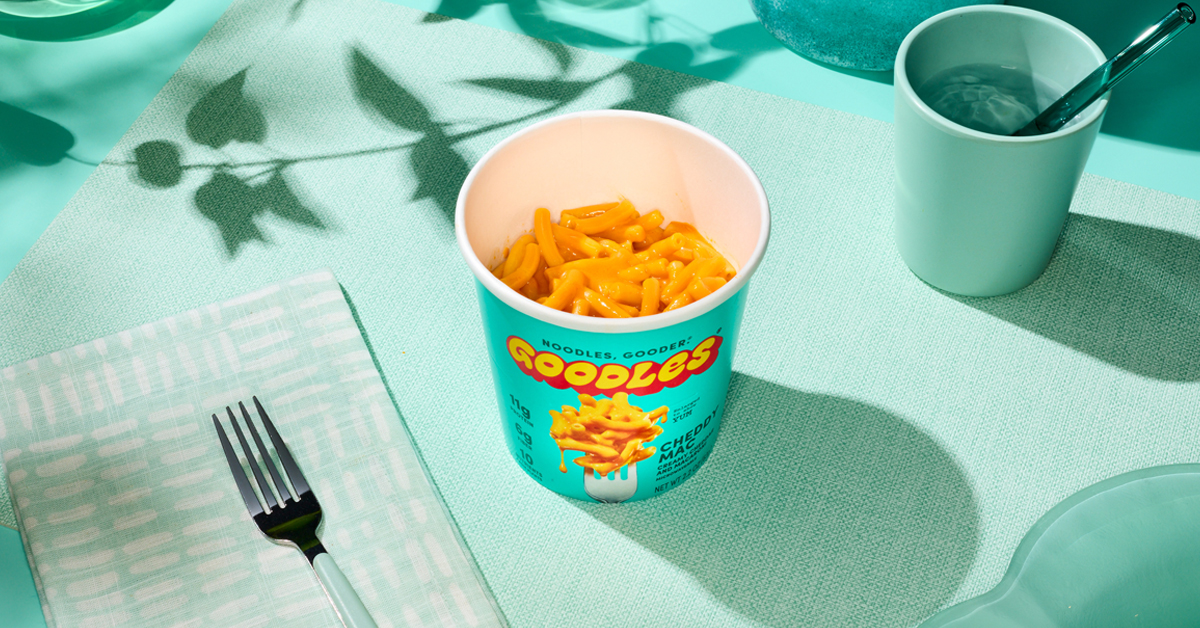
When it comes to boxed mac and cheese, some consumers love the liquid cheese version while others prefer the powdered packet variety, but there is one convenient format that presents an even bigger market opportunity: microwavable cups.
Goodles, Nosh 2024 Rising Star recipient, has already captured the first two segments with its Original and Deluxe lines and is now bringing the brand to the single-serve space with cups. The innovation will position the Santa Cruz, Calif.-based brand firmly in the final third of the mac-and-cheese pie chart, as founder Jen Zeszut calls it.
“A third of the market is the dry cheese, where you add the milk and the butter and you stir, stir, stir,” she said. “A third of the market is squeezy cheese, like Velveeta, where you don’t need the milk or butter. And literally, a third of the market is cups. It’s crazy because the wedges are exactly the same.”
Goodles is launching the 16 oz. microwavable cups in its two top-selling varieties: Cheddy Mac and Shella Good. The format maintains the brand’s standard nutritional profile – delivering 10 nutrients from plants with between 10 to 11 grams of protein and five to six grams of fiber per cup, respectively. Goodles also claims it is the first mac and cheese cup to receive the Clean Label Purity award.
“It is literally the number one most requested innovation ever since we launched,” Zeszut said. “This is a totally different usage occasion. It’s on-the-go or bring it to work. It’s on the road. It’s when your kids get home from school and you don’t want them cooking with pots and pans.”
Goodles surveyed its consumers as it researched the cupped innovation and found that about 82% of its customers were buying a cupped mac and cheese from another brand because Goodles didn’t have that variety in its portfolio. Additionally, the survey found that 92% of respondents would not replace microwavable cups with the boxed varieties.
“We expect cups to be completely incremental,” Zeszut said. Since launching its “Deluxe” Squeezy Cheese line last year, “there has been zero cannibalization” of the dry cheese varieties, Zeszut added.
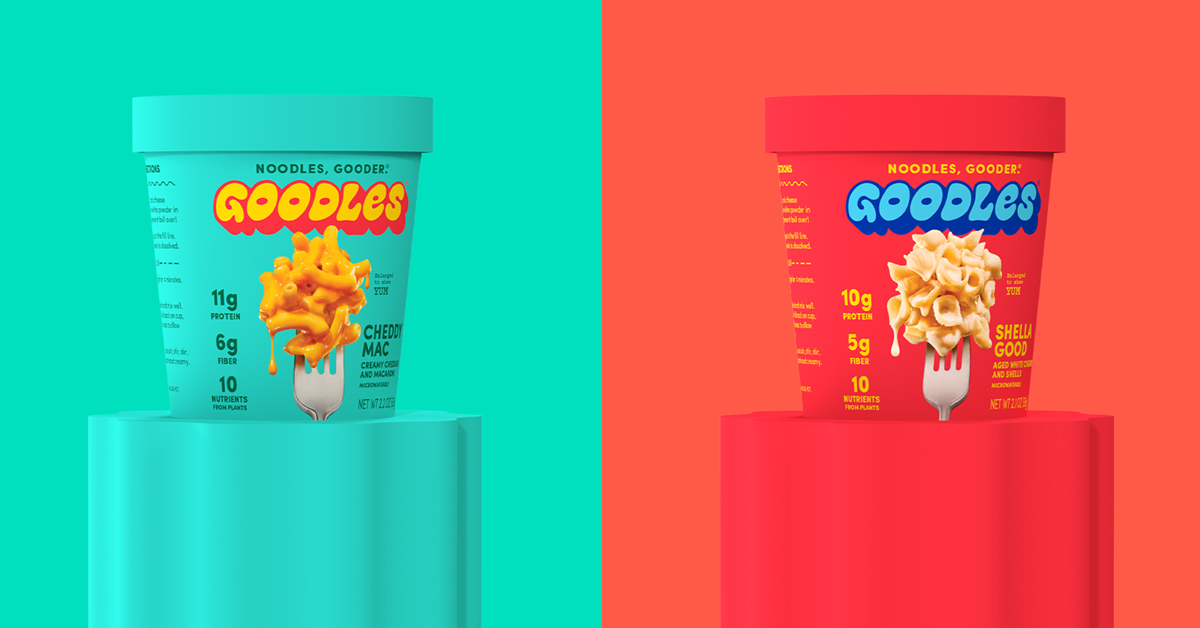
To pull share from Kraft’s Easy Mac and Annie’s cupped format, Goodles decided to lean into its value proposition by formulating around BPA and PFAS-free paper. The packaging decision differentiates away from plastic but opened the door to sourcing challenges due to the lack of co-packer capacity for the paper innovation.
The cups also required more R&D on recipe formulation and design to solve for boil-over issues that can arise with microwavable soups or noodles.
To prevent boil over in smaller plastic cup designs, brands often add more starch to the noodles. This soaks up the water quicker but also coats the tongue preventing flavor from getting through, Zeszut said. “It has no flavor but it’s not their fault. It’s the cup’s fault, actually.”
Goodles factored in more “headroom” at the top of the cup to prevent the boil-over problem, adding cost to the packaging material.
The brand also spent a year-and-a-half reengineering its noodles to cook quicker in the microwave, while still maintaining the brand’s calling card of high-protein and plant nutrient content.
To help align new product launches, like cups, the brand moved its invite-only Clubhouse social platform to its homepage. The move encourages more interaction with the exclusive digital community where “diehard Goodles fans” can receive early access to products, special perks and branded schwag.
Clubhouse serves as a workaround to spending marketing dollars on advertisements and commercials because it allows these dedicated consumers to “bring 10 other friends and get them hooked on Goodles,” Zeszut said. “If word of mouth is what gives us a competitive edge and we can’t outspend them, we have to out weird them.”
Tagged Brands (1)
Explore the Nombase CPG Database
Head to Nombase to learn more about the tagged companies and their offerings.