
Legacy Pasta Producers Are Pumping In Protein. Is There Whitespace Left?

Protein needs no introduction to any food category, and particularly not pasta.
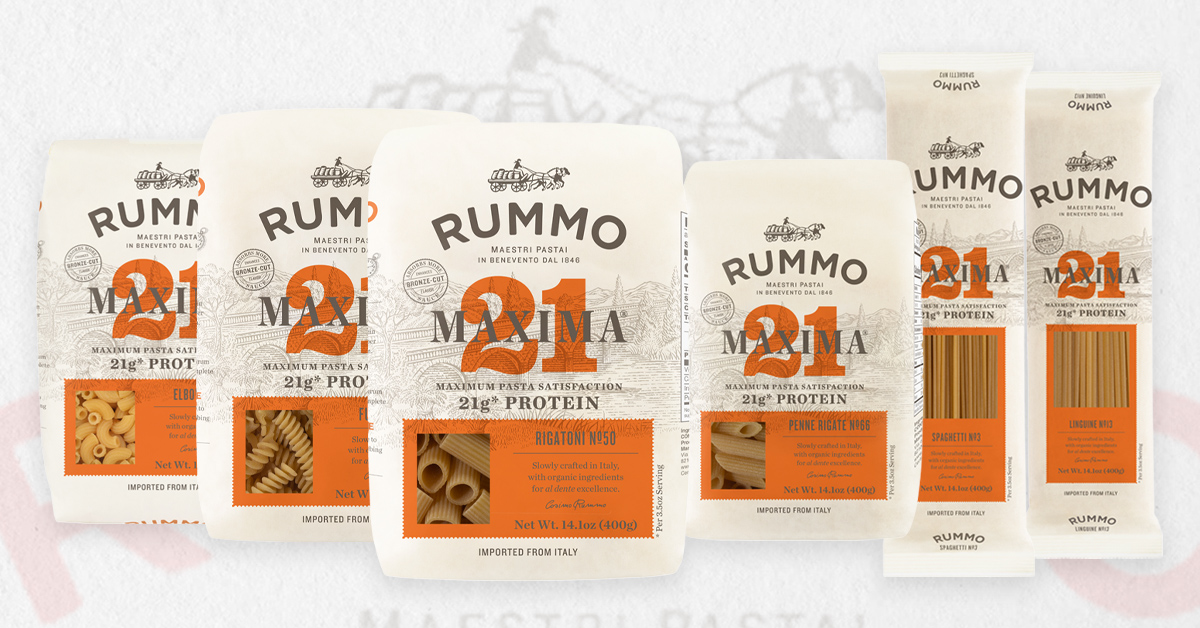
The protein-enriched pasta market has now converted a legacy, premium player to pump yellow peas into its tradition-entrenched production process. Pasta Rummo is set to debut a new two-ingredient line known as Maxima nationwide next month, offering 21 grams of protein per serving derived from organic durum wheat semolina and yellow pea protein.
The line will roll out to Sprouts stores followed by additional retailers in the second half of the year, Antonio Rummo, president of Pasta Rummo USA, told Nosh.
“You’re getting those health benefits without sacrificing anything on taste or texture,” Rummo said. “Just like our classic pasta, it’s crafted using our Lenta Lavorazione method, which means we take our time to get every step right. Maxima has that same sweet wheat flavor, stays perfectly al dente, and has a porous surface that really holds onto sauce. It’s real pasta, just with more to offer, and it reflects the same Italian heritage and care we put into everything we make.”
The seventh-generation, family-owned company has grown its presence significantly in the U.S. with sales up 61% in 2024 and up 555% over the past six years. The company said it recently hit just below 60% ACV across the U.S., adding that its Classic and Gluten-free pastas, launched in 2015, have been the fastest-growing SKUs in their categories in grocery “for six years straight.”
According to Rummo, his company is the first premium brand to enter the protein pasta set, which has been dominated by startups using other pulse-based protein inputs. Banza debuted with chickpea-based pasta contributing 20 grams of protein per serving in 2014. The brand has constantly evolved its formulation for textural and structural improvements, but its primary focus has been on popularizing the chickpea itself, bringing the legume into new categories such as frozen pizza and waffles.
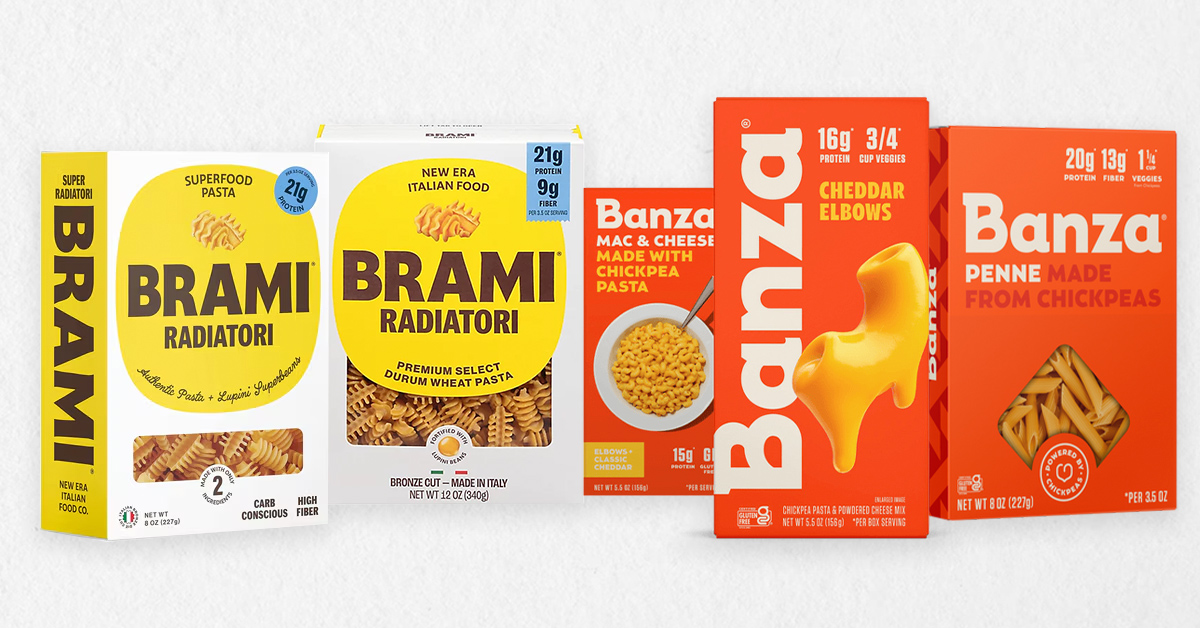
Other upstarts like Brami and Kaizen Food Company have embraced the traditional Mediterranean protein source lupin as the main ingredient for their enriched pasta products. While Kaizen has focused on growing awareness for lupin by expanding across categories, Brami, whose founder is a first-generation Italian American and worked as a chef in Italy, has remained focused on ushering in a “New Era of Italian Food” via two traditional product types: pastas and pickled lupin beans.
National players like Barilla have also pumped out protein pastas made from a blended array of inputs including red lentils, chickpea, pea protein, barley and others, contributing just 10 grams of protein per serving. Rummo said it looked into using protein isolates to increase macros further but abandoned that method, claiming these inputs are “highly processed, often involve chemicals and waste a lot of water.”
However, others, such as Mizkan Group-owned ZenB, have also embraced yellow peas as a base for its pasta in the past. The company formulated its products solely with yellow peas as it worked to grow awareness for the protein ingredient in the U.S.; however the ZenB line was discontinued in the U.S. in February.
Pasta alternatives as a concept saw a boom and bust period back in the 2010s when the growth of gluten-free diets brought alternative ingredients such as red lentils and quinoa to the category. However, many of those products faced quality issues in comparison to traditional alternatives and have either been discontinued or significantly iterated against to improve taste, texture and durability.
Pasta Rummo’s premium approach to alt-pasta could give the category, and yellow peas, a leg up. The company is already leading growth in the natural channel, it claims, and has performed well across classes of trade ranging from premium, specialty stores to “more value-driven supermarkets.” It said it only wanted to enter the set if it felt it could do it in a premium way, which Rummo believes it has accomplished with this new innovation.
For Rummo, the push into protein is an opportunity to both capture whitespace in a growing, on-trend category while also reaching new audiences, such as “health-conscious shoppers” looking for higher-protein, functional foods as well as “food lovers” who “love the idea of getting a little extra nutrition out of their meal,” Rummo said.
“Rummo has always delivered on taste and performance, and we think Maxima bridges those two worlds beautifully,” he continued. “It’s a way for us to connect with that first audience [of health-conscious shoppers], people we haven’t fully reached yet, while staying true to what our brand stands for.”
As the protein pasta market continues to grow – up double digits in the past four years, per Rummo, and projected to reach over $444.8 million in revenue at a CAGR of 4% by 2030, according to Grand View Research – Rummo is readying itself for the long run. The company has also invested €50 million (about USD$56.6 million) in new production lines, the doubling of its warehouse stocking capacity and the addition of solar power systems for sustainable energy production.
“Our [global] president, Cosimo Rummo, has a saying we really live by: ‘Stand out so as not to become extinct,’” Rummo said. “That mindset drives everything we do, especially when it comes to innovation. We strongly believe in research and development… and when we talk about research we do not only mean the creation of new products but also the improvement of existing ones, in addition to packaging and the improvement of our production technology.”









![[Exclusive] Elavi Goes National with Whole Foods Market; Launches Exclusive SKU](https://d2azl42aua8mom.cloudfront.net/wp-content/uploads/2026/05/28110626/Elavi-970-150x150.png)