Forager Project Wants To Prove Naked, Plant-based Protein Isn’t Always ‘Rough’

“Our whole impetus here was ‘I don’t want to do it if it’s rough’ – let’s start from a good product and understand how [and] what we can do [on protein],” said Stephen Williamson, founder and CEO of Forager Project.
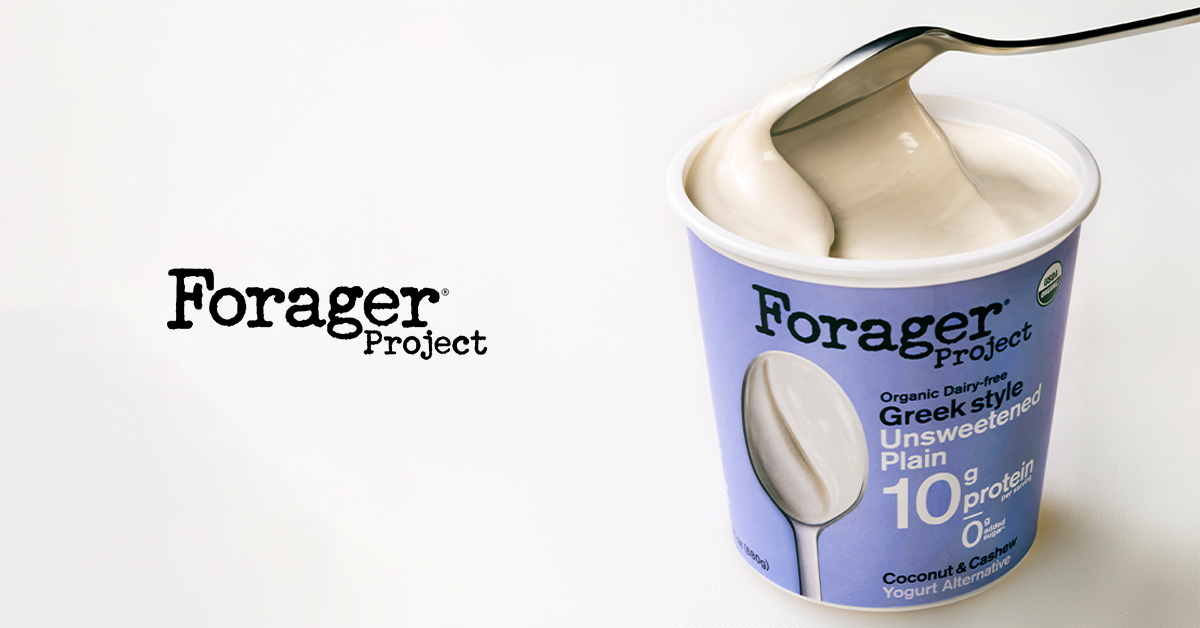
Today, the plant-based dairy creamery is rolling out its latest innovation – an Unsweetened, plain Greek-style yogurt – as proof it is possible to balance high levels of plant-derived protein while maintaining a product’s palatability, Williamson said.
The new product contains 10 grams of protein per serving – a significant jump from the 1 to 3 grams of protein per serving common among category leaders – and the vast majority of that nutrient is contributed by the brand’s hero ingredient, cashews. The remaining protein is supplemented by the use of organic brown rice protein, Williamson explained.
“If you look at the market, everybody – unless they just really don’t care about taste, and there are a couple players out there who obviously don’t care about taste at all – hasn’t made an unsweetened plain for a reason, and the reason being is that they taste terrible,” Williamson said.
Achieving ‘The Least Unpleasant Isolate Experience’
He said that over the course of the company’s 12-year history, it has tested hundreds of plant-based protein sources ranging from obscure inputs like watermelon seeds to more common but still difficult-to-reliably-source ingredients like fava beans and lentils. In the end, Forager determined that getting the most protein out of its hero cashew is the best method for appealing to consumers on the basis of taste.
“When you work with pea protein, it’s not just like actual pea protein – there are 27 different pea protein [isolates], and each of them have different characteristics,” Williamson said. “If we can get as much protein out of cashews as possible – which obviously makes it more expensive – then we can figure out from there… what supplements, complements or integrates with cashews in a way that you get the least unpleasant isolate experience.”
This new product contains just five organic ingredients: Coconutmilk, cashews, rice protein, agar and a combination of six live active probiotic cultures. The product is sugar-free, oil-free and made without any fillers, added starches, natural flavors or preservatives. The 24 oz. tubs carry an SRP of $7.99 and will roll out to Sprouts Farmers Market and Whole Foods Market stores nationwide this month.
Williamson said that Forager takes an opposite approach compared to the innovation practices of others in the category, who typically begin with a predetermined amount of isolate to reach desired protein levels and spend the rest of the formulation process “covering up what is a miserable experience,” Williamson said.
That practice has left a bad aftertaste among consumers for plant-based products, he believes. Forager sees its alternative dairy products not as just a solution for vegan consumers, but as a conversion tool for flexitarians. The team is realistic about its position in the market and said its goal isn’t to remove dairy from the market, but to provide a more efficient alternative to cow’s milk products.
Williamson said that “the script needs to be flipped” in dairy, claiming that 85% should be plant derived and 15% from cows, rather than the current inverse.
“When you’re in a position where you taste great and nutritionally are not sacrificing, and it’s more environmentally sustainable than dairy, you appeal to a broader consumer base, more of a flexitarian consumer base,” JC Hanley, co-founder and president, added.
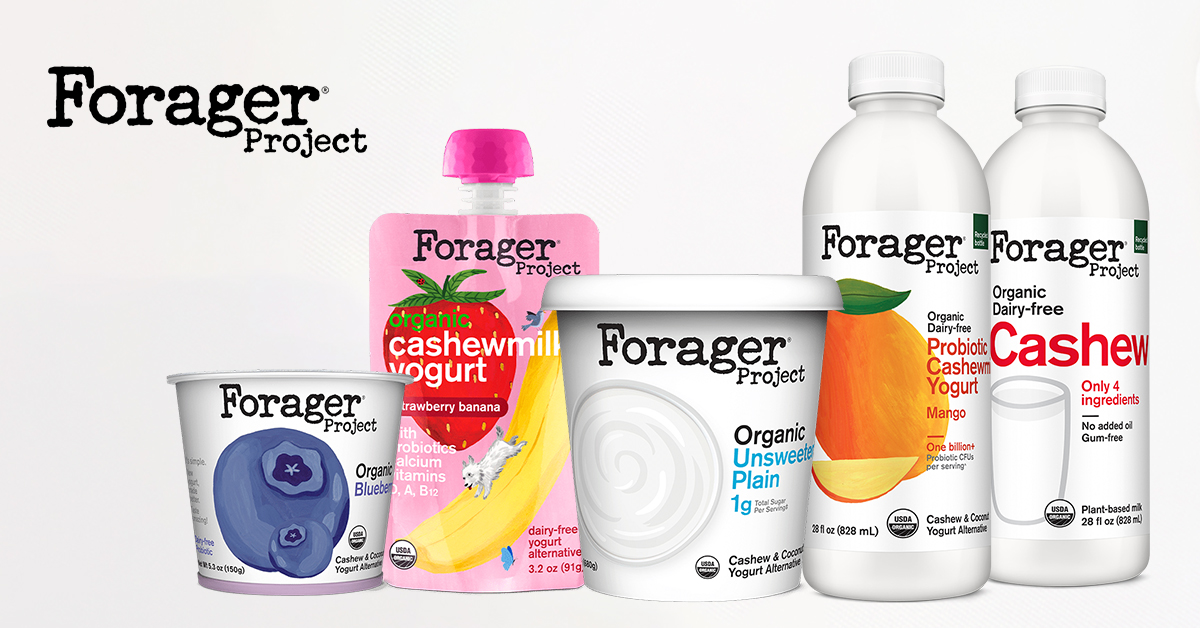
Forager’s portfolio now spans yogurt, sour cream and a variety of beverage categories such as creamers and protein shakes. The items are sold in a range of formats in over 10,000 stores nationwide including Publix, Kroger, Albertson’s and more. In addition to its strict innovation standards, Williamson said the brand’s key to success has been a consistent focus on clean, simple ingredients.
Manufacturing A Moat
Williamson, who spent over a decade as chairman and CEO of juice brand Odwalla, said Forager made the decision early on that it would do all of its own manufacturing. That facility has become the company’s moat, enabling Forager to constantly experiment with new and better ingredients. That has allowed the brand to maintain a robust innovation pipeline while also constantly tweaking and improving its existing formulations.
“The work you do on your base also drives your innovation,” Williamson said. “Creamers really came out of our work on milk and our work on yogurt, and our work on sourcing cashews and oats and coconut. They drive each other and I think that on the quiver of dairy products right now, we’ve got a lot of work to do on building out the quiver of [plant-based] protein yogurts.”
That work is also particularly important for the company as it leans heavily on the taste profiles contributed by its raw ingredients – which “are alive,” Williamson emphasized. Depending on the time of year they’re harvested and sourced, the taste profiles each input contributes can vary. Those subtle changes can be resolved by subtle formulation tweaks, he said, that is why “our recipes are not locked.”
“I think [about] 48% of what I do is wrong,” Williamson added. “I tend to think you need to live your life open to change because hopefully you’re changing as you learn relevant information that makes you better. I’m a failure king.”
But something Williamson is doing must be right. Forager is currently the leading independent plant-based yogurt company, falling just behind two Danone-owned brands, So Delicious Dairy Free and Silk, per Circana data viewed by Nosh for the 52-week period ending Jan. 26, 2025. The company’s dollar, units and volume sales have also steadily increased over the past year and two-year periods while both category leaders are seeing those same metrics drop over the same period. To note, Danone’s Manifesto Ventures took a minority stake in Forager Project in 2019.
“A common thread that is super important between the creamers and Greek [style yogurt] is the clean, simple ingredients,” said Hanley. “Protein is obviously enormous, but within plant-based consumers have told us, and it’s obvious, that they’ve shifted from products that have oil [and fillers] in them to [products with] clean, simple, organic ingredients. It is also how we think about our products and innovation – that is a North Star for us.”
Explore the Nombase CPG Database
Head to Nombase to learn more about the tagged companies and their offerings.