Search across the BevNET CPG Media network including BevNET, Nosh, Brewbound, Taste Radio, Nombase and CPG Jobs.
The Machine Method Mindset for Food Investing and Entrepreneurship
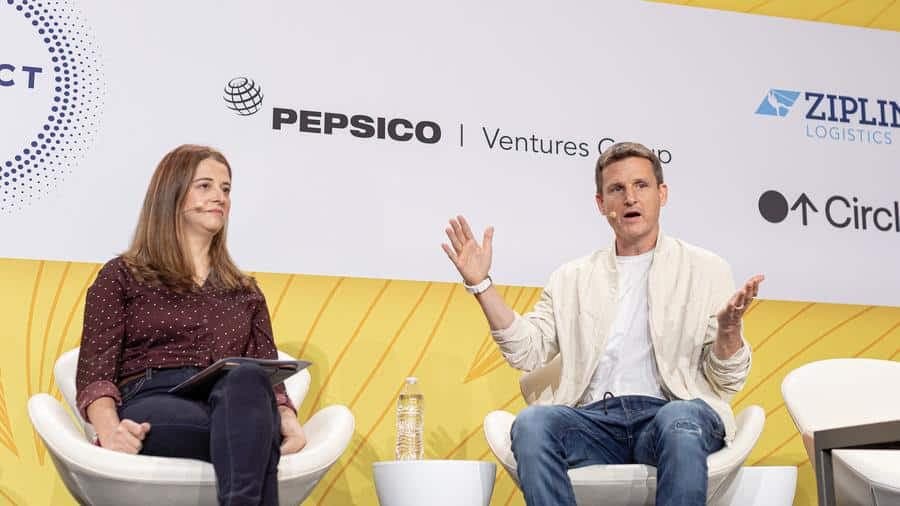
The Machine Method Mindset for Food Investing and Entrepreneurship
Though many may know him for his “frenzied” persona, in reality Dyrdek has a methodical approach to his life and work. He shared his brand building and investment philosophy as well as gave attendees an inside look into his “Machine Mindset,” discussing how founders and executives can integrate this philosophy into their own life and business. Dyrdek’s talk gave attendees a look at the thought process of a creator and content entrepreneur whose money and brand go into the development of successful companies.
Featuring: Rob Dyrdek, Founder & CEO, Dyrdek Machine
Transcript
Note: Transcripts are automatically generated and may contain inaccuracies and spelling errors.
Speaker 1 [00:16] When I first interviewed our next guest, I knew him as a prolific athlete who changed the sport of skateboarding, a media producer, and a television star, but I didn't quite know the whole story about how he's gone through an evolution personally and professionally in order. To get to his current role, which to be clear, still includes all of the same things he was doing before, just a lot more stuff layered on top, and now he's also adding investor and advisor to his resume and maybe one day book author, I hear. So here to share more about that journey and how his mindset impacts his investment and advisory process, Rob Deerdeck.
Speaker 2 [01:12] Should we be, look, I, I feel better being close.
Speaker 1 [01:15] OK. OK. Um,
Speaker 2 [01:17] at this.
Speaker 1 [01:18] Thank you. Intimate. Oh, it's really
Speaker 2 [01:20] nice. Thank you for having me. No,
Speaker 1 [01:22] thank you for coming. Uh, I think how many hours have you been awake at this point now? Probably you got started on your day way before us. Look,
Speaker 2 [01:29] I do. I sleep for as long as my body needs it. And that sometimes it's 3:30 in the morning, 4:30. I never allow myself to sleep past 5. But last night I went to dinner with a friend, so I slept till 5 today. Yeah, and look, and I, and then I had my first call at 5:30. And I just, I don't like doing calls at 5:30. I thought this morning where it's like, I need to have my rhythm of the morning. So tomorrow I'll probably get up at 3:30.
Speaker 1 [01:58] So, to that point, I think, you know, this might be a little unfamiliar language to a lot of folks because they know you from, you know, being on television, from sports, from shoe deals. Um, can you tell us a little bit about how that's evolved into your, you know, current. Advisory practice and investment sort of family office. Yeah,
Speaker 2 [02:21] and I really wouldn't call it like it's we're a venture creation studio, right? So I basically created a business that creates businesses in 2016 because I realized like my passion, I like to say I'm fueled by the joy of creation. And I love to create businesses, but I like to do it with um really high quality partners that can operate it. And then I go from the build and creation stage to the advising stage and, and for me it's been sort of market agnostic, you know, from building footwear brands and alcohol brands and and then building snack food brands uh both with outstanding foods and Mind right. Uh, sort of the evolution that would have, have led me here, but for me, it's really about, you know, my passion for creating businesses and then Sort of the art, science, and magic of creating a business from idea stage all the way to an exit is sort of the process that I've been trying to master throughout the last few years.
Speaker 1 [03:24] Why not just say, you know, I've had a busy couple years, decades of a career. I'm just going to kick back and relax a little. What made you want to start this new chapter?
Speaker 2 [03:36] It's just a natural evolution in who. I am as an entrepreneur. I started my first company when I was 17 years old. I like to say I was raised by entrepreneur wolves. I had started, co-founded 13 different companies before my 14th company was a company that creates companies, and I've created 18 companies since that point, sold 6 of them for 550 million, and it's, it's, it's like this beautiful art sport for me. And, and then again, you know, I'm about human optimization and living a healthy, happy, balanced life. So despite shooting 250 episodes of television, 52 podcasts, selling a company for 190 million. Managing my, you know, core portfolio, my family office, I
Speaker 1 [04:22] still wakes up at 3:30 in the morning with only
Speaker 2 [04:24] about 25% of my time, you know what I mean? So it's, it's not even like another chapter for me as much as it's just a part of how I've evolved into living a full life and something that I really enjoy, and are trying to in a systematic way get really good. Doing it.
Speaker 1 [04:41] One thing that I think is really interesting is you mentioned it's 25% of your time, and I know you have a really unique way of looking at your time and I, you know, perhaps that's not for everyone, but I do think it's something that a lot of entrepreneurs in the room need to perhaps get more strategic with. Yeah,
Speaker 2 [04:58] I mean, look, the thing that I preach to all entrepreneurs is you are designing, you can't. Like design your business and then anchor your happiness to the success of the business. You have to design the same way you do a 5 year projection on the growth of your business. You should have the same. Uh, design and focus in your life so you will grow your business and your life together. So when you find success in business, you find success in life and I think that, you know, really, really requires taking an approach to what's a harmonious way to design your life to where you are at your highest. Output of energy for decision making for your business because you just can never underestimate how being burnt out and running on the edge, what you think you have to do in order to find success is actually impeding your ability to have the clarity that you need to actually evolve and grow a business.
Speaker 1 [05:58] So, you know, with that 5-year plan versus 10-year plan, I think you, you project out even further personally. Um, how do you then balance being a realist and making sure you're accomplishing what you need to do now versus, you know, thinking about 10 years in the future.
Speaker 2 [06:15] Yeah, I mean, look, you, in, in, in the attempt to master life, you know, you're just trying to look out into the future and with higher and higher probability guide yourself to the future that you see, and the better you get at that over time, the further out you can see. And you know, I, I like to think if you're, if you're just hoping and wishing it's, it's pointless. You, you have to decide what that, where you want to go to and then understand the path to get there in a tactical way. And then the first one, you know, you could break almost anything you would want to achieve into 5 milestones that you need to fully understand to get there and then boy you better believe in your heart of hearts. And get to the first milestone, and then that progression towards that milestone will create that energy and that belief within yourself that you will eventually accomplish the goal.
Speaker 1 [07:09] So what happens if you miss that milestone though? How do you still stay positive for brands it might be, I really want to hit this new retailer sales metric.
Speaker 2 [07:18] Look, if you cannot, if you have 5 milestones and you cannot get to the first one. And you try everything that there is. You knock on every door. You do everything, and you never get there. That is a sign to you that you are not going to be able to do it. It is not everything that you choose to do. You don't automatically create a plan and that plan happens. You are given the chance to pivot and do everything you can. To accomplish that first one, but if you don't get past the first one, you have to seriously consider the viability of your product because so many people in the entrepreneur space fall in love with their idea and their product and then project out into the future why everybody would love it, but never really do the work to understand the consumer and why the consumer actually would connect and use this product as a service. I don't know. I didn't, I didn't didn't feel that powerful when I said it.
Speaker 1 [08:23] So I mean though if you don't um meet those metrics, I know for you personally you really prioritize your family life as well. How do you use that to balance um maybe the struggles in your business life?
Speaker 2 [08:38] Yeah, I mean, look, I'm the the beauty of, you know, the position that I sit in is I designed a very Clear life plan. And part of that was like the time that I would spend with my family and the time I would dedicate to working. And so what happens in that that time frame. If I'm dedicating a certain amount of time, if I want to do more, I either have to hire right or I have to create systems and automation to create more capacity to do more. And so if you think about that from a design perspective, that's designing harmony and then you know basically growing and expanding into life and getting more harmonious and more balanced as time. Now inside that. was a construct of my own personal energy. And so why I even co-find, create, develop, fund through the early stages, venture builds, but I don't operate them. So it's like, you know, if, if one of the portfolio companies is in the trenches and bleeding it out. I hold their hand, but then I go back to my castle and my balanced life and like, hey, this is, you know, and, and not and you know, trying to be a smart ass as much as that's the way that I designed my involvement in it because what happened to me as an early entrepreneur and builder, I would build these companies I was so deeply and emotionally attached to. That it would tear the life out of me trying to help manage them and my quality of life was disrupted significantly. So now my core focus is the machine itself and the system for continually building businesses and managing my wealth and ultimately managing my time and energy and capacity in a way that keeps me. In a consistent state of joy, which consistent joy over long periods of time is actually what happiness is, you know, that's the only reason I play the game to be happy every single day.
Speaker 1 [10:42] So you have a unique perspective on the world and your own life and how you run your own businesses. Are you, when you're investing or partnering with people to create a company, are you looking for versions of yourself? Can they be different?
Speaker 2 [10:57] I look, I, I'm a little crazy. So I don't know that I'm trying to find another like, we might cancel each other out. Uh, but yeah, look, I'm looking for people that understand, you know, I used to I used to be so brand focused. I was a brand guy and it's brand over everything. And I think As I began to see business in a more multi-dimensional way from building so many ventures with sort of the start at the end sort of business plans that we're going to build it, this is the capital it's going to need, here's all the staging it's going to need and this is what we're going to sell it for like that that began to to to see business evolving and growing in these these different stages which ultimately. You know, changed the way that I looked at partners. I wanted someone that understood brand, product, media, marketing, operations, and finance and leadership. I needed someone that could see the business holistically, that had general knowledge, and that understood how all of these things actually trade between each other. To create a really successful business, then step back, look at the product idea, look at the market, look at the disruption range. Is it too disruptive to where you've got to create a market? Is it, is it a marketing disruption? Is it innovation disruption? And then look at it more from the lens of can it be a platform so that if you don't win on your first product, you You have a brand that's built in a way that can scale across multiple product lines to give yourself a chance at finding success.
Speaker 1 [12:34] I mean, you are a brand, right, in and of yourself. So how do the brands you then create and invest in have to fit into your brand? Do they have to fit into your brand, or could you, would you be involved with a product that doesn't, you wouldn't personally use?
Speaker 2 [12:49] I wouldn't, I would, I mean, some, I walked the line a little bit with it. And, and I think in the future, you know, considering sort of, you know, the, the idea that I've sort of met a lot of my bigger goals in the last few years has sort of changed my perspective and my priorities on how I would even look at stuff I would build. I, I want to connect with the founder, mainly and the idea and I want it to be with a high probability of success because I can. Everybody in the room knows creating a business is the most exciting, incredible thing in the world, unless it doesn't work, then it's the fuck it's a nightmare, an ongoing chaotic, psychotic nightmare that you hang on till you finally lose belief and give up, you know. And I can tell you
Speaker 1 [13:37] it's positive message there. and to stay positive. It's OK.
Speaker 2 [13:43] And look, this will be another one that's going to really make you sad and drive drive you down into the negativity world. I have found that the businesses that I that man, that really work in my port that I have created, they work from the very beginning. It's very rare that like if you're fighting for it, man, you're like they're they're always fighting for it. So, and, and there are a lot of people I've built the company and sold it for 190 million and it was like, it did 50 million in the first year and like it's, it's like the, the moment the plan was built, it was executed, all the ideas, the the, the hypothesis behind it, the entire structure. was in there and it worked from the very beginning. And then I had the same exact plan that looked just as probable and amazing. And it was the, you know, you launch it to crickets, and it's like, what like, you know, like that, that sort of world that I've really Began to see is you feel the energy from the very beginning when you truly have something that is special, you know.
Speaker 1 [14:45] Well, I will say though, you know, when you say it works from the very beginning, you have capital, you have personally brand recognition, name recognition. Some of these folks who are in the room or perhaps listening online are like, I'm making this in my kitchen. I used to be, you know, a teacher, a lawyer. I don't have those same resources. So how can I be expected to create something that's going to work
Speaker 2 [15:07] from the beginning and, and it's completely irrelevant. Right, because my, my, no, like, nobody cares. Nobody in this room probably even like even knows I talk like this, let alone like that, that I'm influencing anybody to buy a product, right? It's, it's as it relates to that celebrity sort of influence. What it is when you have something, even at the earliest stage when if you're in the kitchen making it, you're in the garage, everybody's tasting it. This is incredible. Just give me more like you feel that's the success in it working versus like, you know, let's just say you've got You know, your, your honey bar that you're making out of your garage because you love bees and like you're going to take honey to the next level.
Speaker 1 [15:48] Guys, if someone makes a honey bar and
Speaker 2 [15:51] sorry, and, and then you're you're everybody closest to you taste the bar and they just kind of like, it's amazing. Like you're the honey bar is going to be extraordinary. Like, that's and then you're like, oh, let me kind of pivot into like what what was bitter in the taste like if you're fighting that sort of thing, that's what I'm talking about. As the energy of, of a venture feeling like the momentum starts at the very beginning that you're riding rather than trying to figure out why, where's the consumer? How come nobody doesn't like this? I thought everybody would like this. I like it, right? Because we think what we like. Everybody should like, you know,
Speaker 1 [16:28] I mean, at the same time though, um, you know, I think there's been this move to creating, especially in like functional foods, let's say, which I know you've created several of those brands. Not everybody wants a super high protein powder. Not everyone wants a new. Tropic enhanced chip. So, you know, how do you balance kind of not everybody likes it with, but there's still a consumer out there, you know, maybe you're just sampling your honey bar to the wrong people. Yeah,
Speaker 2 [16:55] but, but think about, you know, as those as examples, right? So if, you know, uh, if we looked at this, this idea that hey, there's this sort of like new tropic wave and and supplements and there's, you know, this, this evolution and functional foods like, man, if you blend. Uh, a concept and add new tropics to a snack food, this you could open up a new category. Now when we go and build that, what do we do? We're trying to build a much more mainstream concept brand rather than a functional brand and so that's why we try, you know, called it Mind right and wanted to. Um, you know, connect to this bigger cultural concept and why we made really bright packaging and made it nootropic superfood infused superfood like what this is really giving you is a very simple to understand innovation of like this is this great tasting amazing bar or chip and hey it's for your it can it's for a healthy mind, right? It's like rather than have this snack that's you know. Uh, strictly for a service like I want to gain weight, so I'm taking protein. I want to, you know, use it as a way to be better at my work. It's simply a better for you like nootropic infused snack. So that's, that's, that's the shot that we're taking. In in that form and then in in outstanding foods, you know, our our other snack company, it's like really it's, it's taking out all the bad stuff and putting in nutrients and proteins and and creating plant-based products like it's, it's this idea of it's outstanding it's still this much broader how do we go and attack traditional snack food rather than be. Hyperfunctional because hyperfunctional is like the cohorts are very small. Um, until that market is made and you know the different versions of that, whether it's prebiotics, probiotics, collagen, how then markets are made by certain companies that create that, that's never what we have attempted to to do in our companies.
Speaker 1 [19:05] I mean, you've talked about having successful financial exits. You're talking now about customers. How much when you're creating a brand or investing in a brand are you focused on that outcome and the exit because when I talk to a lot of brands they're like. Oh, I'm not thinking about the exit right now. I'm just thinking about growing it, you know. It seems like you've got an eye for the end. How do you not get lost in that as you're trying to get there? Well,
Speaker 2 [19:27] look, I don't. That's because I sit on both sides, right? I want to create it and I want to invest in it and I will judge myself not by how great the brand is, but the return on my capital, right? Like that is the right and left brain that I like to play in from my perspective. So I want. Um, entrepreneurs and partners that are, that are super focused on the financial side, you know, I, you know, just listening to the ladies before, man, that was like some really smart stuff, man, as it relates to like, you know, all the cost structure and the complexity of especially in this space and how important, you know. like getting to like that that contribution margin is is so important and for me at the end of the day there's if you can't find financial success and have the metrics that are appealing to an acquirer that if they take this same framework and system you've created and scale it and have higher economies and grow that margin that's they're looking at taking your idea and making it much bigger and to me that's I'm. I only play the game for that, you know, like I'm not playing. I still am looking at it from a capitalist point of view. I just, since I'm such a creator, I can't be an investor. I have to co-fund that business and I have to sit with Billy G pushing him on like the name of Outstanding Foods was Fresh soul and he had invented a. banquet chip and like it tastes there
Speaker 1 [21:00] was there was pig salt shakers. They were shaped like pigs, but,
Speaker 2 [21:04] but at the time it was called soul and, and I was like, we got to push this thing further. You got to be more aggressive in this space. And he came to me and he was like, what do you think about the name Pig out? And I was like, oh, It's a little aggressive. And, and, but I'm like, but it feels good. It's like, it's like the entendre and then it's like, he's like, we could call it outstanding foods. And that's how it's born, you know, I think even with mind right, it was like originally feed your brain and it was like, ah, it's like the word brain is like, OK, you're just, it's like this brain, this gooey gooey. dangerous thing. If you hit it too hard, it's over. And, and then as we went through the process, it's like, man, when you hear the word mind, right? It's like, is that even available? Like, can we even get that? Like that's like, so like, spot on. And and that to me, is part of that creation process of brands that I just enjoy so much and sort of solving. Uh, that idea of this puzzle of how do you ultimately connect the brand soul to the brand name through the to the product and it's what the service the product does an effort to create a brand that has the ability to last forever.
Speaker 1 [22:16] I mean, it's interesting to me hearing you talk about brand because, you know, clearly holding on to autonomy of your own personal brand has been really important to you throughout your career. Um, and I think a lot of founders in the audience when they think about taking investment capital, that's what's scary to them is like I'm going to lose that control over my brand. So any advice on how to work with financial partners but still not lose yourself in the process?
Speaker 2 [22:43] I mean, look, I think taking on capital is the scariest thing in the world, and, and, and I think you can't fall in love with the reputation and the money of the individual as much as like you have to like it. No different than dating, you know, like you wouldn't just like, like I'm just going to marry this person because they have all these benefits for me like rather than really trying to find your soulmate, and I think that that people should look at capital the same way like you really want capital that's aligned with your core values and the vision. But make no mistake, they are not investing in. They'll tell you they're investing in you and that they love the idea, but they are investing for a return, and there's nothing worse than You know, getting your, your first big round of financing and missing all your numbers and then like here you go trying to like, you know, you know, present new ideas on how things are going to change and then the the the pain of what that dilution can mean to you as a founder if you cannot hit the numbers that somebody invested into you on. Uh, is a very dangerous, dangerous place, and you really want people that will be empathetic for you in that process and help you guide you, uh, to try to help evolve and get you into that place rather than put pressure on you.
Speaker 1 [24:07] I know, uh, there was a story I heard recently about, uh, you were trying to bring in some capital and you did not get the valuation you thought you were going to get necessarily. Um, I think that's also a struggle for a lot of brands, right, is they're like, but I see the potential. Why can't these investors see the potential in this?
Speaker 2 [24:25] Yeah, well, look, I mean, I think today it's even, you know, it's way different than it was a year ago. You know what I mean? And, and I think it'll be that way for a while, and there, there's a lot more. Capital was way looser as as its potential versus like showing us a more tactical understanding as it relates to how this can be profitable, sustainable or sustainable value creation to invest further on top of it, but You know, I, I think it's, you got to be realistic and your metrics, you know, the numbers never lie. You know what I mean, like you can get away with some stuff, but man, you, you will always get your value if you can tie it back to growth metrics. You know, I mean, you're playing a game of growth. They're not in early. Stage venture middle like because they want you to ride out as a $5 million business for the next 7 years, you know what I mean they are in the business of of high growth and if you're growing, you know, we have some companies that it's the growth is so unbelievable and the unit economics and the and the overall business models are so extraordinary. That they've grown past even needing capital and then then you get into this much different world of like if you are going to take it you're getting it at insane valuations even in this market because the growth in the numbers and the metrics are there that they know that they're going it's less even about the multiple on the return as much as you know you're getting a return. A much higher probability based off of the growth, you know, I
Speaker 1 [26:04] mean, you said earlier, you know, you missed the numbers. You're not the guy who's like, I'm going to go fix them, but you are the investor and there is your money on the line still. What do you do to kind of encourage your founders and teams to make sure that they don't miss it again?
Speaker 2 [26:21] Yeah, I mean, look, we're, it's, it's almost like if you can imagine at the Dyrdek Machine sort of the core of our the way we look at the businesses because we're intimately involved in most of the businesses, so we just, we want to help build those projections then our only goal from our side is to make sure they hit those numbers because if they hit the numbers they're creating the value we look out long term at what the value is going to be for us and so. That ends up manifesting itself in a lot of different ways. Sometimes that's like, OK, let's bring in a marketing consultant to launch this new product. Like, OK, let's find a new digital marketing person to help drive up ROAS. It ends up being all like each company has all of these different sort of needs that we just try to jump in and support only with the intent of making up and changing, getting back to the numbers, and then we're realistic. We don't, we're not looking for. You know, the dream numbers we're like you miss one quarter, you miss 3 months for one quarter, then we're adjusting the projections for the year and all of our projections all the way out, and then now this is the new number, and then we'll go back at the end of the year and show, OK, and you know and of course the founder loves to say like look we're off by 3% even though like we just reduced it by 2%. 20% after 3 months, you know what I mean? Like, but it's, it's just being realistic along the whole way and you can make effect because a lot of times, you know, you're head down in your business and it's hard for you to step back and look at where are even places where you could get help or get support that could potentially get you back on track to your revenue.
Speaker 1 [28:03] I mean, but uh, you know, one thing that I've read or heard about you is that you're, you know, this is your family office, you have kids now, you're thinking about generational wealth and, and generational change, and I think that's something that also a lot of entrepreneurs in the audience are thinking about as well. So how does that, you know, we've talked a lot about the return at the end, but how does that. You know, pressure almost impact where you're making those decisions and does it add pressure.
Speaker 2 [28:33] I don't think so. It it adds this, you know, it's an extraordinary transition to go from self-preservation to generational preservation. It's, it's in a very unusual, um, it's nothing I never predicted. No one ever spoke about, and I had to like create enough wealth to finally like realize that that that you're playing the game for a different level, including having children and a family, but it's exciting to me. Because now I look at everything through the lens of my legacy and how could I make this last not 5 years, 10 years, but how could it be people talk about it 500 years from now, you know, and I literally almost from the way I structure the trust for my house that I'm building that will be in the family for hundreds of years to like This is going to sound bougie, but how I'm like custom designing and naming each Ferrari that I get. So that it's like, like 100 years from now at auction, it's the RDO1 blue magic for auction. Like that's how deep I am. And like making an impact for hundreds of years
Speaker 1 [29:38] a little bit of manifesting there.
Speaker 2 [29:40] Yeah, yeah. And look, and for me, look, even at this level, I have a vision board every day I get in a Soma Dome and do a guided manifestation meditation. where I try to visualize myself in the future. I am constantly trying to plant flags in the future in my mind that I can grow into and become because the person I am today, I planted a flag to become 5 years ago and became that person, you know, and so if you don't continually do that, you will never actually begin to set that energy off into the universe to actually guide you. To that ideal version of yourself.
Speaker 1 [30:20] I mean, but that's a lot of pressure, right, for entrepreneurs in your portfolio company, right? Like, oh, I'm not just making a healthy snack. I have to build this whole system for 500 years.
Speaker 2 [30:34] No, no, they know they're a part of it. But you, hey, you can see the smile on their faces. They love like they just hear me up here ranting about manifestation at a at a CPG event. They're like, this, this is why we love this guy. This guy's over the top,
Speaker 1 [30:47] you know it is natural food. So manifestation fits right in. Good. Everyone's had a bunch of adaptogens. We're all, you know, happy today.
Speaker 2 [30:57] Then we're all going places.
Speaker 1 [30:59] Um, well, with that, uh, that's a good note to wrap up on. And, uh, we're gonna head to break where everyone can go have some more adaptogens, New Tropics, all the good stuff, and maybe just a little bit of coffee on top of that. And then we'll come back here for, um, uh, the first part of our pitch slam and some other great speakers. Thank you guys so much.