Square Baby Bets on "Deez Nuts" Saving Lives in Super Bowl Ad!
"Deez Nuts" Are Saving Lives: Rap-Video Babies Go Nuts in Super Bowl LX Ad to Help End Food Allergies
Square Baby’s first Super Bowl ad seeks to raise awareness and promote early allergen introduction to reduce the risk of food allergies by up to 80%.
BEND, OR, Feb 2, 2026 – On a Sunday when brands saturate our screens with high-production celebrity cameos, Square Baby is showing up with a group of toddlers, a heavy bass line, and some witty lyrics to help put an end to food allergies.
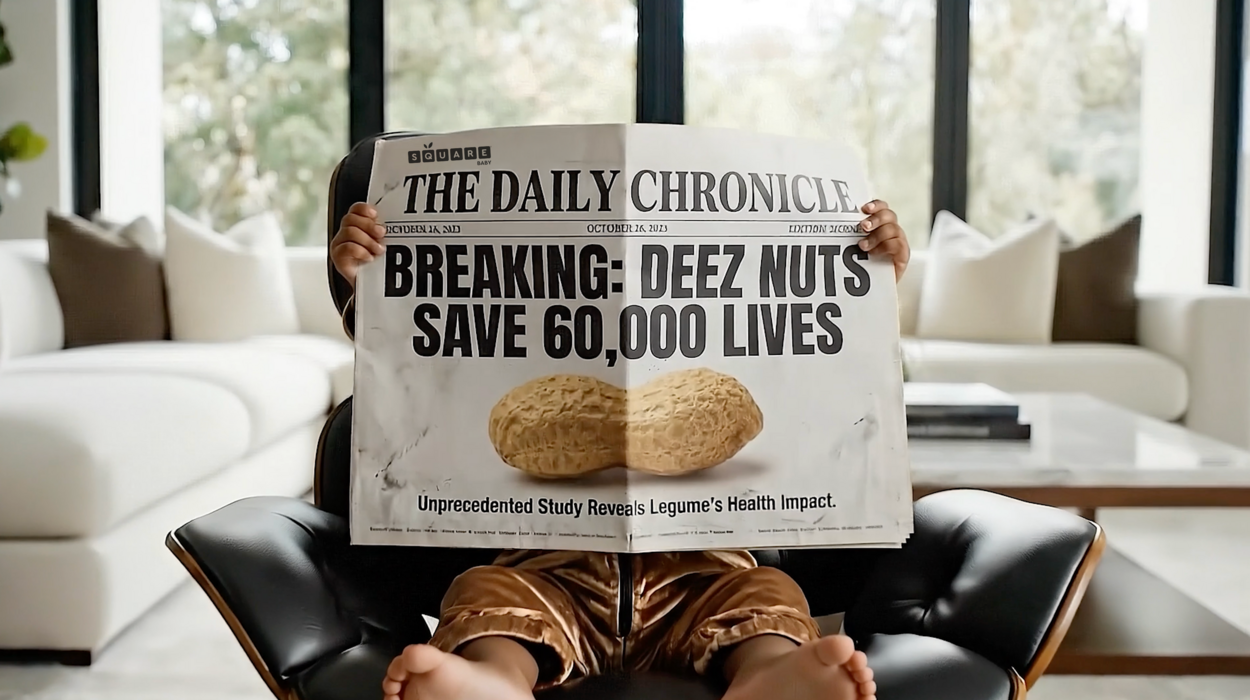
Today, Square Baby unveiled "Deez Nuts," a 2-minute rap video featuring babies, scientists, a ton of peanuts, and a massive marquee that spells “DEEZ NUTS.” The spot is intentionally playful on the surface, but behind the humor is a serious, science-backed message: early introduction of allergens, like peanuts, can help reduce the risk of food allergies.
The campaign aims to educate parents on new medical guidelines, based on landmark research like the LEAP Study, which found that introducing peanuts as early as four months can help reduce the risk of developing this lifelong allergy by over 80%. Since that shift in guidance, more than 60,000 babies' lives have been saved, according to a CBS News report.
Founded by a Registered Dietitian and a Certified Genetic Counselor, Square Baby says the goal wasn’t shock for shock’s sake, but attention in service of education.
“Early allergen exposure is one of those topics that’s critically important, yet most brands still avoid it,” says Katie Thomson MS, RD, Cofounder and CEO of Square Baby. "We knew the campaign name would raise eyebrows, but we needed a name and a song so catchy that parents couldn't ignore the message. And if ruffling a few feathers is what it takes to protect the next generation of kids, we’re willing to go there."
The ad reflects Square Baby’s broader mission to challenge norms in the baby food aisle, where many products rely heavily on sweet flavors and avoid allergens entirely. By contrast, Square Baby emphasizes science-backed nutrition, veggie-forward, balanced meals, and prides themselves on transparency.
This ad may be new, but Square Baby has been a pioneer in Early Allergen Introduction since they launched in 2018.
“Parents are constantly bombarded with advice that feels overwhelming or contradictory,” says Kendall Glynn MS, CGC, Cofounder and COO. “We believe nutrition information should feel empowering, not intimidating. And humor can be a powerful way to open that door.”
The campaign will air during halftime of the Super Bowl in select local markets, alongside a broader national rollout across digital, social and educational platforms to help parents better understand early allergen introduction and infant nutrition.
About Square Baby:
Square Baby is a science-led baby food company on a mission to improve infant nutrition and help prevent food allergies. Founded by a registered dietitian and a certified genetic counselor, Square Baby offers the only customizable meal system that delivers 100% of a baby’s daily recommended servings of vegetables, fruit, whole grains, healthy fats, and protein.
By being on the forefront of nutrition science and embracing allergen introduction, Square Baby has created truly balanced meals that contain twice the protein and half the sugar of most pouches. They’re also the only baby food offering 8 top allergens, including peanuts, in an effort to help end food allergies. Meals are made fresh with organic ingredients and zero added sugar, preservatives, or additives – ever. Square Baby ships frozen meals nationwide in sustainable packaging and is also available on Amazon.
Media Contact: Katie Thomson MS, RD | Cofounder & CEO
LEARN MORE:
Early Peanut Introduction Can Reduce Food Allergy Risk by Over 80%
The campaign aims to educate parents on new medical guidelines, based on landmark research like the LEAP Study, which found that introducing peanuts as early as four months can help reduce the risk of developing this lifelong allergy by over 80%. Since that shift in guidance, more than 60,000 babies' lives have been saved, according to a CBS News report.
The headline is worth repeating: 60,000 babies saved.
60,000 futures without fear.
No hives.
No panic.
No EpiPens in every backpack.
All because parents said "YES" to science. "YES" to introducing allergens early.
What we’ve always known, has been proven again. Introducing allergens, like peanuts, early and often saves lives.
Challenging the Status Quo in Baby Food and Infant Nutrition
“Deez Nuts” reflects Square Baby’s broader mission to challenge outdated norms in the baby food aisle -- where many products rely heavily on sweet flavors and avoid allergens entirely.
Square Baby takes a different approach, focusing on:
Science-backed infant nutrition
Veggie-forward, balanced meals
Early allergen introduction
Radical transparency for parents
This ad may be new, but Square Baby has been a pioneer in Early Allergen Introduction since they launched in 2018.
The "Deez Nuts" campaign will air during halftime of the Super Bowl in select local markets, alongside a broader national rollout across digital, social and educational platforms to help parents better understand early allergen introduction and infant nutrition.
Square Baby will continue to raise awareness of important issues that impact the immediate and future health of our next generation, including early allergen introduction.
As healthcare professionals and moms, our founders are passionate about raising the bar and raising their voices for food allergy prevention and many other science-based problems in the baby food aisle -- ie lack of veggies / protein / healthy fats, prevalence of high fruit sugar / sweetness, overuse of pouches for infant feeding and motor development, heavy metals testing and transparency, truth in marketing, etc.
FAQs on Early Allergen Introduction in Babies
Does early peanut introduction prevent peanut allergies?
Yes! Not only has this been proven in clinical trials like the LEAP, PETIT, and EAT Studies, but we now have evidence of the impact of early allergen introduction over the last decade.
An October 2025 study showed decreased rates of peanut allergy and other food allergies since the new recommendations were published in 2015 following the LEAP study. These new guidelines transformed how doctors approached early feeding recommendations and shifted from allergen avoidance to early allergen introduction.
What is Square Baby's Allergen Introduction Menu?
Almond Butter & Banana (almonds, wheat)
Beet Berry (yogurt/mik)
Blueberry Crush (yogurt/milk) -- coming back soon
Hazelnut Pumpkin Pie (hazelnuts, egg, soy)
Lil Cashew Chicken (cashews)
Mango Chia Pudding (yogurt/milk)
Salmon Mash (salmon/fish) -- coming back soon
Peanut Powder (peanuts)
What are the risk factors for developing food allergies?
Every baby is unique, but here are some common risk factors for food allergies:
Family History: If you or close family members have allergies, eczema, or asthma, your baby may have a higher risk.
Eczema: Babies with eczema are more likely to develop food allergies. Managing their skin health is crucial.
Environmental Factors: Smoke, pollution, and household chemicals can weaken the immune system.
Vitamin D Deficiency: Low vitamin D levels during pregnancy and infancy may increase the likelihood of allergies.
Antibiotic Use: Overusing antibiotics can disrupt gut bacteria, which impacts immune system development.
When can babies eat allergens like peanuts?
To help prevent food allergies, the American Academy of Pediatrics generally recommends offering a wide variety of foods including potentially allergenic foods as early as 4-6 months.
For an in-depth guide, check out our blog on Introducing Allergens Safely to Your Baby.
Should my baby avoid allergens?
According to the NIH, " ...only a very small subset of infants will require in-office testing and medically supervised peanut introduction and, as such, the vast majority of infants can have peanut introduced safely at home. Misunderstanding or misinformation among both parents and clinicians could result in many infants being misclassified as being at high-risk, leading to unnecessary screening and specialist referrals and, ultimately, delayed food introduction. Delaying the introduction of peanut and other solid foods due to misclassification will result in a missed opportunity for food allergy prevention."
Consult your pediatrician and/or allergist before introducing solids, including allergens – especially if your baby has severe eczema or known food allergies as additional allergy testing is recommended before introducing other allergens. No testing is needed if your baby has mild to moderate eczema.
How do I introduce allergens safely to my baby?
Introducing allergens can be daunting, but we are here to make the introduction of allergens seamless (and less stressful!). Here are a few helpful tips to make the introduction easier:
Consult with your pediatrician or allergist about introducing allergens.
Introduce allergens early & often. New research shows introducing allergens EARLY (between 4-6 months) and often (several exposures of each allergen per week) may help prevent food allergies.
Serve first at home or at a Pediatrician's office. Baby’s first known allergenic food should be given at home or in a doctor’s office.
Try spoon feeding purees with the allergen. Finger foods are great for motor development skills, but can often end up on the floor or in their hair! With allergen introduction, it’s important that your baby actually consumes the food (allergen) to get the dosage needed for exposure. In our experience, spoon-feeding may be easier.
Dosage matters.
Some dosages have been determined by landmark studies.
For example: 2g peanut protein, 3 times per week is recommended by the LEAP study to help prevent peanut allergies by up to 80%.
Increase serving size gradually. Start with small portions. If no major concerns arise from the introduction of the allergenic food, research suggests gradually increasing the amount over a few days.
What are the signs and symptoms of food allergies in babies?
It’s important to watch for signs of food allergies as you introduce new foods:
Skin reactions: Hives, redness, or swelling.
Digestive issues: Vomiting, diarrhea, or stomach pain.
Respiratory problems: Wheezing, coughing, or difficulty breathing.
Severe reactions and anaphylaxis: Difficulty breathing, throat swelling, or a sudden drop in blood pressure.
If your baby shows any of these signs, stop feeding the food and consult your pediatrician immediately. If they exhibit severe reactions like anaphylaxis -- call 911.
For More Information:
Learn More
Stay Informed, Stay Competitive
Unlock the articles, expert interviews, and data reports that power the food and beverage industry. Join our community and stay ahead with exclusive insights from BevNET and Nosh.
Explore the Nombase CPG Database
Head to Nombase to learn more about the tagged companies and their offerings.