Spring & Mulberry Refines Omnichannel Approach Amid Cocoa Headwinds

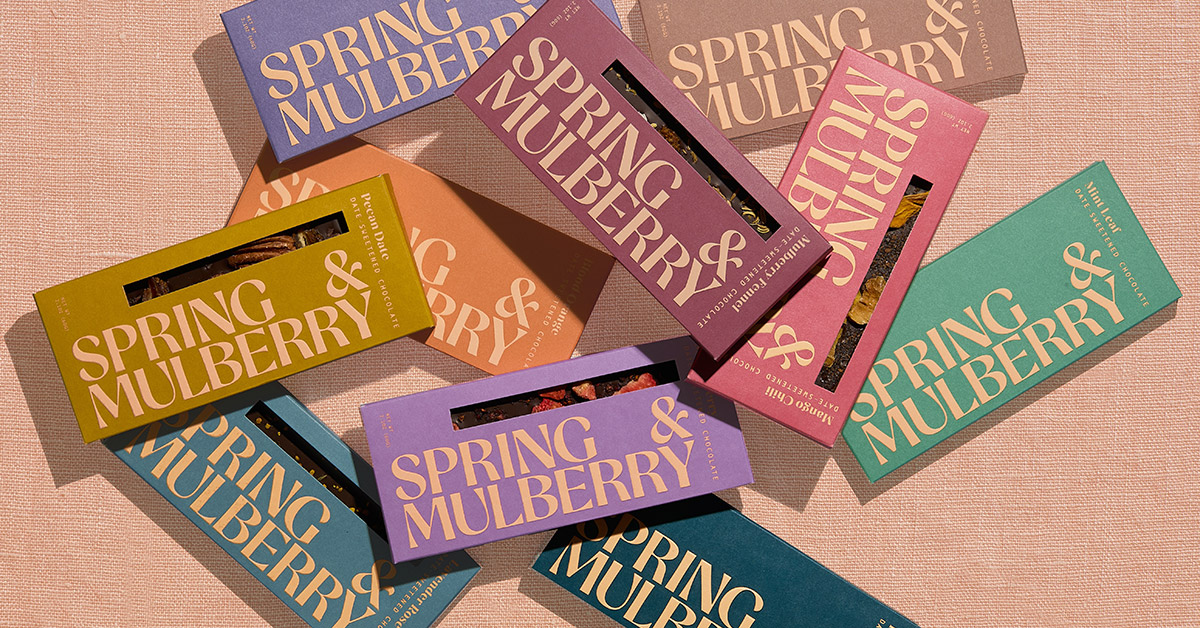
Cocoa prices and global tariffs might be weighing heavily on many chocolate makers, but one brand is finding new ways to reach consumers with its date-sweetened treats.
Navigating a dynamic supply chain environment has been a key learning for Raleigh, N.C.-based Spring & Mulberry, founded during pandemic uncertainty in 2022. The brand has become known for its date-sweetened chocolate bars topped with dried fruit, nuts and botanicals.
Last year, the brand built momentum in retail and has used it to fully embrace an omnichannel distribution model. Spring & Mulberry is leveraging the opportunity for brand discovery that department stores, home decor and wine retailers offer and use it to go deeper with grocery partners.
“Spring & Mulberry has always straddled the line between mass and luxury, self-consumption and gifting,” co-founder and CEO Kathryn Shah told Nosh recently. “We cold-called our way to the first 400 accounts.”
Shah, formerly a brand manager at LVMH’s Veuve Clicquot, and co-founder Sarah Bell, previously Harry’s director of Global R&D, have used their respective experiences in luxury goods and lifestyle brands to build a unique model for distribution.
Last month, Spring & Mulberry launched into Nordstrom stores and is preparing to enter Total Wine & More in May as well as airport book and stationery chain WHSmith later this year. The strategy is to target “places where most grocery store brands can’t operate” and “create this mystique around being in multiple places at once,” Shah said.
This approach has been fueled by early learnings in Spring & Mulberry’s evolution. The brand got its retail start in Foxtrot, where it was advised by buyers at the next-gen convenience chain to “right-size and right-price” down from a $15 chocolate bar to under $10, Shah said. The smaller size “unlocked” partnerships with natural channel retailers like Erewhon and Whole Foods – where it is in 150 stores over three regions as of September.
At that time, Spring & Mulberry released a secondary line infused with essential oils aimed at meeting pent-up demand for a lower-priced, premium chocolate bar.
“A lot of grocery stores, especially ones that don’t have a premium section, like Whole Foods, or the ‘granola-crunchy’ [natural grocery] businesses, actually need a chocolate bar that’s closer to $6.99,” she said. “We’re mixing the two [chocolate bar lines] with retailers, giving people an entry price point to date-sweetened chocolate and giving them a giftable, high-end option.”
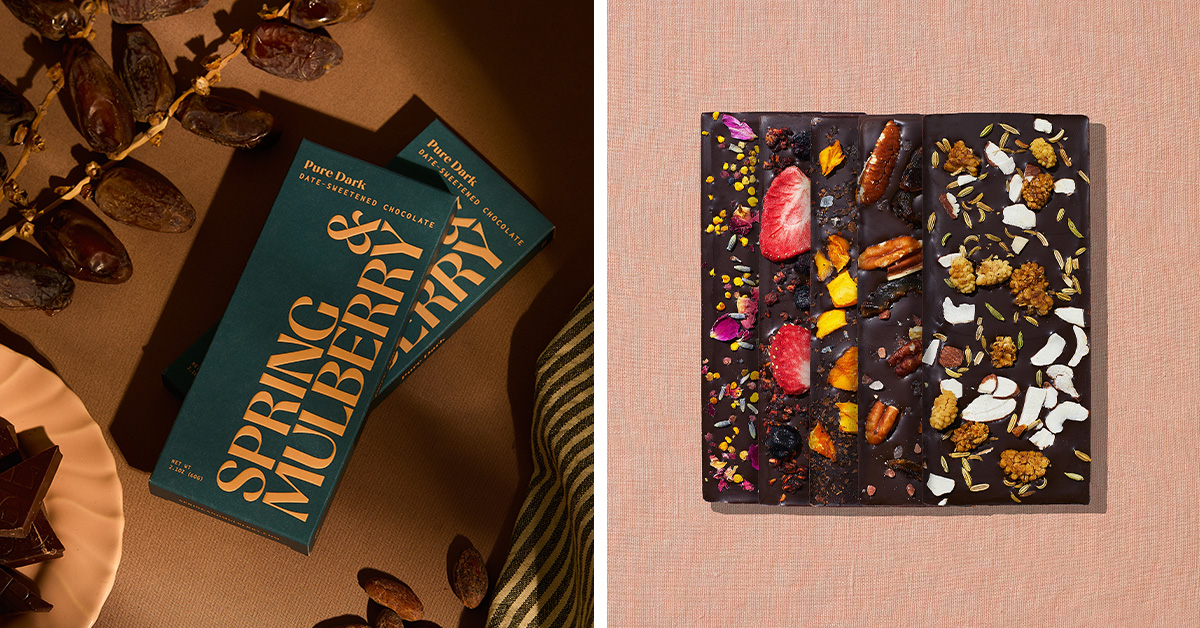
Uncertainty still looms over Spring & Mulberry with inflation and cocoa price volatility putting a strain on category brands last year and tariffs threatening supply chains this year. For Shah, challenges are just opportunities in disguise.
As inflation has increased the price for staple products like eggs or bread, specialty items are less impacted and even can be seen as a “little luxury,” Shah said.
“It’s the lipstick effect. If you can’t afford a high-end handbag from Chanel because of a recession, you might buy Chanel lipstick,” she said. “I think the same is true with premium or specialty grocery products. If you can’t go out to eat as much, you might end up buying the chocolate bar to make something special at home.”
Looking at the cocoa supply chain, Spring & Mulberry is not only having to navigate higher prices for a key raw product but the availability of the commodity as demand has grown. The brand has diversified its ingredient supplier network to hedge against that hurdle.
In terms of cocoa pricing, Spring & Mulberry is small enough that a rise in commodity costs can be offset by increasing efficiencies in other parts of the company’s manufacturing operations and distribution.
Spring & Mulberry’s strategy is to focus on the little things that create revenue, rather than getting preoccupied with macro issues that are out of control.
“We plan to be in this business for a long time, to build something big and sustainable,” Shah said. “Everything in the world goes up and down. There’s inflation and then it goes down. Cocoa prices spike and eventually, they will come down. These things normalize in time.”