More Than Apparel: Why Patagonia Provisions Is ‘Bullish’ On A Leaner, Consumer-Focused Portfolio

Patagonia Provisions has spent decades bringing its message of conservation and environmental protection to the food industry with limited success.
In 2022, the brand associated with outdoor apparel decided to pare down its packaged food offerings, paving the way for a leaner portfolio and a deeper understanding of what is bringing consumers to the brand. After a year of significant SKU rationalization, the company acquired climate-neutral cracker brand Moonshot Snacks in early 2023, eventually reworking Moonshot under the Patagonia branding.
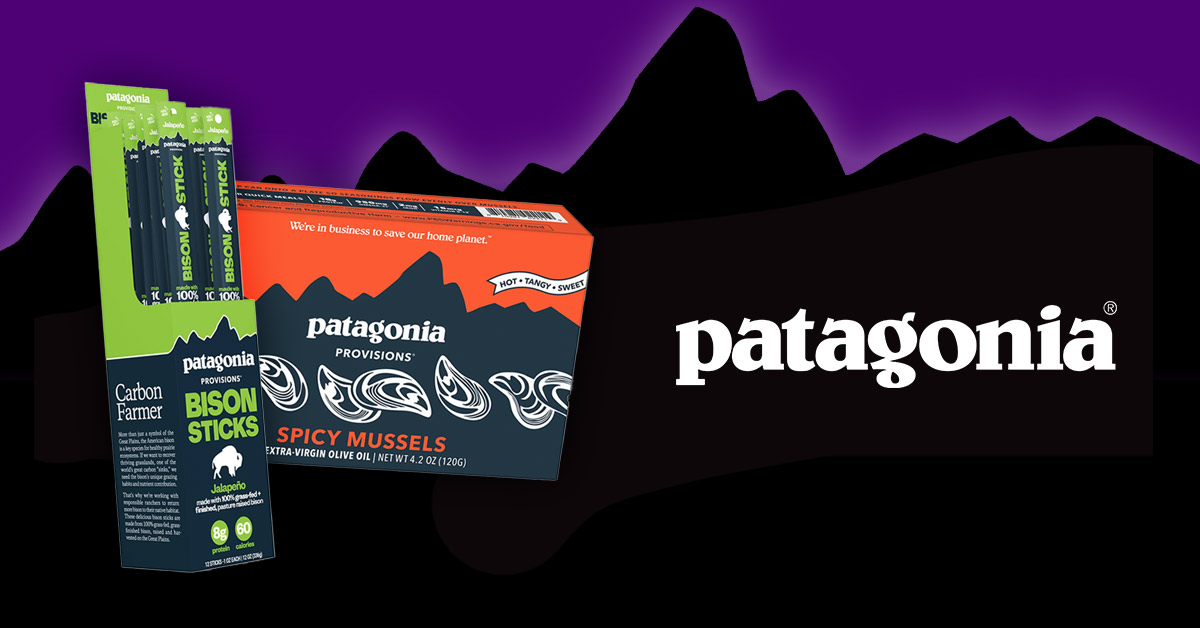
While Patagonia Provisions initially discontinued its bison meat sticks, the brand brought it back this year with 3 SKUs (Original, Jalapeño and Ranch). The snacks rejoin Patagonia’s extensive selection of over 15 tinned fish varieties, positioning the brand in two high-growth categories.
Along with its dried pasta, crackers and Kernza beer partnership with Deschutes Brewing, Patagonia is seeing the benefits of a focused approach to food and beverage. Patagonia Provisions Head of Brand and Innovation Jen Berliner spoke with Nosh about the company’s decision to maintain a diversified portfolio that hits multiple store sections, why it is betting on meat snacks and why tinned fish aligns with the brand’s purpose.
—
What is the strategy behind operating Patagonia Provisions in fairly disparate categories?
Our portfolio falls into two buckets. One is responsibly-sourced, super high-quality protein. The other is regenerative organic certified grain products. We’re quite focused on those product areas because that’s where we’ve found a magic combination of being able to meet the environmental sourcing standards that we require and impose on ourselves.
We’re quite bullish on all of these categories. It’s a bit early in this newer, more consumer-focused portfolio. Beer, particularly the non-alc beer, is doing really well, and there’s a huge amount of opportunity there. Our cracker business is growing about 200% year-over-year, and our velocities are up significantly, about 52%.
Each part of our portfolio has a lot of complementary elements. For example, our tinned fish and our crackers can be sampled together. One is the vehicle for the other, and we’re actually seeing consumers use them that way, too, which is nice.
Plus, they can wash it down with a beer.
Exactly.
What led Patagonia to discontinue so many products like the bison meat snacks?
The Provisions portfolio has had many iterations, and at one point, had many more products. Over the last couple of years, we have narrowed that significantly, crossing things off for various reasons, from product quality to market fit or not meeting sourcing standards. So we have landed at this place, where we have these four lines that check all those boxes.
When we did that four-piece portfolio analysis, the bison links didn’t make it through for a number of product quality and consumer fit reasons. They were in a larger bag with multiple servings. There were things about the consumer experience of the product that were also not aligned in addition to the challenges of unit economics.
Then why relaunch them?
We knew the bison links weren’t working, and we decided to discontinue them. But we still really loved the supplier. All of our bison meat comes from Wild Idea Buffalo. We always knew that if we could figure out a new format for bison that could still allow us to lift up the amazing things that Wild Idea of Buffalo is doing and hit our quality bar, we would do that. We were able to get to that with the stick format.
Will Patagonia Provisions go deeper in the pasture-raised meat category?
We’re really excited about the resounding response to the bison sticks from the Patagonia community, so you’ll definitely see more from us in this space. I think we’re unlikely to go into the fresh and frozen because that’s not the fit for our brand and our consumers, but I think definitely more to come from us in the meat snack space.
We’re very excited about the meat snacks category, just based on the initial reaction to the bison sticks and all the consumer work that we did before launching those; we feel like that has a lot of potential to become our biggest category.
There is a lot of opportunity in meat snacks, but for now, tinned seafood is Patagonia’s biggest category. Why has it been such a winner?
Patagonia Provisions has been in tinned fish for a while now, before it was a hot category. Tinned fish is one of those categories where you can taste good sourcing. I spend a lot of time on canned sardine subreddit pages and talking to tinned fish enthusiasts, and I think we purely win on quality and sourcing.
The reason we’re in tinned fish makes a lot of sense because Patagonia is a company with a 54-year legacy of caring about oceans and rivers. We’re a company and a community of anglers and surfers who care about the waterways. The health of those ecosystems and the fish within them are inherently tied to them.
Despite the moment premium tinned seafood is having, do you see a ceiling to how far Patagonia can go in this category?
There definitely is a ceiling on tinned fish in the U.S., but I don’t think we’re anywhere close to it right now. It’s still very niche, so there’s a lot of opportunity. Tinned fish still hasn’t really moved from a date night product to replacing the chicken breast or turkey slices that are usually on a salad and sandwich.
For us, it’s less about needing to do more and more species or more things in tins, although we’re certainly always looking. It’s about consumer education. There’s so much room to teach consumers that these are good for the planet and good for you as it relates to nutrition.
There’s going to be a lot to come from us soon, digging into the nutrition of our product, compared to others in the category, because when you source seafood in the right way, there are good nutritional outcomes, too.
Tagged Brands (1)
Explore the Nombase CPG Database
Head to Nombase to learn more about the tagged companies and their offerings.