Inside Karma Sauce’s Fiery Rise from Space Lab to Hot Ones Fame

There’s likely only one entrepreneur out there that can claim their work has aided both astronomical discoveries and celebrity tea spilling.
When Gene Olczak launched Karma Sauce back in 2010, it was just a side hustle to complement his full-time job: working at NASA to design the center of curvature optical test for the most powerful space telescope ever built. While taking part in a month-long neighborhood “locavore” challenge, Olczak was seeking spice and was inspired to make his own hot sauce from ingredients sourced within the challenge’s set radius of 50 miles from his home in the Finger Lakes region.
After realizing there was a lack of locally grown hot peppers in the area, Olczak turned to butternut squash as his base, infusing heat with what supply he could find to create the first versions of Karma Sauce.
But external interest in the uniquely spicy sauce ignited a passion for Olczak and opened the researcher up to a new world of experimentation. The locally sourced ingredient aspect also later set the framework for Karma Sauce’s brand ethos, and the Karma Sauce Farm where many of its peppers are grown, has proven to be the company’s own secret ingredient.
“The overwhelming majority of products that are on the market, even the small [batch] stuff, is co-manufactured,” Olczak said. “There’s a couple of big ones that do a lot of it, and they use things like xanthan gum and as a general trend, a lot of products rely on the imported industrial mash products that come in and tend to have 12% salt. They really limit you to a certain flavor profile that is not the same as working with peppers.”
Olczak’s commitment to clean label, small batch, locally sourced products has been Karma’s key to securing appearances on 5 seasons of the YouTube series “Hot Ones.” The relationship has also evolved over time with Karma serving as the manufacturer of Hot Ones’ private label line, Los Calientes, which has been featured on 23 seasons of the show. Olczak has also become an informal curator and creator for many of the sauces that have made celebrities, from Bad Bunny to Jason Bateman, sweat just a little bit.
“It’s tricky for them to find makers they can get on the show because they want the small, boutique stuff, that means they want a relatively small, startup operation” Olczak said. “But you need a fair amount of sauce to support one of their episodes while it’s running so that can be demanding, both from a materials and capital [standpoint] to put out tens of thousands of bottles at once if you haven’t been doing that before.”
Starting Small Himself
After the locavore challenge kicked off his interest for sauce making, Olczak invested in a scratched and dented kettle, purchased off eBay, and transformed part of his garage into a 300 sq. ft. commercial kitchen. Within a few years, the research he had been conducting on the telescope concluded and Olczak began considering a career switch.
“If you buy a pallet of sauce from somebody else making it for you, it’s pretty easy to walk away from, but when you’ve devoted a third of your garage to this commercial kitchen, and it’s always staring at you, you can’t just ignore it,” he said.
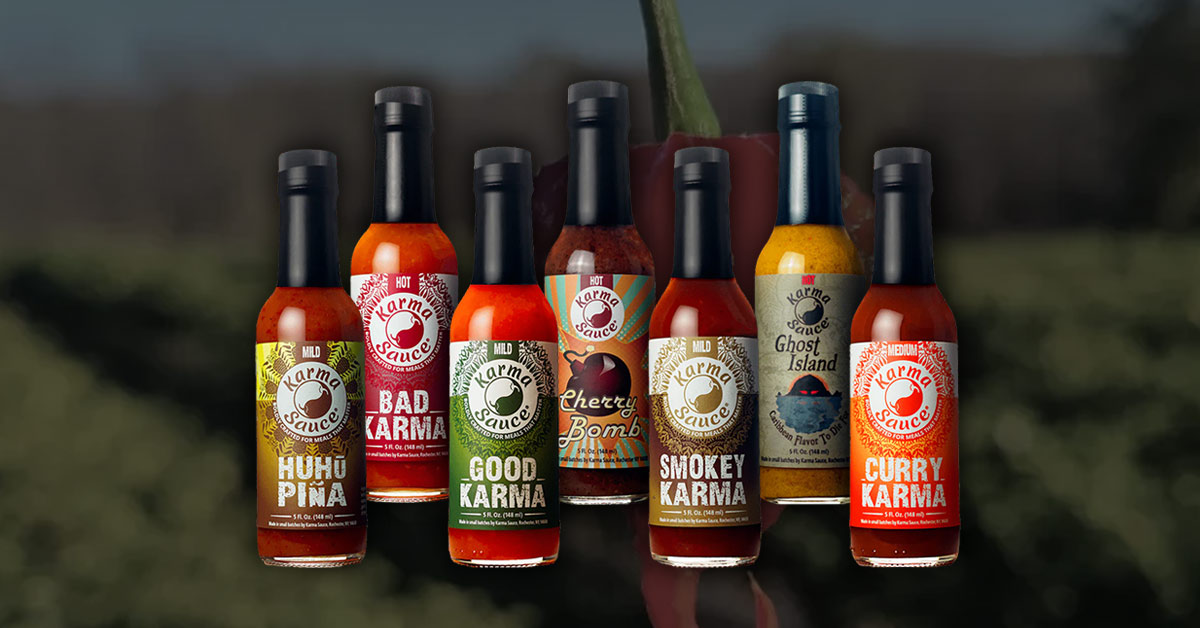
Olczak has since cooked up everything from fennel-strawberry salad-inspired sauces, to some of the spiciest condiments in the country, including Extreme Karma, which secured the brand its first spot on Hot Ones in 2018. The Karma Sauce brand alone currently features about 22 SKUs, including the recently launched Thai-inspired Lift Off, featured on this year’s season of Hot Ones.
“That’s why he has had a partnership with The Heatonist and Hot One for so long,” Vince Press, “Hot Takes” Lead at Karma Sauce. “They realize that [Gene]’s a mastermind at combining flavors…they’ll have us concoct some sauces for people that are on the show and that’s how the Los Calientes line started.”
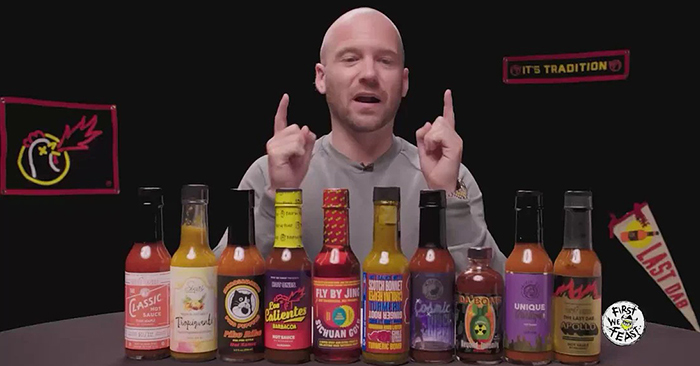
Around 2013, Noah Chaimberg, the founder of Brooklyn-based hot sauce shop The Heatonist and the official curator for Hot Ones, reached out wanting to carry Olczak’s creations. At the time, Chaimberg’s store was just a push cart he peddled around to various markets, but he had visions for a shot selling a curated collection of locally-produced, clean label and all natural sauces – a philosophy he’s still committed to over a decade later and one that remains the barrier to entry for any product seeking placement on Hot Ones.
With regular features on the show, and sales within Chaimberg’s growing shop, Karma’s operations began to expand, though Olczak said he likely could not put a number on the impact it has had since the two businesses have been closely intertwined for nearly a decade.
“Certainly being part of that show… does provide some cache that [Hot Ones] have had enough faith in Gene and Karma Sauce to continue to have them back, continue to have them make their sauce,” said Press. “It’s something that we use if we’re trying to market our sauces to particular wholesalers or retailers – it has weight.”
About six years ago, Karma’s operations moved out of Olczak’s garage and into a larger commercial kitchen facility and now has the capacity to produce up to 12,000 bottles of sauce per day. All of the brand’s products are still made with fresh ingredients and contain only about 2% salt.
“We’re using a 10 horsepower mill right now and [making] a full 250 gallons at a time, which is still tiny compared to Nestle, or someone like that. It’s still kind of the craft beer story where they probably spill more sauce on the floor than we make in a day,” Olczak said.
Beyond Sean Evans
While Karma has secured placement at chain retailers like Wegmans and Price Chopper, those accounts represent only about 15% of the business. The brand generates about a quarter of its revenue from direct to consumer sales, but its “sweet spot” is in boutique, gourmet and specialty grocers – the “mom and pop type shops,” Press said, noting these retailers account for roughly 60% of the business.
“With these more craft sauces it makes more sense that the core consumer would not necessarily be going to the large chain grocery store in search of those more unique products,” Olczak said.
But the company is continuing to pursue those accounts, alongside building out a slate of private label customers. Currently, Olczak’s hot sauce operation produces for between 15 to 20 private and white label customers, including Heatonist and Hot Ones, as well as others like UAE-based Mr. Moustache and brands like Djablo and Chef Digby Stridiron.