Can Fonio Be The Next ‘Miracle Grain’? Yes, If There’s Enough

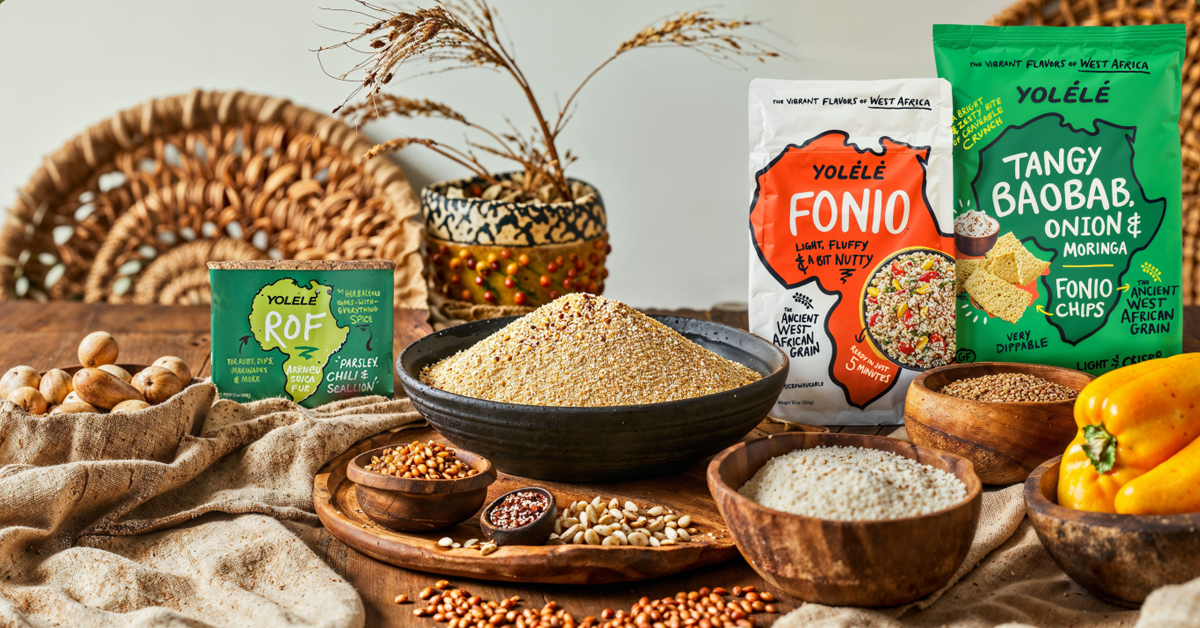
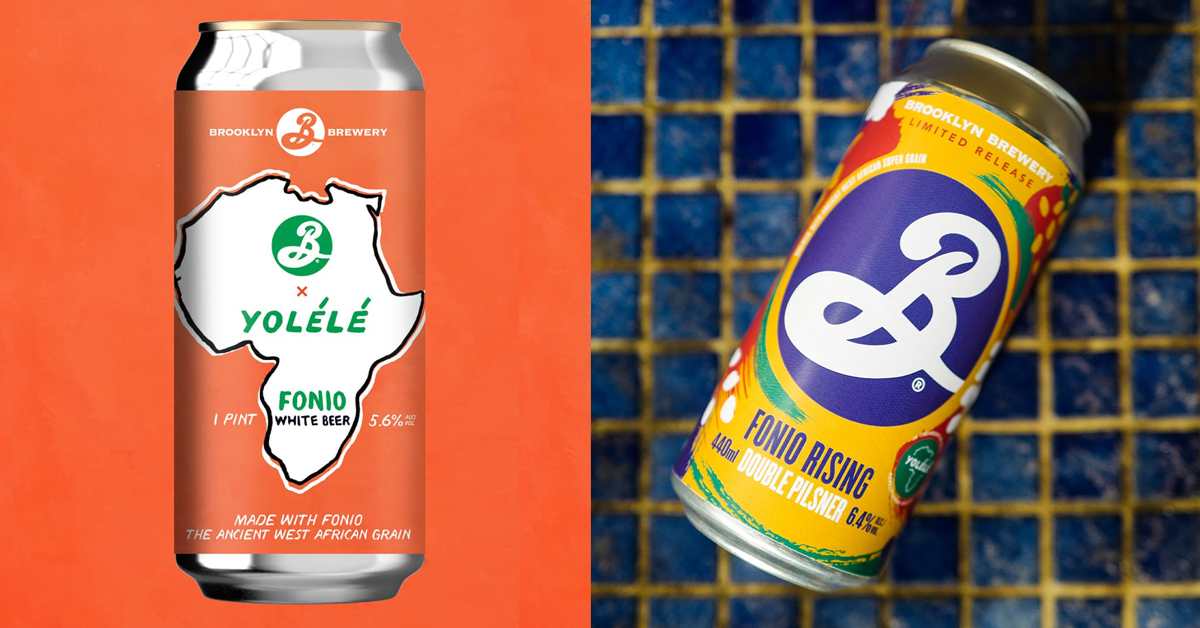
It started with a simple bag of grain. Later that grain was processed into chips. But the fun really ramped up when Yolélé turned fonio, the niche West African “miracle grain” the brand has made its hero ingredient, into a limited-edition beer.
Philip Teverow, Yolélé’s CEO and co-founder alongside chef Pierre Thiam, believes that the current interest in fonio from large food and beverage companies can help it carve out a prosperous future in the U.S. food system.
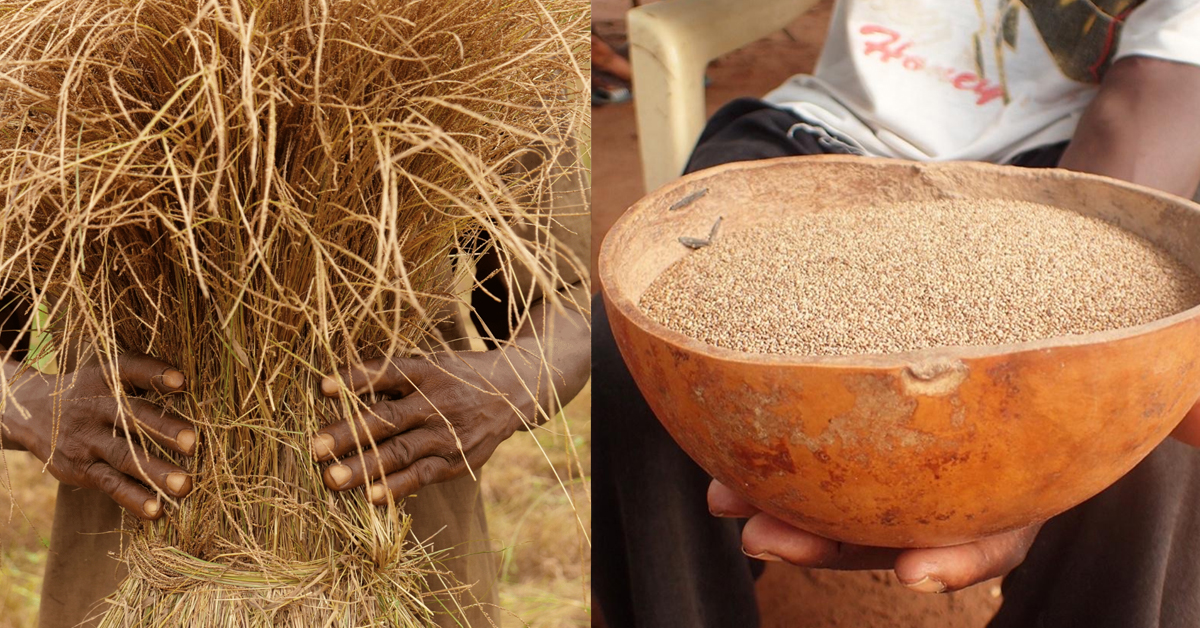
Fonio, with its drought-tolerant, regenerative properties, is the oldest cultivated grain in Africa. The tiny, nutrient-dense crop is renowned for its consistent yields year-to-year in arid regions where water is scarce and farming can be risky. One-quarter cup serving of fonio contains 3 grams of protein, 160 calories, 1 gram of dietary fiber and about 37 grams of carbohydrates as well as 1.7 mg (or 10% Daily Value) of iron.
Teverow and Thiam have spent the past eight years building a market for fonio under CPG brand Yolélé while serving as a processor and importer on the side. The CPG arm currently sells a variety of bagged and seasoned dry fonio, fonio-based chips and spice rubs, but those items are just a small kernel of the duo’s larger aims to commercialize this input.
“We are a niche African food brand as a CPG company, but we’re pretty good at creating awareness and generating buzz,” Teverow said. “We don’t have the capacity to generate the kind of volume that creates impact so if we can work with larger companies with bigger distribution footprints – that’s what’s going to make the impact. That’s what’s going to drive the volume from the facility that we build, which is the core of the business.”
But Teverow, who helped introduce quinoa to the U.S. beginning in the late 1980’s during his time as director of Dean & DeLuca and Thiam, a leading proponent of the world of African food, are now caught in a chicken-and-egg situation. The company needs cash to build its processing facility and increase fonio production, but it also needs more capacity to show there’s a viable U.S. market for the grain.
The Beer Funnel
That’s where beer came in. In 2022, the brand introduced a limited-run of a fonio-based White Beer made in collaboration with Brooklyn Brewery brewmaster Garrett Oliver. That collaboration has now grown to a second offering, a Double Pilsner known as Fonio Rising, that is sold at Whole Foods stores nationwide.
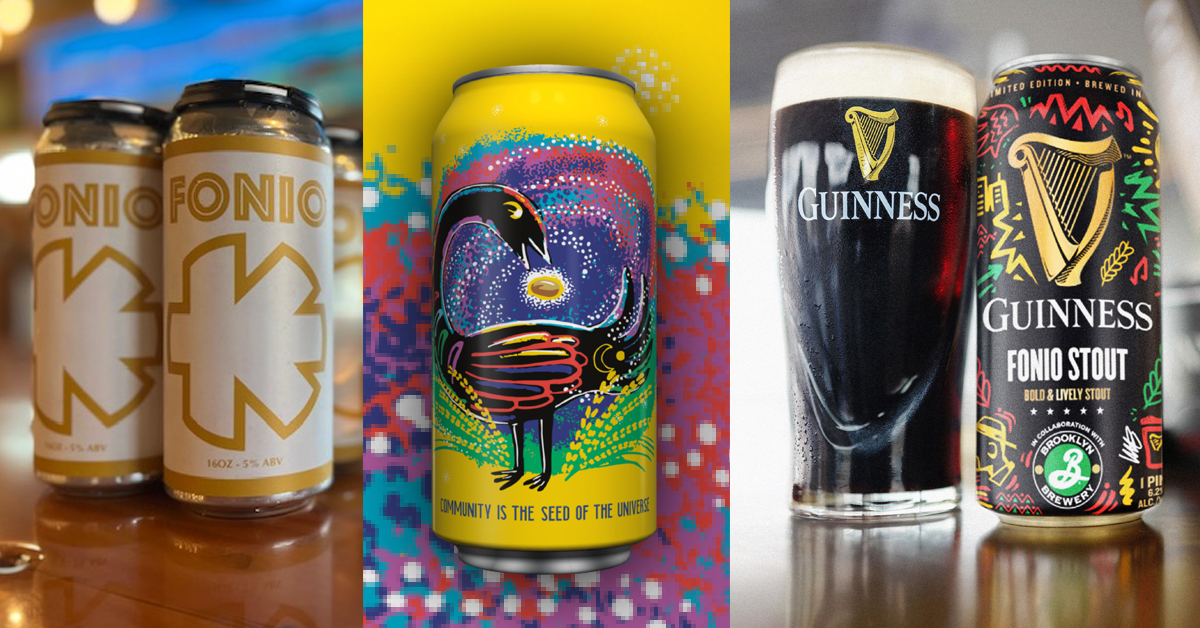
Oliver has spearheaded fonio adoption beyond his own brewery through his “grant-making organization” The Michael James Jackson Foundation, producing a fonio Lager with Our Culture Brewing and Creature Comforts Brewing as well as a limited-edition Fonio Stout with Guinness, which rolled out in November.
“Some large companies like Guinness, Carlsberg and now Kirin… are brewing with fonio and the reason why is it’s been easy for them. That is the nature of brewing: You take grain, put it in a big vessel, add water, let it ferment, and then strain out the liquid. The liquid is then beer,” said Teverow. “It doesn’t really matter what grain you put in there. In fact, in West Africa, traditionally, beer has been made with millet, and so it’s kind of a traditional version of beer.”
Utah-based Kiitos Brewery has also introduced what it claims to be the first 100% Fonio beer available in the U.S. in January. The beer experiments got Teverow thinking about what other food and beverage segments share those same traits where the specific grain input is flexible. Those are the categories Teverow is now targeting as he works to grow the applicability of fonio across the grocery store.
Creating Use Occasions
The company was recently selected to produce a fonio-based plant-based milk at pilot scale with a large, sustainability-focused packaging manufacturer. Teverow is also in talks with numerous “large food manufacturers” who want to use extruded fonio crisps – similar to rice krispies – as a crunchy mix-in for bars and chocolate.
“Smaller craft chocolate companies are always doing limited time offerings so we thought there’s something there. And in fact, there is,” Teverow said. “Chocolate manufacturers have said, ‘Oh hell yeah, I’ll do that.’ Chocolate also comes from West Africa so thematically, it’s a great fit… [Producers] also don’t have to think about a formulation too hard, you just replace that with this, and it’s done.”
With momentum growing behind the grain through the ingredient supply arm, increasing processing capacity is next on Yolélé’s to-do list. Currently, the company is one of the only fonio suppliers to the U.S. and sources from a network of smallholder farms across West Africa where it can procure and process around 1,000 tons of raw fonio paddy per year.
Once the company completes the build out of its processing plant, complete with a novel machine to de-hull the microscopic bran from its husk, it expects to have an output of over 12,000 tons per year. While Teverow said its current capacity is enough to sustain the CPG business and its ingredient supply arm for now, the timeline for the plant’s build out is in flux as is the access to the cash it needs to break ground.
‘An Emblematic Initiative For Economic Development’
The team is currently waiting on investment from the International Finance Corporation (IFC), a division of the World Bank that lends to the private sector to support livelihoods, health and economy of developing regions outside of the U.S. But that funding is now imperiled as the Trump administration retreats from foreign aid.
“If the U.S. withdraws its funding – which is possible, who knows, right? – then that will severely impact IFC’s ability to operate and invest in anything,” Teverow said. “There are people in senior levels of authority at the World Bank and IFC who probably have bought more of [Thiam’s] cookbook than anyone else in the world. They’re big fans and they love fonio. A lot of the people in the organization come from fonio country, and they want to see it emerge as an emblematic initiative for economic development in West Africa.”
There is some upside: Teverow said its equipment manufacturer in Europe recently generated some positive results in developing a new processing mechanism for the tiny, couscous-like grain. The next step is for Yolélé to ship nearly three tons of raw, fonio paddies to the manufacturer’s pilot facility to test the solution on a large scale. The goal of that test is to generate enough information to engineer and quote out the equipment needed for the plant.
Although it took ancient grains like quinoa decades to break into the American diet, Teverow believes the momentum behind fonio is already accelerating; in 2023, the United Nations’ proclaimed it was the Year of the Millets, specifically highlighting fonio and its nutrition and food security attributes. The growth of Yolélé’s own brand provides additional evidence, with volumes steadily increasing and adoption of fonio products spreading across channels including food service and airports, Teverow explained.
The CPG business has aimed for “discovery” placements like next to the deli counter rather than the Salty Snack aisle and is leaning hard into small format chip bags within food service accounts, securing steady repeat orders, Teverow said. That growth has allowed it to ramp up production from one three day run per quarter to a run every two months.
“The emphasis for us is finding other companies to use fonio in their products, under their brand,” Teverow said. “Sure, collaborations are great. We always like that. But most importantly, if other companies use fonio – that’s volume – but it’s also recognition and awareness, and if ‘featuring fonio’ is highlighted [on-pack], then it increases awareness and creates that snowball effect. The more companies using it [equals] the more companies that will use it.”
Explore the Nombase CPG Database
Head to Nombase to learn more about the tagged companies and their offerings.