A Bite With… Julia Ocampo, Luker Chocolate’s COP16 Delegate

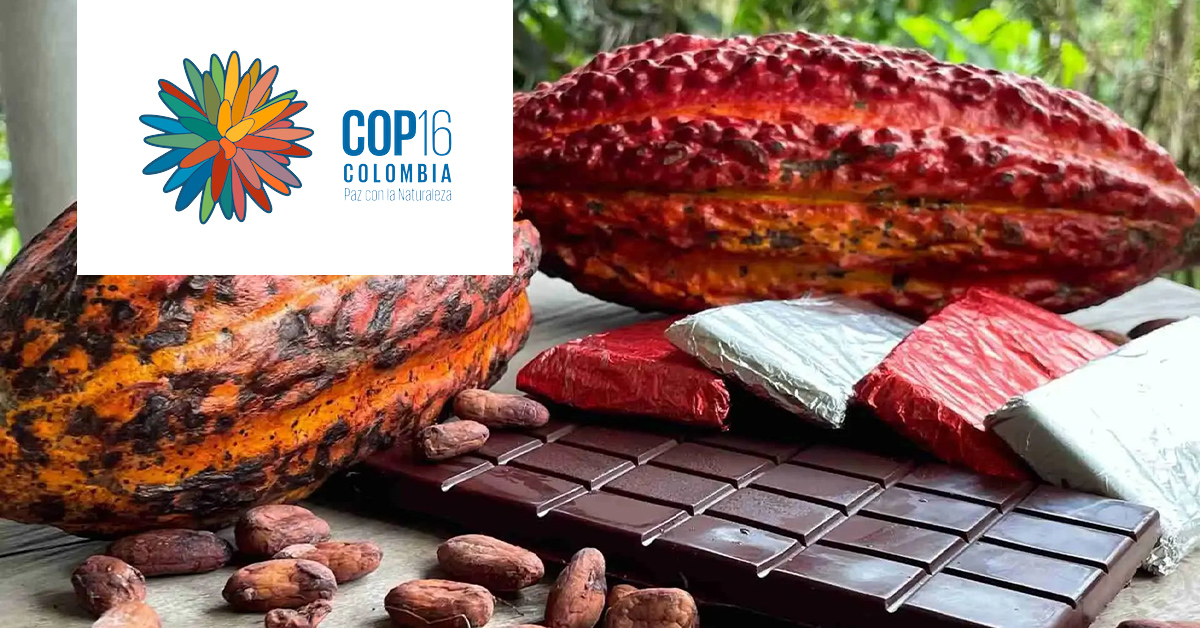
Over the past two weeks world leaders from over 180 countries gathered for the United Nations’ 16th annual Conference of Parties to the Convention on Biological Diversity (COP16) in Cali, Colombia. The conference concluded with agreements to give indigenous groups a voice in conservation efforts and support for requiring major corporations to share the financial benefits of research regarding natural genetic resources.
But the COP also left plenty of unresolved issues on the table, including important details on how participating countries would achieve biodiversity goals. We caught up with Julia Ocampo, Luker Chocolate’s VP Cacao Sourcing and Sustainability, who was invited to participate and spent the past week on the ground at COP16 sharing how supporting biodiversity strengthens a company’s supply chain, enhances resource resilience and reduces vulnerability to environmental disruptions.
“For Luker, biodiversity contributes to stable cocoa yields, higher quality, and healthier surrounding ecosystems, all of which are essential for long-term business sustainability,” she said. “Biodiversity also appeals to consumers who value eco-friendly products, building brand loyalty and ethical growth.”
During the event she shared how the Colombia-based sustainable chocolate processor has worked to integrate biodiversity into supply chains and built resilient agricultural systems that benefit both the ecosystems and cocoa-producing communities. This interview has been lightly edited for clarity.
Given the current climate-related challenges impacting the cocoa supply chain, what was Luker’s primary message at COP16?
Luker’s main message at COP16 was the urgent need to prioritize biodiversity as a vital measure of climate change impacts. With rising temperatures and unpredictable weather affecting cocoa yields, Luker advocated for resilient, biodiversity-centered farming models that stabilize ecosystems and support sustainable cocoa production. By investing in biodiversity, cocoa farms become better equipped to withstand climate extremes, ensuring supply chain stability and the long-term availability of quality cocoa.
What does Luker’s invitation to COP16 signify regarding global climate initiatives, and will it help drive meaningful action?
Luker’s invitation to COP16 reflects a growing recognition of agriculture and biodiversity’s role in addressing climate change. It reinforces Luker’s commitment to environmental stewardship and underscores the significance of sustainable business practices on a global stage. While COP16 is a critical platform for dialogue, Luker believes that genuine progress requires ongoing industry collaboration, policy support, and practical on-the-ground actions.
How is Luker working to conserve biodiversity among its partner farms?
Luker’s biodiversity conservation approach is built on a sustainable landscape model, recognizing the synergies between people and nature in areas where cocoa is cultivated. This involves working closely with cocoa families, communities, and local institutions to protect ecosystems.
At COP16, Luker highlighted the positive impacts of agroforestry and regenerative farming through The Chocolate Dream, a social innovation initiative that seeks to transform the chocolate value chain from its origin. Results include the propagation of native trees alongside cocoa, habitat restoration, soil health regeneration, and the preservation of ecosystems around partner farms. Training farmers and their families, including youth, in biodiversity and water resources is a cornerstone of Luker’s sustainability strategy. Luker’s Cacao, Forests, and Peace initiative showcased at COP16 illustrates how agroforestry systems can simultaneously preserve biodiversity and support productive cocoa farming, fostering a resilient ecosystem that benefits both the environment and farmers’ food security.
What sets Luker’s approach apart from typical cocoa growing and sourcing operations?
Luker Chocolate adopts an “anchor model” approach, meaning it operates farms in various cocoa regions, experiencing the same challenges and opportunities as small farmers. This model distinguishes Luker by focusing on sustainable, locally-driven development that enhances community well-being. Beyond cocoa farmers, Luker works with families and communities, providing training in regenerative agriculture to promote sustainable practices like crop diversification and natural pest control. This partnership model supports the sourcing of high-quality Cacao Fino de Aroma while strengthening economic resilience and ecological balance within farming communities.
With cocoa prices elevated, how does Luker view the industry’s role in making chocolate more accessible?
By investing in biodiverse farming systems, the industry can minimize crop losses, enhance yields, and support farmers’ income – ultimately benefiting consumers with more stable prices. Luker also advocates for industry-led efforts to promote diverse farms and utilize byproducts. Agroforestry and regenerative systems produce multiple products on the same land, protecting biodiversity while increasing farmers’ income. Luker has implemented innovative initiatives to use byproducts, creating flours, nougats, juices, and syrups from materials previously considered waste, providing farmers with new revenue streams.
What role does Luker believe the CPG industry plays in supporting sustainable cocoa?
Luker sees the CPG industry as a vital partner in promoting sustainable cocoa by investing in biodiversity-friendly supply chains and supporting fair-trade principles. CPG companies can amplify sustainability by promoting transparency, choosing suppliers [that] prioritize ecosystem health, and investing in farmer education. Luker encourages the industry to also educate consumers on biodiversity’s importance, urging support for brands committed to sustainability.
Are there biodiversity lessons Luker can share that apply to crops beyond chocolate?
Yes, Luker’s agroforestry approach, which integrates diverse plant species, can benefit various agricultural systems. This method supports soil health, enhances water retention, and provides natural pest control — principles applicable across multiple crops. By fostering biodiversity, other sectors can achieve greater climate resilience and sustainable yields. At COP16, Luker emphasized the importance of involving cocoa families and communities, particularly youth, in ecosystem protection through agroforestry, regenerative practices, biodiversity monitoring, and income diversification.