CPG Week: The Case Against David. Plus, Is Vegan Cheese In Crisis?
Episode 126
In this episode:

In this episode:
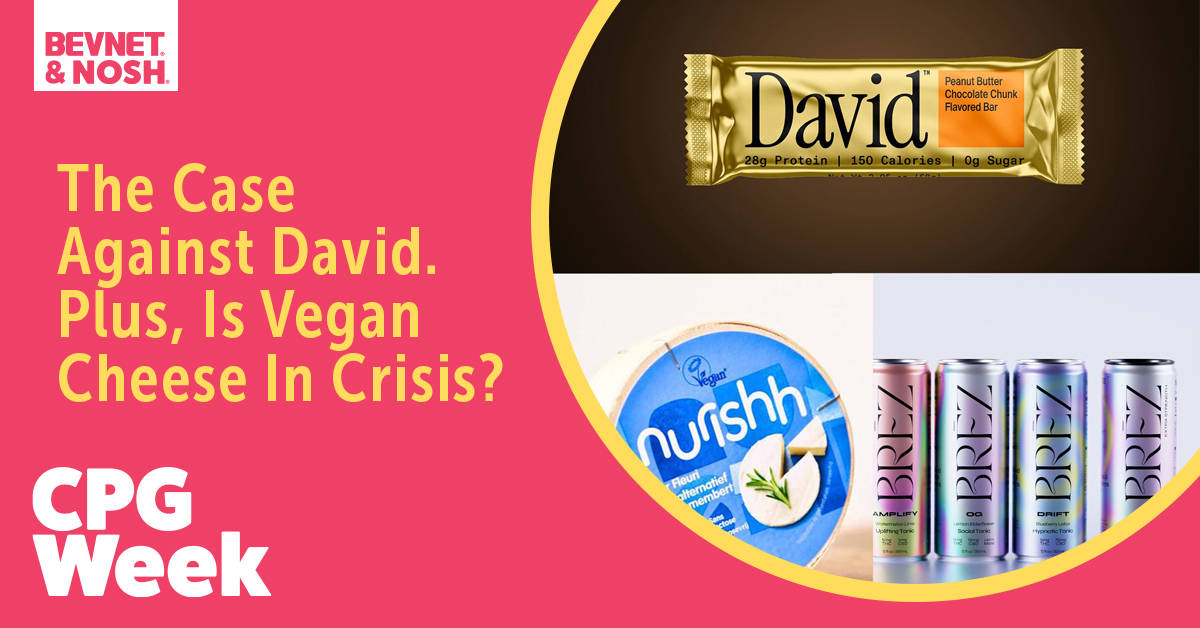
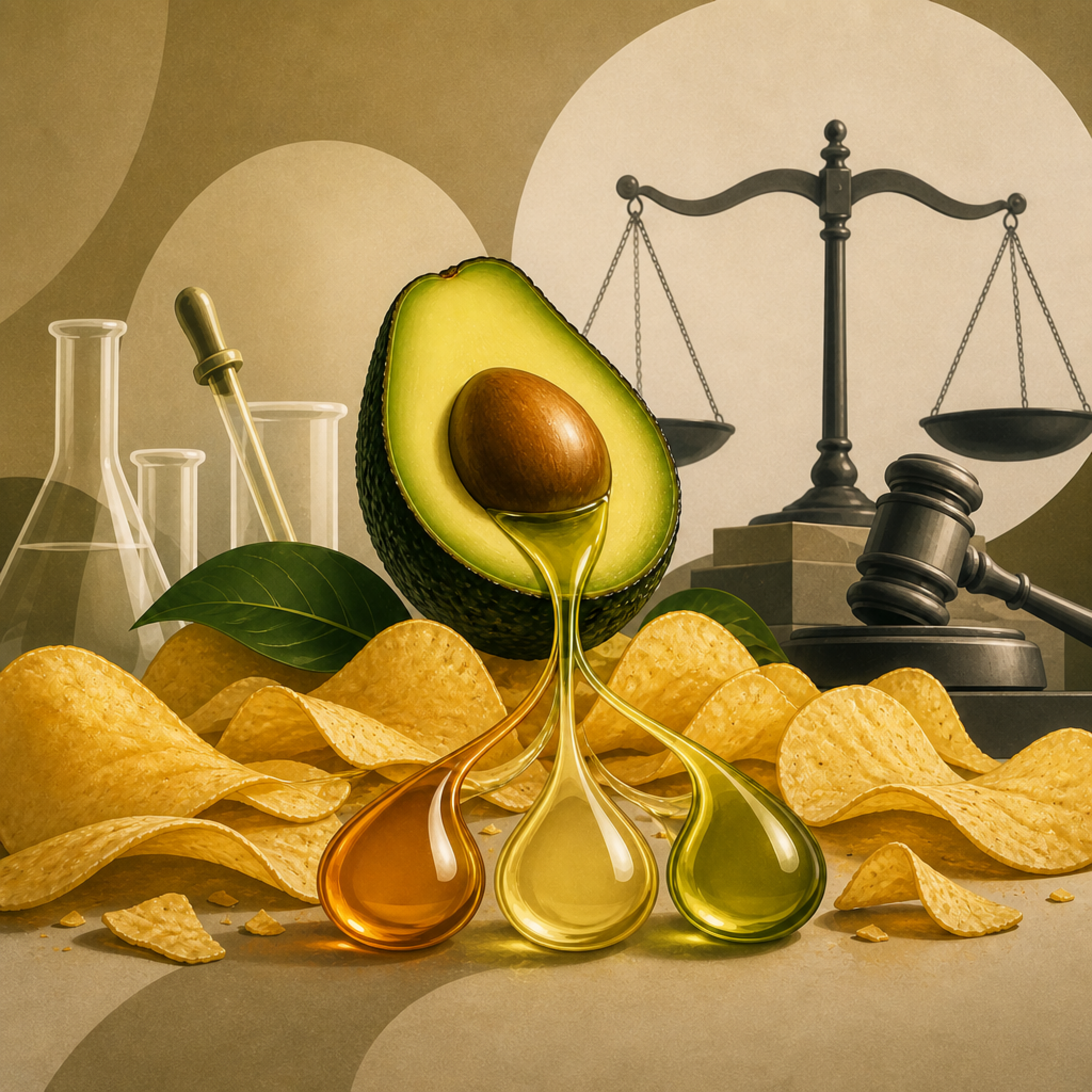
This week, the podcast team explores an antitrust lawsuit centered around protein bar David’s acquisition of its supplier Epogee. Next, the hosts look toward regulatory headwinds in hemp drinks and why there are signs of optimism despite retail setbacks. Finally, the team looks at candy maker Joyride’s new $30 million funding round before discussing the future of plant-based cheese.
Show Highlights:
0:15 – Three brands are suing Peter Rahal’s David brand for monopolizing the novel ingredient EPG.
2:00 – While Texas and other states institute new restrictions on intoxicating hemp beverages, startup brands are beginning to see more investor interest in backing the category. Senior reporter Lukas Southard explains how BRĒZ is platforming around function and “feeling good” to add new retail doors.
5:45 – Is better-for-you candy having a moment? Nosh managing editor Monica Watrous explains why the $30 million round raised by Joyride (formerly Project 7) proves there is a lot of opportunity in sour sweets.
7:00 – The Bel Group announced it will be shutting down its plant-based brand Nurishh last week. Lukas digs into what is happening in the vegan cheese set.
9:00 – In other news, Monica and Lukas talk mayo-themed weddings, marathon drinks and Once Upon A Farm’s new apparel line.
About CPG Week
CPG Week is the podcast that explores the latest happenings in the consumer packaged goods industry. Join our seasoned reporting team as they dish out the week’s stories in quick, easy-to-digest episodes. Catch up on the top headlines of the week, dive into exclusive insights with the BevNET and Nosh teams, and set yourself up to make more informed business decisions. Tune in to stay up-to-date on the latest developments in the dynamic world of packaged food and beverage.
New episodes are released every week. Send us comments and suggestions anytime to cpgweek@nosh.com.
Show Highlights:
This week, the podcast team explores an antitrust lawsuit centered around protein bar David’s acquisition of its supplier Epogee. Next, the hosts look toward regulatory headwinds in hemp drinks and why there are signs of optimism despite retail setbacks. Finally, the team looks at candy maker Joyride’s new $30 million funding round before discussing the future of plant-based cheese.
Episode Transcript
Note: Transcripts are automatically generated and may contain inaccuracies and spelling errors.
[00:00:05] Monica Watrous: Welcome to the CPG Week podcast by BevNET and Nosh. I'm Monica Watrous, here with my co-host, Lukas Southard. Now here is the latest in food and beverage industry news. Protein bar brand David is facing a lawsuit after announcing plans to acquire Epigee, the supplier of its plant-based fat replacer. The ingredient at the center of this legal battle is EPG, which reduces 92% of calories for each unit of fat replaced without altering taste and texture in a variety of food applications, according to the company. In a filing last week, plaintiffs Own Your Hunger, Lighten Up Foods, and Defiant Foods alleged David and Epogee violated federal antitrust laws and orchestrated the deal through secretive and collusive conduct, cutting off the supply of the novel ingredient. The suit claims the plaintiffs and other food manufacturers invested hundreds of thousands of dollars into research and development and marketing specifically tailored to the ingredient, reasonably relying on EPIGE's encouragement and assurances of continued access. According to the lawsuit, EPIGE began reporting supply shortages in late March, providing vague responses such as, quote, two to three month timelines. Following the announcement of the acquisition, Epigee informed its clients via email that it would no longer accept new orders and would wind down accounts. The plaintiffs cite, quote, immediate and ongoing harm stemming from the supply issues that began in March, including layoffs, lost sales, sunk costs, and inventory write-offs. While Epigee supplied other brands prior to the acquisition, David accounted for about 90 percent of Epigee's business per the lawsuit. As we previously discussed on this show, David's acquisition of Epigee was announced in conjunction with its $75 million investment round.
[00:02:01] Lukas Southard: THC-infused drinks are under a barrage of fire from state legislatures. In Texas, Governor Greg Abbott is debating whether to sign into law a bill that would effectively shut down the state's hemp industry. In Kentucky and Tennessee, THC drinks can now only be sold within the three-tier system at liquor stores, barring brands from the D2C opportunity that many have relied on for a steady distribution channel. Finally, a provision in the prospective congressional spending bill would close the door on intoxicating hemp products, reaffirming what was previously allowed through the 2018 farm bill, and effectively making any THC product made from hemp illegal to produce on a federal level. So if you were running a hemp-derived THC brand, you might be feeling a little uneasy right now. But from the brands that I've talked to recently, that is not the case. A number of brands have lined up investment rounds from small VC funds, proving there is optimism for the future of the category. Breeze, one of the category leaders, has taken a nuanced approach to future-proofing itself by platforming both in and out of THC with four new SKUs that launched this week, two of which are infused with hemp-derived Delta 9 THC and two that are THC-free. I spoke with Breeze founder Aaron Nosbitch last week in anticipation of the launch. He said that, in his opinion, the future of the adult non-alcoholic set includes functional beverages both with and without THC. Breeze, which made its mark being digitally native and utilizing social media and online marketing to quickly develop a following, is launching its new non-infused drinks in all Sprouts locations. The strategy expects to bring the brand closer to a 50-50 split of its retail and online distribution. The THC varieties in grocery are also expected to build a beachhead in traditional retail while driving new consumers to the brand's online presence where it sells its THC drinks.
[00:04:05] Monica Watrous: I'm curious what makes these non-THC drinks from Breeze and other brands special and why consumers would opt to buy those versus just a traditional soft drink.
[00:04:17] Lukas Southard: Yeah, well, when Breeze first launched, it launched as a microdose THC brand. Since then, it has expanded its portfolio out to a couple different dosages. They have a multi-serve THC spirits alternative. They also have shots. But most importantly, they launched a THC functional beverage called Flow that uses lion's mane and a couple of other functional ingredients to give a relaxing effect without THC. Now, what they're doing is basically building off of that. So they're building other use occasions and value propositions with these four new drinks. The two non-infused drinks are called Dream and Elevate. and they are kind of playing on different sides of use occasion in terms of one is more like an energy drink without actually having caffeine in it, providing mental clarity, focus, and just kind of like this, you know, energetic boost. Without THC and then dream obviously is more aligned with the kind of winding down and a more of a sleep product So along with those there are the other two varieties that have THC that also play into those use occasions just adding five milligrams of THC in each so it's almost like they are platforming along this idea that if you can have the same effects either with or without THC but in a functional set and hitting consumers at very specific day points or use occasions.
[00:05:50] Monica Watrous: from weed drinks to sour candy, creator-backed candy company Joyride has raised a $30 million funding round. The sour candy brand formerly known as Project 7 relaunched early last year as YouTube star Ryan Trahan joined as an investor, part owner, and chief creative officer. The brand now sells a line of low-sugar gummy candies such as sour strips, ropes, and wedges. Online creators are no stranger to consumer packaged goods, and despite the challenges still persisting within the industry's funding environment, these companies often garner high valuations right out the gate. As an example, just look at fellow YouTubers Mr. Beast's Feastables, which was valued at $5 billion early this year. Meanwhile, Sour Candies are having a moment. Better For You Sour Candy brand, Final Boss Sour, also secured funding recently to accelerate its online business. And late last year, the Hershey Company acquired YouTuber Max Chuning's brand, Sour Strips, for an undisclosed sum.
[00:06:58] Lukas Southard: Last week, multinational cheese maker, The Bell Group, or in the company's native French, Le Groupe Bell, announced it would be winding down its plant-based cheese brand, Nourish, by the end of the year. Bell launched Nourish after acquiring fellow French company All In Foods in 2020. Nourish has made grated, sliced, cubed, and even a brie-style round using coconut or sunflower seed oil, with the products containing no gluten or artificial colors or flavors. Bell, which makes plant-based versions of its more recognizable Baby Bell, Laughing Cow, and Boursin brands, has made a number of investments in plant-based alternative ingredient suppliers since launching Nourish. This signals that it might be shifting its focus from brand building to making more vegan options of its popular brands. Now, Bell is not the only major food company that has been investing in precision fermentation food tech outfits. These companies provide scalable ingredients that can be used in popular brands and seems to be part of the trend that is happening in alternatives to both meat, dairy, and cheese. For example, Kraft has tapped Chilean food tech business, NotCo, to make dairy-free versions of its Kraft singles and mac and cheese. It's important to note that Bell is closing down its nourish brand amid a slowing down in the all-cheese set, according to data from the industry group, the Good Food Institute. Plant-based cheese household penetration declined slightly last year to 4% compared to 5% in 2023. Additionally, dollar sales for all cheeses were also down 4% with unit sales falling 3%. This contraction might be coming from the fact that many plant-based consumers are opting for cleaner ingredient decks and brands that use less gums, emulsifiers, or starches in favor of recognizable inputs like nut milks, olive oil, and natural fermentation.
[00:08:58] Monica Watrous: On a lighter note, giving new meaning to the term white wedding. Hellman's is offering a one lucky couple an all expenses paid ceremony in Las Vegas, officiated by brand mascot, Manny Mayo.
[00:09:12] Lukas Southard: Is Manny Mayo gonna be dressed up like Elvis? Because I might reaffirm my vows in that case.
[00:09:20] Monica Watrous: Manny Mayo is, I think, just like a giant bottle of mayonnaise.
[00:09:24] Lukas Southard: Smoothie King invited marathon runners to refuel on the go by grabbing a smoothie at its limited time run-through concept.
[00:09:33] Monica Watrous: So we're both marathon runners. I know I drank a lot of things on a marathon course, including Fireball and mimosas. I don't think I could stomach a smoothie. What about you?
[00:09:44] Lukas Southard: I don't know. It really depends on where in the marathon. I will say that when I recently ran the Burlington, Vermont marathon, they were passing out shots of maple syrup, which in the beginning seemed like a great idea. But after about two shots of maple syrup, 20 miles in, it started to turn my stomach a little bit, mix it with a little bit of bourbon and I'm in.
[00:10:08] Monica Watrous: And Childhood Nutrition Company, Once Upon a Farm, has partnered with sustainable apparel brand Little Planet to launch a summer-ready collection, including bodysuits and pajamas featuring a peach-inspired print. So I guess that diaper isn't the only thing that's ripe.
[00:10:24] Lukas Southard: My question is, are these bodysuits and pajamas for the adults? No. Or are they for the children?
[00:10:30] Monica Watrous: They're for children. Like onesies for, like, toddlers and infants.
[00:10:35] Lukas Southard: That's not fun. What if I wanted one?
[00:10:38] Monica Watrous: You're gonna have to send a note to John Foraker and see if you can maybe snag one.
[00:10:44] Lukas Southard: John, if you're listening, I'm an adult male medium, but I can run a little bit big. I like things baggy.
[00:10:52] Monica Watrous: And here are some other notable bits of news from the week. ConAgra Brands is selling its Vandecamps and Mrs. Paul's frozen seafood businesses to co-manufacturer Highliner Foods in a $55 million cash deal. COIA President and CFO Michael Woollard has left the plant-based protein beverage company to start his own consulting business. And finally, Grillo's Pickles announced plans to build a $54 million manufacturing plant nearby a King's Hawaiian bakery operation in Bartholomew County, Indiana, creating 150 jobs. For these stories and more, become an insider at BevNET Anosh. And if you're enjoying the show, please subscribe on your listening platform of choice. That wraps up this edition of CPG Week by BevNET and Nosh. Thank you to our audio engineer, Joshua Pratt, our director is Mike Schneider, and our designer is Aaron Willette. If you enjoyed the podcast, please subscribe on your listening platform of choice, and we will see you next time.
About CPG Week
CPG Week is the podcast that explores the latest happenings in the consumer packaged goods industry. Join our seasoned reporting team as they dish out the week’s stories in quick, easy-to-digest episodes. Catch up on the top headlines of the week, dive into exclusive insights with the BevNET and Nosh teams, and set yourself up to make more informed business decisions. Tune in to stay up-to-date on the latest developments in the dynamic world of packaged food and beverage.
New episodes are released every week. Send us comments and suggestions anytime to cpgweek@nosh.com.
Stay Informed, Stay Competitive
Unlock the articles, expert interviews, and data reports that power the food and beverage industry. Join our community and stay ahead with exclusive insights from BevNET and Nosh.