CPG Week: Private Label-Palooza & Nestlé’s Bet On GLP-1
Episode 75
In this episode:
In this episode:
This week, the podcast team digs into the growing trend among major retailers to invest in new modern white label programs. The CPG Week crew discusses why retail chains from CVS to Walmart to Grocery Outlet are launching expanded private label programs and what these next-generation brands might mean for consumers and independent CPG businesses.
Later, the group dives back into the GLP-1 diet trend after the news that Nestlé is set to launch Vital Pursuit, a 12-SKU line of frozen meals specifically positioned toward semaglutide drug users and consumers looking to manage their weight.
Show Highlights:
0:30 – After sharing his pre- and post-half marathon food and drinks from this past weekend, senior reporter Lukas Southard finds out that Nosh managing editor Monica Watrous has been known to imbibe some interesting alcoholic beverages over the years running 25 marathons.
2:30 – The team dives into the recent slew of private label brands that have been launching this year with senior reporter Brad Avery explaining the new line that was announced by CVS.
4:10 – Monica shares what we know so far about Walmart’s new store brand bettergoods and how it aligns with other mass retailers moves in the category.
6:15 – The team discusses what this says about the changing formula for private label strategy in major retailers and how this exemplifies what has happened in grocery post-pandemic.
11:20 – Lukas goes through what we know so far about Nestlé’s expected Q4 release of a GLP-1 positioned frozen meal line. The group talks about how this is not the first – and likely not the last – weight management brand to come out of the “Ozempic Era.”
About the CPG Week
CPG Week is the podcast that explores the latest happenings in the consumer packaged goods industry. Join our seasoned reporting team as they dish out the week’s stories in quick, easy-to-digest episodes. Catch up on the top headlines of the week, dive into exclusive insights with the BevNET and Nosh teams, and set yourself up to make more informed business decisions. Tune in to stay up-to-date on the latest developments in the dynamic world of packaged food and beverage.
New episodes are released every week. Send us comments and suggestions anytime to podcast@nosh.com.
Show Highlights:
This episode of CPG Week the team digs into the growing trend towards new private label programs and what it means that Nestlé is launching a GLP-1 drug companion frozen food brand.
Episode Transcript
Note: Transcripts are automatically generated and may contain inaccuracies and spelling errors.
[00:00:05] Monica Watrous: Welcome to the CPG Week podcast by BevNET and Nosh, your source for the latest food and beverage industry news. I'm Monica Watrous, Managing Editor of Nosh, here with my co-hosts, Brad Avery and Lukas Southard. If you're enjoying the show, please subscribe on your listening platform of choice. And we hope to see you at BevNET Live on June 12 and 13 in New York City. You can register at bevnetlive.com. On the podcast today, we're discussing the private label Renaissance plus Nestle joins the GLP-1 craze. But first, Lucas, you just ran a half marathon last weekend. What do you eat or drink before, during, and after a race?
[00:00:44] Brad Avery: I'm no expert like you, Monica, but I did prepare a little bit this week. So the day before the race, I, uh, I was drinking lots of water and then we decided to go to a winery, which I was good. And I only drank a couple non-alcoholic beers and a low dose THC beverage. Don't tell the winery I brought that one. And then the next morning I had some overnight oats that my wife had kindly made for me. And then my, my go-to though, for exercise is Zoa's Energy pre-workout mix. I love that. I love to get my big Dwayne energy going before I get out on the track. And then, um, post run, I did try some ketone shots. Shout out to Frank Losa and Ketone Aid. He sent me a bunch of samples. So I did have a ketone shot after. I don't really know if it helped with my recovery, but I felt pretty good for the rest of the day. My muscles have been and continue to be very tight, but I had energy. What do you do, Monica? You're, you're a big racer.
[00:01:45] Monica Watrous: I am. Yeah, I'm actually training for my 26th marathon currently, and I always eat chubby snacks before a long run or race. And I like to indulge in a little hard seltzer during a double digit long run. If I'm on the race course and somebody's offering me a beer or a shot of fireball or mimosa, I usually accept it.
[00:02:05] Brad Avery: Fireball on the racetrack. Wow. I I'm impressed.
[00:02:09] Monica Watrous: I know I've been known to pack my own little airline bottles and my hydration vest Oh just gives you that little burst of energy that you need.
[00:02:17] Lukas Southard: I was about to say Lucas. I'm disappointed you're prepped and ended I went to the winery and drank a bunch of wine and then Monica delivered.
[00:02:24] Brad Avery: Well, yeah, I was good when I went to the winery I did chug a beer at the end of the race as you know, cuz they give you a free pint I believe that's customary. So
[00:02:32] Monica Watrous: I wonder if there are any beers, wines, or hard seltzers in CVS's new private label store brand line.
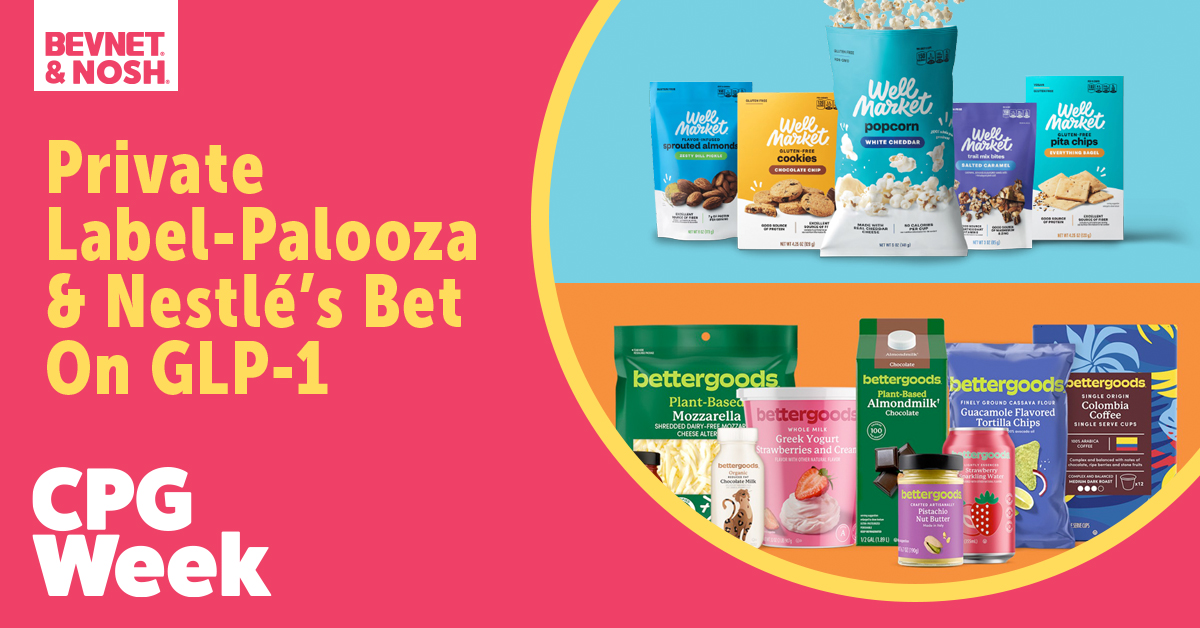
[00:02:42] Lukas Southard: There's not, I think there might be some regulatory issues with that, but there are definitely plenty of popcorn, cookies, and some next gen flavors that are in CVS's new private label well market line. So this is interesting, we've seen a lot of retailers start coming out with new private label lines that look more modern, have a more premium positioning, and embrace next generation flavors. So Wellmarket is going to eventually replace CVS's existing store brands of Gold Emblem and Big Chill. It is rolling out now to around 9,000 CVS stores with about 40 products at the opening line, and they've got some interesting flavors in here. Turmeric curry trail mix, jalapeno roasted in-shell pistachios, peanut butter and caramel probiotic-boosted popcorn. So I was able to talk with CVS's VP of Store Brands, Mike Weir, about a week ago about this new launch. I wrote about that on Nosh, which if you wanna read the full story, that is CVS Launch's WellMarket Store Brand, And it's part of a big wave we're seeing, I think, across a number of retailers. Walmart, Target, even some smaller regional chains are either revamping or for the first time introducing private label. And I think what's funny is CVS has said they've been working on this for years now, but it's all sort of hitting at the same time.
[00:04:07] Monica Watrous: So at the end of April, we saw Walmart launch its Better Goods private label brand, and that marked the retailer's largest store brand food launch in 20 years. That line encompasses nearly 300 products spanning frozen, dairy, snacks, beverages, probably no wine or beer. pastas, soups, coffee, chocolate, and more. And a lot of these items also tap into dietary trends like gluten-free, plant-based, clean label, no added sugar. The prices for that line range from $2 to under $15. So it's a more premium offering in Walmart's lineup, but still affordable amid ongoing inflation. In the recent Q1 earnings report released by Walmart, Management said that the share gains in the U.S. were driven by upper income households who are trading down. So it makes sense that they're trying to appeal to that demographic.
[00:05:07] Lukas Southard: And CVS's line is priced around $299 to $899, which is about in line with what they were selling for the Gold Emblem and other store brands before that. But the goal is to present packaging that feels more modern, to embrace better for you and wellness, and to update store brand for the 2020s.
[00:05:29] Brad Avery: These retailers are also obviously competing with Target, which has been deep into private label for a while across the whole store. At the beginning of the year, they launched a new private label called Dealworthy that is mostly in like accessories and home goods, not so much in the food and beverage. But along with that, Target is also lowering prices on nearly 5,000 quote, frequently shopped items across the store. And the mass merchandiser says it's already reduced prices on over 1,500 items, spanning food and beverage, and there's more cuts to come throughout this year. The price cuts will be implemented across their national brands as well as its target-owned food and beverage brand, Good & Gather.
[00:06:16] Lukas Southard: So part of what is driving this, it seems, is that there are more sales for a private label. If you take Sprouts, for example, They now say 20 percent of store sales are coming from their store brand products, up from just 12 percent in 2017. And we're now seeing other smaller chains also introduce lines for the first time. There's Grocery Outlet. There's Good Food Holdings, which is the owner of Bristol Farms and Lazy Acres, also this year launched empanadas and other products under a private label brand. So it's not just the big guys who are redoing their portfolios. There are smaller local chains getting into this because I think consumers are looking for either a value option or looking for alternatives, especially when you consider inflation and a lot of those other pressures that have been affecting consumers' wallets.
[00:07:09] Monica Watrous: I think a lot of this also goes back to the fact that private label has evolved beyond the sort of lower priced alternative to the national brands. And a lot of these retailers are introducing unique products that you can only find at those retailers. We know for years Trader Joe's and Aldi have been leaders in introducing products that are unique to their stores to bring more people in. And I think that the perception of private label has really changed because of some of those efforts. Last year, private label sales hit a record and accounted for nearly 21% of grocery industry unit sales, which was an all-time high according to the Private Label Manufacturers Association.
[00:07:53] Lukas Southard: There's also an interesting destigmatizing going on with the store brand. I mean, think about it. There's a meme that is like, we have X at home, and it's the store brand Froot Loops that you would buy. And you'd think they're never as good as the real thing. And there's a big move to getting a modernization for these products, to breaking away from that perception that these are cheaper and not as good, to really say, no, these are as good as other products. And usually it's a brand that is making them under a private label contract. Right.
[00:08:24] Monica Watrous: From off-brand to on-trend.
[00:08:27] Brad Avery: Exactly. And you can see that in the packaging, too. I mean, they really invested in the packaging from, you know, Walmart and CVS and Target, all these new private label. They look very modern. They're taking some cues to what is trending in CPG in terms of how these look with bold colors and sometimes a little bit of a retro font style. So I think it works. They know that it's not just like the white label brands that we're used to, but they're now becoming kind of cool.
[00:08:59] Monica Watrous: You guys, I grew up eating private label cereal and toasters pastries. Not Pop-Tarts. But it's interesting because at the time, those were products that were very value-driven and almost a necessity for a family who has a tighter grocery budget. And now we're seeing some really evolved offerings. Probiotic popcorn at CVS, who's asking for that?
[00:09:30] Lukas Southard: And when you are only able to afford the value brands, if that is your income bracket, those premium trends, gut health, or again, flavors like turmeric curry trail mix, I mean, those are usually out of reach for you. And now here they are at an affordable value. And I think it's becoming more mainstream as well. So it's really a sea change as far as the old perception of CPG products and flavors go.
[00:09:56] Monica Watrous: Well, and I think as retail becomes more competitive, there's a lot more ways that people are buying their groceries. These retailers are smart to create items that are making their stores destinations for consumers.
[00:10:12] Brad Avery: The real question is, are these new private label and the focus on private label by these big retailers, are they going to push out the smaller CPG independent brands and replace them and will there just be less and less shelf space for independent, privately owned brands?
[00:10:32] Monica Watrous: It's a good question and it's something that I would be thinking about if I had a CPG brand.
[00:10:39] Lukas Southard: It certainly provides more competition and you look at scanner data and there are categories where private label is as competitive or leading the space. I mean, bottled water, obviously, but sparkling water as well. Private label is a true competitor for a lot of the name brands.
[00:10:55] Monica Watrous: We'll continue to be watching this space and reporting on any new developments, new product launches from retailers and data that shows that private label really is gaining even more traction. Another story that we reported on this week involves Nestle launching a new product line for users of GLP-1 drugs. Lucas, you covered that. Can you tell us more?
[00:11:20] Brad Avery: Yeah, so Nestle is the first major food company to really lean into this GLP-1 diet trend. They announced yesterday the launch of a new line of frozen foods called Vital Pursuit, which is not to be confused with their collagen supplement brand Vital Proteins. They acquired that in 2020. Vital Pursuit is a 12 skew line of frozen meals made up of grain and pasta bowls, sandwich melts, and pizzas. And it is solely tailored for GLP-1 drug users, as well as people who are just trying to manage their weight better, especially through curbing their appetite. So I wasn't able to get any additional information from Nestle yet on the details of how this vital pursuit line was formulated to fit the needs of GLP-1 users. But the company did say in its press release that the meals will be portion controlled and high in protein and fiber.
[00:12:19] Monica Watrous: Well, that makes sense, right? Because we hear a lot about GLP-1 users who are losing muscle mass or having digestive issues. And so those are attributes that are going to be really important to them.
[00:12:31] Lukas Southard: I think what's very interesting is when GLP-1 first started hitting the scene, we started hearing a lot of almost panic in a way from brands about what's this going to mean? Are people just going to stop buying snacks? Are people going to stop eating food? And what we're now seeing with Nestle doing is the reality, which is you pivot, you build for that consumer demographic. And we should remember at this moment, this is still a smaller demographic, but it is sizable. There's a quote in your article, Lucas, from Nestle SA CEO, Mike Schneider, that I thought was pretty interesting, where he talked about the whole topic of dieting and weight loss is back to the top of the agenda.
[00:13:11] Brad Avery: Yeah, he said, to be flippant, diets are cool now. And this is not the first company that's bet on the GLP-1 dietary trend, especially to build up a brand, Simply Good Foods, the parent company of the low-carb Atkins brand, announced at the beginning of the year that it was investing heavily in researching how it can align Atkins with GLP-1 users. Weight Watchers has put GLP-1 at the center of its marketing efforts. And then you have retailers like GNC who've built out whole sets for GLP companion products like Belly Welly and Super Gut. So this isn't going away.
[00:13:48] Monica Watrous: We also saw Daily Harvest develop a line of meals for GLP-1 users as well.
[00:13:54] Lukas Southard: It's still early, so I don't want to say for certain, but are we seeing a diet culture feeding frenzy coming? Nice.
[00:14:03] Monica Watrous: I don't like it because I feel like we've made really good strides in the body positivity movement. And this feels like a setback to be obsessed with diets again. This feels very 1990s.
[00:14:16] Lukas Southard: Yeah, Monica, I think you're totally right. I mean, it's almost shocking in the way that it's like the pendulum suddenly just swung all the way back in a way with Ozempic.
[00:14:27] Monica Watrous: It'll be interesting to see how companies respond to this trend, whether they're developing products that complement the use of the drugs like Nestle is doing or developing alternatives to the drugs that mimic some of the effects of Ozempic, Wigovi and Monjaro. Here are some other notable bits of news from the week. Top takeaways from the Sweets & Snacks Expo, Forward Consumer Partners acquires Showcheel, and we play to win former Body Armor exec and Patrick Mahomes' launched sport coffee. For these stories and more, become an insider on Vevnet and Nosh. That wraps up this edition of CPG Week by BevNET and Nosh. Thank you to our audio engineer, Joshua Pratt, our director is Mike Schneider, and our designer is Aaron Willette. If you enjoyed the podcast, please subscribe on your listening platform of choice, and we will see you next time.
About CPG Week
CPG Week is the podcast that explores the latest happenings in the consumer packaged goods industry. Join our seasoned reporting team as they dish out the week’s stories in quick, easy-to-digest episodes. Catch up on the top headlines of the week, dive into exclusive insights with the BevNET and Nosh teams, and set yourself up to make more informed business decisions. Tune in to stay up-to-date on the latest developments in the dynamic world of packaged food and beverage.
New episodes are released every week. Send us comments and suggestions anytime to cpgweek@nosh.com.
Stay Informed. Stay Competitive.
Become an Insider to unlock exclusive CPG insights, data, education, and industry exposure for food & beverage leaders.

Industry Analysis
Context behind the headlines

Data & Reports
Category performance & trends

On-Demand Education
Expert-led video courses