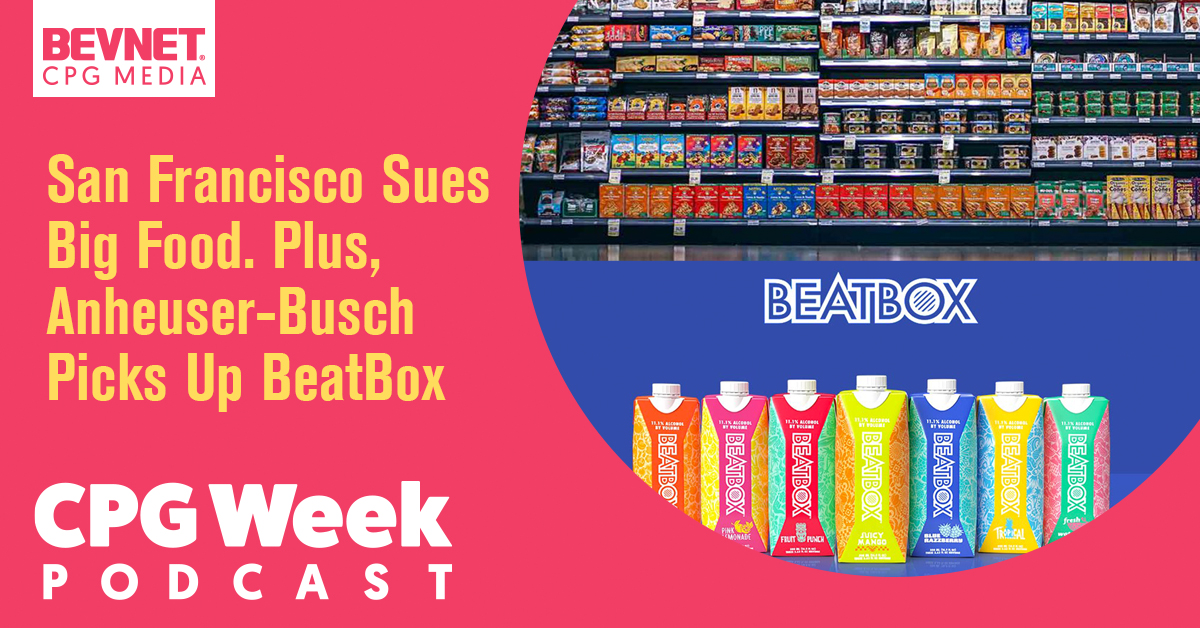
CPG Week Podcast: San Francisco Sues Big Food. Plus, Anheuser-Busch Picks Up BeatBox
Episode 152
In this episode:
In this episode:
This week on the podcast, Nosh managing editor Monica Watrous and senior reporter Brad Avery discuss San Francisco’s lawsuit over ultraprocessed foods, Anheuser-Busch’s $490 million acquisition of BeatBox, Stockeld Dreamery’s sale to Bettani Farms, and Ripple Foods’ $17 million funding round.
Show Highlights:
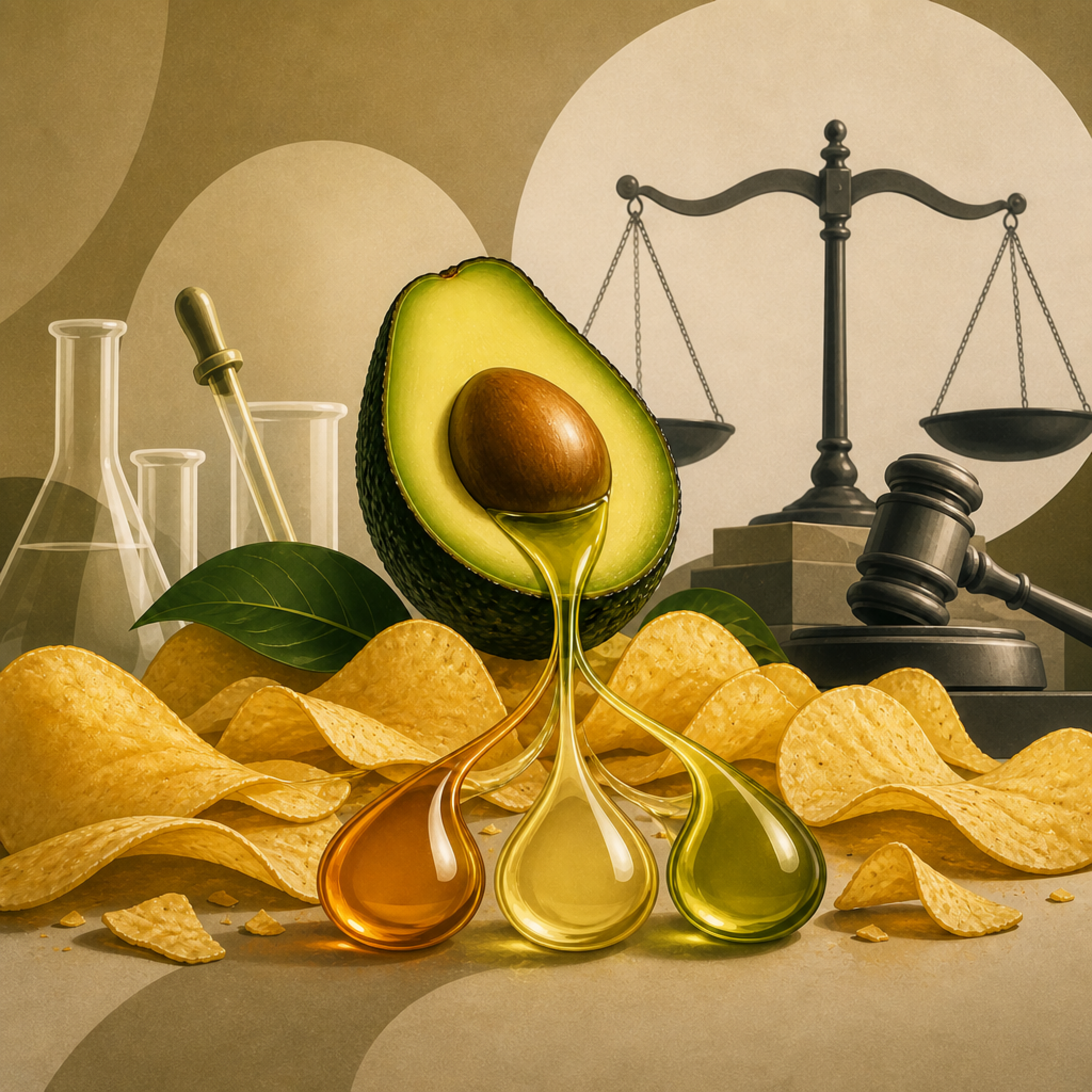
0:15 – San Francisco has declared war on America’s snack aisle, filing the nation’s first government lawsuit against makers of ultraprocessed foods. Monica breaks down the case.
2:55 – Anheuser-Busch has acquired ready-to-drink alcohol brand BeatBox for $490 million. Brad explains what the deal means for the beer giant.
3:30 – Stockeld Dreamery’s assets have been sold to Bettani Farms, the food tech entity formerly known as Climax Foods.
5:10 – Plant-based milk producer Ripple Foods closed a $17 million funding round, setting the stage to execute on its growth plans in the new year. Brad explains.
6:15 – Monica and Brad discuss highlights and takeaways from Nosh Live and BevNET Live.
About CPG Week
CPG Week is the podcast that explores the latest happenings in the consumer packaged goods industry. Join our seasoned reporting team as they dish out the week’s stories in quick, easy-to-digest episodes. Catch up on the top headlines of the week, dive into exclusive insights with the BevNET and Nosh teams, and set yourself up to make more informed business decisions. Tune in to stay up-to-date on the latest developments in the dynamic world of packaged food and beverage.
New episodes are released every week. Send us comments and suggestions anytime to cpgweek@nosh.com.
Show Highlights:
This week on the podcast, Nosh managing editor Monica Watrous and senior reporter Brad Avery discuss San Francisco’s lawsuit over ultraprocessed foods, Anheuser-Busch’s $490 million acquisition of BeatBox, Stockeld Dreamery’s sale to Bettani Farms, and Ripple Foods’ $17 million funding round.
Episode Transcript
Note: Transcripts are automatically generated and may contain inaccuracies and spelling errors.
[00:00:05] Monica Watrous: Welcome to the CPG Week podcast by BevNET and Nosh. I'm Monica Watrous, here with my co-host Brad Avery. Now here is the latest in food and beverage industry news. San Francisco has declared war on America's snack aisle, filing the nation's first government lawsuit last week against the largest manufacturers of ultra-processed foods. City Attorney David Chu claims local governments are footing the bill for chronic diseases linked to the company's products. And the lawsuit alleges that 10 companies, including General Mills, PepsiCo, and ConAgra brands, have misled consumers and sold products they knew could harm health. Whether the city will be successful in this case remains to be seen. In Philadelphia earlier this year, a federal judge dismissed a private lawsuit over the health impact of ultra-processed foods. However, San Francisco has a strong track record in matters of public health, winning giant settlements against tobacco companies and opioid manufacturers in recent years. In response to the lawsuit, a spokesperson for Consumer Brands Association pointed out that there is no federally recognized definition of ultra-processed foods and noted many of the companies were reformulating products with more protein and fiber, less sugar and no synthetic dyes. States and local governments have tackled ultra-processed foods through a variety of regulations and laws. In California, lawmakers from both sides of the aisle approved legislation this year that formally defines ultra-processed foods and opens the door to removing them from school cafeterias. But the Golden State has long been a first mover when it comes to food reform, banning a slate of synthetic preservatives, as well as artificial dyes, well before the Make America Healthy Again movement took shape. Across the country, many cities have imposed taxes on soda and other sweetened beverages, and states including California, Arizona, and West Virginia have barred certain ultra-processed ingredients, like artificial food dyes, from food sold in schools.
[00:02:08] Brad Avery: California having its own definition for ultra processed foods is very important here because the Consumer Brands Association is correct. And that is what I could see being the hurdle to a successful lawsuit is the lack of a proper definition for ultra processed foods. Right now it gets treated a little bit like a I know it when I see it issue. Like porn. Yes, exactly. But whether it's synthetic ingredients, artificial food dyes, as mentioned, or others, ultraprocess is a vague term, but it's one that's caught on. So going by California standard, that gives them a case to push forward in particular products that they can cite. Yes.
[00:02:52] Monica Watrous: Of course, we'll continue to follow this developing story at Nosh.
[00:02:55] Brad Avery: A new ready-to-drink product is joining the party at Anheuser-Busch InBev. The beer giant is set to acquire an 85% majority stake in party punch brand, Beatbox, for roughly $490 million, with plans to acquire 100% ownership after five years based on predetermined pricing formula. Beatbox, which was founded in 2011, is one of the fastest rising RTD alcohol brands. and it's a coveted addition to AB's Beyond Beer portfolio alongside brands like Cutwater Spirits and Neutral Vodka Seltzer.
[00:03:33] Monica Watrous: In other acquisition news, Stockeld Dreamery, the alt-cheese maker that announced it would close up shop in November after six years in operation and over $20 million in capital raised, has offloaded a portion of its assets to plant-based food tech entity Bettani Farms, formerly known as Climax Foods. Financial terms of the deal were not disclosed. The Stockeld Dreamery will stay on board for a few months to assist with the transition. The news of Stockeld's acquisition comes alongside two additional deals made by the Berkeley, California-based company, including Alt-Mozzarella producer Numu and plant-based meat company Hungry Planet. Stockheld's pea protein-based alternative to cream cheese will continue to be sold in bagel shops and restaurants as part of the new parent company's broader portfolio. As it was shutting down, last month the company sold select pieces of equipment to European alt dairy company Planet Dairy, but the deal with Bettany includes all of the company's intellectual property as well as U.S. distribution contracts. During the course of its lifecycle, Stockeld established a presence with its vegan cream cheese and bagel shops, as well as nearly 500 independent retailers around the country. Earlier this year, the startup gained placement in 17 New York City area Whole Foods stores, marking its first deal with a major retailer. However, after calculating the cost of supporting and scaling that partnership, the company would need to raise additional funds on the back of the 20 million it had already brought in. As investors have become less interested in plant-based categories, StockGeld opted to take the quote, responsible route and began shutting down operations, paying outstanding invoices and selling through inventory.
[00:05:09] Brad Avery: Well, as one pea protein plant-based foods maker closes down, another is raising money. Ripple Foods, the maker of plant-based milks using a pea protein base, closed $17 million in funding and announced Becky O'Grady as its new permanent CEO last week. The funding round includes a mix of new investors, including Material Impact and Rich Product Ventures, as well as past investors, S2G Ventures, Prelude Ventures, Fall Line Capital and others. Ripple's raised a lot of money over the years. The $17 million infusion is one of their smaller rounds. They previously reported a $49 million financing in the fall of 2023, and they previously closed a $60 million Series E in 2021. That chased a $65 million investment in 2018. So, where is this latest round going? For the company, new product launches are scheduled for Q1, including a new line of organic plant-based milks, as well as expanded presence in food service and retail.
[00:06:10] Monica Watrous: That's a lot of P's.
[00:06:11] Brad Avery: It is. It's a lot of P's and it's a lot of S's with the signs in the room.
[00:06:16] Monica Watrous: On a lighter note, we have just wrapped up our Nosh Live and BevNET Live conferences in Marina Del Rey, California. Brad, what stood out to you as a highlight or takeaway from the events?
[00:06:27] Brad Avery: Well, you're gonna walk around your big interview on day one of Nosh Live with Khloe Kardashian.
[00:06:35] Monica Watrous: Oh yeah, that.
[00:06:36] Brad Avery: Yeah, I feel like that's the big elephant in the room we have to address with Cloud. I thought she did fantastic on stage. I really appreciated the candidness talking about celebrity brands and being a celebrity founder and knowing that that's a double-edged sword that could hurt her own image if this doesn't go well. How did you tackle that interview?
[00:06:58] Monica Watrous: Very nervously and with a lot of protein popcorn in my belly. No, actually, she was great and she was very well poised and articulate and had a lot of interesting insights that I thought were relatable to brands of all sizes, whether or not they have a celebrity on their cap table or in their C-suite. I thought that insight carried over to the session with Allison and Stephen Ellsworth, the co-founders of Poppy, as they spoke about some of the early influencer partnerships they had and how an early collaboration with Jennifer Lopez failed to move the needle on the business. And yet the collaborations that they had with organic influencers of smaller scale that seemed more authentic to their core consumer helped move the needle and propel the brand forward.
[00:07:46] Brad Avery: Yeah, that was on day one of BevNET Live and Allison talked about partnering early with Alex Earle and kind of catching her on her rise to fame and celebrity, you know, recognizing a young talent that was getting a following and coming up at the same time as their influencer partners. And I think that's very true to what Poppy is and has been.
[00:08:07] Monica Watrous: Definitely. And Allison Ellsworth's advice to the audience is don't partner with Alex Earle now. Find the next Alex Earle to partner with. Exactly. And grow with their creator.
[00:08:18] Brad Avery: You know, one more thing that stood out to me in the events was Jenny Britton's session at Nosh Live, the founder of Jenny's Splendid Ice Creams. And she has an arts background. And one thing I really loved that she talked about was taking that artistic influence, that creative element, and bringing it into the business world. And I think that connects a bit to what Allison was saying about not just copying what others are doing, but finding the next thing, finding your own version of it. And what Jenny Britton talked about was taking the creativity that an artistic life brings and putting it to, well, we need to make every dollar count, so how can we be as scrappy as possible? And sometimes clashing with the financial business-minded people at the cap table, but ultimately marrying these two disciplines.
[00:09:07] Monica Watrous: Yeah, there was a lot of really interesting perspective across the two events and insiders can catch the replays of all of the sessions at Nosh and BevNET. Here are some other notable bits of news from the week. Stephen Ellsworth, who co-founded modern soda brand Poppy with his wife Allison, has joined Consumer Products House dropout companies as an operating partner. Canned Coconut Water Brand, Once Upon a Coconut, has partnered with L.A. Libations to grow its business in Southern California. And finally, having eliminated undue friction from its distribution relationship with the Coca-Cola Company, Monster Beverage Corp. is better leveraging its partnership with the beverage conglomerate to expand its category reach and fuel global growth. For these stories and more, become an insider at BevNET and Nosh. And if you're enjoying the show, please subscribe on your listening platform of choice. That wraps up this edition of CPG Week by BevNET and Nosh. Thank you to our audio engineer, Joshua Pratt, our director is Mike Schneider, and our designer is Aaron Willette. If you enjoyed the podcast, please subscribe on your listening platform of choice, and we will see you next time.
About CPG Week
CPG Week is the podcast that explores the latest happenings in the consumer packaged goods industry. Join our seasoned reporting team as they dish out the week’s stories in quick, easy-to-digest episodes. Catch up on the top headlines of the week, dive into exclusive insights with the BevNET and Nosh teams, and set yourself up to make more informed business decisions. Tune in to stay up-to-date on the latest developments in the dynamic world of packaged food and beverage.
New episodes are released every week. Send us comments and suggestions anytime to cpgweek@nosh.com.
Stay Informed, Stay Competitive
Unlock the articles, expert interviews, and data reports that power the food and beverage industry. Join our community and stay ahead with exclusive insights from BevNET and Nosh.