CPG Week Podcast: A Chicken Feed Cockfight And Gummies Galore
Episode 159
In this episode:
In this episode:
This week on the podcast, Nosh managing editor Monica Watrous and senior reporter Lukas Southard tackle the recent controversy surrounding cage-free egg producer Vital Farms, the latest updates affecting the hemp beverage industry, and a beverage maker’s strategic expansion into functional gummy supplements. The hosts also highlight several recent funding announcements.
Show Highlights:
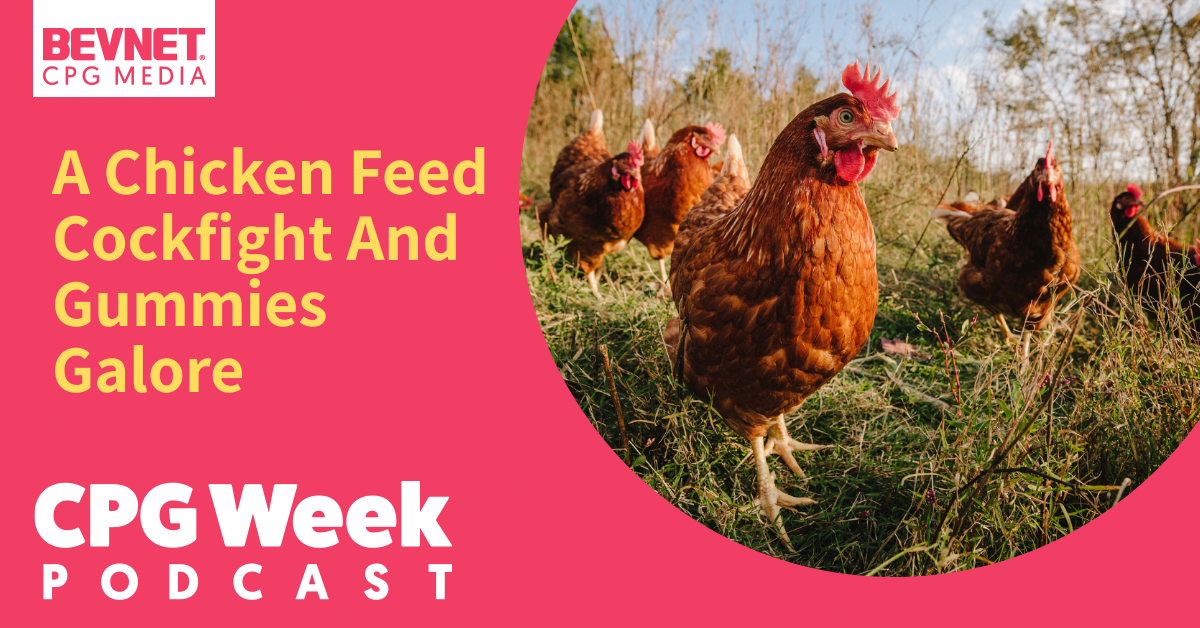
0:15 – Outdoor-access egg producers are taking heat online for the way they feed their hens, and the scrutiny has landed heavily on Vital Farms. Monica digs into the drama.
2:00 – Two legislative proposals are finding significant backing from hemp industry stakeholders. Lukas shares all the details.
4:05 – Monica highlights a handful of recent investments announced by a Snoop Dogg-backed ice cream brand, a dietitian-founded snack company, and a coconut water sports drink maker.
6:40 – Lucky Energy is expanding beyond beverages into the uber-popular functional gummy segment. Lukas outlines the strategy behind the launch.
About CPG Week
CPG Week is the podcast that explores the latest happenings in the consumer packaged goods industry. Join our seasoned reporting team as they dish out the week’s stories in quick, easy-to-digest episodes. Catch up on the top headlines of the week, dive into exclusive insights with the BevNET and Nosh teams, and set yourself up to make more informed business decisions. Tune in to stay up-to-date on the latest developments in the dynamic world of packaged food and beverage.
New episodes are released every week. Send us comments and suggestions anytime to cpgweek@nosh.com.
Show Highlights:
This week on the podcast, Nosh managing editor Monica Watrous and senior reporter Lukas Southard tackle the recent controversy surrounding cage-free egg producer Vital Farms, the latest updates affecting the hemp beverage industry, and a beverage maker’s strategic expansion into functional gummy supplements. The hosts also highlight several recent funding announcements.
Episode Transcript
Note: Transcripts are automatically generated and may contain inaccuracies and spelling errors.
[00:00:05] Monica Watrous: Welcome to the CPG Week podcast by BevNET and Nosh. I'm Monica Watrous, here with my co-host, Lukas Southard. Now here is the latest in food and beverage industry news. Outdoor access egg producers are taking heat online for the way they feed their hens. Last week, the scrutiny landed heavily on Vital Farms, the publicly traded pasture-raised egg brand, often held up as a model for humane production. BevNET editor-in-chief Jeffrey Klineman chronicled some of the drama on Nosh this week, noting that while a lot of the debate has since died down, it should serve as a lesson that even well-loved brands with the strongest reputations can quickly find themselves in the face of a social media firestorm. At the core of this debate was the common use of supplemental feed, usually made with soy or corn, to provide the hens the nutrition they need to become productive egg layers. While the hens are guaranteed access to roam and snack on insects and other pasture-available treats, according to egg companies, that doesn't negate the need for chicken feed to support a healthy flock. Several Instagram accounts ripped open outcry around Vital Farms and other cageless egg suppliers' use of that feed, noting that the use of soy or corn had resulted in a higher level of linoleic acid, an omega-3 fatty acid that is generally recognized as nutritionally beneficial, but is a component of seed oils, which has faced major scrutiny as part of the Make America Healthy Again movement. Vital Farms attempted to address the issue on several channels and on its own blog by noting the documented health benefits of omega-3 fatty acids. But by the time the company weighed in, the complaints had cracked wide open. Commenters attacked the company's transparency, even stating that its keeping it bullshit free tagline was misleading. Insiders can read the full analysis on Nosh.com.
[00:01:56] Lukas Southard: Looking to the intoxicated hemp beverage category, a pair of legislative proposals are finding significant backing from hemp industry stakeholders. The first bill was put forward about two weeks ago by Indiana Representative James Baird. The Hemp Planting Predictability Act buys time for lawmakers to put together a framework to allow hemp-derived THC drinks and CBD products to be regulated federally. A co-sponsor of that bill, Virginia Representative Morgan Griffith, followed the Hemp Planting Predictability Act with his own legislative effort called the H.E.M.P. Act, H.E.M.P. being an acronym in this case for the Hemp Enforcement Modernization and Protection Act. Under this bill, the FDA would be forced to initiate a rulemaking process to set milligram limits of hemp products. If the FDA fails to release a final rule within the three years of the measure's enactment, federal law will automatically establish intoxicating limits of 5 milligrams per serving and 30 milligrams per package. These various solutions are being applauded by the majority of the hemp beverage industry, as lobbying efforts have continued to ramp up to try to put in place a stopgap for the deadline that is approaching for November 12th. Most recently, a new industry coalition of beverage alcohol retailers and distributors was established to push for a regulatory framework for intoxicating hemp drinks. Backed by Total Wine & More, BevMo by GoPuff, ABC Fine Wine & Spirits, and Spex, the Beverage Alcohol Merchants Coalition, or BAMCO, launched last week with the goal of, quote, advocating for responsible federal regulation of low-dose hemp-derived THC beverages and beverages only. This all comes as Chicago City Council recently outlawed hemp-derived THC products, with the exception of beverages containing no more than 10 milligrams of THC per 12-ounce container.
[00:04:06] Monica Watrous: Over the past week, our team has covered a decent amount of investment news on BevNET and Nosh. Early stage venture fund Rising Tide Ventures has backed Dr. Bombay, the ice cream brand co-founded by Snoop Dogg and the Happy Company under boss Lady Foods. Though financial terms of the investment were not disclosed, two and a half year old Dr. Bombay has raised approximately $8 million to date, according to co-founder Sam Rockwell. No, not that Sam Rockwell. The brand produces a portfolio of hip hop style ice cream, pints that combine the textures of sherbet and ice cream in flavors like tropical sherbet swizzle, baked blueberry muffin, and peanut butter jelly time. Its products are crafted in collaboration with food scientist, Maya Warren, whom Rockwell called the quote, foremost authority in ice cream. In a different deal, Humble Growth, the growth equity firm founded by Andrew Abram and Nick Giannuzzi, has acquired a minority stake in Better For You snack maker Simply Fuel. Based in Leawood, Kansas, Simply Fuel was founded by registered dietitian Mitzi Doolin, who has previously served as the team nutritionist for the Kansas City Chiefs, the Kansas City Royals, and the Golden State Warriors. All of our teams are represented there, Lucas.
[00:05:25] Lukas Southard: Yeah, I've seen better days for the Golden State Warriors currently, but we'll get into that another time.
[00:05:30] Monica Watrous: We don't need to talk about the Chiefs. The brand offers a range of protein balls crafted with gluten-free oats, honey, peanut butter, organic coconut, almonds, whey protein, and cocoa. Products are available nationwide at Costco, Sam's Club, Walmart, and Target. The partnership with Humble Growth marks Simply Fuel's first institutional investment since launching a decade ago. And on the beverage front, coconut water-based sports drink brand Coco 5 secured its largest tranche of growth capital to date as it looks to expand its retail footprint and scale the leadership team. The $10 million round, led by boutique investment firm and existing funder Loop Capital, will go toward executive hiring, expansion into new regions, and increased production as the brand doubles down on channels like hotels, convenience stores, drugstores, specialty wellness retailers, and specialty and club chains.
[00:06:28] Lukas Southard: In other beverage news, well, kind of beverage news, Lucky Energy has decided to jump into the fast-moving gummy category with a line of caffeinated gummies. Each eight-gummy sachet has 128 milligrams of caffeine along with eight grams of fiber and a number of other functional ingredients. This is an interesting zag for an energy drink brand to go into the gummy format where brands like Grooms or Create or even Belly Welly have really found a niche for wellness-seeking consumers and shoppers looking for more options for the on-the-go or ready-to-go lifestyle. When I spoke with founder Richard Laver last week about this, he talked about how There was a real opportunity to expand his brand outside of energy drinks and into an actual platform. In talking with many retail partners, he said that a lot of the buyers in these retail stores are looking for more options that take up less shelf space and also have higher margins. And the gummy category really serves that purpose pretty well.
[00:07:48] Monica Watrous: You mentioned gummies being a hot category, and we are seeing more and more activity there. Just this week, Kroons, which is one of the segment leaders, unveiled YouSnacks, which is a broader platform that houses all of its brands, including Nootropes, Immune, Juiced, and quote, the many additional innovations coming, according to founder Chad Janis. Gruins is a brand that was valued at $500 million last year and has expanded to thousands of retail stores since it launched within the last couple of years. And its flagship product is Superfoods Greens Gummies, which was created as a more appealing alternative to greens powders and is packaged in single serve daily packets with over 60 organic fruits and vegetables in the formulation. Chad Janis said that he has over a hundred employees now at the company, and they're working on all kinds of new innovations to meet all kinds of new functional need states. Here are some other notable bits of news from the week. Hot dog, Smithfield Foods is acquiring Nathan's Famous in an all-cash transaction valued at $450 million. Brinwood Partners has sold private label take-and-bake pizza producer Great Kitchens Food Company to Rich Products Corporation. And finally, Zing Bars founder David Ingalls has reacquired his plant-based protein bar brand from the American Licorice Company with support from Dundane Ventures. For these stories and more, become an insider at Bevanette & Nosh. And if you're enjoying the show, please subscribe on your listening platform of choice.
[00:09:34] Monica Watrous: That wraps up this edition of CPG Week by Bevanette & Nosh. Thank you to our audio engineer, Joshua Pratt, our director is Mike Schneider, and our designer is Aaron Willette. If you enjoyed the podcast, please subscribe on your listening platform of choice, and we will see you next time.
About CPG Week
CPG Week is the podcast that explores the latest happenings in the consumer packaged goods industry. Join our seasoned reporting team as they dish out the week’s stories in quick, easy-to-digest episodes. Catch up on the top headlines of the week, dive into exclusive insights with the BevNET and Nosh teams, and set yourself up to make more informed business decisions. Tune in to stay up-to-date on the latest developments in the dynamic world of packaged food and beverage.
New episodes are released every week. Send us comments and suggestions anytime to cpgweek@nosh.com.
Stay Informed. Stay Competitive.
Become an Insider to unlock exclusive CPG insights, data, education, and industry exposure for food & beverage leaders.
Industry Analysis
Context behind the headlines
Data & Reports
Category performance & trends
On-Demand Education
Expert-led video courses