CPG Week: Clean Labels, Dirty Sodas and Soylent’s Struggles
Episode 136
In this episode:

In this episode:
In this episode of CPG Week, Nosh managing editor Monica Watrous and senior reporter Brad Avery dig into the dual trends of clean labels and dirty sodas. The hosts also discuss a new AI-driven solution for food and beverage manufacturers and the stalling of a Silicon Valley darling.
Show Highlights:
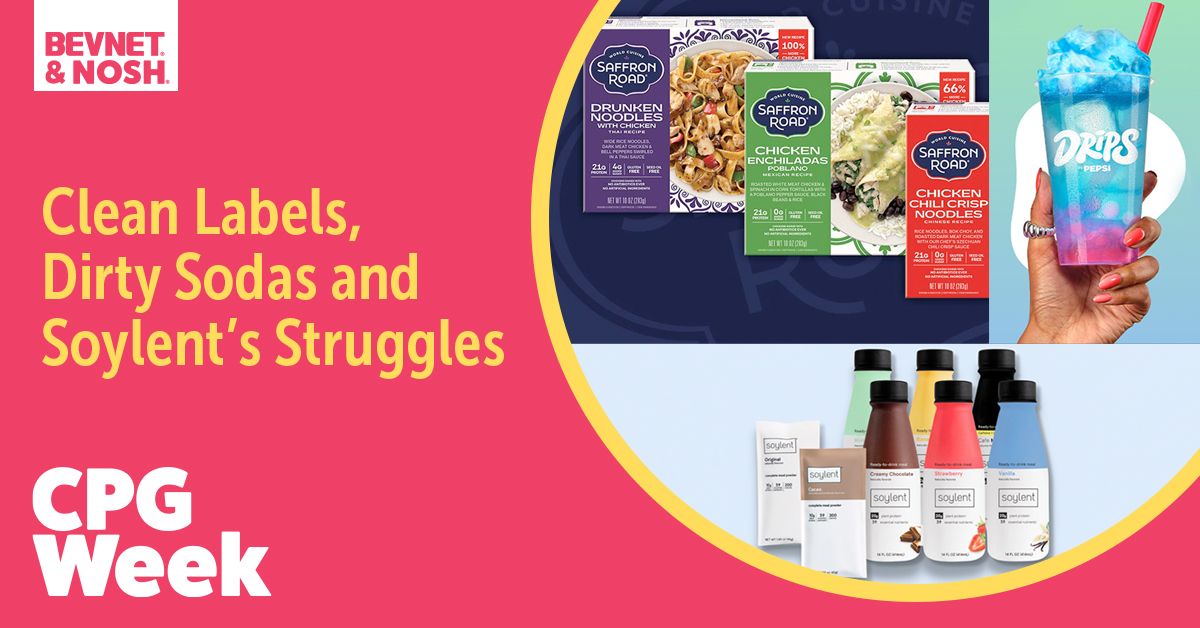
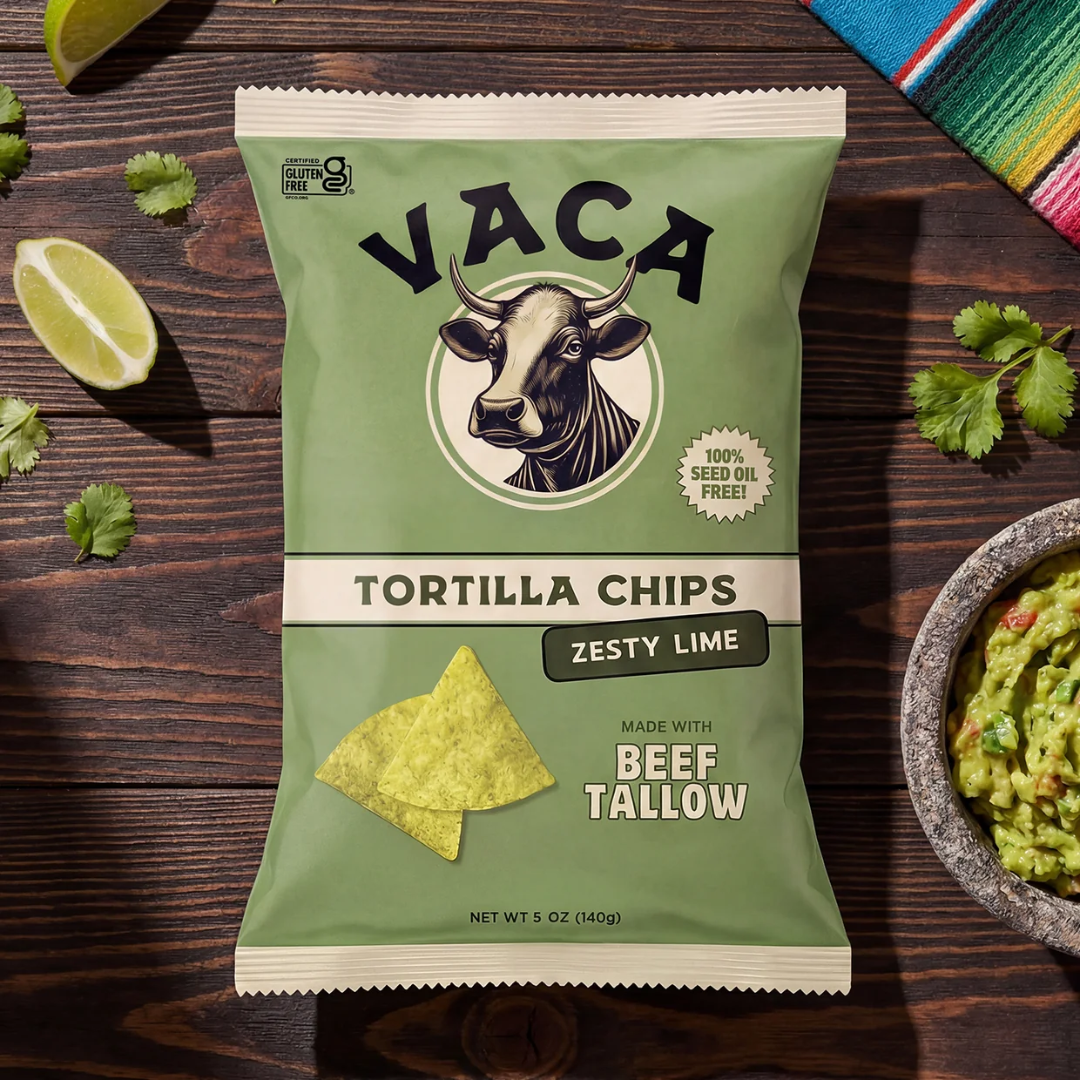
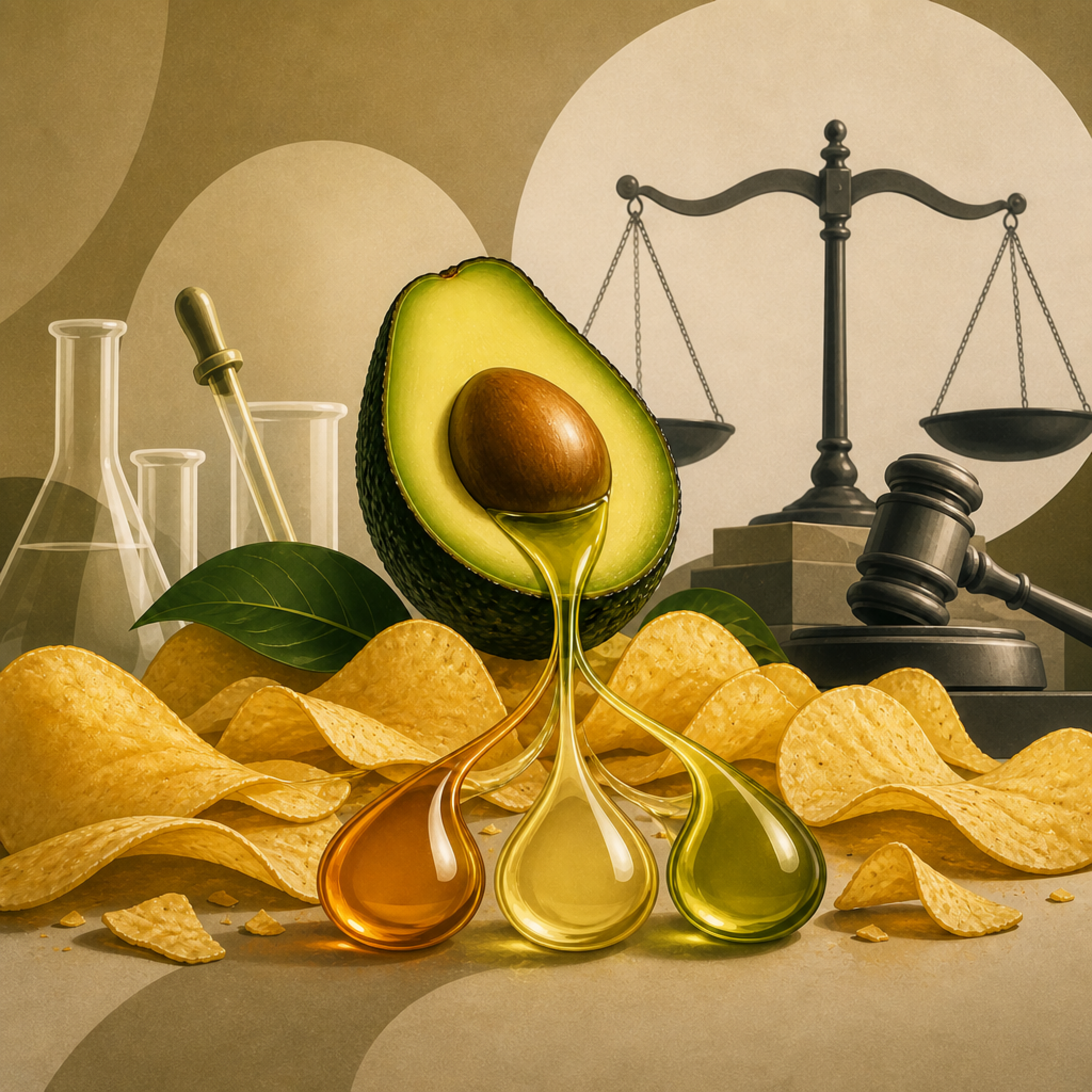
0:15 – Saffron Road is introducing its “most ambitious brand refresh” in its 15-year history as it aims to align with today’s consumer trends, including the growing anti-seed oil sentiment and an insatiable appetite for protein.
3:20 – The Dirty Soda trend has officially broken TikTok containment and is now influencing restaurant and retail innovation. Brad highlights recent examples.
7:25 – Keychain has raised $30 million in Series B funding and is introducing an AI-powered operating system to streamline production for food and beverage manufacturers. Monica explains more.
8:45 – Soylent is struggling. Brad shares what the future may hold for the meal replacement brand.
10:15 – The hosts chat about protein-packed sauces, a decline in drinking and Newtopia Now.
About CPG Week
CPG Week is the podcast that explores the latest happenings in the consumer packaged goods industry. Join our seasoned reporting team as they dish out the week’s stories in quick, easy-to-digest episodes. Catch up on the top headlines of the week, dive into exclusive insights with the BevNET and Nosh teams, and set yourself up to make more informed business decisions. Tune in to stay up-to-date on the latest developments in the dynamic world of packaged food and beverage.
New episodes are released every week. Send us comments and suggestions anytime to cpgweek@nosh.com.
Show Highlights:
In this episode of CPG Week, the hosts discuss why Saffron Road is aligning with the growing anti-seed oil sentiment, how the TikTok-driven dirty soda trend is influencing recent beverage innovation, Keychain’s latest fundraise, and the recent struggles of Silicon Valley darling Soylent.
Episode Transcript
Note: Transcripts are automatically generated and may contain inaccuracies and spelling errors.
[00:00:05] Monica Watrous: Welcome to the CPG Week podcast by BevNET and Nosh. I'm Monica Watrous, here with my co-host Brad Avery. Now, here is the latest in food and beverage industry news. Saffron Road is introducing its, quote, most ambitious brand refresh in its 15-year history, as it aims to align with today's consumer trends, including the growing anti-seed oil sentiment and an insatiable appetite for protein. Rolling out this month to retailers nationwide, the brand's renovated product line features reformulated recipes, eliminating canola and soybean oils and adding in some cases twice as much chicken or lamb, as well as a bold new look that integrates artwork reflecting the brand's global heritage. The certified B Corp is also transitioning to plant-based and compostable fiber trays to strengthen its commitment to sustainability. While Saffron Road was built on introducing international flavors to the frozen aisle, with cuisines spanning Indian, Korean, Thai, Mexican, Moroccan, and more, its core consumers are, quote, modern millennials and aspirational baby boomers who are seeking more nutritious premium options in the set. I spoke with founder and CEO Adnan Durrani, who told me the changes were informed by a very deep dive using retail tracking data, panel studies, and consumer surveys over the past year. He told me that transitioning away from seed oils has been in the works for more than five years, which is long before they were deemed unhealthful by the Make America Healthy Again movement. Moreover, the rising adoption of GLP-1 weight loss medications marketed under names such as Ozempic, Wogovi, and Mangiaro has fueled demand for products with higher protein density and portion control.
[00:01:57] Brad Avery: Mentioning that he was getting away from seed oils about five years ago and wanted to do this is curious. Obviously, this trend had to come from somewhere, so I wonder if he was Already ahead of the curve there, but I do wonder what it also says about the types of consumers that Saffron Road appeals to and their current base and Did he say who they're trying to expand with is it largely that kind of maha? Conscious consumer or is it a broader demographic?
[00:02:29] Monica Watrous: Well, he told me that Saffron Road has always been aligned with removing harmful additives and promoting a clean ingredient deck. Uh, he did mention that the opportune time for eliminating seed oils is now as the Maha movement is gaining more interest and influence over the food industry. But he also said that the brand has now become the first frozen entree that is seed oil free certified. And he mentioned that this movement away from seed oil and other controversial ingredients has been happening across the supermarket. He thought that the frozen foods category has been lagging behind and believes that Saffron Road is leading a charge here.
[00:03:16] Brad Avery: Well, it's always great to hear about clean label, but what about getting a little dirty? The dirty soda trend has officially broken TikTok containment and is now influencing menus and CPG innovation across the food and beverage industry, as several companies, including Taco Bell, PepsiCo, and Lowe's Hotels, made new announcements this week about new products, innovations, partnerships, and more all around this trending dirty soda. PepsiCo is at the center of many of these deals, including the first major Baja Blast flavor innovation in years going on tap at Taco Bell. We also have PepsiCo's own Drips by Pepsi line that is launching into regal movie theaters after a test run last year. We're seeing this trend grow faster and faster because this week's announcements also included Lowe's Hotel launching its own line, Press Juicery, or Pressed, now coming out with brightly colored sparkling options. McDonald's, which launched a Cosmix restaurant concept built around beverage innovations, is bringing some of those drinks to 500 stores this year. And it may not be dirty soda, but Wendy's is not one to be left out. The fast food chain is also getting on the game with new cold brew coffee with cold foam and sparkling energy drinks. I wrote a bit about this on BevNET. You can read the story, Dirty Business, Why Soda Trends Are Shaping Strategy, from Pepsi to Taco Bell. But there's so much to cover here, and it's a fascinating trend that kind of goes away from health and wellness and just really embraces next-gen flavor and consumers wanting something different rather than necessarily healthy.
[00:04:59] Monica Watrous: Can you explain to those of us who aren't in the know what dirty sodas are?
[00:05:05] Brad Avery: Largely, the trend comes out of Utah, where there is a very large Mormon population. And if you may or may not know, Mormons cannot have hot drinks or caffeinated drinks that aren't soda. So they're forbidden from coffee. They're also forbidden from alcohol, which made soda shops a go-to social restaurant experience in the state. That has been spilling over. There's chains that began in Utah like Fizz Drinks and Swig that are now rapidly expanding across the country. Both are expecting over 500 locations in the coming years, including Canada and the US. And Coke and Pepsi and KDP are all paying attention. They already work with these chains, and now it's influencing their own innovation to a degree. I think this is all part of the larger flavor revolution that we've been witnessing in CSDs and energy drinks to an extent as well.
[00:06:01] Monica Watrous: But Brad, the examples that you described are happening on premise, but are there any RTDs at this point that are offering this dirty soda experience?
[00:06:10] Brad Avery: Off the top of my head, I'm not sure of anything that's calling itself a dirty soda, but I do think we see the ethos being reflected in a lot of the flavor trends. Look at Coca-Cola's Creations program that offered limited edition esoteric flavors like Starlight and Dreamworld, as well as their permanent edition of an orange cream flavor or co-branded Oreo Coke. Those are the kinds of creative, kind of wacky flavors that you will get on the TikTok home chef accounts or in a soda shop like Fizz or Swig. You also see this week Mountain Dew launched a partnership with Trolley Gummy Worms and they're following a bit of the energy drink trend now of partnering with candy. So we had C4 Sour Patch Kids and Skittles. Now we're seeing some sodas start to forge these own brand partnerships to catch attention. This is very social media driven. They're deliberately colorful. It's meant to pique the interest and whether or not it's something that consumers will want to go back to again and again is besides the point. It brings attention to the brands and at the very least drives a one-time if not multiple purchases.
[00:07:24] Monica Watrous: And now for some investment news this week, tech startup Keychain has raised $30 million in a Series B funding round led by Wellington Management and Box Group alongside existing investors. To date, the startup has raised a total of $68 million just 18 months after its launch. The company plans to use the proceeds from the round to launch Keychain OS, an AI-powered operating system that will streamline production for consumer packaged goods manufacturers by reducing waste, predicting bottlenecks, and improving planning in real time. The new offering builds on Keychain's flagship search and discovery platform, developed to help brands and retailers manage orders, track products, and connect with manufacturers. Since its launch, the network has grown to more than 30,000 manufacturers and over 20,000 brands and retailers, facilitating more than $1 billion in manufacturing projects monthly, according to the company. HeChainOS adds manufacturing to the mix, connecting food safety, inventory, procurement, and cost accounting into a single intelligent system that can replace legacy enterprise resource planning systems such as Oracle, QAD, and Plex.
[00:08:43] Brad Avery: And say it ain't so, but Soylent is struggling. Starco, the parent company of the meal replacement brand, announced that Soylent's RTD shakes earned just $6.8 million in Q2 2025, its latest earnings last week, down from $11 million last year. That's a 33.6% drop. It comes amid, quote, inventory constraints. It's probably not the growth curve that Starco hoped to see for Soylent when it acquired it in 2023. The deal brought a proper RTD beverage line to Starco's portfolio that also includes vodka-infused whipped cream Whipshots and popcorn butter spray brand Winona Pure. But it's not all grim for the tech-adjacent brand. Soylent did see an operating profit of around $164,000. That may or may not sound like much, but it's a far cry better from an $8 million loss last year. So a return to Soylent's D2C roots may now be in the cards, as Starco CEO Ross Sklar said that a strategic exit of unprofitable SKUs and retail channels is underway.
[00:09:48] Brad Avery: Maybe Dirty Soylent is the answer. Ooh, now that's thinking with your head.
[00:09:53] Brad Avery: Dirty Soylent. It's people. You know, everyone made that joke. And I wonder if that was always too much of a hurdle for the brand. Could be. The Soylent Green. Could be. Couldn't get over it.
[00:10:08] Monica Watrous: On a lighter note, nearly every food category has seen some level of proteinification in recent years, and now it's condiments' turn to bulk up. A new brand called She's the Sauce markets protein-packed creamy ranch and honey mustard.
[00:10:25] Brad Avery: Now what does the name mean, She's the Sauce?
[00:10:28] Monica Watrous: Isn't that what the kids say? Like, oh yeah, she's the sauce. Do they? I don't know, it's like all that and a bag of chips for 2025.
[00:10:35] Brad Avery: I'm finally at the age where I don't know what the kids say anymore. I've been at that age for a while. I'm hitting that point. Yes, she's the sauce. It just is like, am I drinking a person? Is this the Soylent Green? Well, in darker news, the teens aren't drinking.
[00:10:55] Brad Avery: Good, they're not legal.
[00:10:59] Brad Avery: The percentage of Americans who say they drink alcoholic beverages has fallen to its lowest point, 54% in the history of Gallup's annual survey tracking drinking patterns of adults. So it's not really tracking the teens, it's everybody. When you hear the phrase, no one's drinking anymore, there's a grain of truth to that. Alcohol consumption is down significantly. In fact, just this morning, I was looking at a non-alc drinks for dummies book that is now out, the For Dummies series.
[00:11:26] Monica Watrous: I didn't even know that was still going. Personally, my alcohol consumption has not declined, so I'm not really part of the majority here.
[00:11:36] Brad Avery: At least you're still in the majority.
[00:11:38] Brad Avery: 54% is more than half.
[00:11:43] Monica Watrous: And that's math.
[00:11:44] Brad Avery: You can rest assured that you are a traditionalist.
[00:11:47] Monica Watrous: Thank goodness for that.
[00:11:49] Brad Avery: I believe also a quick shout out is in order to Tuyo Foods, the powdered aguas frescas brand based out of Santa Barbara, California. The three-year-old company announced a small crowdfunding round of $68,000 this week, surpassing its $50,000 ask. The brand currently only sells multi-serve tubs of its drink powders, but the financing should allow for a new single-serve stick pack line in the near future. So just a quick congrats to Tuyo. I've met them at trade shows in the past. They have a pretty innovative product. We've talked about this Agua Fresca trend on the show before, and their powdered approach, which kind of mirrors a kind of Kool-Aid, Flavor-Aid type of beverage format, is a really great natural step for the category, I think. So congrats to this startup brand for a nice little crowd raise.
[00:12:38] Monica Watrous: Absolutely. Stephanie is the founder and she is a delight and the products are great. So I echo that wholeheartedly. I'm actually not sure if Tuiyo will be at Newtopia Now this week, but I will be. New Hope Network's replacement for Expo East, Newtopia Now is coming back for its second year in Denver this week. And I will be in attendance hoping to see as many brands and new products as I can. One thing I love about that show is it is a way more intimate and calmer counterpoint to Expo West. It's a sister show and fewer exhibitors but a lot of retail buyers and the folks that I spoke with who exhibited last year loved having the opportunity for more face time with important stakeholders in the industry It just allows for more meaningful conversations and the vibe is just a little bit lower key.
[00:13:37] Brad Avery: Well, unfortunately, I will not be attending as much as I'd like to and hope to be there in the future. But if you see Monica, say hello. Don't be a stranger. We love hearing from you. In fact, you can reach out to us at any time. CPG Week at Nosh.com is our email. We love to hear from listeners. Let us know what your thoughts are on the news of the week.
[00:13:57] Monica Watrous: Yes, we'd love to hear from you and definitely say hi at Utopia if you're around. Here are some other notable bits of news from the week. Ben Weiss, the creator of Buy Tea, has brewed up another attempt at boozy tea. Launched in May, Weiss's latest venture is Crooked Tea, a 4% ABV zero-sugar iced tea in lemon, peach, and raspberry flavors. Amazon is leveraging its deep pockets and robust logistics infrastructure to offer same-day delivery of perishable groceries to over a thousand cities with plans to expand that to around 2,300 by the end of the year. And finally, Skinny Dipped is forecasting over $100 million in revenue this year behind a bigger push into Better For You Confectionery. For these stories and more, become an insider at BevNET and Nosh. And if you're enjoying the show, please subscribe on your listening platform of choice. That wraps up this edition of CPG Week by BevNET and Naush. Thank you to our audio engineer, Joshua Pratt, our director is Mike Schneider, and our designer is Aaron Willette. If you enjoyed the podcast, please subscribe on your listening platform of choice, and we will see you next time.
About CPG Week
CPG Week is the podcast that explores the latest happenings in the consumer packaged goods industry. Join our seasoned reporting team as they dish out the week’s stories in quick, easy-to-digest episodes. Catch up on the top headlines of the week, dive into exclusive insights with the BevNET and Nosh teams, and set yourself up to make more informed business decisions. Tune in to stay up-to-date on the latest developments in the dynamic world of packaged food and beverage.
New episodes are released every week. Send us comments and suggestions anytime to cpgweek@nosh.com.
Stay Informed, Stay Competitive
Unlock the articles, expert interviews, and data reports that power the food and beverage industry. Join our community and stay ahead with exclusive insights from BevNET and Nosh.