CPG Week: The War On Ultraprocessed Foods
Episode 116
In this episode:
In this episode:
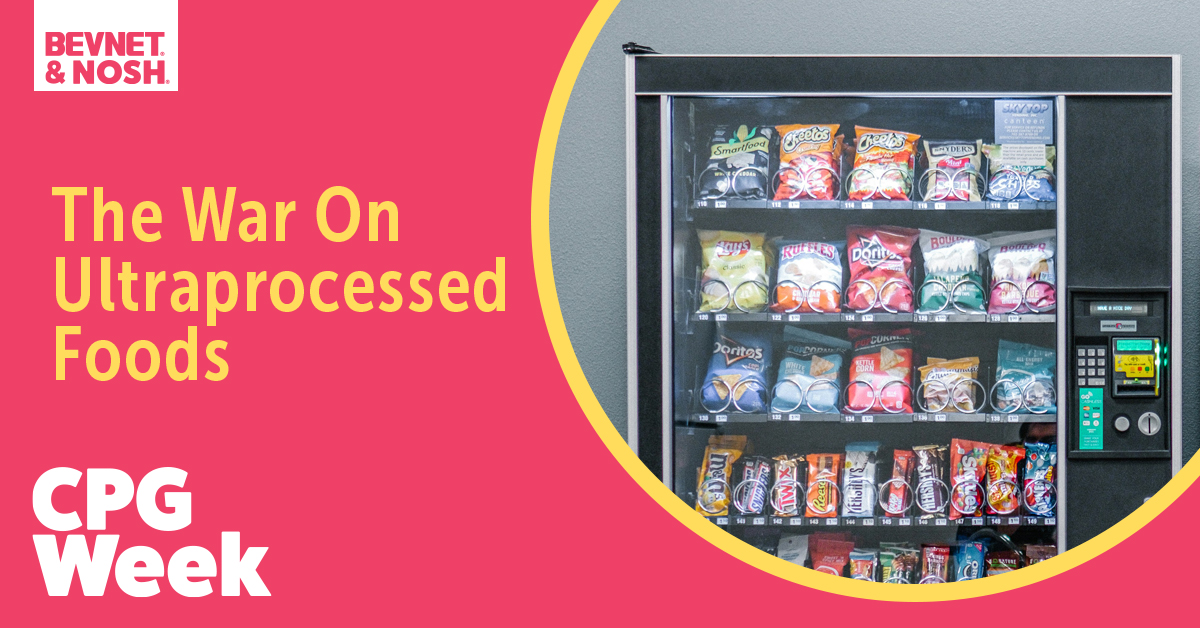
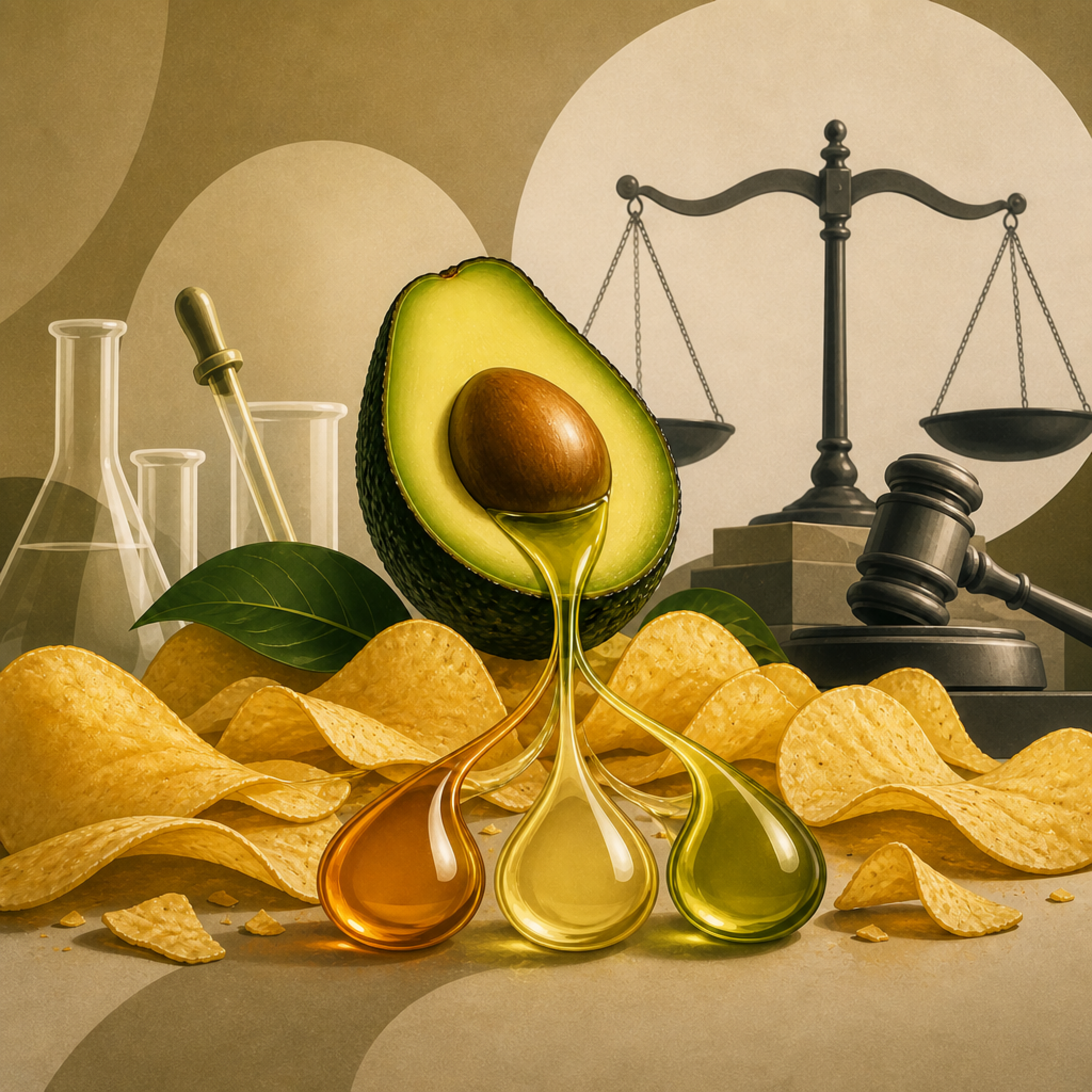
In this episode, the CPG Week team discusses industry and regulatory efforts to define and restrict ultraprocessed foods in the U.S. food supply. Spoiler alert: There’s a lot of gray area.
Show Highlights:
0:30 – Nosh managing editor Monica Watrous declares April Fools’ the worst day of the year. The group discusses a few of the best and worst brand pranks.
3:00 – Assistant managing editor-Newsletters Adrianne DeLuca details efforts by the Food Integrity Collective to develop guardrails around the designation of non-ultraprocessed food.
5:45 – Senior reporter Brad Avery cites the nutritional differences between raw potatoes and Pringles to explain the impact of processing.
8:45 – What policies are in the works at the state and federal levels to restrict ultraprocessed foods? The group discusses recently passed bans on certain food additives and why a state-by-state patchwork could create major headaches for food manufacturers.
14:20 – Brad and Adrianne point out the challenges that lie ahead for a largely deregulatory administration seeking to regulate ultraprocessed foods while conducting mass layoffs across the agencies involved.
About CPG Week
CPG Week is the podcast that explores the latest happenings in the consumer packaged goods industry. Join our seasoned reporting team as they dish out the week’s stories in quick, easy-to-digest episodes. Catch up on the top headlines of the week, dive into exclusive insights with the BevNET and Nosh teams, and set yourself up to make more informed business decisions. Tune in to stay up-to-date on the latest developments in the dynamic world of packaged food and beverage.
New episodes are released every week. Send us comments and suggestions anytime to cpgweek@nosh.com.
Show Highlights:
In this episode, the CPG Week team discusses industry and regulatory efforts to define and restrict ultraprocessed foods in the U.S. food supply. Spoiler alert: There’s a lot of gray area.
Episode Transcript
Note: Transcripts are automatically generated and may contain inaccuracies and spelling errors.
[00:00:05] Monica Watrous: Welcome to the CPG Week podcast by BevNET and Nosh, your source for the latest food and beverage industry news. I'm Monica Watrous, Managing Editor of Nosh, here with my co-hosts, Brad Avery and Adrianne DeLuca. If you're enjoying the show, please subscribe on your listening platform of choice. On the podcast today, we are discussing ultra processed foods. But first, we are recording this episode on April 1st, my least favorite day of the year, because I'm gullible. And we have been inundated with fake press releases and posts on social media about products that do not exist. Some of them should never exist, but others I'd be in. I mean, some of these things kind of sound good. Reese's chocolate bread? Yeah, would eat.
[00:00:55] Brad Avery: Honestly, I even saw a Hot Honey Perfect bar and it had me thinking for a second. I wouldn't not try it.
[00:01:02] Adrianne DeLuca: Right? That is my thing about this holiday now, where it's like, why are you presenting products as a joke that you would absolutely make anyway? Like, if you put out a press release about a fake product, you should be legally required to produce that product.
[00:01:17] Monica Watrous: Some companies do like this, like April Fool's serves as a testing ground for some of these outlandish concepts.
[00:01:23] Brad Avery: I will say some of my favorites this year have been not even product focused. Like Belly Welly, they did a prank on someone naming their twins Belly and Welly after the brand and it turned out to not be true. But as Monica noted, I was also very gullible and thought that was hilarious and real until it was proven otherwise.
[00:01:45] Monica Watrous: And then there's Garlic Ranch Ollipop, which I got to say, hard pass, would not drink. Probably not good, but I'd try it. I hate ranch anyways, so I'm going to pass.
[00:01:57] Adrianne DeLuca: I tried the pepperoni pizza perfi soda. Nothing can be as bad as that because the taste lingered. I was at Expo West, and that's a show where you're constantly sampling so many different things, and that taste still just persisted for like an hour. No matter what else I tried to drown it out with, it was still there, and I only had a single sip, which just shows you the power of the pepperoni pizza perfi.
[00:02:23] Monica Watrous: Really left an impression. You could even call that perfect pepperoni pizza soda and ultra processed food. I guess we're still trying to figure out how to define this thing. And I, when I say we, I mean the industry, scientists, regulators, everyone. Adrian, you just wrote an amazing three part series about ultra processed foods, looking at this topic from all angles. First of all, let's talk about how the industry is approaching and defining UPF.
[00:02:53] Brad Avery: As of right now, we're not really defining it, or at least with any hard guardrails. I'd say the best framework we have is what everyone refers to as the NOVA definition. It's got a little bit longer of a name, but I'll spare you the details for now. Anyways, the people behind the non-GMO project are currently working to come up with some sort of industry framework to put some guardrails on what is and what is not considered ultra processed food. sat down with their founder during Expo West, and she shared that, you know, when they kicked off this project, they were looking at the food system as a whole. From a top-level view, what do we need to do to make food more transparent, healthier, just support general well-being among Americans. And the one area they identified that the industry was not tackling was this concept around ultra-processed foods, which is why they've begun to try to develop some sort of certification program around it. They thought NOVA would get them there, but turns out once you try to apply that framework, which was developed by a group of scientists in Brazil back in 2009, to actual manufacturing processes, it doesn't get you all the way there. There's just some gaps. They're currently working with a bunch of nutritionists, retailers, the industry, trying to bring in insight from all angles to come up with an actionable definition that actually helps manufacturers understand where their foods fall in this scale of, you know, minimally processed, processed, ultra-process designations and how they can move towards that more minimal processing goal and simplify formulations a bit.
[00:04:42] Monica Watrous: There's so much gray area here. Processing is important and when people are scared of things like the word processing and preservatives and additives, they really don't understand the food system.
[00:04:56] Brad Avery: Absolutely. This has been one of, I'd say, the most interesting conversations that I think has come up in recent weeks where everyone in the industry is obviously focusing on what regulators are saying around ultra-processed foods. There's so many different forms of processing that then contribute to the end nutrient density. of a food product. So, NOVA defines it as, you know, kind of shorthand. If you don't have an ingredient that's on that label in your kitchen or you couldn't go buy it at a grocery store, it's likely ultra processed. Inputs like salt, vinegar, things that have been used as preservatives for a long time they're all kind of getting lumped into this definition in these broader conversations right now. And that's just generating a lot of confusion on the consumer end.
[00:05:47] Adrianne DeLuca: So Adrian, in the most recent story you wrote for this series about what the science says and where it falls short, you use an example of potatoes. And you point out that an average 5.3 ounce potato has about 110 calories, no fat, 26 grams of carbs, no sodium, but compared to Pringles chips, And a similar size five ounce serving has 750 calories, 45 grams of fat, 10 grams of sodium, 80 grams of carbs. How much of that is just the cooking process? And when we talk about ultra processing, how much of that is just adding oil and salt?
[00:06:24] Brad Avery: It raises a really good point, Brad, because, you know, as we mentioned, a five ounce potato is not the same as a five ounce serving of Pringles. Especially when you're looking at the nutrient density of these products on this serving size comparison, what really stands out among the ultra-processed foods is actually the lack of fiber that they contain. And I think that's going to likely emerge as a larger sticking point among this ultra-process debate when you do get down to the manufacturing process level. I think when it comes to ingredients, that's when it gets even trickier because plenty of inputs that have been used for years, like salt, vinegar, sodium, there are chemical derivatives that are commonly used now in food. And it's going to take kind of a line-by-line review of all of these ingredients to determine which ones do qualify as a non-ultra processed food versus an ultra processed food. So there's just a lot of nuances, I think, still to wade through.
[00:07:26] Monica Watrous: Right, and when you talk earlier about how a guideline that people are using to define UPF as made with ingredients that you wouldn't have in your pantry. But if you're looking at a very basic kettle cooked style potato chip recipe, we're talking oil, potatoes, salt. And that would be considered UPF despite the fact that it has a simple ingredient deck because it was engineered in a way where people want to eat it, the addition of salt makes it hyper palatable, right?
[00:07:58] Brad Avery: Not necessarily. So potato chips can qualify as just a processed food because all of those ingredients, yeah, you could purchase at the store. But when it comes to a Pringle, where it's made with dehydrated potato starch, there's like nine other ingredients in there that I'm not even going to try to name off.
[00:08:16] Adrianne DeLuca: Maltodextrin, cornstarch, mono and diglycerides.
[00:08:20] Brad Avery: those things. You're not going to be able to go pick that up at your local supermarket and cook up your own Pringles at home. That's when it teeters on the edge of this ultra-process definition.
[00:08:35] Monica Watrous: Let's look at it from a regulatory angle now. What are the states doing? What federal policy proposals are in the works? And how could the government attempt to regulate this?
[00:08:46] Brad Avery: You want to talk gray area, Monica, this is even grayer than the industry approach, I would say. At a federal level, the Make America Healthy Again movement, spearheaded by RFK Jr. himself, has made UPFs their biggest talking point from additives and dyes and all of those ingredients that we were just mentioning you can't readily purchase. That's really what they're focusing in on, on how to define these. And that's what they're going after initially, because as we mentioned, there is really no working definition for UPF. And I think they're even smart enough to realize there's not something they can act on in a regulatory sense around UPFs, but something like red dye or potassium bromate, like those are clear ingredients we can latch on to that are commonly associated with these types of products. At a federal level, Kennedy is currently reviewing the SNAP guidelines, dietary guidelines, the GRAS process. They're taking a very top-level approach here to regulating ultra-processed foods, potentially removing them from the SNAP program or the accessibility of these products through the SNAP program. When it comes to actual actionable regulatory moves, a lot of that's actually just playing out at the state level right now, where we've seen even states like California, before all of this really got started back in January, passed a bill to begin removing UPFs from school lunches. West Virginia became the first state to ban synthetic dyes. And that will take aim first at school foods, but they're going to expand that regulation they plan to all foods sold in the state. And there's about 20 similar active bills moving through state legislatures right now. Utah just joined the fray earlier this week. I'm sure by the time this episode goes live. We'll probably have a few more to tack onto the list. Just, this is all to say the states have really taken this, you know, as a key initiative that they can act on because, back to the federal level here, the FDA does not have really the capacity to enforce anything that they put into place right now. between layoffs and just being chronically under-resourced, understaffed for many, many years before these layoffs hit.
[00:11:19] Adrianne DeLuca: You mentioned one bill that bans UPFs from school meals, but again, how are they defining UPFs? Because as we've just established, there's no proper definition for what an ultra-processed food actually is by law.
[00:11:33] Brad Avery: Yeah, so California took a, I'd say a lighter approach to defining UPFs by saying they're going to remove some of them from the food system or the school food system. So they're taking, you know, the most obviously processed foods and targeting those, so things that are rife with food dyes, synthetic food dyes, synthetic additives, synthetic preservatives, anything that is, you know, chock full of those products are what they're taking aim at first. This is not going to be a comprehensive nor a broad-reaching regulation on ultra-processed foods. There will still be ultra-processed foods sold in California schools. This is just really their first step in trying to rein it in. Really, what a lot of this comes down to is pushing food manufacturers to start considering reformulation. That was the main rally cry of Governor Gavin Newsom when he passed that legislation. That is the same what West Virginia has emphasized after they passed their food additive bill. Even RFK was out in West Virginia last week. supporting that effort, but his broader message was, I really hope this pushes others, other states, other food manufacturers to really consider what's going on here.
[00:13:00] Monica Watrous: How likely is it, given the track record of the FDA, the lack of resources there, for UPFs to be defined at the federal level and regulated in this way in the next four years under the Trump administration?
[00:13:17] Brad Avery: I don't want to make any solid predictions because the Trump administration, as I'm sure everyone listening knows, has shocked us at every turn in the past few months. Hold my beer. Yeah. But given the FDA is its own agency, Trump administration removed, they took 10 years to define the word healthy. So I don't expect it to come in the next four. If it does, the concern of many and rightly so, would just be that this definition they would come up with largely ignores readily available scientific evidence, or science just in general, and more spans from what RFK has repeatedly emphasized as just being public interest. He thinks that is where this definition should be based. We can leave that one up to everyone's own interpretation. I take that as the food, babe, maha kind of sentiment, but we'll have to wait and see on really how much action they end up taking at a federal level.
[00:14:22] Adrianne DeLuca: Yeah, I wouldn't even begin to make a prediction on what will be happening on the federal level anytime in the near future, because even when you look at a lot of the stated goals versus actions, it's confusing. They say they want to deregulate as much as possible. They're anti-regulation, but then this we want to regulate, so we want to get regulations on ultra-processed foods. except they are now slashing as much manpower as possible from all corners of the government, including health, including food. And when you cut people, that actually makes it harder to deregulate. You need manpower in order to properly deregulate or to regulate. And so the entire thing is just such a confusing mess of what are their goals in the end and how do they plan to achieve them? that I would not even begin to make a prediction about how the FDA might operate on this. All we know is that they have this sort of initiative, but it seems to be largely public statements from what I can tell right now. It's a public statement initiative, and I don't know of any serious measure on the back end to actually enact anything.
[00:15:39] Brad Avery: Brad, I think that raises a really good point and as much as I love to point out the hypocritical and contradictory nature of this entire administration, so I think it is an interesting sentiment that's emerged where you do have this federal figurehead pushing for, you know, making America healthy again without the means to do so, yet it is gaining a lot of action at the state level. something seems to be working in their favor, but the messages in the meantime are very mixed and very clouded and are likely gonna result in a hell of a lot of headaches for everyone.
[00:16:19] Adrianne DeLuca: For me personally, I think the biggest point of confusion is just when we talk about these ingredients and it's trying to understand which is okay for you and which are problem ingredients. And there's a sentiment of, if you can't pronounce it, you shouldn't eat it. But that's not always true. Ingredient panels often just use the scientific name for something. There's a lot of ingredients that are just vitamin B under a different name. I'm totally for cleaning up the food system. I totally do believe there's a lot of ingredients we use regularly that need to be cut out for just people's health. But I don't know enough personally to say which is which. And definitely I don't know that every single lawmaker in the country is an expert in this either.
[00:17:01] Brad Avery: I'm not sure RFK is either. He recently posted a TikTok pronouncing some very common ingredients like you just named off, like riboflavin, that is vitamin B12, and claiming, you know, these kind of ingredients need to go because we can't pronounce them. So when it comes to the science, it's going to be an interesting four years.
[00:17:25] Monica Watrous: Thanks for joining us, Adrian, to shed some light on this topic that we will be reporting a lot more on in the months to come, I'm sure. Well, insiders can read the series on Nosh.com, ultra-processed food, the food industry's approach, regulatory moves and resource allocation create conflict, and what the science says and where it falls short. And here are some other notable bits of news from the week. How Cynics is capitalizing on the clean label Frozen Wave, Inside Instacart's new merchandising service, and Lucky Energy Net's $14.2 million in fresh funding. For these stories and more, become an insider at BevNET and Nosh. That wraps up this edition of CPG Week by Bevna and Nosh. Thank you to our audio engineer, Joshua Pratt, our director is Mike Schneider, and our designer is Aaron Willette. If you enjoyed the podcast, please subscribe on your listening platform of choice, and we will see you next time.
About CPG Week
CPG Week is the podcast that explores the latest happenings in the consumer packaged goods industry. Join our seasoned reporting team as they dish out the week’s stories in quick, easy-to-digest episodes. Catch up on the top headlines of the week, dive into exclusive insights with the BevNET and Nosh teams, and set yourself up to make more informed business decisions. Tune in to stay up-to-date on the latest developments in the dynamic world of packaged food and beverage.
New episodes are released every week. Send us comments and suggestions anytime to cpgweek@nosh.com.
Stay Informed, Stay Competitive
Unlock the articles, expert interviews, and data reports that power the food and beverage industry. Join our community and stay ahead with exclusive insights from BevNET and Nosh.