Why B-Sides Is Uncertain About Upcycled Labeling?

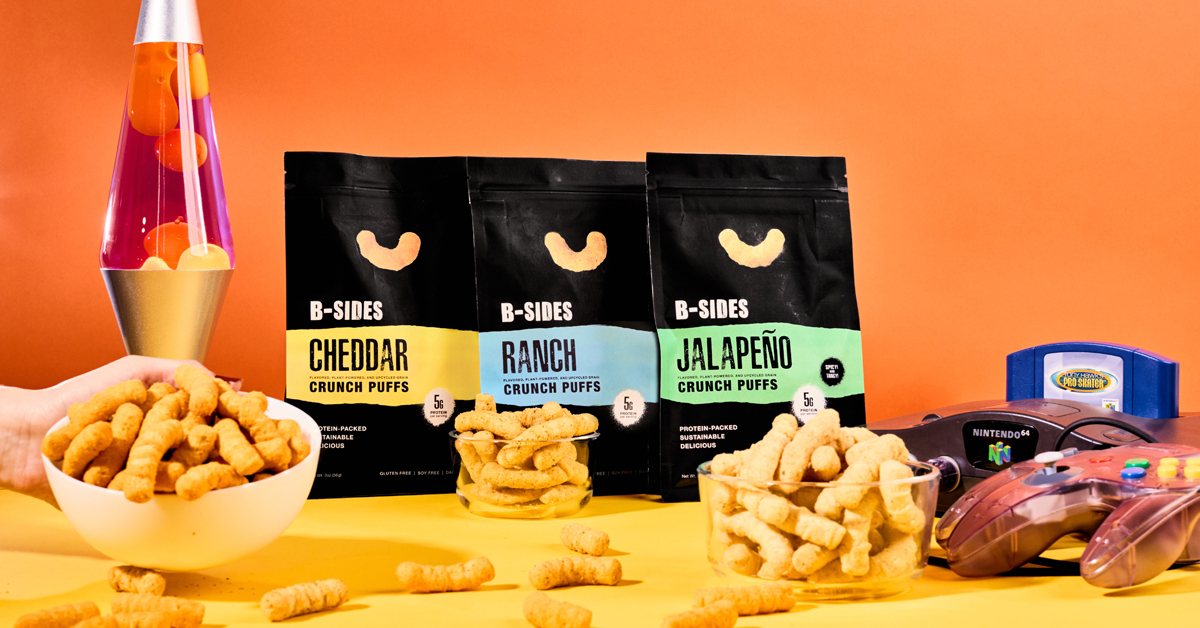
How can upcycling better resonate with snackers? One New York City-based brand is searching for a new approach to reach climate-conscious consumers.
Upcycled puffs maker B-Sides is bucking the trend of many category brands by positioning less around the sustainability claims, but focusing squarely on the perceived value consumers look for in a snack.
In January, the brand made its retail debut in independent retailers in New York City. B-Sides uses leftover oats from oat milk production mixed with pea protein and upcycled corn meal to make its high-protein Crunch Puff. Each 2 oz. compostable pouch has 10 grams of protein and is available in three varieties: Ranch, Jalapeño and Cheddar.
After working as a Goldman Sachs private banker, B-Sides founder and CEO Yousuf Ahmed set out to “do something else entirely.” He looked to the intersection of food and sustainability, asking if there was a better way to address food waste from a business standpoint.
“How can you make an upcycled product resonate with consumers?” Ahmed said. “I’m trying to put together a product that uses upcycling as a tool in the toolkit rather than hanging my hat on it.”
What he saw in the upcycling movement was an “overpromise” by many stakeholders that were slotting in an upcycled ingredient to “rubber-stamp or virtue signal” sustainability to consumers, he said.
“Upcycling is essentially back-solving for a supply chain problem,” he added.
The key is finding the right mix of product formulation and messaging to fill that gap. Currently, B-Sides is “market-testing” by keeping its distribution relegated to Ahmed’s home market in New York along with direct-to-consumer and on Amazon.
The brand is taking an “all-of-the-above approach,” as Ahmed calls it, seeking to answer how “upcycled ingredients make sense from a flavor, textural and nutritional standpoint.”
On the product pouches, the word “upcycled” is in a minimalist font and third on the hierarchy of descriptors. B-Sides is also downplaying its upcycled nature by waiting to apply for an Upcycled Certification. For now, Ahmed said he was unsure whether the return on investment for the third-party certification would move the needle with consumer choice.
It’s a similar position other upcycled brands have taken as the category has evolved. Upcycled chip brand Trashy rebranded from its first name Pulp Pantry as it found health attributes were a more important value proposition to consumers than sustainability metrics.
Other upcycled industry stakeholders have taken a different approach by moving into a B2B ingredient provider role. This strategy allows upcycling businesses to spend less on marketing and distribution, opting to be a value-add for larger brands aiming to meet sustainability goals.
The global upcycled food market is valued at about $54.3 billion and projected to grow at a CAGR of 5.6% to $74.8 billion by 2029, according to a recent report from BCC Research.
The brand is hoping to expand into a broader national retail strategy in the first quarter of 2026. For now, the company is searching for the ideal target consumer of an upcycled, high-protein puff, Ahmed said.
Judging by early indications, that consumer is millennial moms who are looking for healthy snack alternatives.
“We’re trying to deliver a snack that scratches the itch of a Dorito or Cheeto that you also don’t worry about feeding to your children,” he said.
The other target demographic are “people who know they need more protein in their diet and want a snack that is not marketed to gym bros,” he said.