Daily Briefing (Insiders Only): FDA Circles Back On Guidance

The U.S. Food and Drug Administration (FDA) is not renowned for its speed (or ability to meet deadlines), but it appears the agency is kicking off 2025 with a “new year, new me” attitude, releasing not one, but five guidance documents on Monday, the first official work day of the new year (because, let’s be honest, last week didn’t count).
First up on its to-do list (and for good reason): lead limits for processed food intended for young children and babies. Here’s the mandate of acceptable levels:
- 10 parts per billion (ppb) for fruits, vegetables (excluding single-ingredient root vegetables), mixtures (including grain- and meat-based mixtures), yogurts, custards/puddings, and single-ingredient meats
- 20 ppb for single-ingredient root vegetables (think: carrots, beets or potatoes)
- 20 ppb for dry infant cereals
However, the final guidance does not cover other kid products that have been flagged for contaminants (whether that be heavy metals or bacteria) such as infant formula, beverages (though juice has its own set of action levels) and snacks like puffs and teething biscuits (a format that was detected for its high heavy metal contents in 2021).
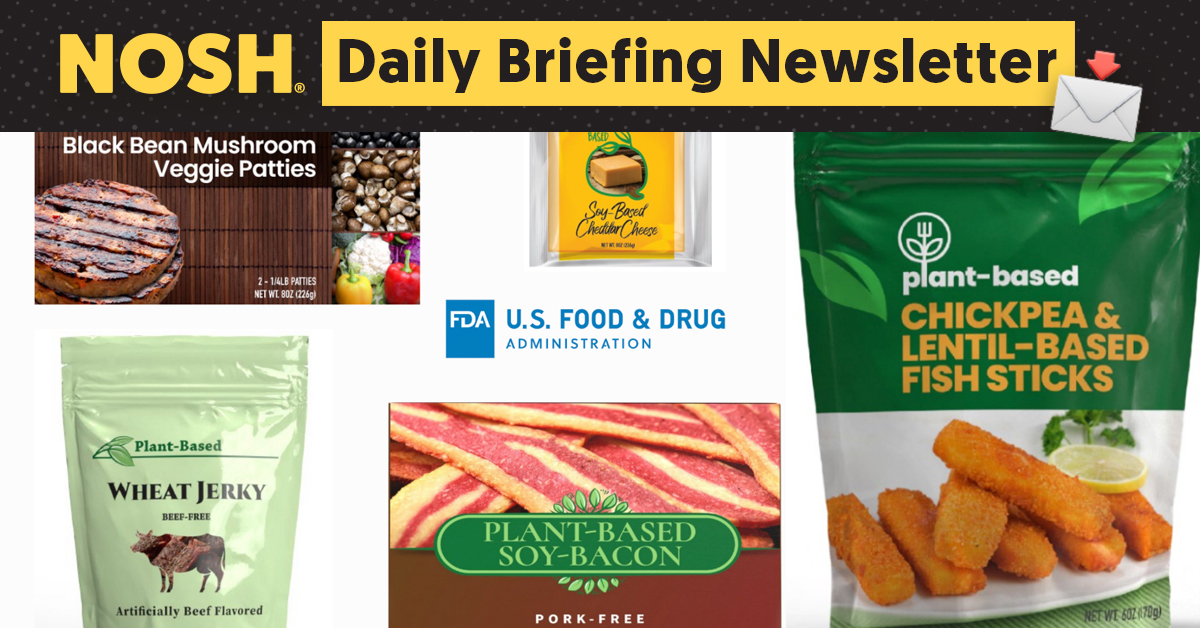
Beyond heavy metals, the agency also released final guidance on food allergen labeling, a directive for FDA staff on labeling for other major food allergens, sanitation suggestions for Low Moisture Ready-to-Eat (LMRTE) foods and a draft on how to label plant-based alternatives to eggs, seafood, poultry, meat and dairy products (excluding plant-based milk alternatives). Let’s get into the latter.
First, to be clear, this is guidance rather than a requirement; however, per the FDA’s findings, it highly recommends that producers clearly call out the primary plant used to make the alternative.
- The agency emphasizes that the plant material (whether that be a bean, legume, mushroom, seed or starch) is one of the most important qualifying aspects of the claim, second to the product type itself (such as burger, nugget, etc).
- Terms such as vegan, meat-free or animal-free along with modified callouts such as “Chik’n” are acceptable as long as the plant source is clearly identified so that consumers can distinguish the product from other plant-based alternatives.
“The statement of identity must be presented in bold type on the principal display panel in a size reasonably related to the most prominent printed matter,” the guidance notes. “The labels of many products prominently display brand names and statements that the food is plant-based but do not conspicuously disclose the nature or source of the food. Consumers should be able to readily observe this information when reading the label.”