Search across the BevNET CPG Media network including BevNET, Nosh, Brewbound, Taste Radio, Nombase and CPG Jobs.
Stocking Shelves that Stand for Something
Transcript
Note: Transcripts are automatically generated and may contain inaccuracies and spelling errors.
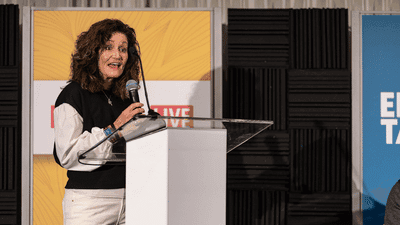
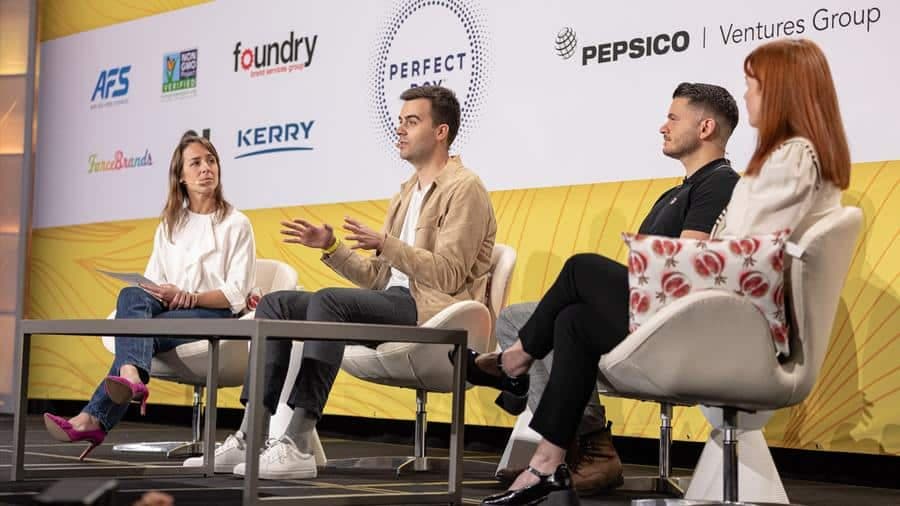
Speaker 1 [00:20] I'm really excited for this panel and really excited to see you all here. Thanks for joining us. Um, we're gonna be discussing the growing potential for sustainability in the food sector, and I have a really exciting, uh, panel of impressive people who want to share with you, so. Um, I'm going to introduce them in a sec, but I did want to, um, introduce myself first and then share a couple of slides for a little bit of background, uh, to lead us into the discussion. So my name is Liza Shillo. I am the director of sustainability and social impact for Perfect Day, and for those of you who don't know us, we are a dairy company, um, I like to say it's similar to brewing beer. We make whey protein without the cow, and so if you imagine a brewery, at the end result you get protein instead of alcohol, which you know goods and bads there, but that's what we do. We've been around since 2014. We're headquartered in the Bay Area, and you can find our products in the US and some of the Asian markets as well. So let me jump in. OK. This is a bit of research that we've gathered at Perfect Day and that we've conducted ourselves, and one of the things that we're finding is that we're really undergoing an evolution in food. Looking back over the past 50 years, we've just seen this evolution and really an expansion. Of what you can find in your grocery aisles today from the traditional staples we've come to expect that provide us with a positive eating experience, the plant-based food movement really took off in earnest in around 2000. And that built on our traditional staples by adding this level of not just experience, your taste and your texture, kind of the enjoyment of your food, but adding that layer of health as well with organic and natural options. And then more recently around 2020, we've seen this explosion of kind of technology assisted foods enter the scene. Perfect Day fits into that category. And these products focus on addressing not only experience in health but also ethical considerations, and I say this is in response to two things we're seeing huge consumer demand for having that option to shop with their values, and then also physical pressures. Climate change is putting pressure on supply chains in a very real way. It's destabilizing. It's driving up costs, and it's generally increasing risk to the agricultural sector. Taking a look at consumers, what we're finding as we dig into data is that consumers are increasingly looking to climate-driven brands when considering their purchase. Globally, 41% of Gen Z consumers are citing climate change as one of the most important issues facing the world, and this was a survey conducted that included issues like economic stability and terrorism as well, and climate change was the most cited issue. I'm looking at the US and UK markets specifically, 88% of consumers are looking to brands to help them make good decisions, and I would add to that, you know, it's not just this want for help. There's a real need as well. Is anybody familiar with Project Drawdown? Nice. All right, I love Project Drawdown, but they basically have pulled together all the studies on our biggest opportunities for impact on climate change, like impact reduction, and of those 100 issues, the top two issues, our biggest opportunities for impacting climate change in a positive way are food related. It's reduction of food waste and reduction of animal-based diets. And yet sustainable Brands has found that consumers have identified recycling as the number one way that they can contribute to a more healthy planet. Recycling falls to number 26 on Project Drawdown's list, so there's a huge opportunity for education. And finally, that 57%, so there's a real willingness to engage on the part of the consumer. 57% of consumers globally are willing to change if they know that it will reduce their environmental impact. So just a quick highlight on a study that Perfect Day conducted and then we'll move into the panel. We looked at the US market to get a better sense for how we might segment our consumers to really understand the potential market size of a product like ours, an alternative dairy product. What we found was a huge opportunity. Over 1/3 of US households are interested in more sustainable dairy options assisted by food technology. This 37% is made up of two camps of consumers the enlightened achievers, who are your, I don't know, your Whole Foods shoppers. They're shopping with their values and they're really enthusiastic about exploring new options for sustainable products. And that second category is the sensitive strivers, and they're also open to food technology, but they're largely motivated by food sensitivities like lactose intolerance. So with that, I would love to introduce our panel. Um, I'll introduce them briefly and then I'll ask each one to introduce themselves in a bit more detail, but, um, moving left to right, we have Ben Berman, the founder and CEO of Tomorrow Farms, Lex Evan, founder and CEO of Lexington Bakes, and Emily Schlt, founder and CEO of Pop-Up Grocer. Come join you guys over here and Um, Ben, if you'd like to start by introducing yourself,
Speaker 2 [06:28] thank you for having us. My name is Ben. I'm the founder and CEO of Tomorrow Farms. Tomorrow Farms is building the commercial layer for the future of food. We're building a platform to launch food and beverage brands that are better for people, kinder to animals, and easier on the planet. Harnessing the amazing tech that is happening in the food space right now, it's our belief that there is a tidal wave of incredible innovators just like Perfect Day who are building better ingredient inputs that can design and build a kinder, gentler food system, and that those companies need an early adopter to purchase those ingredients and bring them to market to create amazing brands that consumers can know and love. Our first product is bored cow, which is a line of animal-free dairy milk that we make using Perfect Day's incredible animal-free whey protein.
Speaker 3 [07:15] Hi everyone, I'm Lex Evan, founder of Lexington Bakes. We make consciously baked luxury treats with natural and ethically sourced ingredients. Um, I started this because I wanted to find ingredients that were sourced with kindness and respect for people and the planet, and to give people a reason to celebrate and kind of forget about, uh, trying to make everything they eat healthy. Sometimes it's OK to forget about it.
Speaker 4 [07:42] Uh, hi, I'm Emily, uh, the founder of, uh, Pop-up Grocer. We are not one of the largest retailers in the country is the description of this outline, so I don't know, maybe ask me in 20 years. Uh, instead, we are the discovery destination in the US for the latest and greatest in grocery. So we feature the most innovative, the most creative, uh, consumer packaged goods. We've had the good fortune of actually featuring these two brands that are up here, and to date we have existed in the form of short-term locations in seven cities across the US, including here in LA back in 2020. And what makes us unique is that we exclusively feature better for you, better for the planet products that are also exclusively new to market, and we prioritize underrepresented and under-resourced founders.
Speaker 1 [08:41] Thank you. So I'm gonna go ahead and jump right in and if we do have time, I'd love to take questions from the audience, so please be thinking about a question you might have. Um, This is a question for all of you, and Emily, we'll start with you. Tell us about your company, uh a little bit more, you know, what did your path look like getting here today, and how does sustainability tie into your business?
Speaker 4 [09:05] Sure. Um, so in my little over a decade-long career, I've been exclusively in CPG, um, I cut my teeth at a tiny yogurt company, you may now know as Chobani. And from there I went on to devote myself to uh launching emerging brands. Uh, I realized in that process the many challenges that they face and just simply getting on a shelf, um, and again, these emerging brands are specifically those that are doing things better, and I wanted to help change that. So I created pop-up Grocer, which is an efficient path to market for these brands. And I guess as far as sustainability, that's what we're talking about today, we are a zero waste grocery store in the sense that we work on consignment, so any product that's unsold we ship back to the brand or we donate it to a food insecurity partner. And we are also by nature of being better for you, exclusive, devoted to improving the health of the population, um, and, uh, what else? Oh, and then from a social perspective, we are committed to at least a minimum representation of underrepresented founders of 20% today, always looking to improve and increase that. And, and we have a fund where we give back a percentage of our in-store sales to one emerging, the founder of one emerging brand, on an annual basis, as well as creative services to overhaul their packaging and brand identity for further development. Thanks.
Speaker 1 [10:51] Lex, can we hear a little more about your path? Sure,
Speaker 3 [10:54] so I have a background in beauty. I spent 15 years as a brand strategist and designer working uh with Johnson and Johnson, Aveeno, Clean and Clear, Neutrogena. Um, baking was not the startup I wanted to do. This is my 4th attempt, but the path of least resistance. Selfishly, I wanted epic dessert for my cheat days. During the week, I limit my daily sugar intake to about 40 g, and when Saturday rolls around, it was just very disappointing to try to compensate for the rest of the week in one day. So I made my recipes. My Instagram community wanted them. I did a quick pre-sale, sold $5000 in about five days, and figured that was great product market fit. Um, 12 months later, it's 14,000 units sold. Um, from a sustainability angle, it's, it's integral and core to everything that I do. Um, having worked at J and J for 10 years, that I've been pushing for more sustainable packaging. Um, I've witnessed how hard it is for a brand of that a company of that size to execute. And having now started my own brand, I realize how much easier it can be when you, when you kick off a company with that initiative. So our cookies and brownies are square format. Some people are confused why the cookies are square, but you can get more cookies out of a tray when they're square versus round. You reduce water waste, energy waste, space and shipping. Everything is kind of examined under a lens of sustainability, that's just one of those lenses.
Speaker 2 [12:44] I did my corporate years doing the boring stuff like management consulting and I worked at Amazon and I went to business school, but throughout that whole process considered myself some sort of food entrepreneur. I grew up in Portland, Maine, and I started a food truck company called Mainly Burgers that I grew to 3 trucks and 16 employees and got to be on the Food Network and it was very different than the company I run now, but I've realized that getting a call from the bread delivery at 4 in the morning isn't so different than Slack messages that I deal with these days. Uh, in 2020, I launched this unintentionally pizza pop-up out of my apartment in Philadelphia. I was making 20 homemade pizzas a week on Sundays and lowering them up my window on a pulley system to raise money for hunger relief and went viral and I suddenly I was on Ellen and raising money every week, making these pizzas out of my apartment. It was a crazy experience. Raised a few $100,000 and donated the whole entity to Philadelphia's largest hunger relief organization, where it's now their culinary training program for low to low income individuals, which I'm super proud of as well. At that time, I was an investor, investing broadly in the future of food companies just like Perfect Day. And in all of my conversations with these companies, people were pitching themselves as some variation of the picks and shovels, the future of food or the railroad tracks to a better food system or the intel inside to the blank industry. And I had two thoughts. One was how do I make this my career? This is where I should be spending my time, energy, efforts. And two was, what is my role in that ecosystem? And it seemed that the missing layer here was the front end, was the commercial ecosystem that could exist around these backend food tech R&D players. And so that's what we aim to do at Tomorrow Farms. Our formal mission statement is to win hearts, minds, and stomachs to fuel the sustainable food revolution. At the end of the day, the only reason for setting up what we have is to reinvent our favorite foods in a more sustainable way. We've raised $13 million to date to do just that, and our investors want us to find a way to continue to enjoy the foods that we love, but find better opportunities to create those products with amazing partners.
Speaker 1 [14:47] Thank you so much. Thank you all, so inspiring. Um Lex, traditional businesses are standing up sustainability or ESG programs as a means to address preexisting issues, but with purpose-driven companies it's a little different. As a business that is all about driving a sustainable impact. Could you speak a little more to your program, and you have hit on a great example with your cookies. So if you know we'd love to hear a little more.
Speaker 3 [15:17] Sure, so um. There's the shape of the cookie, which reduces energy and water waste. There's the shape of the packaging, which is um something I've learned from working at J and J which is just to, to right size everything so you reduce all the excess airspace and shipping. And that might not be very impactful when you're just shipping a box of 4 brownies, but I'm also in retail stores, and when you're shipping pallets, you're also reducing carbon emissions and the weight and everything that you're shipping by reducing everything to the smallest possible size, um. When it comes to ingredient sourcing, it's, it's similar. I look for companies that invest back into the communities that they're harvesting from, um, that incorporate their own sustainability initiatives, so it's, it's not just my company, it's the other companies I'm supporting through what I'm creating.
Speaker 1 [16:11] Yeah, great examples. Emily, did you want to add to that from your own perspective?
Speaker 4 [16:17] Sure, um, I think I touched on the waste aspect of, uh, our environmental, uh, element, um, but there's also animal harm, I suppose, uh. 80% or more of the products that we feature are vegan, um, so. That's solid effort there, um, and, uh, I think I touched on the social, um. Aspect as well as far as uh prioritizing underrepresented and under-resourced, but we do also prioritize sustainability at large in our um product selection. So we're always looking for brands who are innovative in that regard. Um, one area in which there are any entrepreneurs or wannabe entrepreneurs out here looking for a white space in which to develop, uh, would be packaging. Um, that's something we would love to see more of.
Speaker 1 [17:13] Great call out. Ben, excuse me, so, um, what are you hearing from consumers and how has this shaped your, your messaging and your strategy?
Speaker 2 [17:26] Yeah, I'm gonna touch on the ESG question because I think it'll flow right into that question. Perfect. It's sort of a foundation for it. When we think about ESG. We think about two sides to what we have to accomplish. One is what we're building as a company, and I think at Tomorrow Farms we're trying to ascribe. A set of values that is not always about moving fast and breaking things and hustling and sleeping in the office and doing things that make it really hard for you to bring your best self to work. And so there's a whole side of our ESG initiatives that just thinks about what does it mean to build a company that people want to work for that is sustainable in its longevity even if it doesn't have an environmental impact on the side of the company they're building. The other side of that equation is what are you doing with your products and how are you building sustainability as a core piece of that foundation. And so when it comes to what we're hearing from customers, we have the really proud but very challenging task of launching a product that no customer has ever interacted with before. Now the product identity statement on our first product, Bred cow is animal-free dairy milk. And until we launched that product, that set of words was an oxymoron to any consumer that had ever come across it. People know and are adamant in our social channels that if it is animal-free, it therefore cannot be dairy. But that's the whole reason that we started the company, was to be able to launch amazing products like that. What we end up hearing from consumers is some variation of, we love the brand, we love the taste, we have no idea what this is yet. And so there's a lot of category building that we are constantly trying to do in this space, and we're trying to find all the reasons that a customer might come to us and might make the transition from what they're currently drinking, whether that's traditional dairy milk or a plant-based. Option and decide to purchase bored cow instead. Oftentimes sustainability is that story. Oftentimes vegan is that story. Sometimes being better for you and lower for sugar is that story. It's our job and our hardest job to tell that story effectively to customers so that they can make the switch.
Speaker 1 [19:15] Thank you. All right, let's see, um. Emily, what is your vision, looking 5 years out, say, where do you see your company, um, you know, and Thinking about retail versus direct shipping, uh, diversification of your product portfolio, um, you can take this where you'd like.
Speaker 4 [19:38] Um, it's the question of the year for me. Um, so like I said, we've been existing in these short-term locations, hence the name Pop-up Grocer. Um, we are advertiser first, retailer second, that is our model. Uh, so, We are evolving from that in the development of our first permanent location in New York City, which will open in just a couple of months, God willing, and assuming that all goes well, we will open more of those. Um, I'm actually looking here tomorrow, so we'll see if something in LA, uh, that fits the bill crops up. Um, so we definitely intend to open more permanent locations, um. From there, I wish I had a crystal ball, but I do not. We just will follow the path of consumer demand, which you brought up all those great statistics, but one that I know is also 80% of Gen Z and millennials are considering environmental efforts from brands that they choose to shop with. So it's not only nice to have. Um, good thing to do. It's a necessary for business thing to do. Um, so, uh, I think it means that there's an exciting future for us to continue to support that and give consumers what they want.
Speaker 1 [21:07] Oh, that is a really compelling statistic, and we're seeing that pan out. I mean, that is, it's a very good point. Um Ben or or Lex, would you like to add to that your own 5 year,
Speaker 3 [21:21] um, I think there are two main objectives that I have for the next 5 years. One is to, to leave an impression of our radical ingredient transparency on the industry. I don't think it's enough to just list the ingredients that you use. It's, it's critical to, to list where they're sourced from because especially for Gen Z who's, who's looking to change the world. It's really hard to do that, but it's easy to do that when you're just shopping, and if you invest your dollars into brands that are investing in that change, you can connect with Gen Z much stronger and accomplish that the goal of changing the world, um. It's important to me to source our ingredients from um farms that treat their animals with kindness, and, and I know that's, that's, uh, we're talking about animal-free dairy, which I would hope to move to in the future, but there's, there's ethical ways of sourcing both routes, right, right now, um, and um ethics change, so in a couple of years. It might only be ethical to use animal-free dairy milk. That's likely where we're headed. Uh, sorry, two parts. The other part is the easier part, which is a luxury bakery in every grocery store. Um, I'm from New York. I live here now. I remember every major bakery that had a blow up in New York had a line around the block, and it would be months before I can like find time to go wait in line to get it. I, I, I'm creating iconic bakery desserts that you can go and get in any grocery store.
Speaker 2 [23:01] I'll keep my answer short and slightly anecdotal. In the bottom of my freezer, I keep almost always 6 frozen hot dogs, and I'm embarrassed by this fact. And the reason is on Friday afternoons when you're working from home and you try to eat healthy for lunch and 4 o'clock comes around, I am always hungry, and that is always my first choice because it feels good and I love that flavor, and it's like nostalgic, and I want more of it. The long-term vision for Tomorrow Farms is how can I continue to have hot dogs on the bottom shelf of my freezer, but not feel bad about having them there, in every sense of the word. And how do we at Tomorrow Farms enable this entire space to reinvent our grocery store shelves so that we can do that.
Speaker 1 [23:40] I love that.
Speaker 4 [23:43] 6, now 5. 6 hot dogs? Oh yeah,
Speaker 2 [23:49] no, because as soon as you have one you have to replenish and then if there's 5, I mean that's a normal Saturday.
Speaker 1 [23:57] Right. There you go,
Speaker 2 [23:59] cheat day. The rest of the week is a cheat day. There's one non-cheat day.
Speaker 1 [24:05] Um, let's see, this one's back to Lex. What role does collaboration play in your efforts to continue to leave a positive mark on the planet?
Speaker 3 [24:16] I think it's impossible for one person or one brand to change the world. This can only happen through collaboration, um. I hope to keep collaborating with both of you and I hope you have a butter coming out soon because I'd love to replace my animal butter. Um, but I mean, Emily's business is empowering what I'm doing. Ben's business is also empowering other people who are trying to make that change happen. Um, we can't do this alone. You have to collaborate to change the world.
Speaker 4 [24:48] Yeah. Yeah, I mean, I think the most exciting thing for me, I have so much gratitude to just be able to have this business and I've had it for the last 3 years, you know, 30,000 new products are launched every year. We select and support about 600 right now, but that's a capacity issue. Like I can't tell you how many emails I receive on a daily basis, so I just think that's tremendously. Optimistic and Really just demonstrates the potential that there is here for growth given that there are so many people doing the hard work of doing things differently.
Speaker 2 [25:34] Mhm. Yes to everything mentioned from a business sense, collaboration is also just key for sanity in this space. Communities like the ones here are the only reason that I think we can all continue to stay sane in building companies like this, companies that are trying to completely reject the status quo and build something bigger and better than what existed before. And for me it is only because of founders like Emily and Lex that I can wake up every morning and feel more energy to do that because there are people trying to do it alongside you. And whether or not we work with these companies in a business sense, it is always refreshing and energizing to have a chance to talk to amazing founders doing something important.
Speaker 1 [26:11] Definitely, all ships rise right when we're contributing to this, I think. Um, Ben, how do you measure impact? How do you think about that?
Speaker 2 [26:24] And I'll go back to my answer about ESG because I think there's two sides to it. On the business side, super proud to be a B Corp. Lots of things that we're always trying to accomplish to measure the impact of how we're doing as a company. That includes employee turnover, leveling our salaries, competency matrix, everything that we can do to support a thriving company from a people's standpoint. On the product side, it's one of the reasons that I think raising money in this environment is important. It can be expensive to do that measurement work. And I'm really glad to see a generation of companies that seem to be prioritizing initiatives such as life cycle assessments, which are major things to undertake. They require tens of thousands of dollars, a few months of your time, a lot of strategy around how you're going to integrate the results of that to your marketing and internal programs, as well as a bunch of your employees' time to be able to support those questions. But it's really important for us to be able to tell that story. We don't just want to pay lip service to the idea of sustainability. We want to show our customers, buyers at supermarkets, and people in the store that we've actually created something that's better for our planet. Um, and so we are constantly trying to find ways to measure that, whether it's a life cycle assessment or, uh, uh, uh, marketing opportunities to tell that story.
Speaker 1 [27:38] Thank you. Thanks for calling out Life Cycle Assessment because that is just taking off right now, and sustainability marketing is quite a specific kind of marketing, and LCA really gives you the power and the confidence to be able to speak with confidence to the impact of your products.
Speaker 2 [27:55] There's a fun tension there, you know, if I can enable my marketing and creative teams. To have fun telling the story of our life cycle assessment, that actual document is dense and not something that I want to be sharing with every customer. And if I can enable my team to show it through animations and TikTok channels, like that's the story, that's the type of brand that we want to be displaying to the world.
Speaker 1 [28:15] Awesome. Oh, that's awesome. Well, I, um, I have one more question, but I'll hold it. I'd love to look to the audience. Are there any questions from the audience for these guys while they're up here? And Lucas will run you a mic. work.
Speaker 5 [28:38] Emily, this question's for you. I was just curious, when you, um, start to open your brick and mortars, how do you think your mission will change because you said you're an advertiser first and then a retailer second. Do you think that model will change as you open, you know, more stores in like that are that have more permanence?
Speaker 4 [28:56] Yeah, um, you sound like one of my investors. Uh, I think given our mission to provide exposure and visibility to emerging brands and predominantly those that are under-resourced and underrepresented, we will remain advertiser first. The exact way in which that shows itself physically or through our business model and little things that we might jigger um is. To be seen, but yeah, in our first permanent location, the way that we've mapped it out is that we will rotate brands on a quarterly basis. We feature somewhere between 100 and 150, somewhere around 400 products, and we were also looking to expand beyond just food and beverage, which might be less interesting for this crowd, but But looking to home, body care, continuing to develop our pet category as well, focusing more on kids. So there's just a lot of growth in terms of our category development, but continuously offering people something new, something fresh, something to discover is central to who we are.
Speaker 1 [30:15] Other questions?
Speaker 3 [30:19] I can add a thought to what Emily said. Oh please, I think the genius of what you're building is that, uh, the future of any brand right now is. The intersection of content and product, and I think that's what you're doing brilliantly.
Speaker 4 [30:35] Thank you. I mean, I think I, I've, I've been a, I always call myself a dirty marketer. I've been a dirty marketer for the entirety of my career, um, but maybe less dirty made by the fact that I am supporting products that are good, and I think that advertiser can be kind of, uh, an ugly word, uh, when you're talking about selling stuff to people that they don't actually need nor want, um, just reframing that to trick them. Um, much like they do with pricing, etc. Uh, so, I think the fact that we're able to advertise things that people do want that are actually good for the planet, um, that are good for, for society is a, is an honor and I think is a, is a really exciting thing.
Speaker 1 [31:21] Mhm. All right, well, I will, um, turn this one back to you. This is actually for Emily as well, um, though you guys are welcome to pitch in too, um, who do you look to for inspiration, um, either business sustainability or, or leadership.
Speaker 4 [31:40] Um Oh yeah, uh, a number of A number of people, I guess. I don't know if anyone has any extra time, but I'll name two concepts here in LA. There is a concept called regrocery, which is truly a package-free grocery concept. I have a number of locations here, so if you have some time, I would check them out. And another grocery concept called supermarket that is working toward fixing the food desert problem in this country, which is another one that needs a lot of support. Um, uh, starting in Central, South Central LA, which, uh, actually has, uh, no organic grocery stores. Um, so they are working to better people's health by bringing them good food, um. So just to name a couple and then maybe Unilever, which could be a shocking answer, but just recently I heard that the CEO was in trouble with shareholders at large due to focusing too much on sustainability. So depending on which side of the argument you're on there, sounds pretty interesting to me.
Speaker 1 [32:50] I think they're a very inspiring company for sure. Guys. OK
Speaker 3 [32:59] um. My background is in uh CPG beauty and we've struggled to implement Sustainable packaging. So the brands that inspire me are the ones that are, are risking everything to launch with sustainable packaging. Um, I believe the brand is Bite, but the reducing bottles of liquid to just small tabs for mouthwash is incredible. Uh, I'm sorry if that's not relevant to food,
Speaker 4 [33:28] but it is Bite, I think,
Speaker 3 [33:29] yeah, yeah. Um, but that, that's what drives me is how, how do I bring that like intensive, uh, research in the beauty space into food and reduce the issue of packaging being sustainable in food and to be fair, my packaging is not sustainable right now, but I'm also one person producing 14,000 brownies, um. It's on my priorities. It's just low.
Speaker 1 [33:59] Yeah, packaging is a, is a big one, a big challenge.
Speaker 2 [34:03] Uh, we looked to a lot of areas for inspiration. I love the slide that you had about these waves of, um, uh, food innovation. Uh, we have to tell a story about wave one being for burgers, mashed up beans and spinach and onions, and like it's delicious, but you're never going to fool anyone that that's a cheeseburger. Wave 2, you have impossible and beyond, and if you close your eyes, you would fool a lot of people on a taste test. But no one, I think, thought that we were there yet. We're so proud to be part of what feels like the third wave of this food innovation, which is how do we just recreate the foods that we love by changing the process to make them. And there's lots of inspiration for that because those companies that I talked about who were in wave 1 and wave 2 all did amazing jobs of convincing customers to try these products, and made it a long way, and we stand on their shoulders to be able to do this next generation of work. We also looked to other industries to see how they've done it. I think there's a lot of examples of people pushing the envelope and how we can recreate any product from beauty to uh therapeutics and digital therapeutics, we can understand how they tell really complex stories in really small bites, and that's often our most difficult challenge with consumers.
Speaker 1 [35:06] Definitely, yeah, but those positive trends that we're seeing of consumers leaning into these, these ideas are because of, of those who have come before. You're absolutely right.
Speaker 2 [35:17] There's so much ground softening to do for everything that we're trying to create, and we need, to your point, all ships to rise to be able to accomplish that.
Speaker 1 [35:26] Well, thanks you all. This has been so wonderful um letting us get into your heads and learn a little bit as we think about our own strategies for sustainability, um, and thanks to you guys.