Search across the BevNET CPG Media network including BevNET, Nosh, Brewbound, Taste Radio, Nombase and CPG Jobs.
Market Share with Rachel Drori of Daily Harvest
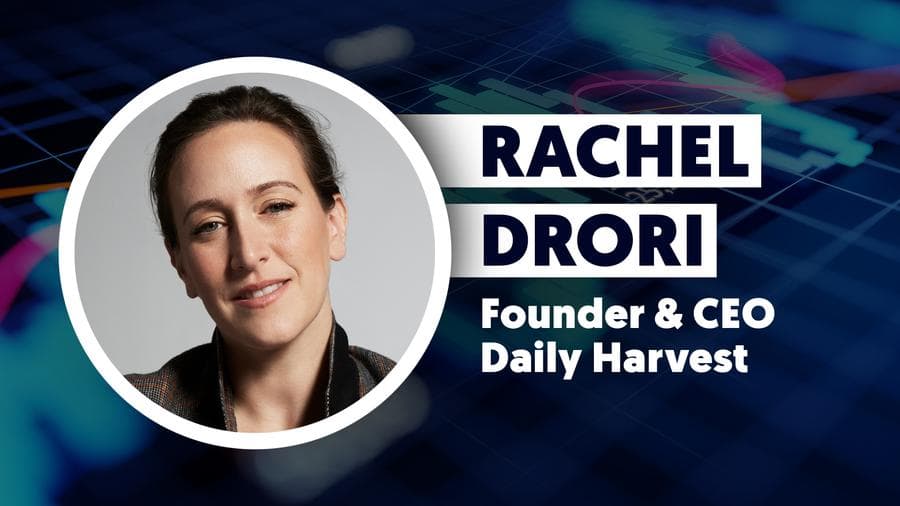
In this episode of Market Share, host Carol Ortenberg, the editor of NOSH, speaks with Rachel Drori, founder and CEO of frozen meal provider Daily Harvest on taking direct-to-consumer brands out to the public.
This month Daily Harvest opened its first “Tasting Room.” In this episode Drori shares why she and her team opened this Chicago brick-and-mortar location and what she gains by meeting consumers where they are and having face-to-face interactions.
In this episode, Drori shares:
How in person, experiential marketing can complement a direct-to-consumer sales strategy.
How an experiential marketing event can help a brand reach new shoppers as well as build loyalty with existing customers.
Why selling products at these events may be just as important as sampling.
Whether or not to use data from experiential marketing to guide your innovation strategy.
Transcript
Note: Transcripts are automatically generated and may contain inaccuracies and spelling errors.
Carol Ortenberg [00:06] Hello, I'm Carol Ortenberg, the editor of Nosh. Welcome to the next episode of Market Share, an original Nosh video series where we learn how executives, leaders, and key decision makers approach strategic choices at their companies. In this series, we share key takeaways for individuals in the food and beverage industry, as well as untold stories of success and struggle. Now, within both food and beverage, direct to consumer brands are increasingly vital, with shoppers often appreciating both the convenience and community that's built around these brands. Meanwhile, investors and acquirers have also been eager to back some of these brands, drawn to the promise of reoccurring revenue from dedicated subscribers, as well as higher distributor-free margins. But what are the boundaries to online sales? Is there a benefit to being face to face with shoppers, offering them a way to touch and interact with your product? What's lost by not being stocked on store shelves. Today we'll speak with Rachel Drury, founder and CEO of Daily Harvest, about how the direct to consumer meal solution provider has bridged the gap from online to in person via experiential marketing, most recently opening a tasting room in Chicago this month. Rachel, thank you so much for joining us and chatting with us today.
Speaker 2 [01:33] Thanks for having me.
Carol Ortenberg [01:36] So, let's start by talking about the history of Daily Harvest experiential marketing. In 2019, you had a refueling station, interactive pop-up in LA and New York. And then in 2020, you had a mobile vending machine known as the DH machine, which traveled around the country. Tell us about the impetus to open both of these previous uh campaigns and experiences.
Speaker 2 [02:01] Yeah, so our mission is to take care of food, so food can take care of you. And one of the main barriers to people taking care of themselves through food, um, is taste. Taste is a huge part of that. So we launched Scoops, um, Right in the middle of summer 2020, which was really an awesome, um, experience, but, uh, you know, for us it was really about how do we get people to taste real plant-based. Whole Foods, so that they, they believe that they're going to be something different from what from their past experiences. Um, and that was the same premise in which we, we opened our refueling station, uh, gosh, I think 2 years ago now. Uh, it was really about how do we, how do we show people that Daily harvest is something different because You know, real fruits and vegetables. Not everyone likes to eat their Brussels sprouts. Um, and with frozen food, there's an additional barrier, so we have to really work hard to make sure that people know that it's not all created equal.
Carol Ortenberg [03:14] Now, you mentioned introducing consumers to the concept of daily harvest. Is there, you know, only so far online can go because you guys do do a beautiful job with your social media and your website and talking about how you're different. I'm wondering, are there limitations to that though?
Speaker 2 [03:33] Yeah, I mean, like, we're growing into a huge clip, and, and we have been since day one. there are a lot of people who are very excited about what we're doing. Um, the pandemic was honestly an accelerator to how many people are willing to buy food online. Um, I, I should know my stats here, but, uh, I think before the pandemic, it was something like 3% of people were willing to buy food online. Um, and through the pandemic, I think it was like Like somewhere between a little, I can't remember the exact number, but something between like 24 and 30% of people bought food online over the past year. Um, so, you know, I don't think that there is any Tm consideration for us. There's a huge group of people who are, are, you know, Comfortable buying food online. Um, that being said, as I, you know, taste is still a barrier, um, and you can't get people to taste food online. It's just, it's, it's not economically viable. Um, so, you know, that's really how we think about offline experiences.
Carol Ortenberg [04:39] And what did you learn from the prior two experiences that led you to how you thought about the tasting room this summer?
Speaker 2 [04:48] The, the past experiences were, were really about experimentation. We've always known that we were gonna open something on our own, um, but we wanted to really test and learn and gain conviction in what it was that we were doing. Um, we had a lot of hypotheses that we wanted to test out. So what masqueraded as like pop-ups were really science experiments, um, and we, we had a series of 11 experiments in the refueling station. And then, um, the, the scoops machine was, um, you know, I think it was in 4 different locations over the past year. So it was really about learning how our customers want to interact with us, learning, um, what they need to taste to believe, learning what educational points they needed to be able to see the bigger picture and to see how we were differentiated.
Carol Ortenberg [05:44] And what are some examples of how you implemented those learnings at the tasting room?
Speaker 2 [05:49] Yeah, so the tasting room is really um meant to be a human to human experience, uh, which, you know, right now has its limitations, but we're doing, we're we're working with what we've got, um, and really about a consultative approach to decreasing the cognitive load required to get food that not only is gonna taste good for you, uh, but also food that is going to meet your dietary preferences and values.
Carol Ortenberg [06:20] With that, have you found that these in-person experiences attract a different shopper or, or, you know, profile demographic than who you already are reaching online, or is it kind of taking that consumer who's maybe on the fence and, and converting them over?
Speaker 2 [06:36] Yeah, so, um, I'd say it's a little bit of both. So, uh, we have an incredibly broad core demographic. We actually track the US population in our customer base on almost every plane, um, geographically, um, demographically, like we, we really run the gamut, which is very unique, um, but You know, so, so basically like everybody's a potential customer of
Carol Ortenberg [07:03] super easy to figure out marketing around that. Oh
Speaker 2 [07:06] yeah, it's great, it's a dream, um, but, you know, we, because even though now there are 30% of people who have tried food online and are willing to buy food. Online there's still 70 that aren't and they take a little more coaxing, so, um, you know, we learned really about how to bring those people through the funnel and how to, to use a combination of online and offline to bring people onto our platform.
Carol Ortenberg [07:34] Now, I imagine some of your existing customers also stopped by just because they're excited that you're opening up a tasting room. I mean, I see many of my friends on social media posting about Daily Harvest, um, you know, events that you guys are doing like the bingo event you did during the pandemic with Neil Patrick Harris, or posting when their latest delivery came, and you have this real community that's excited about the brand and what you're doing.
Speaker 2 [08:01] The one of the the core parts of daily harvest is we make our food with the people who eat it. Right? So if you are listening to customers and then showing what customers are showing those customers what is being done and developed as a result of their feedback, um, it's a really powerful thing and customers want to engage with you and they wanna give you more feedback and they wanna, you know, be a. Part of what of what we're doing so, um, we absolutely get existing customers coming to, you know, hang out to talk to us to see what's new, uh, and it's a really, it's a really nice way to bring, um, you know, an existing customer base and existing community together with people who are curious to learn more.
Carol Ortenberg [08:48] And then, how do you measure success for these, you know, is it just, hey, customer A wasn't a daily harvest consumer, and now they're buying larger orders or more frequently, or we see an uptick in that metro area, or is it more than just, you know, uh, sales dollars?
Speaker 2 [09:06] Yeah, so it's more than just sales, uh, you know, it's brand recognition, it is, um, obviously conversion because why not, um, LTV of those customers, but also, you know, there's, there's the intangible just like brand affinity and brand love and brand equity that is so important, and the team that we have in our Chicago location is, is incredible, um, and they are, um, you know, making a great first impression.
Carol Ortenberg [09:37] Do these experiential events also end up shaping your R&D pipeline? Have you crafted specific, uh, items after engaging with shoppers at these pop-ups?
Speaker 2 [09:50] Yeah, so because we are, we have a direct relationship with our customers anyway, um, we don't really use this information, um, we add it to it and then the anecdotes are nice, but it's not statistically significant like the, the numbers would just have to be ridiculous. Um, so instead, you know, we, we use our data, um, uh, the power of our data, uh, to really inform our R&D or NPD or whatever you wanna call it, um, in a really formulaic and me, um, methodical way.
Carol Ortenberg [10:25] Now, one thing I think is really interesting, um, about the refueling station as well as the tasting room is a lot of people do pop-ups and it's just, you know, handing out free samples, um, which is great. But you also sell products, uh, for customers to take home, which I'm sure adds a level of complexity considering that they're frozen items. Uh, but you and I have talked about the importance of why you felt you wanted to sell product as well. Can you tell us a little bit about that?
Speaker 2 [10:51] Yeah, I mean, it's, it's really important. Um, You know, I, I think people wanna be a part of, of Daily Harvest, and a part of what we stand for and what we believe in, and they want to, um, you know, embody some of that in themselves, and, you know, you have a taste of something, like, yeah, you know, you get to try it, and, and it's kind of here, here today, gone tomorrow, um, or gone in the next 3 seconds if you're me and you eat really quickly. Uh. But it's really about, um, really, you know, habit formation and getting people to, to bring things into their home, and to see that it's not just something that tastes really good. It's something that you have in your freezer at home, that moment that you're hungry, instead of grabbing a granola bar or instead of grabbing a cracker, you can grab something that's incredibly nourishing, um, and it's gonna fuel you in a different way.
Carol Ortenberg [11:47] I think there's something also around, um, you know, the value you associate with something when you've actually paid money for it versus a sample, and that's a really nice sort of, you know, subconscious message that you're sending consumers.
Speaker 2 [12:02] Yeah, absolutely. I mean, we're happy to to get people to taste their food all day, um, but ultimately, you know, People do value things that that they pay for. It's a conscious choice that they're making to to vote with their dollars. Well,
Carol Ortenberg [12:18] I'm excited to see how the tasting room plays out this summer. What's next? Are there going to be daily harvest tasting rooms in every city, um, you know, plans to go into wholesale distribution and go into other retailers? How does this, uh, strategy play out in the longer term?
Speaker 2 [12:36] Yeah, so I would say just as our as our refueling station informed, um, our tasting room. The tasting room is gonna inform the future, so it's still super early days, but we are experimenting every day. We've already made like 100 changes to the setup and the location and the way that we speak to our customers and, and the, you know, the funnel flow. So we're just gonna continue doing that and iterating and, and, um, you know, measuring the success and see where it takes us next.
Carol Ortenberg [13:09] While I am looking forward to seeing how this tasting room concept evolves, I will keep my fingers crossed for a Boston location. Rachel, thank you so much for joining us today and for those of you who are watching at home, thanks for tuning in and check out all episodes of Market Share on Nosh.com.
Related Videos
Market Share: How a ‘Material Sciences Company’ Builds a Food Brand
On this month’s Market Share, we’ll hear from Pangaia Health’s CEO, Ira Laufer, about how he and the company have made this jump and how it’s bringing customers along for the journey.
Market Share: Discussing The Plant-Based Evolution WIth Rip Esselstyn
Over the past several years, “plant-based” has sprouted into quite the buzzy term. But just how exactly has the category evolved, and how has this growth impacted consumer behavior?
Market Share: One Year Past Its IPO, How Vital Farms Practices Conscious Capitalism
On this month’s Market Share we’ll hear from Russell Diez-Canseco, the CEO and president of Vital Farms, about the egg and butter producer’s decision to go public last year.