Search across the BevNET CPG Media network including BevNET, Nosh, Brewbound, Taste Radio, Nombase and CPG Jobs.
Chamberlain Coffee: Inside Creator-Based CPG
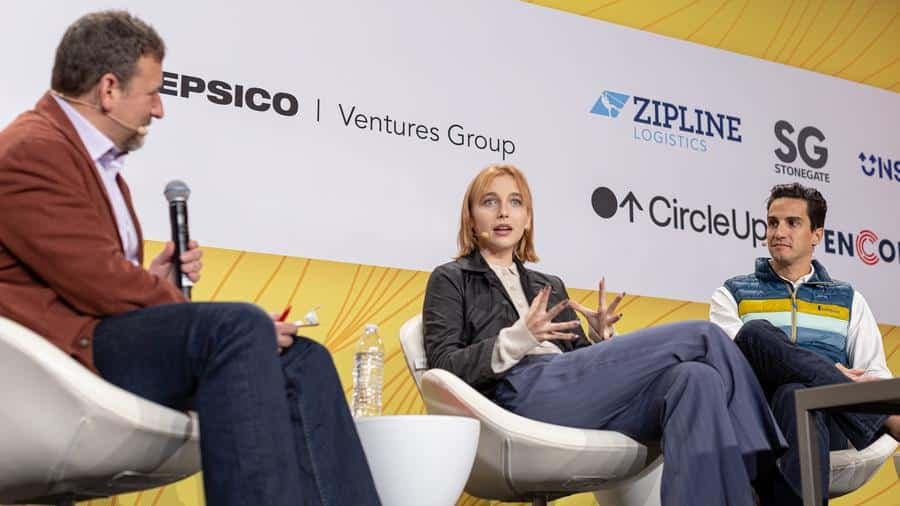
Social media superstar Emma Chamberlain – the Chamberlain Coffee founder famous for YouTube, podcasting, modeling, fashion, and the mirror she holds up to her generation – will join NOSH Live for a special conversation on the convergence of the Creator Economy with the food business. Joined by Chamberlain Coffee CEO Chris Gallant, Chamberlain will take the NOSH Live audience into this new world of CPG, one in which the product choices extend from the founder’s passions to a social media audience of more than 35 million followers.
Featuring:
Emma Chamberlain, Founder, Chamberlain Coffee
Chris Gallant, CEO, Chamberlain Coffee
Transcript
Note: Transcripts are automatically generated and may contain inaccuracies and spelling errors.
Speaker 1 [00:16] I just turned 50. And so, I want to personally thank our next guests for giving me something to talk about with my kids and my nieces and nephews and their friends and, and really an entire range of young people just by asking them one simple question, which is what role does Emma Chamberlain play in your life? So you text them. And they all have an answer from she's funny and really likable and also totally switched from from YouTube to like high fashion stuff, and I think that's sick to she has a slay personality and is super funny to, I think of coffee. To Ask him to ask her about Jack Harlow. Very few of them say none. But even then it's like, none, but I'm totally aware of who she is. And it's having this level of awareness. How do you take it into a passion play in CPG? It's a question that more and more creators like Emma Chamberlain are starting to answer. And one that more brands within the industry are going to have to reckon with, which is why we're so happy to invite Emma Chamberlain, the founder of Chamberlain Coffee. And Chris Gallant, the CEO of Chamberlain Coffee, to the stage so that we can understand the impact of this convergence of the food business with the creator economy. Please welcome Emma Chamberlain and Chris Galant.
Speaker 2 [02:32] OK.
Speaker 1 [02:33] Yeah, it does it, does it fit the, the aesthetic?
Speaker 2 [02:36] It totally fits the aesthetic. I love
Speaker 1 [02:38] it. I'm so glad to hear that. So for old people like me,
Speaker 2 [02:47] Come on.
Speaker 1 [02:49] All right. For well-preserved middle-aged people like me,
Speaker 2 [02:52] better,
Speaker 1 [02:53] can you explain what you do and what it means to your audience?
Speaker 2 [03:01] I will say like what I do is one of the hardest questions for me to answer. Because it's, there's no word for it yet, you know, I started out on YouTube, making videos, documenting my everyday life. And then, you know, I started doing a podcast where I talk about my everyday thoughts. And so like, how do you put that into a word? I don't know. But I think my Like I just try to put things into the world that people can connect with. In one way or another, and I think that's the best way I could put it.
Speaker 1 [03:46] An enormous number of people connect with it, right? 35 million followers.
Speaker 2 [03:55] I don't look anymore. OK.
Speaker 1 [03:58] They're just they're following.
Speaker 2 [03:59] I just, I love all of them, and I'm just, you know, whatever. Each individual is more important to me, you know. So
Speaker 1 [04:07] at what point do we say they need coffee? And so how did, how did Chamberlain Coffee get started?
Speaker 2 [04:14] I think it was. Well, since I was a young person, and I got into coffee at a really young age, like an inappropriately young age, OK, um, you know, I've always dreamed of being a part of that world. Like it was something that I just loved so much and appreciated so much and so it was kind of a passion before I even got on the internet. I just always loved coffee, cafe, you know, environments, things like that and I just Like the way that things worked out was so interesting because you know I grew a career online, but that gives you so many resources that you wouldn't have had otherwise. And so my dream of being like a barista or a coffee shop owner or whatever seemed kind of impossible before, but now you know I knew so many people who could help me make that dream that I had before come true. So it was almost like, you know. Making this dream that I had always had come true, but people also associated me with coffee because it was a part of everything I did just naturally, you know, I was always like filming me going and getting a coffee for the 7th time today, you know, filming me making my 10th coffee,
Speaker 1 [05:32] you know, really long straw. Yes. Oh my God,
Speaker 2 [05:37] that's like that's niche. That's niche. You're you're a real one for that.
Speaker 1 [05:41] I go deep. So yeah, coffee is this thing that's inseparably uh inseparable from your videos. And did anyone suggest to you, hey, let's try coffee?
Speaker 2 [05:59] Well, I have an incredible team and Allie, she's somewhere. Um, my agent Allie and I, you know, we've always worked together in a way that's like, She's so great to bounce ideas off of, and she really, you know, inspired me to kind of If I have a dream to like push it, you know, because I'm always somebody that's like, I don't know, like, is that possible? Is that a good idea? Could I do that? Would I be good at that? And she really was like, no, you care about this, and you should do this.
Speaker 1 [06:35] What were the steps you took to get it off the ground?
Speaker 2 [06:38] Well, we started small, um, you know, one product, um, simple branding, and we just wanted to test it out and see like, does this work, you know, at the time I was around I think 18 or 19. And you know my audience was younger and so coffee is obviously more something you'd assume mature people, older people would enjoy more so it was we had to test it out, you know, so we started small, one product, and we just wanted to see how it went and it and it worked and we were like, alright. Got it. So now let's You know, pedal to the metal. Let's do it. Um,
Speaker 1 [07:17] yeah, and so that one product goes out there and there's like a 10 minute introduction video, and I, I think at one point you actually say, I, I just threw up. Um,
Speaker 2 [07:31] I probably did,
Speaker 1 [07:32] yeah, it was amazing. It was amazing and it's also like this is why this works is because you're willing. To be you, um, and then at what point do you say, well, we need a team, and, and how does that involve bringing sort of Mr. Gallant on board?
Speaker 2 [07:52] Well, I mean, I think. There's only it. This has applied to every part of my career, you know, like, not even just coffee, but, you know, you have to know when things are getting to a point where It can't be done to the best that it could be, if that makes sense, without help from other people who are talented and get it, you know, things can only grow so big. By yourself and with a small team. And so, you know, we, we did a rebrand and kind of got Chamberlain Coffee to a place where. It was More of a fully formed vision than what I started with, but we, we were all hungry to grow it more, but we knew we needed someone to like come in and Be the king, you know, like get in there and do it. And
Speaker 3 [08:49] um I remind you of that.
Speaker 1 [08:53] It's you can actually replay the video.
Speaker 2 [08:58] I love it.
Speaker 1 [08:59] Um, so what's the push pull between the two of you? Like, how do you add this professional structure? To, uh, something that's really almost a single channel uh entity.
Speaker 2 [09:16] Well, I think there's so many sides to, you know, a company. I think, you know, most people know that, but, you know, it's like there's. I think a strategic mind and there's somebody who is excited about what it actually is on a public facing. You know, and I think that I'm obsessed with the public facing of it all, you know, creating this. Kind of cohesive vision. But when it comes to the technical stuff, you know, I'm learning from Chris. Like he, you know, he's the one that he knows this stuff. He's the pro. Um, And yeah, so I think it's like adding this sort of brain into it, this other side of the brain, you know, and it's like, then it's a full brain.
Speaker 1 [10:12] So now, how does that brain kind of figure out where you end and the other half of the brain.
Speaker 3 [10:22] I think it's a big gray area, right? I
Speaker 1 [10:23] don't think that's good. Yeah, gray matter.
Speaker 3 [10:27] I don't think there's a specific line, right? And I think Emma talked about that authenticity of the brand and The authenticity is there in the origin story, right? And the fact that she talked about coffee all the time, and it's a very easy way for a very easy path for people to understand like, oh, Emma's now making coffee. But that doesn't go away with the origin story, it needs to be there every day. And so we're on the phone, every day of talking about, you know, where do we take the brand strategically, what channel should we attack? What, where should we go with innovation? How should we refine the brand? And if you don't have that constant communication and that this sort of big gray area where we're both talking, I think you lose that authenticity and just the cohort of consumers today are, are so savvy that they'll understand that so you really need to have that that piece and that connection all the time
Speaker 1 [11:15] now the, the product innovation and the kind of constant, uh. Uh, appearance, the marketing, the branding are really astounding. I mean, there's, I, I don't know, I can't count the number of SKUs there are, the number of varieties there are, and there are these videos that are like, well this is how you use it, you know, and it's this incredible like coffee milkshake. Porn almost like just these voluptuous cookies sitting in a mason jar with like candies floating up and saying hi, um, you know, and you're sitting there describing all these things. So it's like this, this amazing uh content. And that means that you can sell it online. We talk with a lot of B2C brands, um, and they look to move into physical retail because that's often where the scale is. Um. What, what are the steps that both of you wanted to take to kind of establish the brand? Outside of the Emma channel.
Speaker 2 [12:33] Right. I think, you know, from my end of this, I I wanted to Try my best to kind of remove myself a little bit, you know, not I didn't want You know, someone to open up the page of Chamberlain Coffee and just see me everywhere because I want Chamberlain Coffee to be its own brand and I mean I love to be a part of it. I love to, you know, take photos and, you know, do the campaign shoots and I love all of that and I I love posting about it on my page, but I don't want it to be suffocating, you know, I don't want it to be like too much me, right? And so I've kind of Put more love into creating what Chamberlain Coffee is without me as much, um, where my essences may be coming through in more subtle ways and that's a challenge, but. That was my priority
Speaker 1 [13:37] and that's something that uh sort of traditional CPG team is good at, right is taking this early stage thing that's probably doing gangbusters within one channel and saying, well, you know, how do we, how do we shape it. For the stores. So let me ask Chris, how do you shape it for stores? Like how do you take this phenomenon and, and rewire it for physical retail?
Speaker 3 [14:08] It's a great question. Retail is, is so important for us coming from the growth and the birth as a D2C brand, right, as we look at. Coffee, it's a, it's a staple, and most people still purchase coffee on their ritualistic weekly shopping trip. And so being at retail for consumers is very important for us. And then also if we looked at the efficiency of a D2C market, especially for products that aren't revenue dense, like, like coffee, um, the marketing and efficiencies that are, are increasing and the shipping and fulfillment costs like D2C was a key for us to grow, I'm sorry, retail was a key for us to grow profitably. And so. Really, we thought about, you know, how do we get people there and then how do we get them coming back. And I think it was clear we could get people to the stores, right? We would throw events and we throw pop-ups and thousands of people would come up and be in line to taste the coffee. And so it's clear people would get out of home and go buy it, but how do we get people coming back? Um, and that really is about the brand. It's about the quality of the product. And we saw from our site, our subscription rates are very high. It's a significant portion of our business,
Speaker 1 [15:14] the return that's great if you can get it right. It's great if you can get it and you have a strong media property to help balance that out.
Speaker 3 [15:22] But there's still the nuts and bolts of any CPG brand, right? So having Emma as a partner doesn't. Let us not have the right promos in place, demo and sampling, have a great merchandizing team in place, have the right logistics partner, so all that still needs to hum to make sure it's sitting on shelf when people want it
Speaker 1 [15:39] there, um, and that required raising money. What was that like for y'all?
Speaker 3 [15:47] Yeah, so do you want to start? No, OK, um, so, um, Emma and her team raised a seed round, right with Blazer Capital and UTA Ventures, and they put in some capital to do that transition from that single product brand that she referenced to the full suite of products, um, and so both of those, you know, companies didn't just put in capital, but they put in operators as well and, and really created a very fast growing brand, and I came in shortly after and said I think we need to. Continue doing this but also focus on more innovation and more retail presence and growing the brand bigger. So last year M and I went out to raise the Series A, um, and it was in the midst of the market collapsing or not last year, this year rather, uh, in the midst of the market collapsing. So there are definitely challenges to it, um, but we raised it pretty quickly and that's what we're focused on now innovation, retail, uh, and growing brand awareness.
Speaker 1 [16:42] Can you say what your revenue is now?
Speaker 3 [16:46] We can't share revenue, but we can say, you know, we raised about 7 million. Yeah, plus debt capital.
Speaker 1 [16:52] OK. And what's the growth been like? Huge. So what, what's the growth rate? Fast?
Speaker 3 [16:59] I mean, this year we'll probably go somewhere in the neighborhood of 60%.
Speaker 1 [17:03] So healthy.
Speaker 3 [17:04] Yes.
Speaker 1 [17:05] Um, What are we supposed to make of this phenomenon, you know, where someone who's not necessarily from the food business, although you're in it now, comes in and raises 7 million and establishes a 60% growth rate, um, you know, for, for folks who are sort of coming in from outside media, um. What are you gonna, what are you doing to them, Emma, like,
Speaker 2 [17:40] I understand, like, you know. I felt that. Myself in the beginning, especially I was like do I deserve a place here you know I like I'm not necessarily I don't know every nut and bolt of this industry like and I'm also you know I'm young and I'm still learning about everything but what I realized was is you know my my personal passion. Obviously starts with coffee, but it also is building a brand that means something to people and that they connect with and that maybe fills a gap and kind of having that concept and. Like that's, I think what excited me. And so I was like, you know what, I'm going to bring in people who can help kind of pick up in the areas where maybe I'm weaker and, you know, we can work together to make this amazing thing.
Speaker 1 [18:45] So I, I want to talk about strengths though, um, because, and this is a question for Chris, you know, you have like the Babe Ruth of YouTube here, right? Um. So what are the skills that because there are a lot of brands that want to be able to improve their hit rate with with folks so what what are the skills that you're learning that you think entrepreneurs should really value that you see her do.
Speaker 3 [19:16] Uh, it's a great question. Um, I think in, in, you know, specifically when working with talent-led brands, I think the biggest piece is what we've already talked about is that authenticity piece, not just in the origin story, right, but having it be authentic the whole way through and having consumers really feel that this is Emma's brand, not Chris's brand coming out, um, and you see that come alive to her point about, uh, not just using her face and her image but her personality come through and all the characters that we create to put on our packaging. Um, and then I think the, the other big point in working with talent-led brands is, um, balancing promotion, right, the natural inclination to say, hey, Emma, can you post and, and scream on your podcast about us every day? But then that just won't feel natural at all. And I think consumers can see through that as well. So really balancing out how much of it is promotion, how does it feel natural is important.
Speaker 1 [20:06] There was such a clear thread for coffee for you, right? I mean, it's a constant companion. Um Uh, uh, do you see in other creators such clear threads for food and beverage, or is this sort of one of the, one of the few things that really seems natural and organic?
Speaker 3 [20:30] I think there's a huge opportunity for creators to continue to just penetrate in the food and beverage space, but the key will be again that authenticity piece, but also, you know, to Emma's point, having a team of operators behind it because you don't get forgiven for not hitting your OTIF rates and not having product where it needs to be on time, and consumers won't forgive you for that, so you still have to have that whole other piece there.
Speaker 1 [20:55] Um, now moving Emma into the physical world, um, you know, how do you have her engage with retailers and distributors and, and those kinds of folks? Are you enjoying your sales meetings or
Speaker 2 [21:09] I do. I mean, I think of. Like I wouldn't I wouldn't trade that. I don't want to step back and not be involved. I mean, it's very important to me to be involved and to be learning about all of this as it's happening because I do think to a certain extent I could step back and let other people take care of the things that are maybe more complicated or more technical or whatever, but. I want to learn as I'm going, and I also want to be aware of what's going on and understand what's going on so that I can. Best be a part of this, you know, if I just step back and only do the easy stuff or whatever, then What's the point of all of it, you know, on a personal level, even like selfishly, I want to learn about this and, you know, get better at it and like, And be as intimate with the brand as I possibly can.
Speaker 1 [22:05] What's been the biggest mistake y'all have made so far?
Speaker 3 [22:11] That's a, that's a tough question. Um. I make a lot of mistakes. It's hard to pick one is the best, the biggest. Um, what do you think, Emma?
Speaker 2 [22:21] Like your biggest mistake?
Speaker 1 [22:23] Yes. What's? No, we
Speaker 3 [22:25] can get into that right now.
Speaker 2 [22:27] Honestly, I will be honest, I don't think that there's, I think we've been really fortunate that, you know, so far, there hasn't really been a mistake that sticks out to me as being like, It's just, you know, there's ebbs and flow. We've had a very natural and healthy ebb and flow where, you know, you know, we might like, I don't know, not sell out or something or like and not or, you know, spell something wrong or I don't know, but it's nothing big and, and. I think we've been really lucky and I need to knock on wood right now.
Speaker 3 [23:00] Yeah, look, I'd say I think, yeah, we have the typical challenges, right, of inventory and selling out of stuff and having too much of something, having to dispose of it. One thing I wish we did earlier was ask consumers what they want, right? So this summer we asked our consumers what they wanted and they told us pretty clear we want chai, and we released chai and They sold out like that,
Speaker 1 [23:20] yeah, and, and you had, you're able to have such an incredible dialogue with them, so it's easy for you to say, hey, what do you guys want, and really get a lot of feedback on that. Um, is that one of the key sort of ways you guys think about innovation?
Speaker 2 [23:38] I mean, I think that it's fifty-fifty, you know, because I think listening to what people want is crucial, and you need to be listening because if you're not, there's so many opportunities that will be missed, but you also can't base every decision off of what everyone's asking for because what inspires me is like what do people want that they don't even know that they want, you know, and I think. Sort of that's entrepreneurship, right, exactly. And so it's like, It has to be a balance of both, and if you can combine those two things, then you know, magic,
Speaker 1 [24:16] but so this is a rare thing for entrepreneurs to sort of be the source of both the media and the innovation, um, for a lot of the folks in this room, their work with the creator. is gonna be on a sort of for higher basis or on a representation basis or you know, as we've seen this idea of, I, I don't know how many people have offered you opportunities to co-found something, right? Um, so what should brands know, you work with Cartier, with other fashion houses and stuff. What, what should people know about working with influencers like you?
Speaker 2 [25:03] I would say, you know, And this isn't always necessarily possible, but in an ideal world, I think finding people who naturally enjoy your product, naturally are fans. I think maybe somebody with less followers who's an avid diehard fan of what you do is so much more valuable than somebody with, you know, millions and millions of followers who are just holding it and taking a picture, because the truth is that what you know what we as a consumer. Connect to is just someone being honest and so finding somebody who is genuinely a fan of what you do who just also maybe happens to have a following, I think that's sort of the ideal situation because otherwise it's just very obvious what's going on and that it's just a money exchange and I don't know that's not what makes this stuff fun.
Speaker 1 [25:59] That is a terrific answer. So, thank you so much for joining us. I don't know if you're sticking around or not, but um you can see her on YouTube. You can see Chris on LinkedIn. Yeah.
Speaker 2 [26:14] Thank you
Speaker 1 [26:15] so much. Thanks for, thanks for coming. Thank you.