Search across the BevNET CPG Media network including BevNET, Nosh, Brewbound, Taste Radio, Nombase and CPG Jobs.
Building the Brand S1E2: The Art + Science of Building a Novel Food Brand
Transcript
Note: Transcripts are automatically generated and may contain inaccuracies and spelling errors.
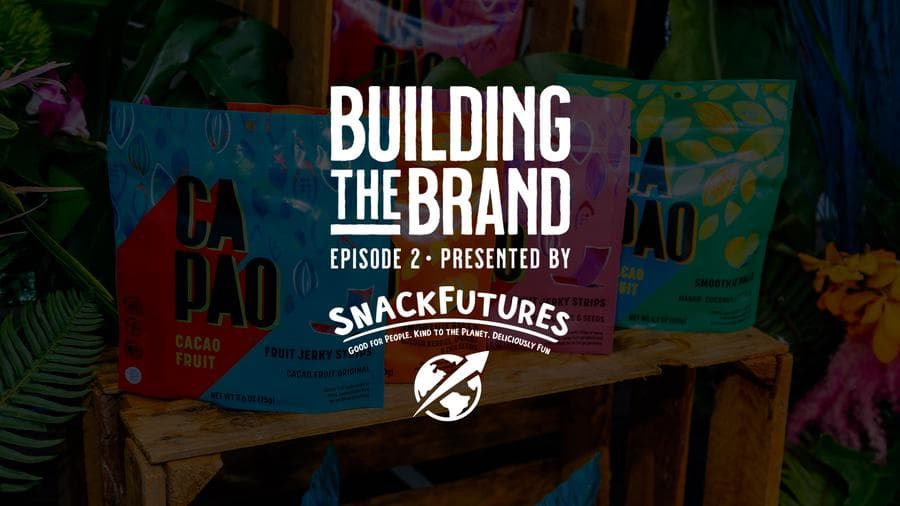
Speaker 1 [00:07] How do you create a snacking world that is good for people, kind to the planet, and deliciously fun? Rescue an ancient fruit that was going to waste. Let us tell you the story of. Did you know that chocolate actually comes from a fruit? That's right, cocoa beans are extracted from cacao fruit pods and then the rest simply goes to waste. That is wasted deliciousness, wasted nutrition, and wasted prosperity for cacao fruit growers. And we just couldn't let that happen. So, we made it our mission to rescue the cacao fruit. Our culinary and R&D teams realized how cool this nutritious, delicious, ancient fruit was and reimagined it into new snack ideas. There were smoothie balls, fruit jerky, and more. We couldn't decide which to launch first, so we let the consumer decide through in real life learning. We began our journey in London, sampling Capao snacks in cafes and on the streets. It was then off to LA where we introduced the Capao varieties in 15 stores to learn even more about what consumers thought about the Capao story, snacks, and packaging. To fully bring the essence of capao to life and get real-time insights, we hosted a mindful yoga event for influencers. They got to see, feel and taste the cacao fruit from expert cacao fruit chefs, take in some meditation, and discover many unique ways to enjoy capao smoothie bites. We also built an Instagram community to get creative and reimagining the possibilities for our product and our purpose of reducing waste. The feedback and engagement we've received along the way has only made us better. We focused and improved upon our cacao fruit bikes. And are offering more sizes to choose from. We've expanded access into more retailers and e-commerce, and are adding to our portfolio so that we can inspire more people to reimagine snacking and the powerful impact they can make, one bite at a time. At Snack
Speaker 2 [02:16] Futures, we push the boundaries of what's possible. Visit us at www.snackfutures.com
Speaker 1 [02:22] to learn more.
Mike Schneider [02:29] Welcome to Snack Features Presents Building the brand, where we explore the lessons learned building innovative, better for you foods. I'm Mike Schneider, the CMO of Nosh and co-host of Taste Radio podcast, and today I'm with Paul Hoffman and Tom Dingley. Paul's the head of operations and supply chain for Snack Futures Innovation Hub at Mondelez International, and Tom works in growth and innovation for Snack Futures. Today we're going to discuss the brand Kapao, an innovative new snacking platform using the cacao fruit. But first, let's meet our experts, starting with Paul.
Speaker 4 [03:01] Hey, I'm Paul. Um, in Snack Futures, I established, set up and manage our business models and ecosystem of partners to help us kind of develop, manufacture, sell and distribute the products that we've got.
Speaker 5 [03:12] And hi, I'm Tom. Uh, I coordinate all of our R&D activities, uh, and my team lead the development of Kappa amongst some of our other brands.
Mike Schneider [03:20] Tell me a little bit about what capao is as a as a snacking platform, and uh a little bit about the cacao fruit, and what it was about the cacao fruit that made it so interesting.
Speaker 4 [03:32] Well, Capao itself is a, it's a new plant-based brand that creates snacks from rescuing and reimagining the cacao fruit and then combining it with simple, nutritious and delicious ingredients. Cocao fruit itself, it's the fruit that brings us the beans that that's used to make the key ingredients that go into chocolate. And when we say rescuing our long term goals use all the parts of the cacao fruit, many of which, like the pulp, for example, that's in our current smoothie bowl products are traditionally, they just go to waste and field.
Speaker 5 [04:01] And, um, you know, in terms of, you know, why did we look at cocoa fruit, um, we're part of Mondelez, one of the biggest chocolate companies in the world. Uh, so we've been looking at different ways to use, uh, cocoa beans and, and use more of the cocoa beans for, for a while. Um, as we came to understand more about the fruit and more about how we could use those things, um, it became clear that, um, Using the cacao fruit, the, the cacao juice inside the pods, uh, it was a really new and unique opportunity that we had, uh, and we had the ability to use that thanks to the development of, uh, an industrial supply of the product from, uh, one of our partners, Barry Calliber, um, who had been working in parallel. Uh, and because we've got that brilliant new ingredient to work with, it gives us a whole new palette to, uh, to work with to deliver delicious snacks that, that use the whole cacao fruit and, and reimagine that, that wasted product, um, into something that was delicious and, and good for you.
Mike Schneider [04:52] And how does that even happen? You guys just kind of sit around at snack futures and try a bunch of waste products? Yeah, that's not how it goes down.
Speaker 5 [05:00] Dig, dig through the bins, of course we don't. So, uh, so no, so I mean, I, like I said, it's something we've been looking at for a long time. We're always looking at ways to, to, to use, um, byproducts, waste products, to upcycle things, and to deliver snacks that are, you know, that are better for the planet and better for people. Um, so we're looking at a lot of things and, and it was just great that this was one of those times where we found a really good ingredient that we could actually deliver on, on what we were trying to achieve. So yeah, there's a, there's an element of serendipity about being able to deliver it as well as we have, to be perfectly honest. Um, and yeah, not everything that we look at works, so we do look at plenty of things.
Mike Schneider [05:33] The cacao fruit isn't something you can just go to the grocery store and, and, and pick up on the shelf. Uh, talk to us a little bit about, you know, Just how do you explain this fruit to people? How do you explain the, the parts of the fruit that are being used? You, you, you mentioned, Tom, cacao juice, uh, it's possible to juice, uh, uh, and, and also, you know, if, if this is If this is a fruit that's used to make chocolate, how do you train somebody, uh, to, you know, recognize the different flavors that are gonna come out of this fruit?
Speaker 5 [06:05] Yeah, sure. So, I mean, the first thing that we do on all of our projects, we go and talk to people, and as you can imagine, the first thing people said is anything with a cacao fruit in it is going to taste like chocolate. And the key thing is that cacao fruit doesn't taste like chocolate. It's a really zesty, fresh, citrusy type flavor. It's,
Mike Schneider [06:23] it's more like a lemon flavor, yeah,
Speaker 5 [06:25] yeah, lemon lychee, people have described it. It's like honey notes. It's, it's not at all like you would expect it to be, and, and obviously people were telling us that very early, so we spent a lot of time talking to people about different ways that we could communicate how different this was. This wasn't a chocolate product at all. Um, and the ways that we did that was by through looking at different product formats. So we looked at product formats that were closely linked to fruit, so juices and smoothies, uh, and our, one of our first launches was a jerky, a fruit jerky product, um, just to try and cue that, um, that message to people that this is not a chocolate product, this is a cacao fruit product. And obviously when we're developing it all the time, we're trying to iterate the different flavors and different flavor combinations to try and enhance that cacao flavor. And, and it was one of the design principles we used on all of our products, uh, which was that they delivered this cacao fruit flavor so people could taste what it, what it is to, to eat a cacao fruit, uh, fresh from the tree if you like.
Mike Schneider [07:25] Talk to us a little bit about some of these processes that you're using. I mean, I think this is interesting because you've got this. This fruit that people aren't aren't used to. You've got, you've got the, um, You've got the means at snack Features to be able to go through different processes and try different things. Uh, are there standards that you're using here to say, all right, we're gonna go through the jerky process, now, we're gonna go through the juicing process, or is this something you have to invent on the fly?
Speaker 5 [07:52] So it's, it's a bit of both. I mean, we're very lucky that obviously we're part of Mondelez, so we've got some of the world's leading experts in food safety and microbiology and quality to help us to make sure that what we're doing is safe, but it allows us to push the boundaries of different processes and using different ingredients. So it was always done in collaboration with those guys. But obviously there's a regulatory aspect that, um, that, you know, Paul can maybe talk us through now about how we, how we had to approach this in a slightly different way because it's essentially a new ingredient for, for people in the US and, and most places outside South America.
Speaker 4 [08:25] Yeah, I mean, I mean, regulating novel food is pretty complex and novel food is, it's, it's something that people traditionally haven't consumed. There's kind of different definitions and people eating, eating these products where you, where they're grown, yeah, that you process them, people, people grow them. And you process them, they go off pretty quickly. So, you, when we're processing and making the stuff, it's, it's all done, kind of, in, in, in market in country where, where it's grown. But actually, if you want to try and import that to somewhere where it's not normal, it's, it's considered novel. So, it's quite complex. And as Tom said, we used a lot of our internal teams who went through all of this. And so, it was more about us trying to find the, the, the right market to where we were going to learn it, um, to, to start with. There's different regulatory systems across different markets, whether it be Europe or US and FDA, US regulators, and originally we'd look to do stuff in the UK, but actually because of the way the processes were going in the order of events, we switched and went to the went to the US, used our partners, used our internal use the partners, the suppliers that Tom talked about earlier, as well as our internal teams to push through and get what we needed from a, from a regulatory perspective. And then, and then we decided, right, we'll switch with instead of going to the UK, we'll go to the US again, joys of the kind of a multinational that we, we're kind of associated with and in and had some challenges we had to kind of make some pretty, pretty dramatic shifts in terms of partners we were working with and how we were going to be going. About doing it, but, but it all worked out pretty well, and I think what was interesting is when consumers, people, at the end of the day, the people who are tasting the products, we did some initial stuff in London when we went to Los Angeles, for example, we were hearing very similar things in terms of what people felt and tasted around the products, so that was quite encouraging.
Mike Schneider [10:08] I'm fascinated that parts of the fruit would be considered novel, while others, or the processed fruit would not be considered novel. Why, why is that? And, and, and, you know, if I'm an entrepreneur who has, uh, who's using a novel ingredient, what do I need to consider? I
Speaker 4 [10:25] mean, it, I mean, it really, it really it really depends. I mean, some of the things, there's a lot of, again, the regulatory environment's a bit of a, a bit of a minefield, and there's a lot of things out there. There's a lot of stuff when, when you say novels, for example, if you look in Europe, there's some things that actually aren't considered novel, but you can get kind of prior art kind of previous cases and get them classified as traditional foods. And in this case, actually, the pulp that we're using has been classified as a traditional food. So, you can use it much quicker and the regulatory process is much more simple. Other parts of the fruit aren't necessarily traditionally consumed and traditionally used and therefore, then you've got to go through, they are completely novel. So, even within a fruit, it's not just about kind of like the fruit as a whole, there's different components that people might traditionally maybe. I think the thing used in Brazil, people traditionally are taking in the fields and, and eating the pulp and making juices from them, and that's used as a kind of justification as to why it's kind of a traditional food and therefore, you'll go through that kind of regulatory process. But there's other parts of it that aren't traditional and no one's really got any data about it and therefore you've got to go through quite a long extensive process to get this stuff kind of approved.
Mike Schneider [11:36] OK, so you have approval, you've discovered that this novel ingredient tastes good, but what about nutrition? We're talking about making better for you snacks. How do you actually figure out that this is, this is something that could be good for you?
Speaker 5 [11:52] Yeah, I mean, so it's about looking at the ingredient that you've got, right? So you're trying to balance lots of different things to give people as much as you can of what they want. So when we're talking to people, clearly, you know, nutrition comes up, you know, all the time in terms of it's very important that we're delivering nutritious snacks to people. They obviously have to be delicious. Every food that people eat should be delicious. If it's not delicious, I don't think you should eat it. Um, so it's about balancing those things as well as obviously the sustainability piece, which is around making sure that what we're doing is, is, you know, doing good things, um, and improving the situation. Um, so it's about balancing all of those different things and it's about, um, making sure that we're very clear about the choices that we make, um, and delivering the best possible product that we can. So, on nutrition, for example, Um, when we were talking to our consumers and when we actually did some, uh, nutritional studies, um, with the British Nutrition Foundation who helped us to do that, we identified, for example, that obviously fiber, most people don't eat enough fiber in their diet, so we wanted to make sure that our products contain fiber to, to help address that. Uh, we've also got a product which is high in protein, uh, a source of protein, so that delivers protein for people too, um, and, You know, it's about, it's delivering on sustainable sustainability piece as well as that, which is why we've got recyclable packaging, uh, we tried new um packaging technologies with a company called Pantoppa, which aims to incentivize people to, to recycle as well as just having the material that is recyclable. Um, so yeah, it's about balancing all of those different things to try and give people as much as they, as, as you can of what they want.
Mike Schneider [13:25] And that's a fascinating part of this too, it's, there's a balance that has to be struck between Uh, between great taste and then also functionality. So delivering the right amount of fiber, the right amount of protein. How do you know When you're making a product, what the right balance is.
Speaker 5 [13:44] Yeah, so there's a, there's a level of trial and error and of iteration. So for example, you know, Cacao juice is quite high in sugar. It's a fruit juice, and sugar does taste great, but it's about getting that balance where you still want to give people a delicious snack that tastes like the fruit, which is sweet, but without unnecessary sugar, without excess sugar, that, you know, we would never add refined sugar to this product, for example. It doesn't need it. So it's about kind of. It's a little bit of an art as well as a little bit of a science, um, so it's about just making those choices and checking those decisions that you're making with, with the consumers, with the people who are going to eat your product at the end, and, and being guided by them.
Mike Schneider [14:27] And is that done through, through focus groups or, or panels, or do you just kind of put a product out into the world and see what happens?
Speaker 4 [14:36] We, yeah, I guess we did, I guess we did a bit of, bit of both. I mean, not, not in terms of massive focus. I mean, traditionally, a lot of, a lot of kind of things, you know, big company, we'd be very deliberate in terms of those things. I think we're trying to be a bit more. A bit different in terms of how we're going about it. We did quite a wide range and quite deliberate kind of different learnings. We went into, I mean, Tom and Tom and his team, we went and, and myself, we were, we went in the streets of London, walked the streets of London, and we did various samplings in, I don't know, cafes and some street sampling, and we learned a lot there about both the kind of types of products and how people were reacting to them, also a bit about the, a bit about the brand. Um, we did some other learning, which was not so much based on the product itself, other than what, how it appealed to people. We did a Kickstarter thing, that was more about kind of trying to narrow down types of products. We had a kind of fairly broad spectrum of products. Tom and his team had had developed so many. Great kind of ways of bringing this to life and we needed to get focused. We needed to bring it down, so we narrowed it down to the first couple that we were doing and really understood about how important the kind of positioning was in terms of waste and reusing and stopping that waste. And, and then, and then we did things like we went in, we went, went to the next stage of, we went to 15 stores in LA. So, we really tried and through those stores, it's not just about putting it on the shelf. We did lots of sampling in store. Um, we, we did some, we did some, um, some, some PR kind of programs there and everything, and, and we learned quite a lot from that. Even then, we went in with two products. Halfway through, we said, yeah, you know what, people are really, for a range of reasons, we're, we're kind of gravitating towards this. So, the smoothie balls, which, which is what we've got now. Um, And from that we said, well, we've got, we got to get a trial pack, we, we, we, we can do sampling, but we can't, we can't do that in 24/7, you can't be sampling, so we need a smaller little pack to get, to get people to kind of To trial it without people handing out samples and everything, so, did lots and lots of things and through all those kind of stages, you get lots of feedback that's kind of, OK, there's some things we've done right, things people love, branding, colors, lots of bright stuff there. There's some things that people were kind of feeding back on some choices we made about packaging didn't open, it wasn't great, but we wanted to get the product out there, but we knew that. But, but some of the other stuff on the product side was about how people reacted a little bit to the amount of sugar. Um, the size of the product, how they're kind of dealing with it, so we changed a few things there and, and, and really as we came back in. We, we kind of communicating it as well. That's another thing. I think when we started off, we were very clear about kind of smoothie balls and actually we went through, people don't really know, we have to focus about cacao fruit and they're kind of linking it to that cacao fruit and even now after we've gone into 50 stores, we're still learning, continue to learn and simplifying further and changing the name even to really heroing cacao fruit again, but it's cacao fruit bites now as opposed to smoothie balls.
Mike Schneider [17:23] I'm curious about some of the initial hypotheses versus the, versus the initial feedback. Um, obviously, whenever you build a new product, you have ideas about what you think the consumers are gonna, are going to say, and then you, you get, you know, some predictable feedback, but you also get surprises.
Speaker 5 [17:41] Yeah, I mean, I suppose the predictable feedback was that, you know, anything with the word cacao in it is going to taste like chocolate, and I think it is that's, that's the big thing that's tough to communicate, you know, is there is more to the cacao fruit than just the beans that make chocolate, so that was probably the predictable piece, I suppose. The unpredictable piece is sometimes how people view flavors and tastes, so. It's just often interesting what what you think is going to work. Sometimes maybe it's a little bit too strong or a little bit too weak or a combination that you think is fantastic. Sometimes they don't think works so well. Um, so it's, it's often those things that, that you can kind of, that's where the real value is in asking people what they think, you know, and listening to their answers.
Mike Schneider [18:22] You, you mentioned the packaging, you mentioned, uh, some people had said that it, it didn't open exactly the way they expected it to, um, You're talking about building a sustainable snacking platform on uh a, a waste, what was previously a waste product. Um, uh, one piece of the equation that we didn't talk about was packaging. Obviously, that's part of the, the journey here as you think about, OK, we want to be sustainable, you're gonna be sustainable across the board. Talk to us a little bit about, uh, the, the, the Kapao packaging.
Speaker 4 [18:51] Yeah, I mean, the packaging itself, as, as, as Tom mentioned earlier, I mean, recyclability was, was, was core and we, we partnered up with a, with a, with another small startup um, Puntapa, which is all about driving, um trying to incentivize and drive recycling behavior. And, uh, so there's two parts of it. There's the part that everything we can do. At the end of the day, we can do something fantastic, but if we come up with a recyclable pack and someone still takes it and throws it in the trash, then, then, then you've made one step, but it, it, it's not really, it's not really made that much of a difference. So, I think a lot of the, we did a really, really conscious effort to make sure that we went for recyclable packaging, and I think in this, in this, these kind of formats, when you want flexibles, trying to get things that are, that are, that are recyclable, is, is a, is a challenge that the world is moving forward and people are making lots of efforts, but, but everyone's kind of pushing boundaries in terms of trying to get to recyclable structures. Very early on when we were making these products for the, for the LA. It was, the easy option would have been to go, actually, no, look, fine, this is too unknown and we can't do this, or there were some challenges around, around trying to get these materials, and, and at one point, the team was kind of trying to veer off to say, well, no, look, we'll go for, we know it's not ideal, but we'll go for a kind of a more of a standard film and, and, uh, and then we'll work on the recycling in the background. But it, it was so fundamental to what we're doing as a brand and what we're trying to do, that we took the Time and we, we, we, we waited a bit longer and made sure that we got that right solution in place. And as I said, that the internal stuff, the first iteration of it wasn't great. One of the challenges was because of the material, and it was difficult to open, but we were able to work on that whilst we were getting this other learning in parallel and then come back and fix it. So, the stuff that we've got now really does deliver against all that we want, completely 100% recyclable and it opens and it functions and does all the things it needs to do.
Mike Schneider [20:39] A lot of brands in 2020 we've seen have been very uh cognizant of sustainability. You're using the term rescuing, uh, rescuing parts of the fruit. What parts of the fruit are you using, um, are you upcycling right now, and what are you still exploring for future use?
Speaker 5 [20:57] So at the moment for capa we're using the cacao juice which comes from the pulp inside the cocoa pod. Um, and, and that's the thing that gives our smoothie balls their delicious taste. We obviously are looking at trying to use the whole fruit ultimately, so using the, the outer parts of the pod and, and other parts that, that, that we can, um, as with all upcycling and use and usage of waste stream products, there's a certain technical challenge that you need to address, as well as, you know, the logistics and the supply chain of how are you're going to collect those materials and, and how are you gonna get them to where they need to be, um. So those things don't always happen immediately, and, and, you know, it's, it's tough sometimes to, to get those waste stream products to work, but the payoff at the end is obviously huge, you know, you, you're genuinely rescuing foodstuffs that aren't being consumed that are going to waste, so it's, it's worth. Can you
Mike Schneider [21:48] talk about any of the possibilities here, it's so fascinating from an innovation perspective, like, we don't get to see a lot of just the breakdown of a particular uh fruit to say, all right. You know, what would you even consider? You're, you're looking at the juice, uh, you've talked about pulp, um, of course there's a rind on, on a, a fruit or, you know, every fruit has some sort of covering. So, like, what are the possibilities that you explore here?
Speaker 5 [22:12] So, so the ambition is we want to use all of it, we don't want anything to go to waste, um, and there's different challenges with using different parts of the fruit. So, um, if you can imagine a cocoa pod grows on a tree, um, actually directly on the trunk of a tree, it's about the size of a, a football, an American football, not an English football. Um, and inside it, yeah, uh, yeah, one of your footballs. Not mine. And inside it is, uh, that's where the cocoa beans are. So the cocoa beans inside it, that's what's been used for, you know, a very long time, 100+ years to make chocolate. Um, and then the, the ambition now is to figure out how to use all of the rest of it, uh, in a sustainable, useful way as well.
Mike Schneider [22:52] So let's talk a little bit about the challenge there. Now, you're, you're educating a consumer base that kao is this, uh, this taste that's. Citrus, you know, perhaps lemony, perhaps like, like a lychee fruit, and what happens when you introduce new iterations of uh the same fruit? Like, what do you do then?
Speaker 5 [23:16] So, you know, there's, there's so many different things that you can do with, with flavor and texture that, you know, ultimately I don't think we're going to be short of delicious new ideas. Um, I mean, during the development, we've worked with some really talented chefs, with mixologists even, um, and we've looked at lots of different food formats as well other than just the ones that we've got, and we've got a ton of stuff in our butt pockets, um, ready to, ready to bring to market when it, when we're ready. Um, so I don't think we're going to run out of ideas at all. Um, I think the important thing is that we do want to use the whole fruit, so there may well be things down the line that come out which have got, you know, more of that cacao flavor, that bitter, I don't really want to use the term chocolaty, but for, for the purposes of understanding, you know, that chocolaty flavor, that's something that we could certainly do as well. So, uh, so yeah, that's the beauty of the cacao fruit, it's, it tastes like lots of different things.
Mike Schneider [24:05] So, it tastes like lots of different things, which means that there's going to be a challenge from a branding perspective. It means that you need to come up with a hierarchy that says, OK, that uh Kapao, the brand means something, and then eventually you whittle down to, here's a flavor within. So, what does the brand Kapao itself stand for, and how do you communicate that?
Speaker 5 [24:26] So capao stands for a brand that's looking to rescue the parts of the cacao fruit that aren't used at the moment. So the important part is that, you know, we're not just going to go and make a chocolate bar. This is about, you know, sticking to that key principle at the moment. The best way that we can convey to people what a cacao fruit is is by using this cacao juice. It's something that's unique. It's new, it's delicious, and I think it's really interesting for people to experience. So at the moment that's the best way that we've found to convey our message. Down the line, there may be other ways, there may be other parts of the pod that we could use, and there may be other flavors that we could bring to the fore, and then it'll be about trying to integrate that into our whole, you know, journey of, of growing Kappa.
Speaker 4 [25:03] But, but building on that summer because we've talked about this quite a lot. One of the core things to the in guiding those kind of things that we'll do in the future and other products, it's got to have A certain percentage of it's got to be all around the cacao fruit, as we said, it's got cacao ingredients in there, but it's not just cacao. There's other simple you look clean ingredient lines, the product tastes great, and there are other things in there as well, and all the products you bring are all going to have other stuff in there, but every single product under that brand's got to have a certain amount, and we've set a kind of an amount of that that we want to, we want to kind of drive because it's all about trying to Drive rescuing the fruit is one of the core principles of the, of the brand and therefore it's important. So you're never, you're not going to see a cacao product in the market in, in, in the future that's only got a little bit of something in it because it's kind of, maybe it's got a taste of something and, and it can be associated. No, it's got to have that certain amount of, of, of cacao ingredients in it.
Mike Schneider [25:58] You're, you're building this brand, you're incubating this new product, um. Talk to us a little bit about how you are getting the word out, how you're, how you're testing this product.
Speaker 4 [26:10] So, so, it's, I mean, it's, it's a real, it's a real mix and as I said, we started earlier, we did, we did initial stuff. We've really focused in LA, um, but also a little bit driven by the world we live in at the moment. We went earlier than, than, than, than we were planning to do. We went, we went online and so when we set up a direct to consumer site on, um, on, on Capare.com. So, that was, uh, another way of trying to learn and Linked to that, so we're in LA to start with, pretty limited number of stores, which we're gradually increasing the footprint. We're in 15 to start with, got that feedback, we went to 50. We're going to come back in, in the coming months and really try and blow out that, that, that footprint a lot more in. And, and really, to start with in, in, in fairly focused kind of locations to allow us to be a bit deliberate in terms of how we're going to kind of build social, get targeted, kind of targeted social, so get a bit more effective, um, cost effective in terms of how we're driving that messaging, but also about how we're targeting like the core consumers and then try and build up and build up from there.
Mike Schneider [27:14] And you've also worked with um with influencers. Tell me a little bit about how you targeted those influencers and how you would decide that somebody would be an appropriate influencer for something like Kapaw.
Speaker 4 [27:24] I mean, it, it, I mean, it's about the, the, a lot of the principles and the core principles of the brand and what it kind of, what it stands for, what the core consumer, we did a core consumer core people, when we did a lot of the initial work, it was about, look, what are we trying to this first stage of product, what are we trying to target and you kind of create this kind of vision of what, what that kind of The core consumerism and if this person isn't going to buy it, then nobody's going to buy it and then outside of that you can, you can blow out and expand. So I think the kind of influences that we've tried to work with and go with are those people who are really that kind of that core kind of core kind of consumer. And if you look, I mean you can look through. Through our Instagram kind of feed and stuff like that, and the kind of people that are, that, that are on there and the kind of lifestyle and the kind of activities and it's a lot of, it's a lot of, it's a lot of health, very health conscious, a lot of yoga, a lot of very mindful activities that people are bringing those through and that's what, what we want to be associated with as a brand.
Mike Schneider [28:17] You mentioned yoga, you mentioned health, uh, you mentioned healthy lifestyles. Um, what kinds of conversations have been, uh, developing on your social media platforms?
Speaker 5 [28:27] So what's been great about social media is, it's obviously a two-way conversation, so we're getting a lot of uh input from consumers directly on how they're using our products. So whether they're just eating it straight from the pack, whether they're crumbling it on their, their yogurts, whether they're using it in different ways. Um, so that's been really interesting to see, and it obviously informs us about, you know, what's, what's really resonating and working well with these people that we're really trying to serve. I think, um, one of the really good examples has been the, the hashtag #Wonder smoothie, uh. Sort of, uh, I wouldn't say competition, but, you know, activity that's been happening on Instagram, and there's been some really fantastic creations that people have, have put on there. Uh, they look absolutely beautiful, and, uh, as soon as I get the time, I'm going to try and recreate some of them because the stuff they've come up with is, is absolutely fantastic, so, that's great. It, it, it, it provides a lot of inspiration for, for me as well as, and my team as product developers, in terms of, you know, there's some great ideas here that we can, we can genuinely go and try. So it's, it's about, that, that conversation's really powerful.
Mike Schneider [29:25] Any of those specifically that, you know, someone's done that you said, oh my gosh, I didn't even think of that, and then it's kind of taking you guys off on uh down a rabbit hole.
Speaker 5 [29:33] Um, we often go down rabbit holes, yeah, because I mean you just, uh, you're following your taste buds and you just want to see what tastes nice. I mean, there's some early ones where people wanted to see, uh, you know, a chili element, a spice element to our products, and we created some that were delicious, and, and we thought they were really delicious, but actually, you know, it's something that is kind of some people absolutely loved it and some people were kind of struggling with it a little bit, and it put them off. Um, so yeah, that, that's kind of one of those things where down the line, we'd love to do something that incorporates that bit of spice. Um, but that was one of the rabbit holes that we kind of went down. How do we get it just the right amount of spice, and if you don't have enough, the people who want spice aren't happy, and if you have too much spice, then the people who don't like spice aren't happy. So
Mike Schneider [30:14] how, how much of that iteration is going on on a given day in, uh, in, in snack futures back at the, back at the lab, so to speak?
Speaker 5 [30:22] Yeah, yeah, constantly, constantly. So we've, we've got an innovation kitchen, we've got multiple innovation kitchens around that, that people are working in daily to try and improve the products that we make. Uh, so yeah, I mean, there's, there's a, there's a huge empowerment within, within my team, the people that we work with, to just go and try stuff. And like I say, whether that's from an idea they've seen on social media, whether that's from a recipe that they've tried at home, a restaurant they've eaten in, um, that's something that we massively encourage. Yeah, that's, that's a key part of our job.
Mike Schneider [30:49] Paul and Tom, this has been really fascinating to hear how the Capao brand has been built at Snack Futures, uh, from, uh, testing out flavors, to testing out different parts of the fruit, to, uh, launch, uh, and getting feedback from your consumers, testing hypotheses. What is next for the brand and for you two?
Speaker 4 [31:09] Well, for the, for the brand, as I think I said a little bit earlier, we'll, we're looking to expand and go and blow out a little bit in terms of what we've got. The speed and pace of which we'll go will be driven by how well it's doing. We've got new products coming and Tom Tom can talk about, Tom can talk about that.
Speaker 5 [31:26] Yeah, so I mean, we'll continue to explore in the kitchen and see how, how we can use these, these different parts of the kaka fruit to make things that are nutritious, that are delicious. That take people on a different taste journey than what they would expect from, from something that actually produces chocolate. So yeah, we'll, we'll keep pushing the boundaries and keep trying to, to deliver new things to excite people.
Mike Schneider [31:48] Hey, thanks for joining us today on Snack Futures Presents Building the brand, and I want to thank Paul and Tom for their time, and we'll see you on our next episode.
Speaker 1 [31:56] At SnackFutures, we push the
Speaker 2 [31:58] boundaries of what's possible. Visit us at www.snackfutures.com
Speaker 1 [32:04] to learn more.