How Diaspora’s ‘Scrappy’ Growth Strategy Reeled In Padma Lakshmi

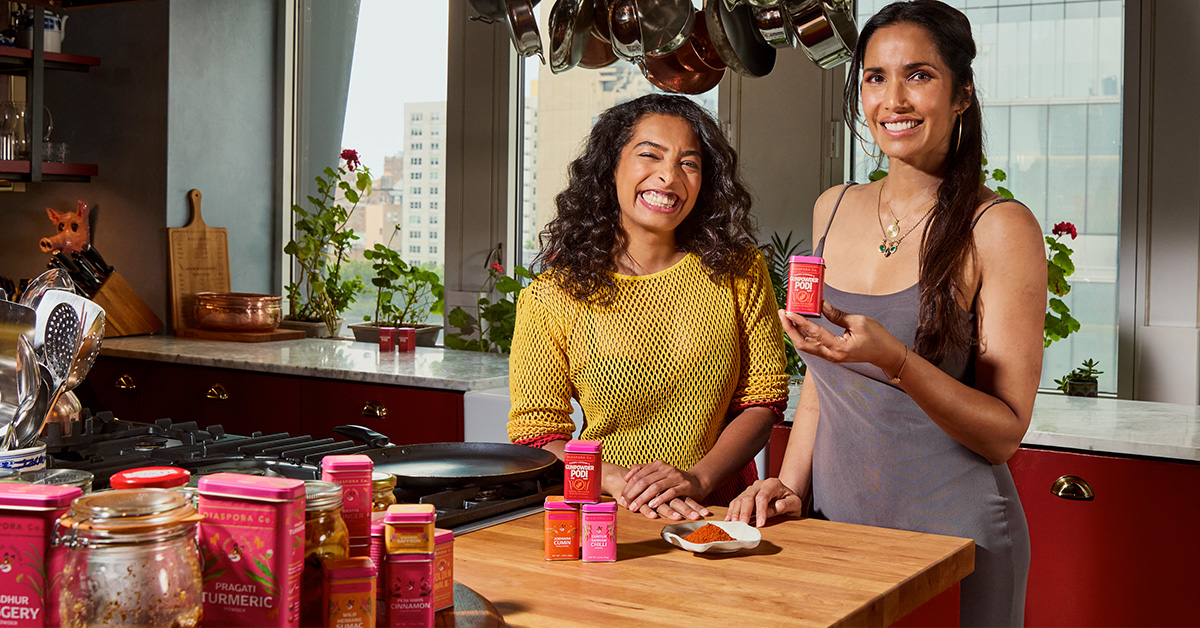
Like many great relationships, this one started with one sliding into the other’s DMs.
Diaspora Spice Co. unveiled one of its most high-profile collaborations to-date this month as the Indian and Sri Lankan-sourced business works to navigate the unpredictable tariff environment. According to founder and CEO Sana Javeri Kadri, during Diaspora’s eight years in business, the company has found that collaborations are one of the most impactful, budget-friendly modes for growth.
“We are such a lean company, we don’t spend money on most things,” Kadri said. “Our advertising budget is maybe one-fiftieth of another [direct-to-consumer] company our size… [But there are] areas that we’re seeing that we can grow significantly – we’re finding that the scrappiest way to grow is via collaborations.”
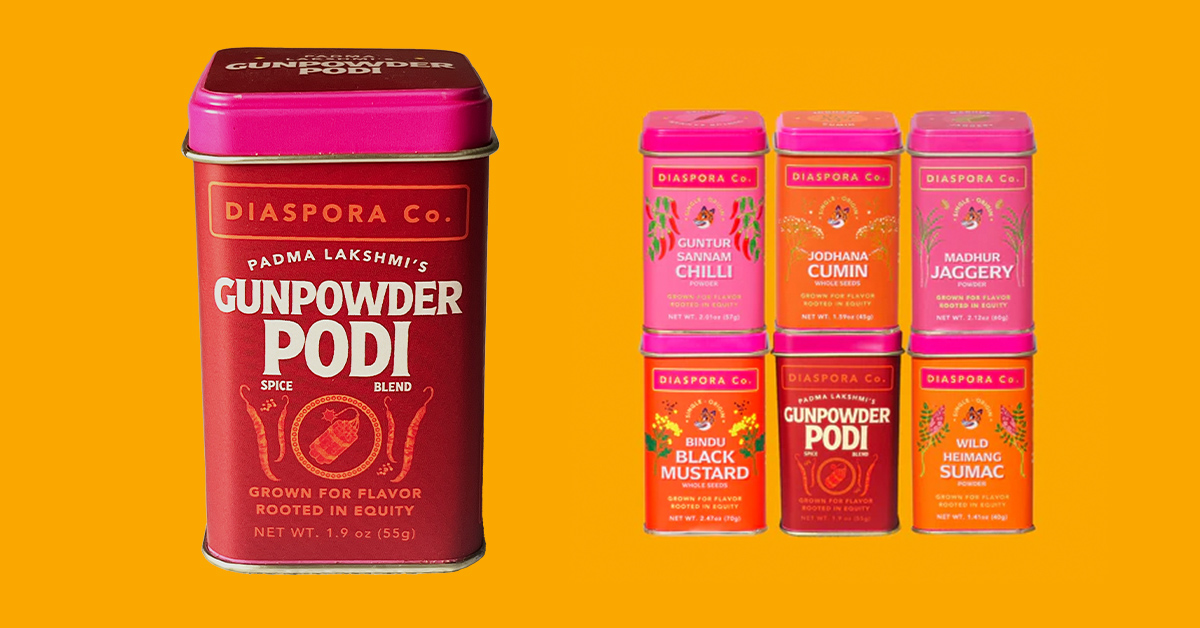
The latest launch, a spice blend known as Gunpowder Podi, was created in collaboration with cookbook author and former “Top Chef” host Padma Lakshmi. The blend features dry-roasted lentils, split chickpeas and spices such as white sesame seeds, Byadgi chillies, pink garlic, jaggery, curry leaf and more.
That direct exposure to Lakshmi’s audience comes at an important moment for Diaspora, which is working to mitigate the impact of 50% import tariffs on its business, imposed in late August. The company was forced to implement price increases between 15% to 20% on all products this month, and Kadri herself also took a pay cut.
“It was really heartbreaking, but we didn’t really have a choice,” she said. “We had to do it, and even that is not fully covering the tariffs. The way it works is the tariff gets paid upfront when something lands on U.S. soil. That could be like 50,000 units of something. It’s then going to take me six months to go through those 50,000 units that I’ve already paid 50% of the value off up front. The math just really doesn’t math.”
Omnichannel Opportunity
Now, Diaspora has been forced to push back profitability further, which Kadri had forecasted would be feasible this year; the company has shifted expectations to another year of breaking even. The brand has also shifted focus from an expected push deeper into brick-and-mortar retail, to prioritizing DTC where the margin is “viable.”
“It’s been pretty terrifying, but the team has been very nimble, and we’ve shifted strategies constantly… that’s where having all those channels is useful to change things in real time as you can,” Kadri said.
Broadening access and flexing between channels is another element to why Diaspora is also leaning into collaborations. Next month, the brand will unveil a collaborative ice cream flavor with San Francisco-based Garden Creamery, building on a roster of products that include chia nut butter with Ground Up, Indian Gulab Jamun Syrup with Transcendence Coffee and Apricot Chilli Saffron Jam with Saba Jams. These products not only build awareness for Diaspora outside of its established customer base, but also offer those loyal customers another way to experience the brand.
“If you buy a jar of turmeric you’re probably going to be sitting on that for a couple years, so what do I give returning customers? I give them something they can use up a lot faster,” she said.
“This creates new, innovative experiences for our returning customers [and] we see that returning customers come back more often when we have these kinds of collaborations. On the other end, often, a new customer will be overwhelmed by… [not knowing] how to make XYZ, but if you give them a nut butter or an ice cream or a chocolate bar, that’s a pretty easy way to reel them in.”
Padma’s Push
Aligning with Lakshmi has already brought multiple, tangible boosts to the brand. Kadri participated in a pop-up event in New York earlier this month that drew a crowd of over 1,400 individuals. Using just five tins of Diaspora’s recently launched Masala Chai powder, she served chai to every individual in line over the course of the event.
The relationship with Lakshmi has been ongoing for years, Kadri acknowledged, noting that she had regularly purchased the spices from the brand’s DTC site and previously nominated Diaspora for a feature in People Magazine. “As South Asian women go… she’s really held the door open for other South Asian women and I credit her for transforming the industry to be a happier, safer place for immigrants,” Kadri said.
Kadri reached out to Lakshmi about the collaboration ahead of her upcoming cookbook debut and said the former Food Network star immediately knew she wanted the product to be gunpowder. Kadri explained that it is an extremely versatile blend that is common in the Tamil Nadu region where Lakshmi is from; she considers the base of an Indian-style chili crisp – it is “nutty, spicy and umami,” she said.
All of the ingredients are roasted before they are ground, meaning that it doesn’t necessarily need to be cooked with and can be easily incorporated into a wide array of dishes and cuisines: “You can obviously cook with it, but you can also just sprinkle it on top of stuff,” Kadri noted
That versatility is also a tool for growth, allowing Diaspora to lean into recipes with Lakshmi such as Gunpowder Podi grilled cheese, or encouraging consumers to simply sprinkle it on popcorn. The product’s broad applicability supports engagement and awareness of its broader spice array and products’ differentiation, she said.
“The magic of food is you give credit to context and origin, and then you do whatever the hell you want with it,” Kadri said. “We’re always trying to encourage people to use [our spices] in all kinds of things and be playful with them. I think it’s that simple…people get scared [about whether] it is cultural appropriation. If you give credit to origin, it’s always appreciation.”
Growth IRL
Now, Diaspora’s focus for the year ahead is to make its products more accessible. The brand is currently sold in about 500 retail stores nationwide, and Kadri said it will push equally on DTC, grocery and independent stores over the next year. Diaspora is also working to increase access to its spices via a pop-up event at New York City shoe store Sabah in December.
“We realized that our shipping cut off for the holidays is December 10… so we have a few weeks in which people want to buy our stuff that we can’t get to them,” Kadri said. “We’re doing the pop-up from the 18th to the [evening of the] 21st as a way to say: ‘Come in, we’ll take care of you, give you hot shots of chai, [and you can] buy all your holiday presents with us.”
That in-person experience is important to consumer adoption, Kadri said, and will also see Diaspora bring its own brick-and-mortar flagship store to life later next year. She believes that in order to run a successful spice company, customers have to be able to interact with the products – see and smell them – to understand the difference and be inspired to purchase.
“We’re looking to grow with a capital G, and the ‘why’ of the growth is super important – our farm partners have more spices to sell,” Kadri said. “It’s not [because] I want to grow for the sake of it. It’s that there’s 140 farming families across India and Sri Lanka who want to sell more spices to the world, and they have the resources to do it.”