‘It Can’t Die’: Doughp Searches For New Operators

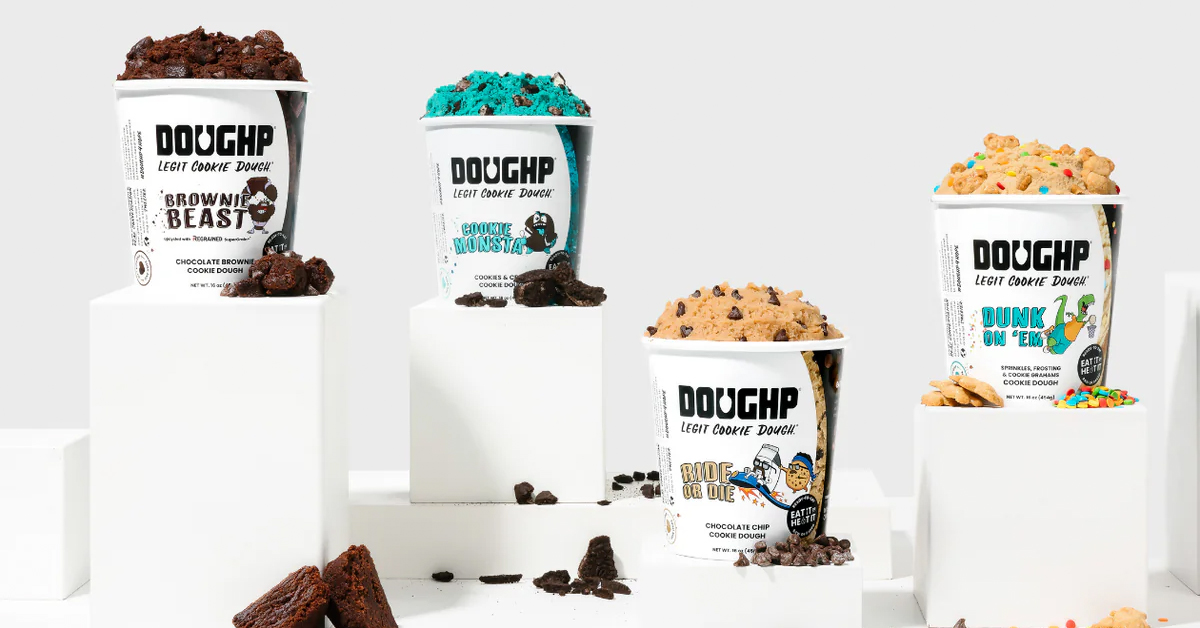
Seeking an exit can be a secretive process, but for Doughp’s founders, being transparent and vulnerable about needing to move on aligns with the brand’s mission.
Last week, Kelsey Moreira posted on LinkedIn that she was looking for a potential buyer for the cookie dough brand she launched almost eight years ago.
“I know it’s taboo to talk about selling your business or needing to step away. But we’re real humans running these companies, not robots!” she posted.
Moriera and her husband (and Doughp CEO) Israel Moreira told Nosh that the post was not a way to offload a failing business but was based on a need for additional resources to take Doughp to the next stage of growth. The Moreiras intend to be part of the brand “in whatever capacity we’re still helpful.”
Not only does the brand need new growth capital to fuel marketing efforts, but Doughp needs an experienced operator “who has run this path before,” Kelsey Moreira said.
Already, the company has received positive leads from the LinkedIn community.
“I don’t think that we’re going to be left empty-handed going through this process,” she said. “Essentially, overnight we went from having just one active conversation to dozens. We are hopeful we’ll find the right fit in short order.”
Setting A Flag In The Cookie Dough Category
The decision did not come easily to Kelsey Moreira, who has been learning on the job for nearly eight years. She launched the brand in 2017 as she became sober from alcohol addiction. Moreira found baking to be an integral part of maintaining her mental health.
The company donates 1% of sales to support mental health nonprofit organizations like SHE RECOVERS Foundation, which supports women’s empowerment in recovery.
Doughp experienced its first shot of growth when it was featured on “Shark Tank” in 2019. Although Moreira didn’t get a deal, the appearance (along with a follow-up episode in 2022) bolstered consumer awareness.
Over the last year, Doughp has pulled back on its expenditures as operating capital has become difficult to raise. The cookie dough brand has prioritized where it is allocating resources on direct-to-consumer marketing and its trade spend in retail.
Part of the problem is that Doughp is at a point where it needs economies of scale to free up more capital to support price cuts and demos in retailers, Israel Moriera said. “Otherwise, we’re just on the shelf. Our product is great and it speaks for itself, but if you don’t get anyone to actually try it and buy it then it’s all for nothing.”
The edible cookie dough set has seen its fair share of saturation. Natural-positioned Sweet Loren’s has expanded into other refrigerated doughs while Deux has taken the functional approach in its cookie doughs. Amid that competitive landscape, Doughp is trying to avoid a similar fate that hit BroDough when it chose to shut down operations in March.
Baking A Recipe For Success
The brand realized that its expansion in DTC, along with its retail partnerships, created a $200,000-per-month burn rate, which wasn’t sustainable as it tried to move towards profitability over growth.
Doughp decided to exit a few retailers that were unprofitable due to “low volume and unfair competition,” but more importantly, the Moreiras realized that they had entered into deals with some retailers that had terms that did not serve the brand long-term.
“We wanted the business so badly that we signed onto an agreement that was not in our best interest,” she said. “We thought if we just need to get the business then it’ll figure itself out. That’s just not the way to work it. You need the right business, not the business.”
The last year has also brought other less-than-ideal learnings when moving from a grow-first mentality toward profitability.
To find more favorable terms on its debt, Doughp tried to renegotiate with its creditors with all agreeing except one. The company sought a six-month hardship accommodation plan with the Small Business Administration on a $1.9 million EIDL loan, but the request for renewal was denied. Doughp was forced to file for Chapter 11 bankruptcy in January in order to put in place a payment plan for the company that would allow it to continue operating.
“Thankfully, in our case, the process went relatively smoothly in that all of our creditors and investors knew what we were going through,” Israel Moreira said. By June, the brand was back on track.
To add to its struggles, Doughp also received a cease-and-desist letter that turned into a lawsuit over some marketing language used on the brand’s labels. The case brought by a “major cookie dough manufacturer” was eventually dropped but left the company to label by hand $100,000 worth of product along with the hours trying to find a solution.
Despite the struggles, Doughp reported it is operating at breakeven with its business split evenly between ecommerce and grocery retail, where conventional shoppers have “made more sense” for the brand, Kelsey Moreira said. The brand is available in over 2,000 retail doors, including nationwide in Kroger and Fred Meyer, among others.
“It’s really hard to kill a good product, and we’ve seen that Doughp won’t die; it can’t die,” she said.