CPG Week: Why Did Guayakí Get A Name Change? Plus, Weed’s Web-Based Approach
Episode 121
In this episode:
In this episode:
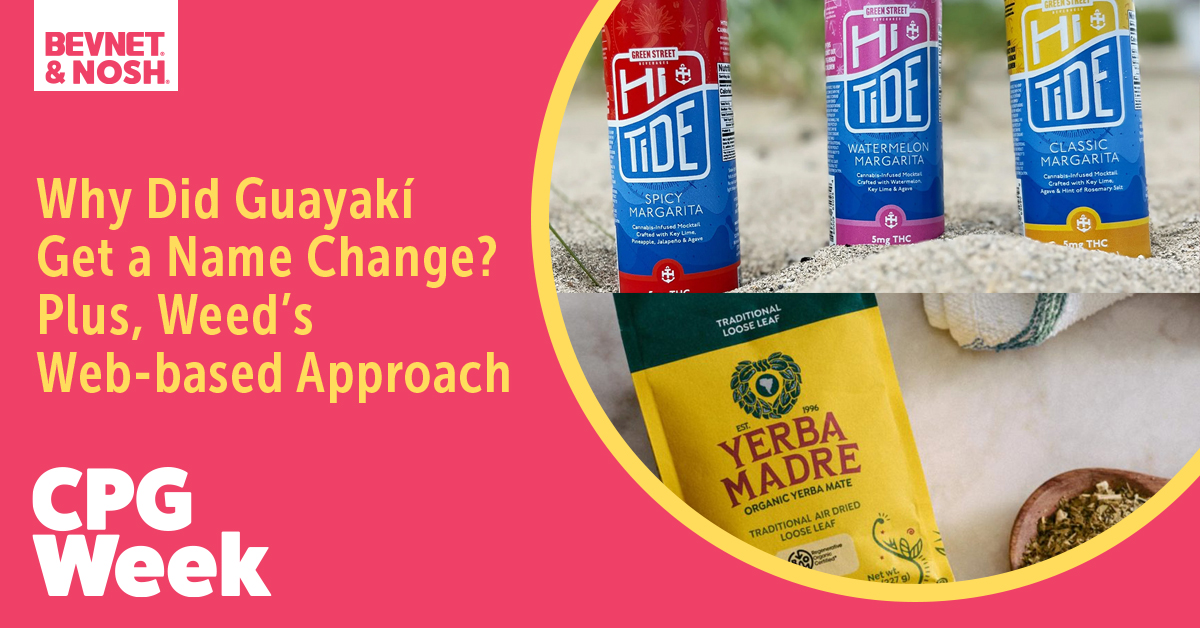
On this episode of CPG Week, senior reporters Brad Avery and Lukas Southard walk through the biggest news items of the week. The reporters discuss Guayakí’s rebrand to Yerba Madre, how intoxicating hemp brands have leveraged DTC to grow and a pair of recent earnings reports showing a slow start to the year. Brad and Lukas finish up with a welfare check on Free Bird founder Jay Williams after a playfully disturbing post on LinkedIn.
Show Highlights:
0:20 – Say bye to Guayakí and hello to Yerba Madre. Brad runs through his recent conversation with Yerba Madre (formerly Guayakí) CEO Ben Mand about the rebrand and how it reaffirms the tea maker as the flagbearer for yerba mate in the U.S.
2:30—Lukas updates Brad on the most recent regulatory wins and losses for the intoxicating hemp beverage category. The two discuss how the category is growing online amid a push for closer alignment with beverage alcohol.
6:30 – Ghost has been sued by Mondelēz, which claims that the energy drink brand cannot use the trademarks for Sour Patch Kids, Oreo, Swedish Fish and Chips Ahoy after being acquired by Keurig Dr Pepper.
8:00 – Lukas runs through Celsius’ “slow start” to the year with its Q1 earnings. Brad chimes in with Black Rifle Coffee’s latest quarterly earnings, also representing lower revenue growth.
9:45 – On a lighter note, the duo discusses a comical post from Free Bird canned water’s founder Jay Williams about a recent run-in with McDonald’s Hamburglar.
About CPG Week
CPG Week is the podcast that explores the latest happenings in the consumer packaged goods industry. Join our seasoned reporting team as they dish out the week’s stories in quick, easy-to-digest episodes. Catch up on the top headlines of the week, dive into exclusive insights with the BevNET and Nosh teams, and set yourself up to make more informed business decisions. Tune in to stay up-to-date on the latest developments in the dynamic world of packaged food and beverage.
New episodes are released every week. Send us comments and suggestions anytime to cpgweek@nosh.com.
Show Highlights:
On the CPG Week podcast, the team goes over Guayakí’s rebrand, hemp beverages in DTC and a check-in on a pair of recent Q1 earnings calls.
Episode Transcript
Note: Transcripts are automatically generated and may contain inaccuracies and spelling errors.
[00:00:05] Brad Avery: Welcome to the CPG Week podcast by BevNET and Nosh. I'm Brad Avery here with my co-host Lukas Southard. Monica Watrous is on vacation this week. Now here is the latest in food and beverage industry news. Kicking things off, Guayaquil got one mother of a rebrand. The Yerba Mate brand is now known as Yerba Madre. After almost 30 years in business, the brand wanted to start reflecting its wider heritage in work with Brazilian and Argentine and Paraguay for its sourcing of Yerba Mate as well as appealing to American consumers who never quite knew how to pronounce Guayaquil. So, this is a pretty big shift. However, the brand will still be owning its regular trade dress, the yellow packaging across its loose leaf tea, and its canned yerba mate drinks. I was able to speak with CEO Ben Mand about the rebrand, and he mentioned that there was always hesitation, a pause, and then almost a bit of stuttering when people try to say the name.
[00:01:14] Lukas Southard: Guayaquil, or as we're now calling it Yerba Madre, has long been the category leader of Yerba Mate here in the U.S., and they still are. This rebrand seems to be reestablishing itself as that flagbearer of Yerba Mate here in the U.S., especially as there's more consumers coming to the brand, as well as more brands that have launched into the market. You have Guru, you have Yerba, you have Matina. So there's more competition, and it seems like Yerba Madre is now reestablishing itself as the big boy.
[00:01:50] Brad Avery: There is more competition, you're right, but Yerba Madre is effectively the Gatorade of this category at the moment. They are far and away the leader and probably the first brand that most people in America will think of if they think of yerba mate. And that's part of what this name is really doing. Ben talked about how a lot of consumers would just call the drink yerba mate or call it a yerba or the yellow can. So this is seizing ownership over the hero ingredient. It's seizing ownership over the category they are the mother of American yerba mate.
[00:02:26] Lukas Southard: from the hemp beverage desk. Last week, Texas amended a potentially disastrous bill aimed at banning nearly all intoxicating hemp products from the state. The new version of the state Senate bill allows for sale of hemp-derived THC drinks under certain stipulations and pitches the decision to sell them to various cities and municipalities. Mind you, this bill still needs to be approved by the Texas House of Assembly and eventually needs to make it to Governor Abbott's desk, who has been outwardly oppositional to intoxicating hemp. In Florida, another market that has been pretty successful for hemp beverages, an attempt to tamp down on those drinks in the state fell short when the state legislature failed to pass a regulatory framework before the end of its legislative session. Now those two pieces of regulatory news might be considered wins for hemp industry stakeholders, yet Rhode Island and Ohio were successful in putting in place limitations to the distribution of intoxicating hemp within the states. And this all relates to some reporting I've been doing for a feature that focused on hemp-derived beverages and the opportunity they have seized in online e-commerce and D2C. Traditionally, online e-commerce channels were not seen as viable long-term distribution place for beverages. Yet, as states like Rhode Island and Ohio, among many others, have put in place detrimental restrictions on retail sales of hemp beverages, these brands have used e-commerce as pretty much the most stable place to sell these drinks. And that's not to say there aren't some challenges in at least five different states. there is explicit outlaws against selling and distributing intoxicating hemp products through the mail. And several other states are in the process of formalizing their aversion to this practice. But that being said, hemp-derived THC drink purchases from brand websites were up 27.4% in the first quarter of 2025. And that is an uptick from the previous two quarters, which were at about 25.9%. and demand hasn't really slowed for this category at all. So according to data provided to me by a Los Angeles-based marketing firm, Pillar, by its numbers, U.S. sales of hemp-derived THC beverages were estimated to be about 382 million in 2024. And that number is projected to jump up to 4.1 billion by 2028.
[00:05:04] Brad Avery: Now, I can imagine that the industry is not thrilled with a lot of these efforts to tamp down on the industry, but what is the response from brands? Did you get a sense of any industry groups and how they are reacting to some of these bills?
[00:05:20] Lukas Southard: there is a little bit of a discrepancy between how the industry views its long-term future being incorporated within the three-tier system of beverage alcohol and in the broader distribution networks of beer and spirits, DSD networks, and what that would mean for D2C. So you have some brands on one side saying, we wanna be in liquor stores and package stores because that's where our biggest opportunity is. the category as a whole has positioned around being an adult non-alcoholic alternative. And so they wanna be in the same places where people go to buy their alcohol. But if it is fully incorporated in the three-tier system, the category would basically make D2C and online and e-commerce sales a lot more difficult to do. And for a lot of brands, that has been a really successful channel for them, and they're not really ready to
[00:06:15] Brad Avery: abandon that just in favor of opening some more retail doors. Speaking of legal news, Mondelez is telling Ghost, hands off our kids. The confections giant has sued the Keurig Dr. Pepper owned Ghost Lifestyle Brad Avery its use of the Sour Patch Kids, Chips Ahoy, Swedish Fish, and Oreo trademarks on its energy drinks and powders. Now, they did have a formal agreement previously, but Mondelēz is saying that that agreement expired when Keurig Dr. Pepper acquired Ghost last year. Mondelēz says it gave Ghost three months to cease use of the licenses, and now they're saying that Ghost is continuing to use them despite a very clear deadline. Ghost was one of the pioneers in the licensed candy flavors for energy drinks that has proven to be extremely popular with many other brands from C4 and onward, borrowing that play with their own licensed deals. Whether Ghost needs these particular brands going forward, I think is an interesting question of how much does Keurig Dr. Pepper give them? Can the brand stand on its own strength? And of course, they still have some other licenses that they can always fall back on. But with a lawsuit coming, I think it's also a warning sign for the brands that have entered into these kinds of agreements with different companies that these can be temporary. And a product that was one of your leading SKUs might suddenly no longer be allowed to be produced.
[00:07:59] Lukas Southard: Looking at the energy drink category, Celsius reported its first quarter earnings this week. It had a quote, slow start to 2025 with revenues falling 7% year over year and even higher in North America. that dollar share slipped 10%. But when you add in their recent acquisition of Alani New into those numbers, it's up to about 16% dollar share. So it seems like Celsius is still trying to figure out how they can fully fit Alani New into their portfolio and how they can synergize their two brands in the energy drink category in a way where Celsius's numbers can lift back up to where it was last year.
[00:08:46] Brad Avery: Towing the line between coffee and energy, Black Rifle also had its earnings this week, and they said they're right on target for their expectations for the year, but there's still some mixed numbers. They reported net revenue of $90 million for Q1, but that's down by $8.4 million from last year. However, one silver lining is their food, drug, and mass business for the RTDs, and in particular, the energy drink brand that they launched with KDP last year is now at 21% ACV for that channel and for convenience. So, Black Rifle does feel that it's on track to right the ship. However, that's before they got the word of tariffs, and they have had to take some pricing increase in order to deal with that, and the overall increase in Arabica coffee pricing that happened over the last year. So on a lighter note, I was on LinkedIn last week and I saw some disturbing news that Jay Williams, the founder of canned water brand Freebird, had been abducted by the Hamburglar.
[00:09:52] Lukas Southard: Rubble rubble. This was an interesting one from Jay. I don't know him as well as you do, but he does list himself as a founder slash big bird, which I'm assuming refers to a free bird, but maybe there's something with large mascots?
[00:10:09] Brad Avery: Something with Sesame Street and McDonald's going on with them. Yeah, no, he's a fun guy. He likes to really riff on LinkedIn, and I just got a kick out of this post he did where he kind of wrote a Little script imagining himself talking to an investor Seeking ten million dollars for the company and the investor asks him did you recently say on the internet where everyone on the planet can see that the Hamburglar had taken you hostage and Jay tells this imaginary investor that yes, of course I did and you know, it's where do we send the check? Presumably to pay the ransom to the Hamburglar.
[00:10:43] Lukas Southard: Yeah, I guess and he got out because you know, he's back on LinkedIn.
[00:10:47] ??: I
[00:10:48] Brad Avery: Yeah, so Jay's a really goofy guy on LinkedIn. I appreciate it, but I assume the $10 million was to pay the ransom, but wouldn't he just want a bag of hamburgers? I feel like it's pretty easy to get out of his grasp.
[00:11:02] Lukas Southard: I like how Jay also zagged away from everyone's obsession with Grimace and the really dark Grimace shakes and people being abducted by Grimace that we saw last year. So I like that Hamburglar's making a comeback.
[00:11:17] Brad Avery: I just think that McDonald's Land crew, that's a criminal enterprise right there. Those guys, that bird too. Rows me the wrong way. Here's some other notable bits of news from the week. Kong Agra said chow, as in goodbye, to its Chef Boyardee brand, reaching an agreement to sell the Ready to Eat Pasta brand to Hometown Food Company in a $600 million cash deal. Actor Tom Holland, co-founder of non-alcohol beer brand Biro, had some strikingly honest remarks to make at the beverage forum in LA last week, namely that he really doesn't know much about business and that he lets his partners handle the financial decisions. But he also discussed his battle with alcoholism and shared how his personal vision has shaped the message of the brand. And finally, former FDA commissioner has questioned the agency's ability to function going forward. Jim Jones, who stepped down as FDA first deputy commissioner in February, criticized staffing and program cuts at the administration, stating that they only exacerbate issues that were already understaffed before indiscriminate firings began. For these stories and more, become an insider at BevNET and Nosh. And if you're enjoying the show, please remember to like and subscribe on your listening platform of choice.
[00:12:28] Monica Watrous: That wraps up this edition of CPG Week by BevNET and Nosh. Thank you to our audio engineer, Joshua Pratt, our director is Mike Schneider, and our designer is Aaron Willette. If you enjoyed the podcast, please subscribe on your listening platform of choice, and we will see you next time.
About CPG Week
CPG Week is the podcast that explores the latest happenings in the consumer packaged goods industry. Join our seasoned reporting team as they dish out the week’s stories in quick, easy-to-digest episodes. Catch up on the top headlines of the week, dive into exclusive insights with the BevNET and Nosh teams, and set yourself up to make more informed business decisions. Tune in to stay up-to-date on the latest developments in the dynamic world of packaged food and beverage.
New episodes are released every week. Send us comments and suggestions anytime to cpgweek@nosh.com.
Stay Informed, Stay Competitive
Unlock the articles, expert interviews, and data reports that power the food and beverage industry. Join our community and stay ahead with exclusive insights from BevNET and Nosh.