CPG Week: What’s New At IFT & PRIME’s Latest Legal Dilemma
Episode 81
In this episode:
In this episode:
On this episode of CPG Week, the podcast team talks expensive energy drink-themed accessories, IFT First and the latest legal quandary for Logan Paul’s drink brand, PRIME.
Senior reporter Lukas Southard was in Chicago last week for IFT First where he got an inside look at how trends are incubated by suppliers and tells his co-hosts about the innovative new products on display. Later in the show, senior reporter Brad Avery discusses the new lawsuit filed against PRIME and what it might mean for the company.
Show Highlights:
0:30 – What makes formal attire functional? According to 5-Hour Energy, its caffeinated cufflinks. Learn what Brad thinks about the energy drink’s most recent marketing campaign.
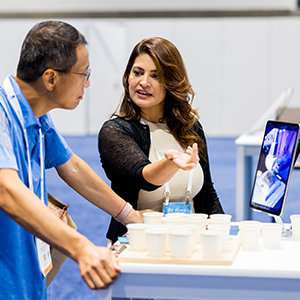
2:30 – Lukas explains what he learned at the Institute of Food Technologists’ yearly expo and how ingredient suppliers shape many of the food trends we see in the market. He explains how weight loss solutions, sweetener alternatives and plant-based ingredients were on full display.
5:50 – From fortified honey to baobab seed pod powder, Lukas tells the team about new products on display at the show before talking about how tracing, certifications and clinical studies were also highlighted at the show.
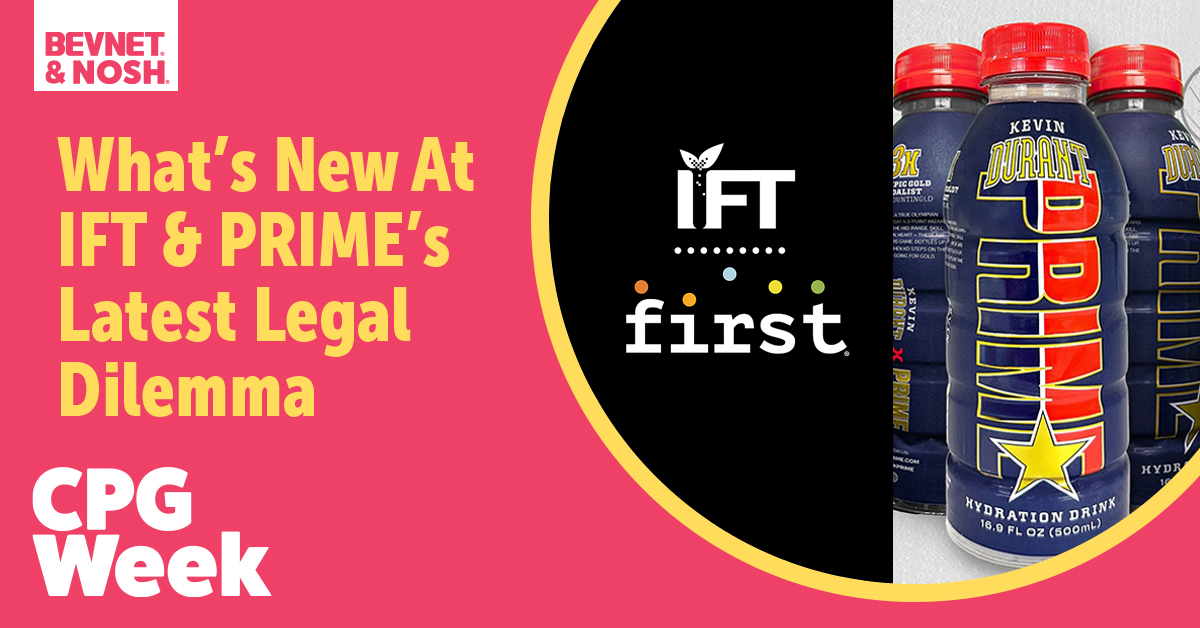
8:30 – PRIME is in legal hot water again. Brad talks about how the drink maker has raised the ire of the U.S. Olympic Committee and how it is another legal issue facing the insurgent hydration and energy brand.
About the CPG Week
CPG Week is the podcast that explores the latest happenings in the consumer packaged goods industry. Join our seasoned reporting team as they dish out the week’s stories in quick, easy-to-digest episodes. Catch up on the top headlines of the week, dive into exclusive insights with the BevNET and Nosh teams, and set yourself up to make more informed business decisions. Tune in to stay up-to-date on the latest developments in the dynamic world of packaged food and beverage.
New episodes are released every week. Send us comments and suggestions anytime to cpgweek@nosh.com.
Show Highlights:
On this episode of CPG Week, the podcast team talks expensive energy drink-themed accessories, IFT First and the latest legal quandary for Logan Paul’s drink brand, PRIME.
Episode Transcript
Note: Transcripts are automatically generated and may contain inaccuracies and spelling errors.
[00:00:05] Monica Watrous: Welcome to the CPG Week podcast by BevNET and Nosh, your source for the latest food and beverage industry news. I'm Monica Watrous, Managing Editor of Nosh, here with my co-hosts, Brad Avery and Lukas Southard. If you're enjoying the show, please subscribe on your listening platform of choice. On the podcast today, we're discussing the latest food science trends and a prime lawsuit. But first, hey, Brad, would you wear five-hour energy cufflinks?
[00:00:34] Brad Avery: Would I? I would give them a shot if they're stylish. I got to see what these cufflinks really look like. Are they little lightning bolts or the running guy on the bottle?
[00:00:43] Monica Watrous: Well, not only are they stylish, but they're also functional.
[00:00:48] Brad Avery: Are you telling me cufflinks are caffeinated now?
[00:00:51] Monica Watrous: I'm telling you, you can wear your 5-Hour Energy on your sleeves. Because 5-Hour Energy has partnered with luxury brand Verstolo Fine Jewelry to design the first ever refillable 5-Hour Energy cufflinks that are designed to hold a full shot of 5-Hour Energy. And they tapped Flavor Flav as the pitchman for this new product.
[00:01:13] Brad Avery: So wait, they're cufflink cup holders for like a two-ounce shot bottle.
[00:01:17] Lukas Southard: No, it's like it is a bottle itself. You fill it up and then you can sip it. You sip it out of your cuff link. It's like a flask on your wrist. They look really bulky. I'm not going to lie.
[00:01:32] Brad Avery: What horrors has man wrought on this earth that we are here?
[00:01:37] Lukas Southard: This is like a, why do we need this thing? Really, what are we doing here?
[00:01:41] Brad Avery: Anyway, the answer is yes.
[00:01:43] Monica Watrous: OK, great. Well, I want to know, since they got Flavor Flav to represent this product, why didn't they do a clock flask or something? You guys know Flavor Flav's signature accessory, the clock around the neck. I actually met Flavor Flav once. He was very nice.
[00:02:03] Lukas Southard: Is he really short? Yes. He's a small man, right?
[00:02:07] Monica Watrous: Small man.
[00:02:09] Lukas Southard: Just making sure. I mean, it's hard to tell on TV and in music videos, but he seems like a very small man.
[00:02:15] Monica Watrous: Yeah. Those cufflinks might be a little heavy for his delicate wrists.
[00:02:20] Lukas Southard: Yeah. He's getting older too. He's got to be in his late 50s or 60s at this point.
[00:02:25] Monica Watrous: Yeah, well, he's still got it. Moving on. Lucas, last week you attended the Institute of Food Technologists annual meeting and expo, also known as IFT first in Chicago. What did you see there?
[00:02:43] Lukas Southard: Unfortunately, I did not see Flavor Flav. Um, I don't think he was in attendance, but you never know. He pops up in random places. It was my first time going. It was, it was a lot of fun. I think it's a much different show than I'm used to when it comes to food shows because it's dominated by ingredient suppliers and flavor makers and kind of these, these companies that are more upstream and, and not necessarily as consumer facing as some of the other food shows that we cover. It was nice having conversations with these companies because it gave me a sense of how food and beverage trends are really make their way down to brands and consumers. A lot of times I think we think of things as. Trends that they're consumer driven, but for the ingredient suppliers, they're working on this stuff years before it actually makes it into the food and beverage products that, that we eat and drink. So there was a fair bit of the trends that we've been talking about seeing throughout the show for one thing that really carried across. I think almost everyone I talked to was weight reduction products that could either be GLP one companions or. just generally leaning into the links between weight control and prebiotics like inulin fiber and gut health. So there was a lot of really cool solutions to reducing sugar and adding sweetness to food and beverage products without spiking people's glucose levels. So there was innovations in terms of Stevia and Ubli's braising product. I also had a nice long conversation with a company called better juice, who I believe Brad, you talked to them a couple of years ago. They're a Israeli based company that makes a proprietary enzyme process that removes. up to 80% of natural sugar from juices and purees without impacting flavor consistency. So I thought that was kind of a cool thing I'd never really heard of. There was also plenty of plant-based innovation, new formulations of soy by Bunky North America, who make fats and oils that can be used in plant-based meats. Talked to Protein Brewery, who made a self-affirmed grass biomass fermentation process to make Their hero product, Fermentine, which turns carbs into a high protein fiber rich ingredient. It can be used in a lot of different applications. It was just kind of chock full of all these trends and themes that we've been talking about, but really getting down to where they start.
[00:05:32] Monica Watrous: There's also that startup pavilion section at IFT. What did you see there?
[00:05:37] Lukas Southard: The startup pavilion was fun. There was a, a lot of brands there. I had some great conversations with a couple of consumer facing products, which was nice. There was a brand new brand called CFG foods, which stands for a community for good. And they made fortified honey that had like different applications of their honey. They had a, a buzzed honey that had, I believe B vitamins for energy.
[00:06:07] Monica Watrous: Oh, I thought you were going to say alcohol. Got real excited.
[00:06:11] Lukas Southard: Well, well, but they also had one that was called D-Buzzed, which I forget what the active ingredient was, but it was supposed to be for the morning after to help you with hangovers. So they were kind of playing into that a little bit. I also talked to a brand called Kaibay. Uh, they're bringing the quote lost crops of Africa to the functional, um, ingredient space. They were sampling, uh, antioxidant, uh, prebiotic powder made from baobab, uh, fruit pods, I believe it was pretty tasty. And I've learned a lot about baobab trees, which was, uh, kind of cool.
[00:06:50] Brad Avery: There's a few brands out there doing some things with Baobab. It hasn't caught on yet, but I'm curious. It seems like a pretty unique ingredient and with the original flavor.
[00:07:01] Lukas Southard: Yeah, they had a little powder that you mix into, you know, water or smoothies and it helps with your gut health and digestion. Another interesting thing that I noticed in the startup pavilion, there was a couple different brands that were focused on third-party certifications and an emphasis on tracing. So there was a new company called Watermark One that was offering a new water quality and sustainability standard. It seemed like it was brand new and they were trying to drive some interest in it. I also talked to Zego, who was there emphasizing their food purity certifications and a TraceMe program about where they do their sourcing and their allergen-free certification. To go along with the emphasis on these tracing and certifications, I also talked to a lot of the larger ingredient providers who are really pushing the clinical studies that they've invested in to prove the efficacy of their ingredients. Neuro was talking about that. Ingredion had a lot of clinical studies they provided me to show how their products were more efficacious than what was originally out on the market. And I think that's really nice to see that there is some science behind a lot of these trends that we've been focusing on.
[00:08:31] Monica Watrous: Brad, you wrote about a lawsuit that cropped up this week. Can you tell us more?
[00:08:37] Brad Avery: Yes, so Logan Paul and KSI's Prime is being sued again, this time by the U.S. Olympic and Paralympic Committee, so topical for the Olympics going on right now. This revolves around a limited edition partnership flavor they were launching with Kevin Durant, the NBA star, who Lucas can tell you all about his accolades with the Golden State Warriors, and also a member of Team USA.
[00:09:02] Lukas Southard: Don't get me started, Brad.
[00:09:06] Brad Avery: So Prime launched a limitation flavor with Durant. And on the bottle, they used phrases such as Olympic, Olympian, Team USA, and going for gold, all of which are trademarks of the US OPC. This was not commissioned or authorized by the Olympic Committee, who have an exclusive with Coca-Cola. And so they are calling this in their complaint, deliberate and willful violation of its trademarks. They cited social media materials, they cited the bottle. And from what I can tell now, the product is not for sale online anymore. And it seems that Prime has taken down the social media posts that were cited in the complaint, as far as I could see. However, we've yet to hear back from Prime. I reached out to Congo Brands, the operator of the brand, and have not heard back. I haven't seen anything from Logan Paul. So this is just the latest in a series of lawsuits that has been hitting the brand as it's really been reaching a peak. We've seen class actions taking claim at the caffeine content of the energy drinks, claiming that they're mislabeled and contain more caffeine than is on the label. We've also seen another trademark allegation, this one from Hitech Pharmaceuticals, which owns the brand Prime Nutrition. So Prime is becoming a bit of a magnet for legal cases. And that's not to mention some of the word and reporting that we've seen and heard about their distribution issues with some of their distributors, which I believe are being smoothed out now. But there was a bit of reporting the past few months that they had some disputes going on behind the scenes. So this is as the brand has topped just on its core hydration drink line over $600 million in retail sales.
[00:10:58] Lukas Southard: Brad, do you think these lawsuits are coming out of the brand being so successful last year, or is this just somewhat like mismanagement and lack of oversight?
[00:11:11] Brad Avery: It's hard to say because I can't speak exactly to what's going on behind the scenes, but there does seem to be a bit of a lightning rod as far as the brand getting as large as it is. Certainly, class actions will start hitting companies once they reach this level. Look at Poppy, for example. So perhaps there was an issue on the back end with the caffeine content. I believe they have pushed back against that. But you see these class actions come out. This seems to be a bit of a slip as far as the trademark violations. And I can understand that one might not think initially that Olympic, the word, is going to be trademarked or the phrase going for gold. So perhaps it was a mistake, but that's just speculation on my part, because we've yet to have word about what Congo or Prime say about this.
[00:12:01] Lukas Southard: I will say that I'm not surprised that going for gold is trademarked, but I guess Olympics is a brand and you can trademark anything. So that was a little surprising to me, but it makes total sense now.
[00:12:17] Brad Avery: Yeah, I didn't think of that the word Olympic or Team USA might be trademarked, but it's pretty clear this is their brand and they're very defensive. I mean, it's notable that Prime did not have their logo on the bottle. It's just the wording that is in question here.
[00:12:34] Monica Watrous: Insiders can read more at BevNET.com. The story is called Prime Violates Trademarks, Claims U.S. Olympic Committee. And here are some other notable bits of news from the week. Coca-Cola, solid top line in Q2, despite sliding volumes in North America. Seeding growth, why CBD giant Manitoba Harvest is hungry for snacks. And Pescevore's long road to scaling tuna jerky. For these stories and more, become an insider at BevNET and Nosh. That wraps up this edition of CPG Week by BevNET and Nosh. Thank you to our audio engineer, Joshua Pratt, our director is Mike Schneider, and our designer is Aaron Willette. If you enjoyed the podcast, please subscribe on your listening platform of choice, and we will see you next time.
About CPG Week
CPG Week is the podcast that explores the latest happenings in the consumer packaged goods industry. Join our seasoned reporting team as they dish out the week’s stories in quick, easy-to-digest episodes. Catch up on the top headlines of the week, dive into exclusive insights with the BevNET and Nosh teams, and set yourself up to make more informed business decisions. Tune in to stay up-to-date on the latest developments in the dynamic world of packaged food and beverage.
New episodes are released every week. Send us comments and suggestions anytime to cpgweek@nosh.com.
Stay Informed. Stay Competitive.
Become an Insider to unlock exclusive CPG insights, data, education, and industry exposure for food & beverage leaders.
Industry Analysis
Context behind the headlines
Data & Reports
Category performance & trends
On-Demand Education
Expert-led video courses