CPG Week: Newtopia Now And Non-Alc Wines
Episode 87
In this episode:
In this episode:
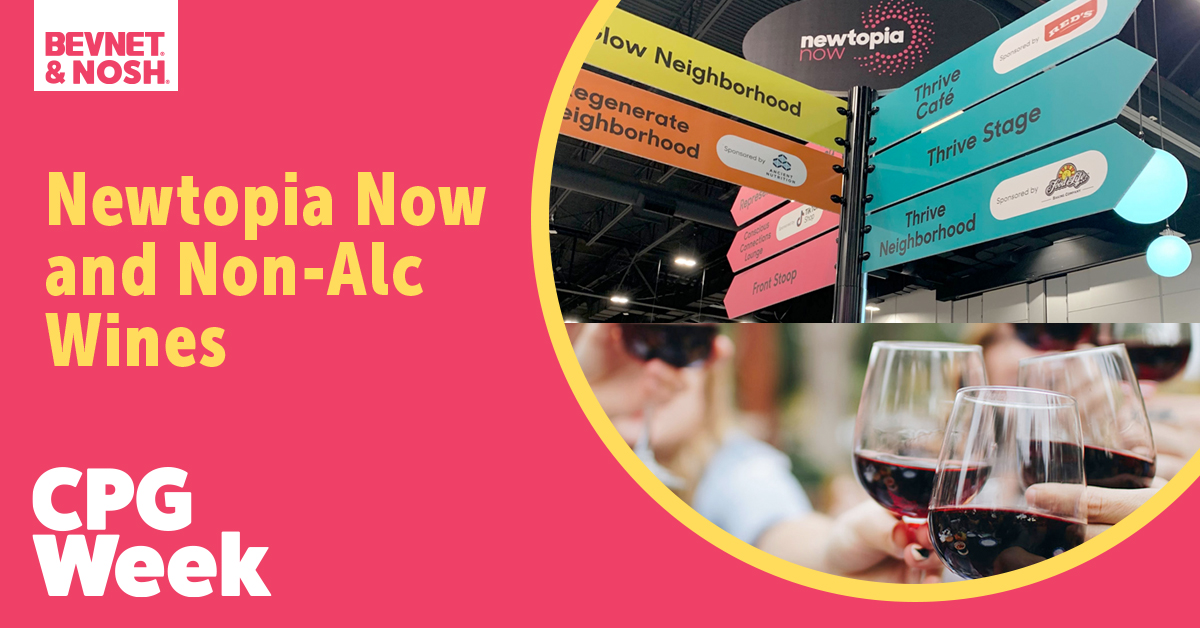
On the episode of CPG Week, the team discusses the social chatter around Foxtrot’s reopening, insights from the first Newtopia Now and the state of the non-alcoholic wine category.
To kick off the episode, Nosh managing editor Monica Watrous and senior reporters Brad Avery and Lukas Southard discuss the reopening of the newly dubbed Foxtrot Café & Market and how some louder voices on social media are not thrilled about its return. Monica goes on to talk about a successful unveiling of New Hope Network’s Newtopia Now. The podcast finishes with Lukas explaining the challenges and successes in alcohol-removed wines and how it represents broader issues in adult non-alc.
Show Highlights:
0:30 – Foxtrot is reopening this week and some of the discourse around its return has focused on former suppliers and employees still waiting for compensation from unpaid invoices and hours.
4:45 – Monica tells the team about her trip to Colorado for the inaugural Newtopia Now and the general reaction from exhibitors and attendees.
12:30 – While there has been innovation in the NA wine category it still remains one of the hardest alcohol-free beverage categories to get right. Lukas explains what he learned reporting about alcohol-removed wines.
About the CPG Week
CPG Week is the podcast that explores the latest happenings in the consumer packaged goods industry. Join our seasoned reporting team as they dish out the week’s stories in quick, easy-to-digest episodes. Catch up on the top headlines of the week, dive into exclusive insights with the BevNET and Nosh teams, and set yourself up to make more informed business decisions. Tune in to stay up-to-date on the latest developments in the dynamic world of packaged food and beverage.
New episodes are released every week. Send us comments and suggestions anytime to cpgweek@nosh.com.
Show Highlights:
On the episode of CPG Week, the team discusses the social chatter around Foxtrot’s reopening, insights from the first Newtopia Now and the state of the non-alcoholic wine category.
Episode Transcript
Note: Transcripts are automatically generated and may contain inaccuracies and spelling errors.
[00:00:05] Monica Watrous: Welcome to the CPG Week podcast by BevNET and Nosh, your source for the latest food and beverage industry news. I'm Monica Watrous, Managing Editor of Nosh, here with my co-hosts Brad Avery and Lukas Southard. If you're enjoying the show, please subscribe on your listening platform of choice. On the podcast today, we're discussing Newtopia Now and non-ALC wines. But first, a Foxtrot update. This week, the upscale corner market announced its first store reopening on the Gold Coast of Chicago, and reactions are mixed. Lucas, you chatted with chairman and original founder Mike Lavatola about the revived retail concept. What did you learn?
[00:00:48] Brad Avery: Well, I will be honest and say that it was a very short conversation. I did ask him about this narrative that seems to be surrounding the reopening about Foxtrot losing its way. Mike Lovato pointed to the fact that he didn't think that the brand had necessarily grown too many locations too fast, but that it had kind of gotten away from the product assortment and the discovery vibe that had made it unique.
[00:01:17] Monica Watrous: A lot of folks took to Instagram, some of them brands that have worked with Foxtrot, some I believe disgraced employees, and commented on Foxtrot's post that it was reopening with some pretty savage remarks. One of my favorites was referring to the fact that a lot of the stores still have rotting inventory on shelves. And they said, what about all the food you let rot on the shelves? You were so gross. And anyone who would still shop there deserves just a little bit of listeria. Hand out some free boar's head samples.
[00:01:49] Brad Avery: Just a touch of listeria.
[00:01:51] Monica Watrous: But a lot of people pointed out, too, that they need to make good on a lot of the broken deals that resulted from the abrupt closure back in April. Legally addictive foods, they make a really tasty, I don't know, toffee cracker. They posted, we got charged $25K by our distributor that you made us sign up for because there was product you ordered sitting in the warehouse when you closed.
[00:02:18] Lukas Southard: Yeah, and $25K for a startup is a lot of money. Nestle or Coca-Cola, that might not even notice it's gone, but a startup brand, that is a lot of money. And I think what's good to note on social media comments is that the angriest people are always going to be the ones posting. It can be hard to say that, oh, everyone is mad at Foxtrot because the angriest posters are the ones making the comments. But there's also a very clear ask here, which is make this right with the people who got left holding the bag before you go about announcing the grand reopening. So it makes sense is a lot of disgruntled consumers and brands and former employees here who are. Very upset with reason this happened so abruptly and then almost as abruptly as a close the answer coming back it feels like. So it's real whiplash, which I think we've talked about that whiplash in the past. But rushing into a reopening without addressing the concerns in a serious way of the people who are upset is. I think they need to at least say something, if not work to make amends.
[00:03:36] Brad Avery: When I talked to Mike Lovato, I did bring up, how does Foxtrot make it right? You know, how do they return trust in the brand and in the retail team and the leadership behind it? And he said, the first thing is just acknowledging that. Brands and founders and customers and employees, they all got burned and it was awful. He was a little differential about how they are trying to rebuild that trust, but he said that they have spent the last couple of months really having a lot of conversations with some of those brands. When I pushed back and said, were there any that said they, you know, wouldn't want to return their product to your shelves? He said, most of the time there's been a lot of good reactions, but there was definitely some brands who said, we're in a wait and see kind of situation and we're going to see how it goes and see what it's like before we come back to Foxtrot.
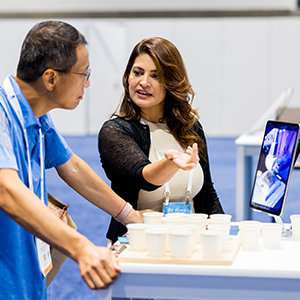
[00:04:31] Monica Watrous: We look forward to following your story on Nosh this week, Lucas. And speaking of taking a wait-and-see approach, that was definitely the tenor of the industry regarding the inaugural Newtopia Now, which took place late August in Denver. I was one of two BevNetters who attended the show, and I gotta say, it was actually a pretty good time. It was definitely a lot more toned down than Expo West and even Expo East, the show that it was meant to replace. And there were, I want to say, maybe about 7,000 attendees and 550 exhibitors, which is a fraction of the numbers that you see at Expo West.
[00:05:16] Lukas Southard: So I remember Expo West asking around about what people thought Newtopia Now supposed to be. I remember there was a little bit of confusion. People weren't quite exactly sure how it was going to be different than Expo East. One of the main things I heard was that it was about getting Expo back to its roots. You know, these shows have grown so massive, including East, and you get this influx of influencers, of other people in the industry, when the goal of the show is to connect brands with buyers. And so that's what I heard was the idea behind Newtopia Now did that reflect what Newtopia Now actually is?
[00:06:00] Monica Watrous: I know that New Hope is trying to be more competitive with the distributor tabletop shows, the UNFI and CAHIE shows, as well as some of the other offerings out there like RangeMe and ECRM. Part of that was making booth sizes pretty equitable, not having those giant island booths that they have at Expo West. All the tabletop sizes were about the same. The biggest one was 10 by 20. The other part of it was they had what they called conscious connections, which was a feature that was designed to connect brands and buyers on the show floor and beyond. And one of the ways to do that was to schedule one-on-one meetings via a mobile app ahead of the show. A lot of the brands that I talked to either encountered technical issues with the app or didn't receive responses to their meeting requests with buyers. So as a result, that particular feature wasn't really as successful as I think New Hope had intended it to be. The other thing that I heard a lot from folks who were exhibiting that there wasn't a lot of communication ahead of the show. So a lot of folks went in there not really knowing what to expect. Having said that, some of the people that I talked to were pleasantly surprised. A few said that they have signed up to exhibit again next year. And the quality of the traffic was really impactful. People who had booths at the show said that they talked to a number of high profile buyers. They weren't bombarded with salespeople like Expo West exhibitors often complain about. And the booth interactions were longer and more meaningful versus like a 20 second encounter at Expo West. People said that they had 10-15 minutes with buyers at their booths. So, all in all, I think people were pretty pleased.
[00:07:58] Lukas Southard: What'd you see as far as trends go? You know, any good products to sample?
[00:08:03] Monica Watrous: Yeah, there were a few things that stood out. I mean, you know, with 550 booths, and I think about 50 of those were non-food items, there wasn't a ton of new innovation or new-to-me brands. But a couple of the themes that cropped up, protein continues to be hot in everything, including places where protein It really hasn't been before. One of the standouts that I saw and a lot of other people were talking about at the show was a pasta sauce brand called Chad and Barney's Sturdy Sauce. This product contains 80 grams of protein per jar or 20 grams of protein per fourth cup serving. And it's made with a proprietary blend of bovine collagen and bone broth and whey protein isolate. It tasted really good. I enjoyed it. I heard some people saying like, I'd rather put this on regular pasta than put regular sauce on like a high-protein pasta. But speaking of pasta, there were several shirataki noodles and other low-calorie or low-carb pasta brands on display at the show. And one that caught my eye was what claimed to be the first ever dried take on shirataki noodles. I don't know if you've ever bought them before, but they're usually packed in water and you have to drain them. Sometimes there's kind of a funky smell with it. They're made with konjac, which is a root vegetable. It's high in fiber. And these were dried. I actually ordered some on Amazon when I got back because I was so impressed with the sample that I tasted there. So those were big. And then, of course, mushrooms continue to be a mega trend. And I saw so many brands of mushroom based herbal alternatives to coffee. Of course, brands that we've seen in the space for a while, like Four Sigmatic, Rasa, and Everyday Dose, but also a few newcomers, Enoki Cafe, 8 Billion, which is the newest venture from the founder of Talking Rain Beverages. And Mei Lama Mushrooms, which is a Hawaiian startup, had a range of cacao mix coffee alternatives, as well as chocolate bars featuring eight mushroom extracts.
[00:10:21] Lukas Southard: So everyone's doing shrooms over in Denver, is what you're telling me.
[00:10:25] Monica Watrous: You know who was doing shrooms in Denver, who I got to catch up with briefly, was Baby Jesus, the founder of Holy Water, who almost poisoned us one time before an episode of CBG Week. Not really.
[00:10:38] Lukas Southard: So I don't know if we've told this story on a show before, but Baby Jesus Runs Holy Water, they have a full-size canned ketone drink, and we thought that's what their shots were. But their shots are actually a different kind of product, and we had them ready to sample live in the studio. And I was looking at the back of the bottle, and I realized that it was two servings of 20 milligrams each of Delta 9 THC and potentially some other ingredients in there, functional ingredients. And so we had no clue until I just saw the little warning sign with the cannabis leaf and flagged it, stopped us from ingesting 40 milligrams of THC right as we were about to go into recording. So we've had a talk with Baby Jesus since then about his packaging needing to call that out. I mean, I don't know why you'd hide it either. That's the selling point, in my opinion.
[00:11:30] Monica Watrous: Well, I think that would have made for a really entertaining episode, but it also would have sent me to the hospital right after. So yeah, I let baby Jesus know what I thought about his labeling of that product and I think he's working on it. In addition to all the mushroom-based beverages, there was a decent amount of non-ALK products as well. One of the new brands that caught my eye is called Huzzy Smart Sips, and they are ready-to-drink canned mocktails made with Various functional ingredients, the flavor profiles were fantastic, and the founder was really cool. I chatted with her for a while. This is a black-owned brand. I think they're getting into Walmart, and the founder previously had a beauty brand that she sold, and now she's working on this. And another favorite of mine in the non-alc section was Libby. It was a sparkling non-alc wine that was low in calorie and really had good flavor. And speaking of non-alc wines, Lucas, you have been studying that space for a while and you recently wrote about it for BevNET. Can you tell us more?
[00:12:40] Brad Avery: I've wanted to write this story for about a year now and it's something that is close to the heart because I'm a bit of a wine geek but it also stems from the fact that a lot of what's happening in the adult non-alcohol category is connected to low and no alcohol wines because wine is, you know, one of the biggest alcoholic beverages that people consume especially in terms of like the food occasion and Frankly, being a bit of a wine geek, I've been somewhat underwhelmed by some of the non-alk wines that I've tried in the last couple of years. I do think some of the really interesting ones that I have tried have been in that wine alternative category. So similar to what you're talking about with Libby, wine alternatives are within the industry, mostly classified as drinks that have never had alcohol in them, so have not gone through the de-alkalization process, are not made from traditional wine but usually made from unfermented grape juice and other kind of teas and flavors and juices. So a non-alk wine is also called an alcohol-removed wine amongst stakeholders in the industry. My story, which was on BevNET, it was titled, Amidst Non-ALK Surge, Why is Wine Struggling to Gain Momentum? I covered kind of both of those categories, the wine alternatives as well as the non-ALK wine. And The biggest thing I learned in reporting the story is that it's really hard to make non-alcoholic wine taste the same or be similarly priced to alcoholic wine. If you think about it purely in terms of like a liquid volume perspective, alcohol removed wine is made in the same way as alcoholic wine, but it must go through a de-alcoholization process that removes somewhere between 12 to 15% of its volume. So you're removing that liquid out of it And you're still going to have to put the same 750 milliliters in a bottle that people come to expect. And that means you need to start with more wine before it goes through the de-alkalization process to get that same amount of volume to put in the bottle. And along with that, you also need to, after it's de-alkalized, try to manipulate the alcohol-free wine to taste in a similar way to what people come to expect. Now, the sparkling and even the white and rosé versions of non-alcoholic wine tend to be a little bit easier to replicate the sparkling. because the carbonation kind of masks some of the flavors that are lost. But red wine is really the hardest one to do because a lot of the really nuanced flavors of red wine like a Cabernet or a Merlot are bound to the ethanol in wine or fermented grape juice. And so when you pull the ethanol out, it pulls out a lot of that nose, so the aroma and some of the deeper flavors that you get, which makes it really hard to try and make versions that are similar to what people have come to expect in the wine drinking experience now and saying all that there are some really good ones out there i've been very impressed with uh what i've tried from a brand called sovi um and they were in the story uh i actually just noticed that this week they announced they have a sparkling orange non-alcoholic wine made from Pinot Gris grapes that I am very excited to try because I love orange wines, funkiness that you get from orange wines. I also talked to a brand called Joyous made by Jessica Sealander, and she's been doing it for a long time. She makes a sparkling rosé, a sparkling white, a still rosé, and a cabernet sauvignon. And, you know, she was one of the few people that told me that she doesn't like this idea that we should, or that the industry should be tempering people's expectations about what non-alcoholic wine should taste like. She was adamant about that a non-alcoholic wine, whether it's a red or a sparkling or a white or rosé, should taste similar to, if not exactly the same as its alcoholic versions. And although she conceded that they're not quite there yet, she is on a mission to really try to make her wines taste no different than the alcoholic versions you find on the shelf, which is, you know, is hard as we just laid out. But I think that's what consumers are coming to expect or want from the category. And that is. what a lot of these producers are doing or trying to do, it's just going to take longer because it's just a harder process than non-alcohol beer or even like RTD cocktails.
[00:17:30] Monica Watrous: Is there a sense of how big this market opportunity is in terms of what we've seen in the near beer category and the mocktail category?
[00:17:38] Brad Avery: Well, so the non-alc wine category is growing just like near beer and non-alc spirits. It's just growing a little bit slower. So, uh, in the 52 week period ending August 10th, dollar sales of non-alc wine were up 27% compared to last year, which was flat with, with near beer, which was about 28.9%. But that was well behind non-alc spirits, which was up 88% year over year. Now, granted the non ALK spirits category is much smaller, 94% of consumers who are purchasing non-alcoholic products are also purchasing alcohol containing drinks. So that's basically saying, look, this is not just sober drinkers that are picking up non-alcoholic wines or spirits or beer. These are people who are tempering their alcohol consumption with non-alcoholic alternatives. And so you need to be catering to a consumer whose, whose taste is, is for the alcoholic versions, just without the alcohol.
[00:18:46] Monica Watrous: Insiders can read more in your story on BevNET. And here are some other notable bits of news from the week. A bite with the Coconut Cult CEO Ari Raz, how Gin & Juice aims to leverage Snoop and Dr. Dre for a gin revival, and Stuffed Puffs acquired Pennsylvania facility to close. For these stories and more, become an insider at BevNET and Nosh. That wraps up this edition of CPG Week by BevNET and Nosh. Thank you to our audio engineer, Joshua Pratt, our director is Mike Schneider, and our designer is Aaron Willette. If you enjoyed the podcast, please subscribe on your listening platform of choice, and we will see you next time.
About CPG Week
CPG Week is the podcast that explores the latest happenings in the consumer packaged goods industry. Join our seasoned reporting team as they dish out the week’s stories in quick, easy-to-digest episodes. Catch up on the top headlines of the week, dive into exclusive insights with the BevNET and Nosh teams, and set yourself up to make more informed business decisions. Tune in to stay up-to-date on the latest developments in the dynamic world of packaged food and beverage.
New episodes are released every week. Send us comments and suggestions anytime to cpgweek@nosh.com.
Stay Informed. Stay Competitive.
Become an Insider to unlock exclusive CPG insights, data, education, and industry exposure for food & beverage leaders.

Industry Analysis
Context behind the headlines

Data & Reports
Category performance & trends

On-Demand Education
Expert-led video courses