CPG Week: Inside The Closure Of Outfox Hospitality And The Future Of Retail
Episode 71
In this episode:
In this episode:
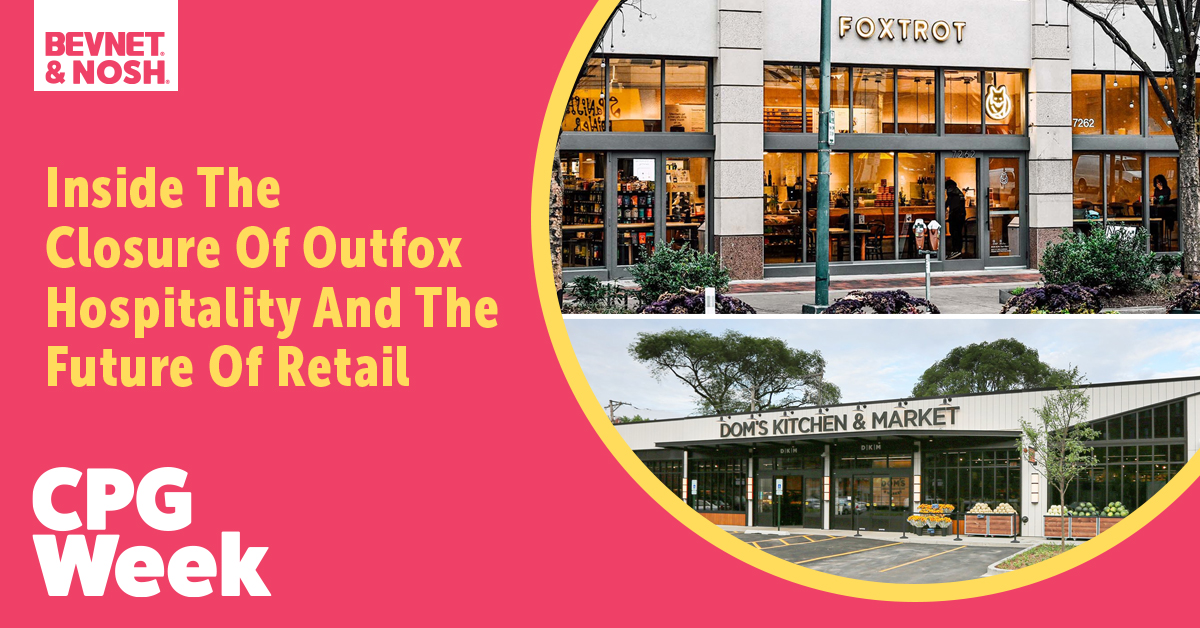
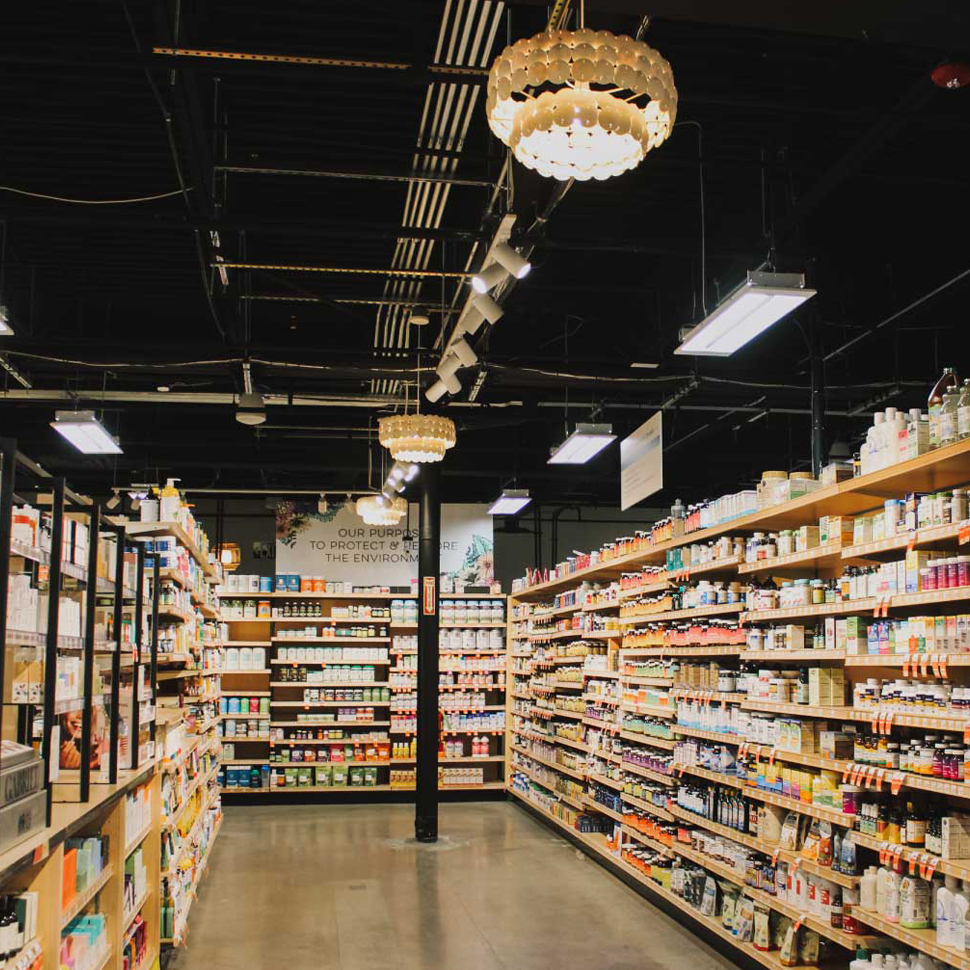
The CPG Week team dives into the sudden closure of Foxtrot and Dom’s Kitchen & Market stores. The group digs into this developing story, discussing possible factors of why Outfox Hospitality failed and ceased operations so quickly. The Nosh and BevNET editorial team unpacks what they know so far, what this means for the brands that sprung out of Foxtrot and Dom’s into wider distribution and hypothesizes on how this will be felt throughout the CPG world.
Later, reporter Adrianne DeLuca explains a new development in the Kroger-Albertsons merger plan and how all this grocery news relates to an uncertain future for retailers.
Show Highlights:
0:35 – Nosh managing editor Monica Watrous and senior reporter Brad Avery talk about Croc-Tail Party, the newly released Pringles-Crocs shoe collection.
1:40 – What happened at Outfox Hospitality, the umbrella organization that manages the Foxtrot and Dom’s Kitchen & Market grocery chains? Senior reporter Lukas Southard explains what developed early this week and what we know so far.
4:45 – What does this mean for CPG brands that have relied on retailers like Foxtrot to break into larger distribution? The team explains how these “next-generation” grocery chains are integral to emerging food and beverage companies gaining brand recognition among consumers.
8:45 – In other retail news, Kroger and Albertsons announced a new divestiture plan in its potential multi-billion dollar merger. Reporter Adrianne DeLuca updates the group on what was proposed and why this might still not be enough to satisfy the Federal Trade Commission’s concerns.
10:15 – Adrianne goes on to explain why this all relates back to a Jefferies webinar she reported on that covered the rocky future ahead for grocery retail.
About the CPG Week
CPG Week is the podcast that explores the latest happenings in the consumer packaged goods industry. Join our seasoned reporting team as they dish out the week’s stories in quick, easy-to-digest episodes. Catch up on the top headlines of the week, dive into exclusive insights with the BevNET and Nosh teams, and set yourself up to make more informed business decisions. Tune in to stay up-to-date on the latest developments in the dynamic world of packaged food and beverage.
New episodes are released every week. Send us comments and suggestions anytime to podcast@nosh.com.
Show Highlights:
The CPG Week team dives into the fallout from the sudden closure of Outfox Hospitality which operates the Foxtrot and Dom’s Kitchen & Market grocery chains and tries to unpack what this means for the retail environment for CPG brands.
Episode Transcript
Note: Transcripts are automatically generated and may contain inaccuracies and spelling errors.
[00:00:05] Monica Watrous: Welcome to the CPG Week podcast by BevNET and Nosh, your source for the latest food and beverage industry news. I'm Monica Watrous, Managing Editor of Nosh, here with my co-hosts Brad Avery, Lukas Southard, and Adrianne DeLuca. If you're enjoying the show, please subscribe on your listening platform of choice. On the podcast today, we're discussing Foxpocalypse, inside the Dom's and Foxtrot closure and the future of retail. But first, Brad, would you wear Pringles-inspired Crocs?
[00:00:38] Brad Avery: No, I haven't seen these. But I am envisioning Pringles tubes with holes in them that you're just trying to slide onto your feet. And that's all I can really envision.
[00:00:49] Monica Watrous: And would you wear those?
[00:00:51] Brad Avery: I'm not saying I haven't worn them.
[00:00:55] Monica Watrous: In a pinch.
[00:00:57] Brad Avery: In a pinch? What do you mean? I spent time on that.
[00:01:00] Monica Watrous: Sour cream and onion, probably.
[00:01:01] Brad Avery: I had to get a drill.
[00:01:03] Monica Watrous: So Pringles has partnered with the footwear brand on a new collection that includes boots featuring a custom Pringles holster so you can pack your crisps on your feet. As part of this collaboration, the snack brand is introducing a limited edition Crocs-inspired flavor called Croctail Party, which has a watermelon chili lime flavor. So I don't know about that, but it sounds pretty stylish.
[00:01:27] Brad Avery: How did it take them this long to get to Crocktail Party? It feels like it was just hanging there in front of them the whole time.
[00:01:34] Monica Watrous: Yeah, it's true. That's a good point. Well, today the main event is the news that just broke this past week, actually in the last 24 hours of our recording this. Lucas and Adrienne, you've been covering the unfolding story of Foxtrot and Dom's closing. Can you tell us about what happened here?
[00:01:54] Lukas Southard: The news broke Monday night by snapshot that Foxtrot would be ceasing operations on Tuesday and possibly declaring bankruptcy. So it started as a kind of a rumor mill through tips from insiders. And obviously here at BevNET Nosh, we jumped on this as soon as we could in the morning. and started making calls and seeing if we could find out and corroborate what was happening. And by mid-morning, Outfox Hospitality, which is the umbrella organization for both Foxtrot and Dom's Kitchen & Market, released the news officially that it would be closing all 33 Foxtrot stores as well as the two Dom's locations in Chicago. A little background on this is that Dom's Kitchen and Market, a two-store small footprint groceries chain that operates in Chicago, merged with Foxtrot in November to make Outfox Hospitality. About three months later, the CEO of Outfox Hospitality, who was the previous CEO of Foxtrot, Liz Williams, left the company to take on a role as CEO of El Pollo Loco and was replaced by Rob Twyman, who was a Whole Foods grocery executive for many years. Obviously we're waiting for the dust to settle on this, but the closing of Foxtrot and Dom's is a pretty big surprise for the industry. Obviously this comes just two weeks after Boisson announced its own closure of its brick and mortar retail. And basically what this tells me is that operating as a specialty retailer is incredibly difficult right now. And all of the previously mentioned chains had huge followings and were in many instances touted as the future of grocery and convenience.
[00:03:49] Brad Avery: And just about a month ago, we were seeing people point to Foxtrot as a likely inspiration for the new Whole Foods Market daily shops, these mini size quick service grocery stores that are popping up throughout cities. And so if Foxtrot goes down, what's that say about the model? Is it an issue with the format or is it just a broader issue specific to the company? Because we're seeing Amazon following in this path.
[00:04:16] Adrianne DeLuca: There are definitely a lot of questions that remain. I agree, Brad, especially just how abrupt this closure went down. I know Lucas and I both spoke with store employees yesterday, and between them and corporate employees, they were just shocked. The ones I spoke with said they were locked inside the store with just lights off. By noon, at least in D.C., we're handing out a lot of inventory on the street. So as for their suppliers and partner brands, it'll be interesting to see what plays out in the weeks to come, whether they ever do get inventory back or paid for those orders.
[00:04:52] Monica Watrous: A lot of emerging food and beverage brands really count on that account, Foxtrot, as their first big entry into brick and mortar retail. What does this mean for them now? Lucas, what have you heard?
[00:05:07] Lukas Southard: In the course of reporting this yesterday, I reached out to Lex Evan, who runs the premium brownie brand Lexington bakes. And Lex kind of made his business in the Arowana market in Southern California, where the brand is located, but has been able to use Foxtrot as a way to kind of move into the Midwest and to other markets on the East coast. So when I reached out to Lexus was before the news became official. He said that although he had received POs from last week, this week on Monday, when he normally receives a PO, he did not receive it. And you know, it's just kind of telling that there's a lot of these startup emerging brands that really use Foxtrot. Like you said, Monica, as a way to. branch out of their first markets or their home regions and into broader distribution in a, in a very kind of hip trendy way, which Foxtrot has done a good job of.
[00:06:05] Monica Watrous: Yes. And Lex said on an Instagram reel that Foxtrot really put Lexington banks on the map.
[00:06:12] Brad Avery: On LinkedIn, we've seen a lot of people calling for solidarity. Errol Schweizer used that word. There's a lot of the community coming together to try and support the brands that are now on the line, trying to figure out what happens next with this key retailer down. Another good point we saw made on LinkedIn came from Caroline Grace, who's the founder and CEO of Product and Prosper, a retail go-to-market firm for CPG. And she pointed out a few possible issues in the marketplace at this shows us one is the consumers are unbelievably price sensitive to borrow her words. There's this very large premium segment at the moment of ultra-premium priced CPG products, and you have to consider what is the addressable consumer market for that, for those types of products. And it could be that consumers just are getting more wary of high-priced products. Another point she made is that expansion too fast can be a death sentence in CPG. Now, I don't know the issues that directly led to Foxtrot's closure, but We see this all the time on the brand side. Growing too fast, you spend too much money, you run out. What happened with Foxtrot? I'm not sure, but it could possibly be that the same is true for retailers.
[00:07:31] Lukas Southard: It's interesting you bring that up, Brad, because one source I spoke with who is operating this channel, but asked to remain anonymous said that the problem lies in all the costs associated with operating as a retailer. They said that a lot of this cost is coming from not only the high price of real estate in expensive urban markets. And inflationary pressures that we've all been talking about for two years, at least, but it's also customer acquisition costs, which kind of fall on the retailer in a lot of ways and make it really difficult to operate as the retailer. When you're dealing with all these different inputs that are raising the costs that you have to charge to your consumers.
[00:08:17] Adrianne DeLuca: I think it is a great point, Lucas, especially as you mentioned, you know, customer acquisition and then say with a store like Foxtrot, you have a lot of brands that are still trying to gain traction in the market. So they don't necessarily have those loyal avid customers yet. That's kind of the place where they're going to build it. So making the model work at retail is definitely a bit more challenging, especially in that brick and mortar setting.
[00:08:40] Monica Watrous: Moving on to another new development in the grocery retail marketplace. Adrienne, you've reported on the latest updates on the Kroger Albertsons proposed mega merger. What do we know now?
[00:08:55] Adrianne DeLuca: Well, Kroger and Albertsons updated their divestiture plan on Monday. They added another 166 stores and a bunch of supporting assets to help those stores, once they're potentially divested, stay open and operational under their new parent company, CNS Wholesalers. This all comes only about two months after the FTC sued to block the deal. Their main criticism was that Kroger and Albertsons, with the original plan, weren't setting up those stores for success. They believed that once sold off, they would probably quickly fail under their new parent company. I believe the words they used were, it was a hodgepodge of unconnected stores. A lot of people still don't think that this deal has a chance of going through, especially with Lena Kahn as chairwoman of the FTC right now.
[00:09:44] Lukas Southard: Adrian, is there any sense about how this will change the timeline? It seems like this will just elongate the tale of when we might see this merger happen.
[00:09:53] Adrianne DeLuca: Well, Lucas, originally back in January, Kroger and Albertsons had said they hoped the deal would close by August. But after the FTC sued to block the deal and especially with these recent updates, it seems like that timeline is going to be pushed out a lot further in the release announcing the new plan. Kroger and Albertson's even ended by saying, you know, they're willing to fight this in court. They're going to stand up for this merger. So it seems like they expect this to play out over the long term.
[00:10:21] Monica Watrous: And all of this, of course, is happening in the context of a CPG slowdown, which you wrote about on Nosh.com. Adrienne, can you tell us more about the findings of the Jeffries webinar that analyzed the state of the retail market?
[00:10:36] Adrianne DeLuca: Absolutely. A lot of what we've talked about today, especially what's going on in retail, was echoed in that webinar. They talked a lot about how inflation these past few years has just significantly changed consumer shopping habits. Notably, I'd say, a lot of upscale, typically premium-type consumers are now shopping for private label and in-club stores, and that just spells a bit of trouble for these middle-of-the-road retailers like Kroger and Albertsons. So the featured guest speaker, Jeff Wojtowicz, he thinks private label will help a lot of these retailers in the near term, but they're going to continue to lose share to mass and discount retailers and believes that will cause them to somewhat lose their identities. So these discount retailers like Trader Joe's and Aldi that do have a stronger private label business, he believes that they're going to come ahead and even cited how Amazon's trying to copy that model as well. They've tested smaller format stores. They're going really deep on their wickedly Amazon private label line. And he said overall, it just points to the fact that everyone seems to be a little bit frustrated with grocery at this point. and even cited that as a grocery expert himself, he was a former exec at Kroger, he's just been disappointed with what they've done in growing the Whole Foods market business. He said other than adding lockers, he doesn't think that they've made any notable gains in the grocery space.
[00:12:05] Monica Watrous: Well, thank you very much, Adrienne, for joining us today and sharing those insights with us. And here are some other notable bits of news from the week. Wild protein chips pumps up with muscular investment, why Refresh Gum tapped nostalgia to rethink Better For You candy, and Nielsen IQ reports non-ALK beverages decelerate amid soft volumes and slow pricing. For these stories and more, become an insider on BevNET and Nosh. And before we close today, I'd like to share some personal news. My dad, who never missed an episode of this podcast, despite not knowing very much at all about the CPG industry, passed away last week. I'd like to dedicate this one to him. Thank you for listening. That wraps up this edition of CPG Week by BevNET and Nosh. Thank you to our audio engineer for this episode, Ryan Galang, our director is Mike Schneider, and our designer is Aaron Willette. If you enjoyed the show, please subscribe on your listening platform of choice, and we will see you next time.
About CPG Week
CPG Week is the podcast that explores the latest happenings in the consumer packaged goods industry. Join our seasoned reporting team as they dish out the week’s stories in quick, easy-to-digest episodes. Catch up on the top headlines of the week, dive into exclusive insights with the BevNET and Nosh teams, and set yourself up to make more informed business decisions. Tune in to stay up-to-date on the latest developments in the dynamic world of packaged food and beverage.
New episodes are released every week. Send us comments and suggestions anytime to cpgweek@nosh.com.
Stay Informed, Stay Competitive
Unlock the articles, expert interviews, and data reports that power the food and beverage industry. Join our community and stay ahead with exclusive insights from BevNET and Nosh.