CPG Week: Food and Beverage Funding Roundup
Episode 66
In this episode:
In this episode:
This week, the Nosh and BevNET team discusses recent food and beverage funding news. In this capital-constrained environment, startups are tapping conventional options like investment firms as well as celebrities, consumers and distributors to rake in extra cash.
Show Highlights:
0:35 – Nosh managing editor Monica Watrous shares the latest twist in the Kellogg cereal drama. HumanCo founder and CEO Jason Karp filed an activist letter urging the company to follow through with its previously stated commitment to remove artificial dyes from such brands as Froot Loops sold in the U.S.
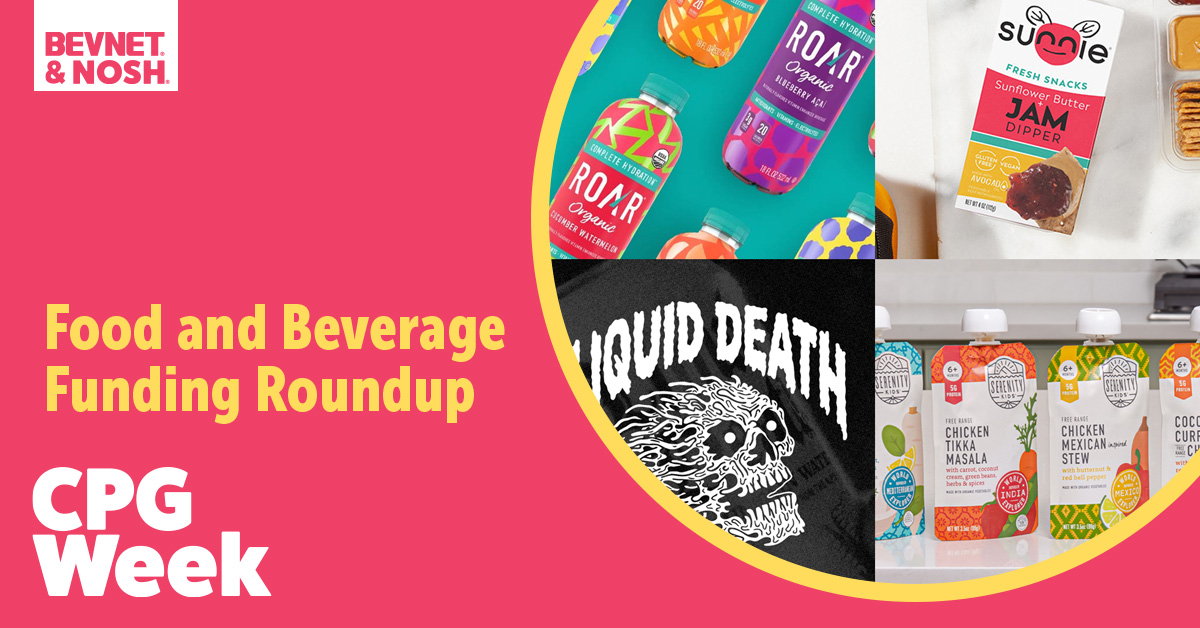
4:15 – Senior reporter Lukas Southard discusses snack pack maker Sunnie’s unique approach to securing funding, inviting some of its consumers to participate in its recent round.
7:25 – Senior reporter Brad Avery unpacks Liquid Death’s $67 million funding round that involved some of its distributors, as well as celebrities and investment firms.
9:15 – Monica dishes details of organic baby and toddler food company Serenity Kids’ $52 million Series B funding. Brad offers perspective on how an already profitable company can benefit from such a significant cash injection.
11:10 – Monica, Brad and Lukas highlight additional brands that have recently raised money.
About the CPG Week
CPG Week is the podcast that explores the latest happenings in the consumer packaged goods industry. Join our seasoned reporting team as they dish out the week’s stories in quick, easy-to-digest episodes. Catch up on the top headlines of the week, dive into exclusive insights with the BevNET and Nosh teams, and set yourself up to make more informed business decisions. Tune in to stay up-to-date on the latest developments in the dynamic world of packaged food and beverage.
New episodes are released every week. Send us comments and suggestions anytime to podcast@nosh.com.
Show Highlights:
In this capital-constrained environment, startups are tapping conventional options as well as celebrities, consumers and distributors to rake in extra cash.
Episode Transcript
Note: Transcripts are automatically generated and may contain inaccuracies and spelling errors.
[00:00:05] Monica Watrous: Welcome to the CPG Week podcast by BevNET and Nosh, your source for the latest food and beverage industry news. I'm Monica Watrous, Managing Editor of Nosh, here with my co-hosts, Brad Avery and Lukas Southard. If you're enjoying the show, please subscribe on your listening platform of choice. On the podcast today, we're discussing which food and beverage brands are snagging that elusive growth capital. But first, the Kellogg's cereal drama continues. Previously on the podcast, we were discussing the social media boycott of Kellogg's cereal brands after its CEO told people that they could save money by eating cereal for dinner. And now the latest battle cry on the Battle Creek based company comes from Jason Karp, who is the founder and CEO of Human Co. You also know him as the co-founder of Hue, which Mondelēz International acquired a few years ago. He's also a Kellogg shareholder, and this week he filed an activist letter proclaiming that Kellogg is dropping the ball when it comes to removing additives, artificial ingredients from its breakfast cereals, and that it's luring American children into eating these harmful ingredients. What do we make of that, Lucas?
[00:01:18] Brad Avery: To be honest, I don't really know what to think. Although I agree with some of the points that Karp puts forth in his LinkedIn post, it does smell a little like a publicity stunt. Yet, in saying that, the pure fact that Kellogg's continues to use additives that are believed to be harmful, especially in food that's marketed to children, is concerning. As a parent, I would not want my kids eating Froot Loops, even though I tried to sneak some when I was a kid. I think it is representative of the environment that we've created for big food companies here to save money by cutting corners with American consumers, whereas in Europe or even in Canada, some of those practices are deemed unacceptable. So I understand that with companies as large as Kellogg's, profitability at all costs can be a guiding force. But what CARP seems to be getting at is there is a better way to do business. So why aren't they doing that?
[00:02:24] Lukas Southard: Well, it seems too that they have a recipe figured out for how to do it in a healthier way. And this is what he put on LinkedIn. If you look at a compare and contrast of the American Froot Loops versus the Canadian Froot Loops, the American product has red dye 40, yellow 5, BHT for freshness. Whereas in Canada, they're using turmeric for color, annatto, concentrated watermelon juice, concentrated blueberry juice. Normal ingredients that you do not see in I don't know any of their mainstream American products So I think he has a point there that Americans are getting an inferior product when it comes to nutrition When you are buying some of these cereals, so whether you think this lawsuit is just a publicity stunt He does have a point
[00:03:11] Monica Watrous: In 2015, Kellogg made a commitment that they were going to remove these additives and preservatives from their products. And as you pointed out, Brad, in other markets, Canada and the European Union being examples, they do offer a cleaner formulation. They quietly stepped away from this commitment when they realized that people are still buying the products with the red dye 40. Right now companies are trying to save all the money they can and it's expensive to replace synthetic dyes with annatto and turmeric and elderberry juice or whatever they're using to make the colors vibrant. So I don't expect that Kellogg will be buckling under this pressure but that remains to be seen. On to happier news. Over the past few weeks, we've seen several food and beverage brands raising capital. We talk a lot about how it's a difficult environment for funding right now, but it's happening and we have examples. Lucas, tell us about Sunny and its recent investment round.
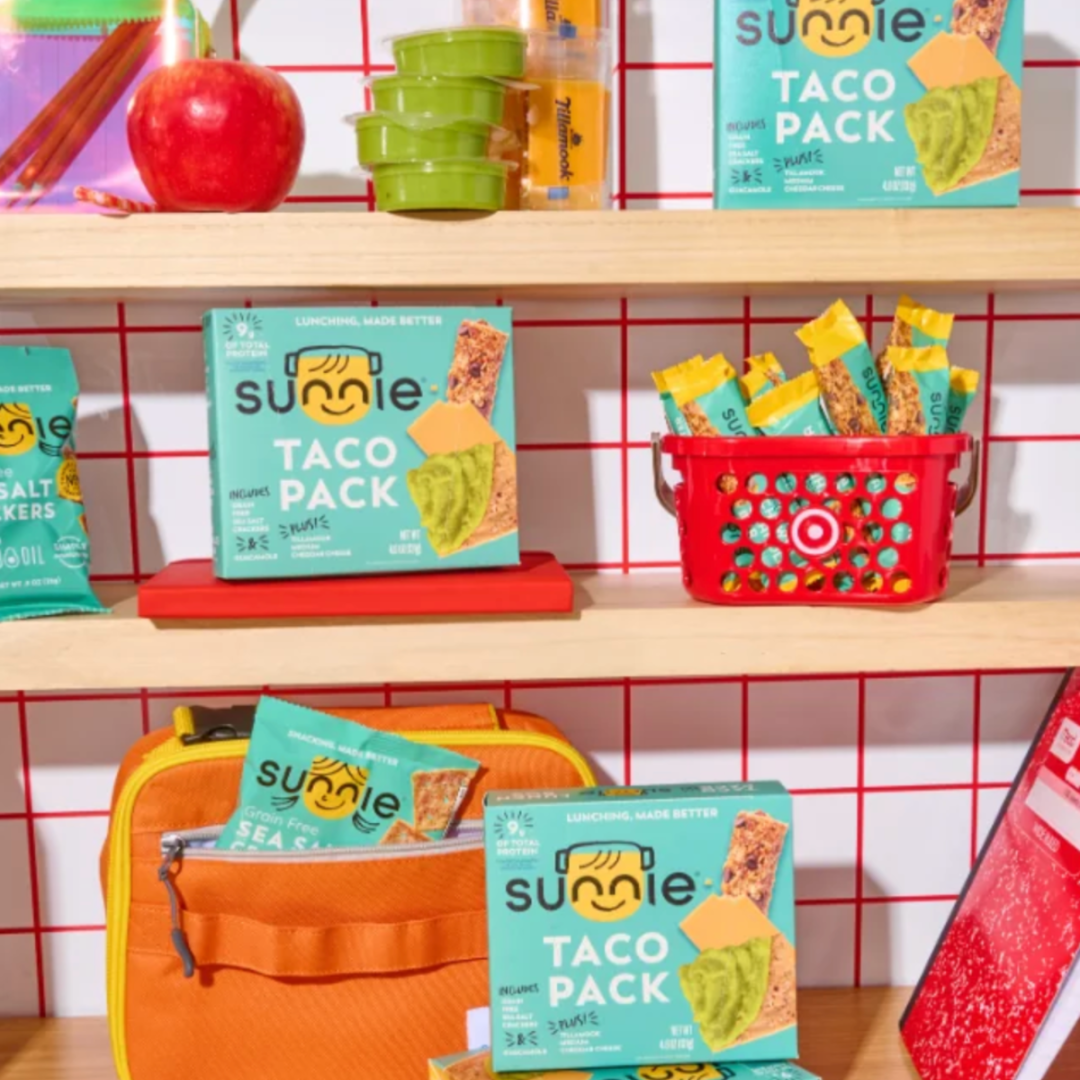
[00:04:17] Brad Avery: I wrote a story right before Expo about Sunny. It was titled, Sunny lands in strategic investment, builds new distribution channels for Nosh. For those who don't know, Sunny makes an allergen-free, gluten-free version of Handy Snacks, those little kid snacks that we had as a kid that came with Ritz crackers and the little plastic spreader of cheese and they make a better for you version. There's includes like a hummus variety, a jam and sunflower butter and a little pizza kits. And right before Expo began, they announced they had secured two thirds of a small round, $1 million that was led by a Fulcrum Collective and SWAT equity partners. But the interesting thing about this round. was that the founders, Katie Tucker and Lisette Howard, had been trying to raise it since the beginning of the summer and had a lot of trouble finding institutional investors. So they ended up going with a safe note and also opening that up to some of their fans. So some of the consumers, they sent out email blasts and even direct emails to some of their consumer base. Asking, uh, if they would want to invest in the brand minimum check sizes were $10,000. So this wasn't like a small dollar crowd funding kind of situation. These were, you know, real, real check sizes, and it just showed how some brands have to be a little bit scrappy these days to get some of the capital runway they need to grow the business. So. Sonny recently signed on with a partnership with target in about 200 stores in the kind of Southwest area and Southern California, and they're targeting bigger growth this year. So they're hoping to be in somewhere around a thousand doors, I think, by the end of the year, which is, you know, a big game for an emerging brand.
[00:06:21] Monica Watrous: And Brad, what's going on in the beverage world as far as investment news?
[00:06:25] Lukas Southard: Well, we've seen a couple big funding raises. One smaller raise came from Roar Organic, who brought in $10 million from their equity stakeholder, Factory LLC. Now, this is $10 million on top of another $16 million that they raised last year. But coming from Factory, it's an existing investor and strategic partner in the brand who has been guiding this hydration beverage. I actually spoke to CEO Bill Lang at Expo West, and what this is really about is building the brand in all the traditional ways. It's expansion in retail. It is innovation. It is continuing to drive momentum. But as far as it relates to investment environment, again, remember, this is a single partner reinvesting, so they didn't have to go out and seek a bunch of individual raises. but they've been able to consistently bring in smaller rounds, $6 million here, $10 million there, $10 million here. One of the larger raises we've seen in recent months came from Liquid Death. They closed a $67 million funding round, bringing their valuation to $1.4 billion. And this is $67 million on top of over $200 million that they've raised since 2019. The last was in 2022. Now, what they did that I thought was interesting is they brought in a lot of their distributors as investors, a lot of their DSD houses. And while they wouldn't name any specific ones, they said their number one distributors in North Carolina, Oregon, Utah, and Washington, among others. So when I talked to Mike Cesario, the CEO, about this funding round, he said that having the distributors involved in the brand was important to kind of give them more of a sense of ownership. especially when you think about that Liquid Death really runs itself a bit like a beer company, runs itself like a beer brand, just look at the can. And when brands graduate out of the DSD networks, that always creates a scramble for them. You can just look at what happened with Bang, for example. And he wanted those distributors to have not just a stake in the brand, but a real sense of collaboration. So that was one of the more interesting things I've seen as far as a brand raising capital in this current environment. Now, it wasn't just distributors. There were also some celebrities like Josh Brolin and some institutional firms as well. But Liquid Death is also one of the fastest growing brands in the beverage sector at the moment. So them being able to raise money is less of a surprise than, say, a smaller startup trying to scrap together capital at the moment.
[00:08:58] Monica Watrous: It's interesting with those examples that you shared, Brad, with Liquid Death and Lucas with Sunny, how brands are having to be creative about who they're bringing in the funding from. So we're getting the consumers and the loyal followers on the Sunny side, the distributors on the Liquid Death side. It's not just the institutional investors. We're having to look for other places to find our money, right? So I recently wrote about Serenity Kids, the organic baby and toddler food company, and a story on Nosh.com, Serenity Kids raises $52 million in Series B round. They actually weren't seeking funding and are profitable, but they accepted this minority investment by Stride Consumer Partners because they We're attracted to their track record of having worked with brands like Yasso and Chomps in the past. They're planning on using that new capital to fuel marketing, new product development, and hiring efforts. This is a brand that is pretty ubiquitous. They're in 18,000 grocery stores at this point. Joe Carr, the co-founder, acknowledged in a statement that the current investment landscape is pretty dire. So their ability to attract this financing and partnership really validates its differentiation in the baby food market.
[00:10:09] Lukas Southard: It's pretty amazing that you said they weren't even looking for capital and they bring in $52 million. Now, being profitable, that's fantastic because it allows them now to really reinvest that into the company and trying to maintain that profitability, you know, R&D, marketing, hiring, all the things that you can now do with a huge cash injection without having to worry about running yourself thin and ruining that profitability that you've achieved.
[00:10:36] Brad Avery: Yeah, and Serenity Kids has moved into a lot of different parts of the kids' food category. As you said, Monica, they're not just in the pouches, they're in toddler formula, they're in the grain-free puffs. So it really allows them to probably lean into that even more on their innovation stream and try to really be one of the major players in the kids' food aisle.
[00:11:02] Monica Watrous: If I were John Forker, I would watch out. Serenity Kids is coming after Once Upon a Farm. Another brand that recently raked in some investment is Honey Mama's, the refrigerated chocolate truffle bar producer. They raised $6.6 million in a Series B investment by Irresistible Foods Group. CEO Jared Schwartz on LinkedIn said that that cash infusion will boost the brand's mission to further its food as medicine movement through a uniquely memorable indulgence.
[00:11:31] Lukas Southard: Also, sparkling water brand Sanzo announced it had brought on Marvel actor Simu Liu and DJ Steve Aoki as investors. Sondra Rocco, the CEO of Sanzo, said that they've been friends of the brand for a long time, and Liu in particular was on the cans as part of the 2021 Shang-Chi and the Legend of the Ten Rings promotional cans. So this is another great little smaller investment for a rising startup.
[00:11:59] Monica Watrous: And folks can learn more about that partnership at BevNET.com. Our managing editor of BevNET, Martín Caballero, did a really great video interview with Sandro at Expo West.
[00:12:12] Brad Avery: To add to these investment gains, seafood-based bacon brand Umarofoods pulled in $3.8 million from AgFunder. Up until now, Umaro has been positioned mostly in food service, offering their seaweed bacon to restaurants, delis, and universities. But this new capital infusion is expected to go towards building out more of a retail presence. The round also saw participation from Alexandria Ventures Investments, Climate Capital Bio, Ponderosa Ventures, and NBA All-Star Chris Paul Shauna Golden State Warriors player. who's really kind of been investing a lot in the plant-based space. He's a plant-based consumer, and he has investments in Meaty, Koya, and Wicked Kitchen as well.
[00:13:00] Monica Watrous: Here are some other notable bits of news. Bain & Company has published its eighth annual insurgent brands list. Unilever is spinning off its ice cream business and eliminating 7,500 jobs to cut costs. And PepsiCo bottlers take a Gatorade pallet fight to the New York Supreme Court. For these stories and more, become an insider on BevNET and Nosh. That wraps up this edition of CPG Week by BevNET and Nosh. Thank you to our audio engineer, Joshua Pratt, our director is Mike Schneider, and our designer is Aaron Willette. If you enjoyed the podcast, please subscribe on your listening platform of choice, and we will see you next time.
About CPG Week
CPG Week is the podcast that explores the latest happenings in the consumer packaged goods industry. Join our seasoned reporting team as they dish out the week’s stories in quick, easy-to-digest episodes. Catch up on the top headlines of the week, dive into exclusive insights with the BevNET and Nosh teams, and set yourself up to make more informed business decisions. Tune in to stay up-to-date on the latest developments in the dynamic world of packaged food and beverage.
New episodes are released every week. Send us comments and suggestions anytime to cpgweek@nosh.com.
Stay Informed, Stay Competitive
Unlock the articles, expert interviews, and data reports that power the food and beverage industry. Join our community and stay ahead with exclusive insights from BevNET and Nosh.