CPG Week: Cultivated Meat’s Harsh Truth
Episode 61
In this episode:
In this episode:
This week the BevNET and Nosh team talk about Subway speed dating, cell-cultured meat’s many challenges, why unrealistic investment might be dragging down food tech companies, and why the alternative meat and dairy industry is a good comparison point for realistic market demand.
Show Highlights:
0:30 – Monica starts the episode asking Brad and Lukas how they feel about Subway’s recent Valentine’s Day speed dating stunt.
2:00 – After a series of stories in recent weeks explaining the struggles of the cell-cultured (or lab-grown) meat industry, Lukas kicks off the conversation highlighting his recent newsletter column exploring why the industry is falling short of its claims of creating a more sustainable food system.
5:05 – It all comes back to the money. Monica brings up some of the recent companies that have shuttered or had to restructure as a result of investment in the category drying up.
7:35 – Why has the industry fallen short of getting products to market? Brad makes comparisons to the failures of the plant-based food industry as a good example of how food tech struggles to gain market share.
9:45 – Does food tech’s challenge come from financing or from consumer adoption? The team debates how brand messaging plays a role but maybe less expensive food alternatives have an easier path to market.
About the CPG Week
CPG Week is the podcast that explores the latest happenings in the consumer packaged goods industry. Join our seasoned reporting team as they dish out the week’s stories in quick, easy-to-digest episodes. Catch up on the top headlines of the week, dive into exclusive insights with the BevNET and Nosh teams, and set yourself up to make more informed business decisions. Tune in to stay up-to-date on the latest developments in the dynamic world of packaged food and beverage.
New episodes are released every week. Send us comments and suggestions anytime to podcast@nosh.com.
Show Highlights:
This week the team talks about cell-cultured meat’s many challenges and why unrealistic investment might be dragging down food tech companies.
Episode Transcript
Note: Transcripts are automatically generated and may contain inaccuracies and spelling errors.
[00:00:05] Monica Watrous: Welcome to CPG Week by BevNET and Nosh, the podcast that dives deeper into the news of the food and beverage industry. I'm Monica Watrous, Managing Editor of Nosh, here with my co-hosts, Brad Avery and Lukas Southard. If you're enjoying the show, please subscribe on your listening platform of choice. On the podcast today, we're discussing cultivated meets harsh truth, costs and doubts casting a shadow on sustainable food solutions. But first, because we're recording on Valentine's Day, Brad, you're a newlywed. Before you tied the knot, would you have attended a speed dating event at Subway?
[00:00:40] Brad Avery: Absolutely not.
[00:00:42] Monica Watrous: Lucas, what about you?
[00:00:44] Brad Avery: I want to make sure that that includes a free footlong meatball sub if I take part.
[00:00:50] Monica Watrous: I think you would have to.
[00:00:51] Brad Avery: Then I'm definitely in. I don't know if my speed dating date would like me to eat that meatball sub in front of them, but I'd do it for the free sandwich.
[00:01:01] Monica Watrous: There you go. Well, so the sandwich chain is getting into the matchmaking business apparently with its latest marketing stunt in Canada called Meet Cute, get it? M-E-A-T, cute, yeah. Inviting singles to break bread and bond over a foot long. I feel like there are so many jokes that could be made. I actually had a first date at a Subway when I was in college, but before my taste became more discerning, I don't know. I don't think I would do it.
[00:01:28] Lukas Southard: I will say Lucas makes a good point about getting the free sandwich though. I do have a bit of a soft spot for that meatball sub, so I can see just doing it just for the bit, but I don't know if I could be with a person long-term who would go to a Subway-sponsored speed dating event.
[00:01:48] Monica Watrous: That's fair.
[00:01:49] Brad Avery: You know, Brad, they say love works in mysterious ways. So you never know. You could have found your other true love at a subway speed dating event.
[00:01:59] Monica Watrous: Here comes the segue. What if that meatball sub was grown in a lab? Lab-grown meat was listed as one of the worst technology failures of 2023, according to a review assessment by MIT. And that was after investors poured $3 billion into the idea, give or take. Lucas, I know this is a topic that interests you. So tell us more.
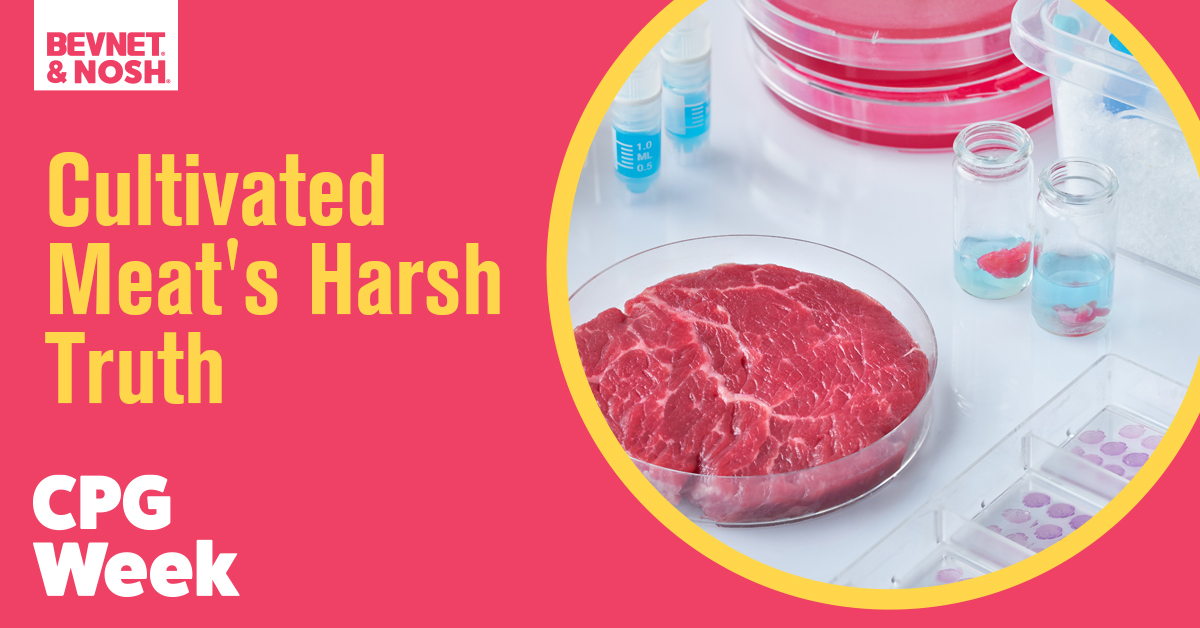
[00:02:21] Brad Avery: I wrote a column this week for our newsletter. It was entitled, From the Butcher Counter to the Bioreactor. By the way, if you are listening to this podcast and you don't already subscribe to our newsletters, press pause right now, go sign up. Don't worry, Brad, Monica, and I will, we'll wait patiently for you to do that. To sum up the column that I wrote, it was kind of focusing on how my former career as a fine dining chef. and a whole animal butcher kind of led me to my interest in food business reporting and most especially kind of food tech and how There are a variety of ways that food tech is trying to solve some of the more unsustainable aspects of our food system. One of those would be lab-grown meat, or there's a lot of different names these days. I tend to prefer cell-cultured. Some people, the industry prefers cultivated meat, whatever you want to call it. It's kind of a subcategory from meat alternatives. It's often lumped in with plant-based, but It's not the same thing. This is actual meat, animal cells grown in bioreactors and formed into meat products. So it all started in, I think it was 2013 with a Dutch researcher who unveiled a lab-grown burger in like a well-publicized event in London. And fast forward 10 years later, and here we are. with an industry that has, as you said, gained about $3 billion of investment over that time. And there's very little to show for it. There's been a lot of companies that have come out of it, many of which are now defunct, but there's also been like ingredient providers, service providers, manufacturers that have all kind of sprung up around this industry that as of yet really has nothing on the market besides like a very small amount of retail in Singapore and basically two fine dining restaurants here in the States that have put it on menus for a limited time.
[00:04:27] Lukas Southard: To me the thing that is fascinating about it is that we have made this massive innovation leap forward to create meat or something approximating meat in a lab out of more or less whole cloth. We're closer than we've ever possibly been to the Jetsons, just press a button and the food materializes before you type of future. And yet the realities of the technology are so slow and expensive to produce that trying to do it at an economy of scale is proving to be impossible, at least in the present day.
[00:05:05] Monica Watrous: Certainly. And we're seeing a lot of media reports that are coming forward and chronicling all the struggles in the sector. One of those was written by Joe Fassler, who our editor in chief, Jeffrey Klineman, says is a Nosh stan, big fan of of Nosh. And he wrote a fantastic New York Times guest opinion essay called The Revolution That Died on Its Way to Dinner. Recent startups that have shuttered or reduced workforce due to the distressed funding environment include Finless Foods. AgFunder reported last week that they apparently laid off a number of people. They didn't get an actual comment, but Their employees were seen on LinkedIn looking for new jobs. And then New Age Eats shut down last year. Good Meat, which is the cultivated meat division of Eat Just, is in a legal dispute over unpaid bills owing an alleged hundred million dollars to a bioreactor firm. So there's certainly a lot of financial challenges in this sector. And back to AgFunder, they did a data snapshot and found that funding for cultivated meat startups peaked in 2021 at $989 million, then dipped slightly in 2022 to $807 million, then plummeted to $177 million in 2023.
[00:06:31] Brad Avery: It's very interesting to see how much money has been poured into this. And as you were saying, Brad, it's not even just that the technology is slow, because that is one aspect of it. There's a whole regulatory environment that makes it very difficult, and it's getting pushed back already. But on the regulatory framework, because it's such a new technology, basically it's being co-regulated by both the USDA and the FDA, at least on the meat and seafood side. You have to, as a company, as a startup, you have to go through two different agencies, all the regulatory hurdles to be able to be approved, to actually offer this product to your everyday citizens or everyday consumers. And that can be prohibitively expensive. When you factor that into the cost of the tech is on its own, incredibly expensive.
[00:07:34] Lukas Southard: And Monica, to your point about the New York Times article, there's a line in there where he talks about actually getting to taste the product, which relatively few people have actually eaten this. And he said, it doesn't really taste like meat, even though it's grown from meat cells. It has to be padded with plant ingredients. And it comes out still kind of tasting a little closer to tofu or seitan. And so it's sort of, well, what was the point? If the whole point is we're trying to create as perfect a replica of meat as we can, and at the end of the day, it still kind of just has the same texture or feel as any of the existing plant-based alternatives, even though these cultivated meats have yet to really properly hit the market. We're seeing a test run with Beyond and Impossible with consumers. If you remember that Bloomberg piece on Beyond from a couple months ago, a few months back, there was a line in there about how when, I think it was when Beyond tried to launch in the Midwest, you had these consumers revolting. It was like, they're trying to take our meat away. There's a lot of built-in cultural norms around meat that is very hard to just trust when a company comes in and says, we're doing it with science and going to make a plant-based alternative or a non-meat meat, people get a little touchy. So I think that even if these companies could get past the hurdle of, can we make this at a rate that is affordable, that makes sense economically, that can return on investment, and then you get it to market, are consumers going to go for it is a bigger question.
[00:09:11] Monica Watrous: And what if we look at some of the other technologies that are a little bit further along in the commercialization, like animal-free dairy? We were talking about Perfect Day before we started recording. As an example of a company that has been well-funded, it's bringing products to market across various dairy categories. They've got ice cream and fluid milk and I want to say cheese.
[00:09:34] Lukas Southard: Well, Perfect Day also shuttered its consumer business last year and laid off about 15 percent of its workforce, showing that even in the alternative dairy sector, there's still challenges.
[00:09:45] Monica Watrous: Right. But is that a challenge based on consumer adoption or is that a challenge based on the lack of funding that's available to these companies?
[00:09:53] Brad Avery: I would argue maybe both. I mean, that's I think the problem that it's running into that we're seeing as you were just illustrating in terms of plant-based or dairy-free, these alternatives to animal-based products. You're getting both pushback from the consumer end and you're also getting pushback from just the business economics of it that it's really hard to both produce a product, especially a retail product, and then also market it and distribute it. as well as try to get buy-in from consumers, it all costs a lot of money and resources. And despite the $3 billion that's gone into the cultured meat and seafood industry, it doesn't look like that's enough, really.
[00:10:41] Lukas Southard: A lot of this is being sold on sustainability, and it's about climate, because the meat industry is a massive contributor to climate change. It's just the reality. The adoption of that is growing but it's slow to grow. There's been some slide back with the vegan and vegetarian. We're seeing a lot more of the flexitarian consumer. And so who these products are appealing to varies. I think outside of meat, We're seeing the plant-based milk space explode, but there's another purpose for plant-based milk, which is if you're lactose intolerant or milk just doesn't always sit well with you. There's a lot of reasons for why you might want to go for an oat milk or an almond milk. Likewise, we're seeing other startups getting a lot of investment money that are trying to disrupt other categories with an alternative that is either more sustainable or provides some other use. So we have Atomo Coffee, which is creating a sort of coffee alternative with date seed and other ingredients. It says are more sustainable because coffee production takes a lot of water and has a big environmental footprint. Atomos raised over $50 million to date. They just, in December, also received more investment from Suntory Holdings. The question is, do consumers want a coffee that's not really coffee? And that's what they're testing now as they're rolling out to market. But more so there's Voyage Foods, which makes alternative peanut butters, you know, peanutless peanut butter, and chocolate without cocoa, which is better for the environment. But if you have a nut allergy, there's a perfect reason for why you might want a seed spread that tastes like peanut butter but isn't peanut butter. Like that, I can see the perfect consumer adoption. And that, again, is made with seeds and oils. It's not costing billions of dollars just for R&D to try and create a lab-grown meat. So there's some reasons for those products I can see, and they can be produced at much smaller cost on the relative scale, at least.
[00:12:43] Monica Watrous: With any of this technology, it all comes down to three things for consumers. The holy trinity of purchasing decisions, which is driven by taste, convenience, and price. And as long as the consumer doesn't have to make a large sacrifice on any of those tenets, then there's opportunity for these companies to succeed. With cultured meat, we're nowhere close to any of that.
[00:13:07] Lukas Southard: Yeah, but I think there is some opportunity here for the future. The problem is about investment. The failure of the technology is about its ability to go to market. I think we're going to see more from this. It's going to keep going forward. And there is opportunity here. Whether or not we see that within the next 10 years or even longer is a question remains to be seen. But it's definitely not the last we've heard of this innovation. And I look forward to seeing what's in store.
[00:13:40] Monica Watrous: Thanks, Brad, our resident optimist on the podcast. That wraps up this edition of CPG Week by BevNET and Nosh. Thank you to our audio engineer, Joshua Pratt, our director is Mike Schneider, and our designer is Aaron Willette. If you enjoyed the podcast, please subscribe on your listening platform of choice, and we will see you next time.
About CPG Week
CPG Week is the podcast that explores the latest happenings in the consumer packaged goods industry. Join our seasoned reporting team as they dish out the week’s stories in quick, easy-to-digest episodes. Catch up on the top headlines of the week, dive into exclusive insights with the BevNET and Nosh teams, and set yourself up to make more informed business decisions. Tune in to stay up-to-date on the latest developments in the dynamic world of packaged food and beverage.
New episodes are released every week. Send us comments and suggestions anytime to cpgweek@nosh.com.
Stay Informed. Stay Competitive.
Become an Insider to unlock exclusive CPG insights, data, education, and industry exposure for food & beverage leaders.

Industry Analysis
Context behind the headlines

Data & Reports
Category performance & trends

On-Demand Education
Expert-led video courses