CPG Week Podcast: A Sweet Acquisition, a Bitter Trademark Battle and Fancy Food Finds
Episode 181
Nosh Staff

In this episode:
This week on the podcast, Nosh managing editor Monica Watrous and senior reporter Brad Avery discuss the acquisition of organic candy maker YumEarth, a trademark case brewing between ready-to-drink coffee brand Rise and PepsiCo, fresh funding for protein ice cream startup Frozen One and a licensing deal that brings Four Loko into the intoxicating hemp beverage set. The hosts also chat about trends and new products at the recent Summer Fancy Food Show.
Show Highlights:
0:20 - Private equity firm ACON Investments has acquired a controlling stake in organic candy maker YumEarth, with global confectionery manufacturer The Fini Company coming on as a strategic partner. Monica details the deal.
2:10 - The trademark case of nitro cold brew brand Rise Brewing vs. PepsiCo is going to the Supreme Court of the United States after the court opted to hear a petition filed by Rise to overturn a lower court decision dismissing its case against Pepsi. Brad recaps the ongoing battle.
3:55 - High-protein ice cream purveyor Frozen One raised a $5.75 million seed round led by Brand Foundry Ventures, with participation from existing investor Supernatural Ventures as well as Abe Burns and Grammy Award-winning singer-songwriter Ryan Tedder. Monica outlines what’s next for the brand.
6:00 - Four Loko-maker Phusion Projects has licensed some of its brand assets to Chuck It LLC for use on intoxicating hemp beverages. Brad shares what is known so far about Nine Loko.
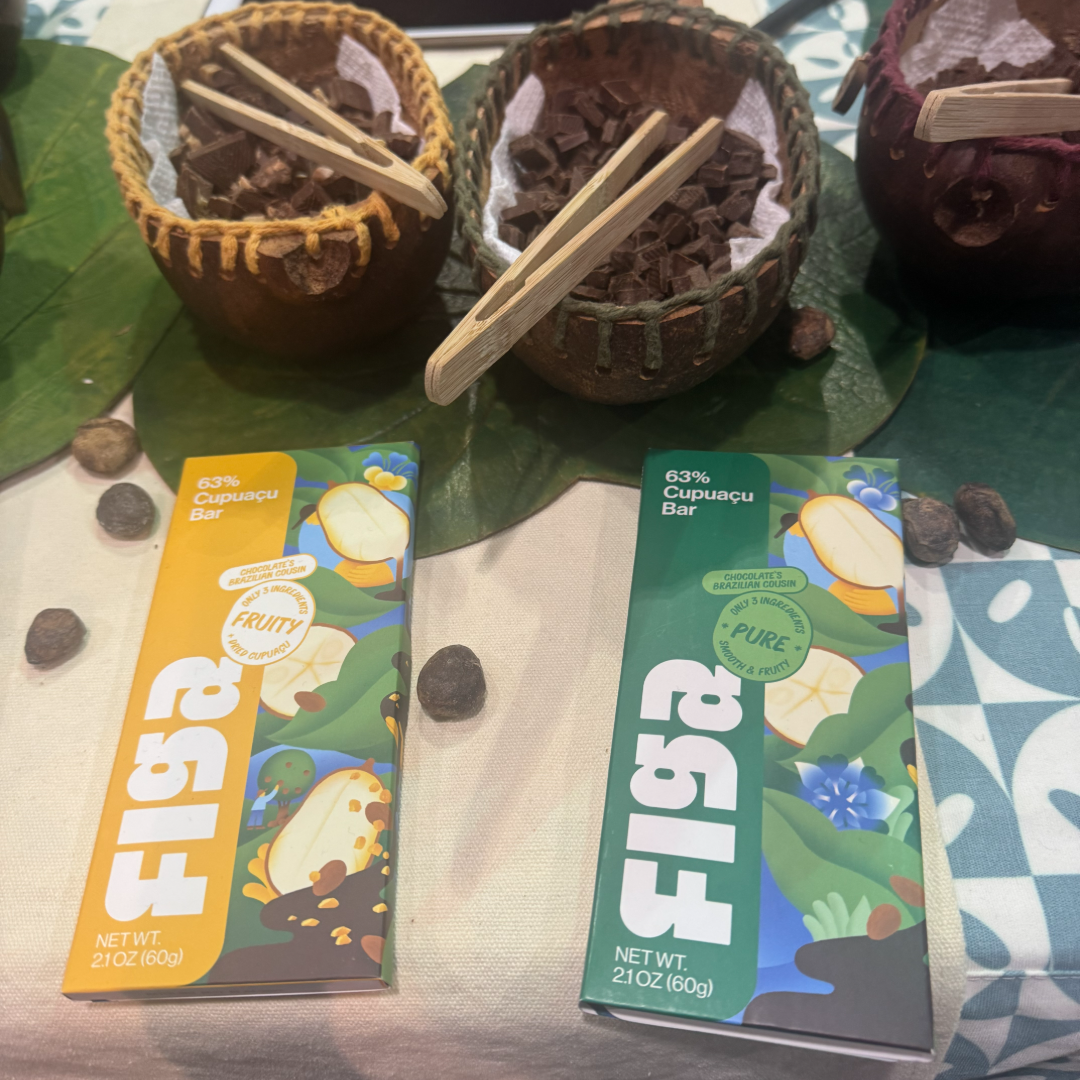
9:10 - The Summer Fancy Food featured a wide array of specialty food and beverage innovation, from a new twist on beer to spicy barbecue sauces. Brad reviews his observations from the event.
Episode Transcript
Note: Transcripts are automatically generated and may contain inaccuracies and spelling errors.
[00:00:05] Monica Watrous: Welcome to the CPG Week podcast by BevNET and Nosh. I'm Monica Watrous, here with my co-host, Brad Avery. If you're enjoying the show, please subscribe on your listening platform of choice. Here is the latest in food and beverage industry news. Private equity firm Akon Investments has acquired a controlling stake in organic candy maker Yum Earth, with global confectionery manufacturer, the Feeney Company, coming on as a strategic partner. Financial terms of the transaction were not disclosed. Founded in 2007, Yum Earth has built its business around organic, allergy-friendly candy made without artificial dyes, high fructose corn syrup, or the top nine allergens. Its portfolio spans gummy and chewy candies, fruit snacks, lollipops, and sour confections, and its products are sold in approximately 30,000 retail locations, including Target, Walmart, Whole Foods Market, Kroger, and Sprouts Farmers Market. Yum Earth CEO Steve Van Tassel said the partnership gives the company access to operational expertise while staying true to its founding mission. Spain-based Feeney, which distributes confectionery products in more than 100 countries, will retain an ownership stake in Yum Earth as part of the transaction. The companies said they plan to combine Akon's consumer investing experience with Feeney's manufacturing and category expertise to support the brand's next stage of growth. Feeney is a leading producer of gelatin, marshmallow, and licorice candies with a nearly half century of experience. The acquisition is the inaugural investment for Akon's Evolution Fund, a new vehicle focused on value-oriented investments across consumer and industrial businesses. And the transaction continues a steady stream of private equity activity in better-for-you snacking and convectionary in recent years, as investors seek brands responding to growing consumer demand for cleaner labels, organic ingredients, and allergen-free formulations.
[00:02:08] Brad Avery: All Rise for the Supreme Court. The trademark case of nitro cold brew brand Rise Brewing versus PepsiCo is going to the highest court in the land after SCOTUS opted to hear a petition, which was filed by Rise, seeking to overturn a lower court decision that had dismissed its case against Pepsi. Let's rewind back to 2021 when Rise first filed a trademark lawsuit against the soda giant when it launched its Mountain Dew Rise Energy line. The independent coffee brand initially seemed to have the momentum in its argument that Pepsi's line was creating consumer confusion and even won a preliminary injunction which forced Pepsi to cease using the name. However, a 2022 Second Circuit Court reversed that decision on an appeal, arguing that RISE's trademark was inherently weak due to the association between the word RISE and coffee as a way to wake people up in the morning. Today, that Mountain Dew line is no longer in production, and last year RISE was acquired by Uptime Energy. But the case is not only not dead, but it's now facing the opportunity to have wide-ranging implications on future trademark case law. Rice's petition to SCOTUS argued that rather than a legal question for a judge to answer, the strength or weakness of a trademark is a question of consumer perception that needs to be answered by a jury. The Solicitor General of the United States agreed that the judge erred in their decision, but said that the Supreme Court should not take up the case, claiming that it's just one of many factors that could cause consumer confusion. However, the court did not take the Solicitor General's recommendation, and now this case is going to go forward and may very well change how future trademark disputes are adjudicated.
[00:03:52] Monica Watrous: Insiders can read more at BevNET.com. Moving on to the freezer aisle, high protein ice cream purveyor Frozen One raised a $5.75 million seed round led by brand foundry ventures with participation from existing investors, Supernatural Ventures, as well as Abe Burns and Grammy Award-winning songwriter, Ryan Tedder. The capital infusion comes just months after Frozen One closed an oversubscribed $2 million round underscoring growing interest in the Texas based better for you ice cream brand. The new funding will support national retail expansion, increased manufacturing capacity, marketing initiatives, product innovation, and additions to its leadership team as it looks to capitalize on early retail momentum. Since rolling out nationally at Target in April, Frozen One claims to have generated some of the strongest sales velocities in the better for you dessert category. The brand, which produces ice cream pints featuring 40 grams of protein and less than 400 calories on average, has also expanded into retailers like Fresh Time, Wegmans, Raley's, Bristol Farms and Central Market. Alongside the funding round, Frozen One announced two new leadership appointments to support its next phase of growth. David Valenza-Frost as Chief Operating Officer and Ashley Montgomery-Ross as Senior Vice President of Sales and Commercial Strategy. Valenza Frost comes to the company from premium ice cream maker Van Leeuwen, where he served as Vice President of Supply Chain, while Ross most recently served as Vice President of Revenue at Onnit. Brand Foundry Ventures, whose portfolio also includes fast-growing brands Graza and Olipop, said Frozen One's retail execution thus far has helped set it apart in an increasingly crowded functional food and beverage landscape. The financing comes as demand for high-protein foods continues to reshape grocery aisles, prompting incumbents and startups alike to introduce products that blend indulgence with functional nutrition. That demand is fueling what some are calling the second wave of protein ice cream, with brands like Natty Ice Cream, Protein Pints, Smearcase, and Indulge also entering the market over the past few years.
[00:05:59] Brad Avery: And when four locos just won't do the job, Chuck It LLC has the answer. Four Loko-maker, Phusion Projects has licensed some of its brand assets to Chuket for use on intoxicating hemp beverages, leading to the launch of Nine Loko, an intoxicating brand made with Delta-9 hemp THC. Phusion Projects clarified to us that it's not manufacturing or selling Nine Loko or any other hemp or cannabinoid products, but are instead made by this independent company, Chuket. In a recent job post for a sales specialist in Houston, Texas, Chuckit describes itself as setting the standard for novel, next-gen products designed to resonate with a new wave of drinkers. Nine Loko's website, meanwhile, describes the brand as a, quote, flavor-first, perception-bending, jazzy cannabinoid juice. The drinks come in Dreamsicle and Galactic Punch flavors, with 16-ounce cans containing 10 mg each of THC, CBC, and CBG, with a suggested retail price of $4.99. Monica, do you remember the heyday of Classic 4 Loco? You bet I do.
[00:07:09] Monica Watrous: I gotta say though, Nine Loko is a great name, but 420 Loko is right there. It's an interesting time to get into the hemp THC beverage category when it may all fall apart in a few months.
[00:07:22] Brad Avery: That is true. And I think there's a lot of optimism going around that a solution will be found. I know there are some lawmakers on Capitol Hill who want to find a solution before November. I, for one, believe that you kind of got to go ahead and assume that they're not going to get a solution done in time and that there's at the very least going to be a period where this gets locked down. Perhaps this is just setting the stage for what happens whenever Congress finally does find the solution. or perhaps they're really just ambitious and you know hoping that we'll have regulatory approval solidified and clarified before November. I would love to see it. I think this is frankly in my personal opinion a terrible thing that this industry is going to get shut down just because we couldn't reach an agreement to clean it up and clarify and regulate it. But I would certainly move ahead with the assumption that there's a ban that's going to go into effect at least temporarily. You know, I'd love to know what their response is, what they think is happening when they want to roll a brand out. There's a lot of other companies that are facing the same issue right now. They're either coming up with backups or seeing CAN doing zero milligrams. We're seeing a lot of other companies doing alternatives to hemp in order to stay afloat. And then others who are just simply preparing for a hiatus as a result. I definitely hope that this market is able to continue thriving.
[00:08:59] Monica Watrous: I do too. We have a lot of friends in this industry and it is a healthy industry and I certainly love to see it continue. And of course we'll be covering all of the developments on BevNET. Now Brad, you just returned from the Summer Fancy Food Show in New York and you actually saw, speaking of cross-category expansion, a notable plant-based beverage brand getting into the alcohol category as one of your observations. Can you tell me more about that?
[00:09:32] Brad Avery: Yeah. Elmer's 1925, the plant-based milk maker. They also make protein drinks and sour cream from plant-based ingredients. is launching an alcoholic beverage, a brand called Good Day Darling, which is brewed from oats and has a beer-like or a cider-like quality, depending on your taste profile. Positioned as an amber spritz, this is a 4.1% ABV drink, and it's being positioned as a bit of a better-for-you, not healthy, but a better-for-you alcoholic beverage that can help reignite some momentum in that space when innovation in alcohol is down. Consumer consumption in alcohol is down. And what Elmhurst sees is a chance to maybe bring some of their consumers back into that alcohol set with something that's novel, original, and not as indulgent as some other alcoholic products are.
[00:10:30] Monica Watrous: Certainly. And we've seen Elmhurst has been at the forefront of clean label formulations in the plant-based category. They're known for their simple ingredient decks, nut milks, as well as oat milks that are made with maybe like two or three or four ingredients. So they have a lot of credibility for health conscious consumers who are looking for better for you options.
[00:10:54] Brad Avery: Yeah the Elmer's name is on the can even though they're going with this good day darling approach they're leaning into a sort of roaring 20s imagery prohibition era a little bit but it's it's certainly connected to the parent company and it puts them into a new regulatory space as well. I was speaking with Eddie Rick the COO of the brand who was telling me he has experience as a former alcohol buyer and retail that they've got a lot of partners and advisors and consultants who are helping them out here as they seek to branch into the very different distribution and regulatory space than they're used to. Interesting.
[00:11:33] Monica Watrous: What else stood out to you on the the floor of Javits Center?
[00:11:37] Brad Avery: Well we definitely saw more non-ALC innovation as well. A lot in the mocktail space. I saw some interesting original startups. A pickle lemonade brand called Mr. Pickles was certainly a fun one with a vibrant can. Did you try it? I did. It was tasty. Dill flavored lemonade.
[00:11:59] Monica Watrous: Sounds refreshing. Pickles are also like kind of a natural electrolyte.
[00:12:03] Brad Avery: Right.
[00:12:03] Monica Watrous: So I mean I feel like it could be like a functional beverage.
[00:12:06] Brad Avery: Absolutely. I mean the pick of flavor is everywhere right now. Oh absolutely. I saw a evangelical Christian owned energy drink startup called Agape Energy that is looking to have a mission of connecting people back to Christianity through an energy drink. OK. I saw new soda launches from Joe T. A new tonic launch from Cheeky Cocktails. And plenty of spicy flavors and food. And I swung by the Hot Ones booth where they were sampling their new spicy barbecue sauces. Those are very tasty. Pretty spicy, but very tasty.
[00:12:49] Monica Watrous: Very nice. Well, you were joined out there by our colleague, Adrianne DeLuca, and she has been covering some, some more of the food innovations at the show, including a lot of Indian inspired cuisine and convenient meal solutions with premium and gourmet twists. We'll be rolling out more coverage from the Fancy Food show on BevNET and Nosh. Here are some other notable bits of news from the week. Rivals is raising a $5 million investment as the brand launches a Puff product and targets new food service and retail opportunities. Takis is dropping artificial colors from its entire U.S. product lineup by the end of the year, marking the latest reformulation effort from a major snack brand as the industry shifts toward cleaner ingredient labels. And finally, Coca-Cola's North America operating unit is set for a management change, as Executive Vice President and President Jennifer Mann is stepping down. For these stories and more, become an insider at BevNET and Nosh. That wraps up this edition of CPG Week by Bevhna and Nosh. Thank you to our audio engineer, Joshua Pratt, our director is Mike Schneider, and our designer is Aaron Willette. If you enjoyed the podcast, please subscribe on your listening platform of choice, and we will see you next time.
About CPG Week
CPG Week is the podcast that explores the latest happenings in the consumer packaged goods industry. Join our seasoned reporting team as they dish out the week’s stories in quick, easy-to-digest episodes. Catch up on the top headlines of the week, dive into exclusive insights with the BevNET and Nosh teams, and set yourself up to make more informed business decisions. Tune in to stay up-to-date on the latest developments in the dynamic world of packaged food and beverage.
New episodes are released every week. Send us comments and suggestions anytime to [email protected].

Stay Informed, Stay Competitive
Unlock the articles, expert interviews, and data reports that power the food and beverage industry. Join our community and stay ahead with exclusive insights from BevNET and Nosh.
Explore the Nombase CPG Database
Head to Nombase to learn more about the tagged companies and their offerings.