How Burlap & Barrel Is Navigating Tariffs

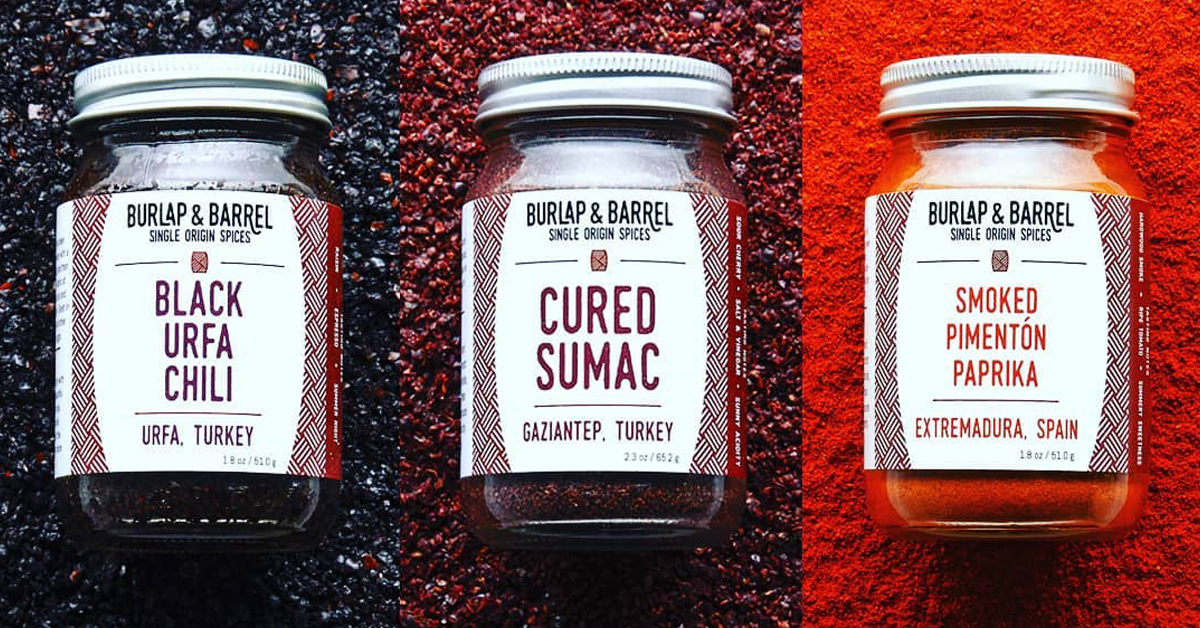
We are tracking the impact of the Trump Administration’s new tariff policies on emerging packaged food brands. Today’s story examines how a single-origin spice company is navigating new supply chain shocks.
Across the packaged food industry, operators are scrambling to reshore supply chains amid sweeping tariffs.
New York-based Burlap & Barrel sources spices directly from smallholder farmers in several dozen nations, paying multiples over commodity prices for Vietnamese cinnamon, Zanzibar black peppercorns and Hungarian paprika.
“We import from 30 different countries, and that’s just spices. We import from other countries for packaging. We get our towels from China and our jars from Taiwan,” co-founder and co-CEO Ethan Frisch told Nosh.
As a public benefit corporation committed to improving the livelihoods of growers globally, reducing payments to its partner farmers was not an option. Neither was raising prices on its broad assortment of premium pantry staples, which span standard seasonings, culinary blends and single-origin sweeteners.
“We’ve worked very hard on our site and in retail to keep our pricing accessible,” Frisch said.
In response to President Trump’s tariff announcement last week, Frisch, along with co-founder and co-CEO Ori Zohar, decided to extend a sitewide “spring cleaning” sale, hoping the proceeds would help finance the upcoming purchasing cycle and offset additional tax-related costs.
“We saw a truly shocking response. The post went viral. Our sales numbers have been truly insane,” said Frisch, adding that the number of orders matched or surpassed the spike in sales following the brand’s “Shark Tank” appearance two years ago.
Burlap & Barrel is blunting the impact of tariffs on its bottom line by pausing additional innovation, including an advent calendar featuring spices sourced from around the world.
“It was already a pretty tight margin project for us, and the tariffs really just put the nail in that coffin pretty much immediately,” Frisch said.
Additionally, the company plans to slow the expansion of its single-origin sugars and Mexican chiles – two recent years-long sourcing endeavors.
Frisch said he is approaching tariffs as “an evolving situation,” but the longer-term impact on consumer spending could deliver a fatal blow to the business.
“The economic uncertainty we are feeling today is a bigger challenge than the tariffs themselves. There’s a resolution hopefully on the horizon for the tariffs, but if the economy collapses, the tariffs are beside the point, and that’s really what we’re worried about.”
Explore the Nombase CPG Database
Head to Nombase to learn more about the tagged companies and their offerings.