Can The Paleo Diet Revive Amid Anti-Ultraprocessed Rhetoric?

Ultraprocessed foods are an invention enabled by modern technology, and amid the growing pushback against them, The Paleo Diet has seen an opportunity to revive its prehistoric approach to packaged food.
“The trends [around ultraprocessed food] that we’re seeing are great for us,” said Trevor Connor, CEO and owner of The Paleo Diet. “If somebody removes ultraprocessed and processed foods from their diet, if they go towards nutrient-dense foods, they’re basically eating a paleo diet.”
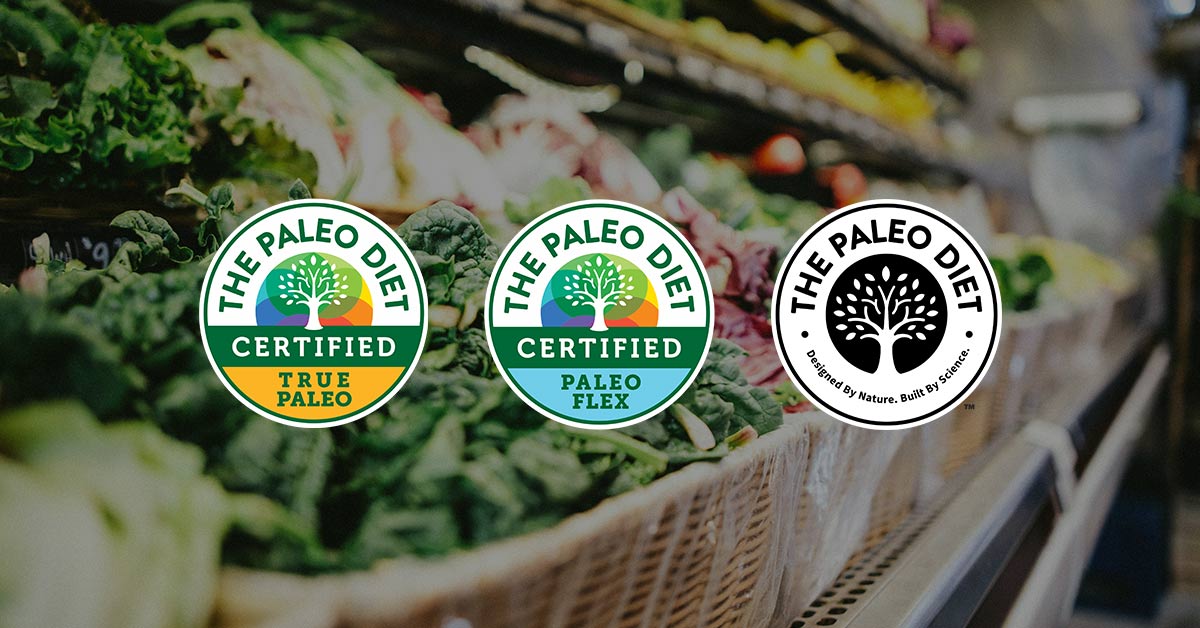
After buying The Paleo Diet business and trademarks nearly seven years ago from its original creator Dr. Loren Cordain, Connor, alongside chief science officer Dr. Mark J. Smith, have worked to realign the company to promote the science behind the diet. Those efforts officially kicked off with the launch of a new certification program earlier this year that offers both guidance and flexibility to the industry and consumers via two distinct badges: True Paleo and Paleo Flex.
“We’re human, and we want to know what the other foods are that we can eat that might not be ‘perfectly Paleo,’ but we can eat and still feel good about,” Connor explained, noting that the company has seen greater interest in the Paleo Flex program.
About The Badges
For those who may have forgotten, the Paleo Diet is a set of guiding principles built around foods that were consumed during the Paleolithic Era (which spanned from roughly 2.5 million years ago to 10,000 B.C.) while humans were largely still hunter-gatherers and before inputs like grains, dairy and legumes became common fare.
True Paleo indicates that a product follows the core Paleo principles: minimally processed, centers on whole foods and does not include grains, dairy, nuts and legumes, added salt, synthetic additives or more than 4mg of added sugars per 100 calories. In contrast, Paleo Flex maintains that a food adheres to the core Paleo principles, but it allows for some flexibility on processing, including the inclusion of a bit of salt, a slightly greater amount of sweeteners and one approved additive from a Paleo-derived source.
Connor’s team worked to develop the standards over the course of two years, first partnering with third-party verifier Where Food Comes From (WFCF), before moving the program in-house. Now, the program is available for free to qualified brands. Connor acknowledged that while a third-party verified program brings a higher level of “perceived integrity,” certifying through a separate body also brings higher costs to those companies.
“We aren’t a pay-for-play program if there’s nothing to pay and we keep our integrity by holding to our detailed and strict standards,” he said about the decision. “The one unexpected benefit that we discovered was that a lot of food manufacturers are having ‘certification fatigue.’ They’re getting tired of yet one more certification to pay for. When they found out that ours is free and our goal is to support and promote them, their response has been very positive and appreciative.”
While he said he and Smith knew the science of Paleo “like the back of our hands,” applying those principles to manufacturing practices proved to be a greater challenge. That was when WFCF came in, and, in addition to industry feedback, was another driving force behind creating a bifurcated approach to certification.
“While our hunter-gatherer ancestors didn’t have donuts, soft drinks, and other processed foods at hand, they did occasionally eat unhealthy foods like grass seeds,” the company explains on its website. “Our bodies have evolved to handle a certain amount of less-than-optimal foodstuff, as long as it’s kept to a small percentage of what we eat. In fact, many nutrition scientists and immunologists feel it’s beneficial to challenge the body’s digestive and immune systems with minor irritants to help keep systems regulated, primed, and functioning at their best.”
The Paleo Flex standards allow for the inclusion of less than 130mg of added sodium per 100 calories and less than 6mg of added sweeteners, so long as those inputs are derived from Paleo sources. True Paleo permitted sweeteners include date paste, fruit and vegetable juices and raw honey while Paleo Flex allows for a wider range including allulose, erythritol, xylitol, coconut and maple-derived sweeteners, among others. The current standards will constantly be evolved, he emphasized, and the team readily welcomes feedback from consumers, experts and industry.
“This is giving a little bit of room for some processing, but you’re still gonna have a real hard time getting any ultraprocessed food certified with us,” Connor said.
Building Badge Momentum
Since its heyday between 2002 and 2015, interest and formal adoption of the Paleo diet has stagnated, but The Paleo Diet claims that 6.3 million people currently practice the diet’s principles in “a recognizable form.” Connor emphasized that many individuals that stick with it find they can adapt the guidelines to work for their own lifestyle.
“There isn’t a specific Paleo diet… it is more a set of principles that are highly flexible,” Connor explained. “Whenever we’re making [new certification] determinations, we always have to look at the principles. This is [also] where the whole ultraprocessed [food] trend is heading towards – are we eating natural foods that exist in nature? Are we keeping them minimally processed?”
Advising consumers to eat more whole, nutrient-dense foods has also become the rally cry of those pushing back on ultraprocessed food products, but unlike marketable diets like WeightWatchers or Whole30, putting actionable guardrails around around a general diet and lifestyle is a bit more difficult. That lack of strict guidelines has been one of the primary inhibitors to rebuilding market momentum around Paleo.
“Any certification program takes a huge amount of work to build any momentum and in many ways, we had put the cart before the horse,” Connor told Nosh. “Working with a third-party certifier is very effective once the momentum is there but can actually make getting the initial momentum harder.”
The platform remains supported by the broader Paleo Diet platform, which Connor noted generates revenue like any other media company and helps support keeping the certification complimentary. Connor is also the owner of Fast Talk Laboratories and its eponymous podcast, as well as an endurance coach and writer for VeloNews Magazine; Connor was also Cordain’s final graduate research student at Colorado State University.
While Connor said his offer to buy The Paleo Diet business was much lower than others Cordain received, he ultimately won the bid by promising to spread the science and message behind Paleo’s principles. In order to make good on that pledge, he also intends to expand the market for Paleo products.
“It’s not a fad; it’s a movement. This works for [people]. They’re sticking with it, and I don’t care that they’re not loud, as long as it’s helping them,” Connor said. “More and more people are recognizing this and moving in this direction.”
According to NIQ data shared by Connor, Paleo-labeled products are growing four times faster (28% year-over-year) than products certified as vegan or keto, as of the end of December 2024. Low FODMAP is the closest runner-up at 18.9%, and Whole30 follows in third place, growing at a rate of 16.9%.
Connor said The Paleo Diet hopes to eventually introduce its own line of packaged food that embodies all of the diet’s principles, but he declined to share any specifics about the categories or potential approach. The company is currently in conversation with qualified manufacturers and distributors over what a packaged food line would look like.
The market for Paleo foods was worth $11.5 billion in 2022 and is estimated to reach $17.1 billion by 2030. Given the cultural shift away from fad dieting and ultraprocessed food toward simple, clean label, minimally-processed products, and since the pandemic, an uptick in general health and wellbeing, it could be the right time for a Paleo resurgence.
“The most important thing that they have in those [UPF] definitions [through NOVA] is the further you get away from recognizing the original food, the more processed it is, which is exactly what I love. I always try to look for simple ways to explain to people how to eat paleo and that would be one of them – be able to recognize what the original [food] was.”