Inside Supergut’s Target-ed Sampling Strategy

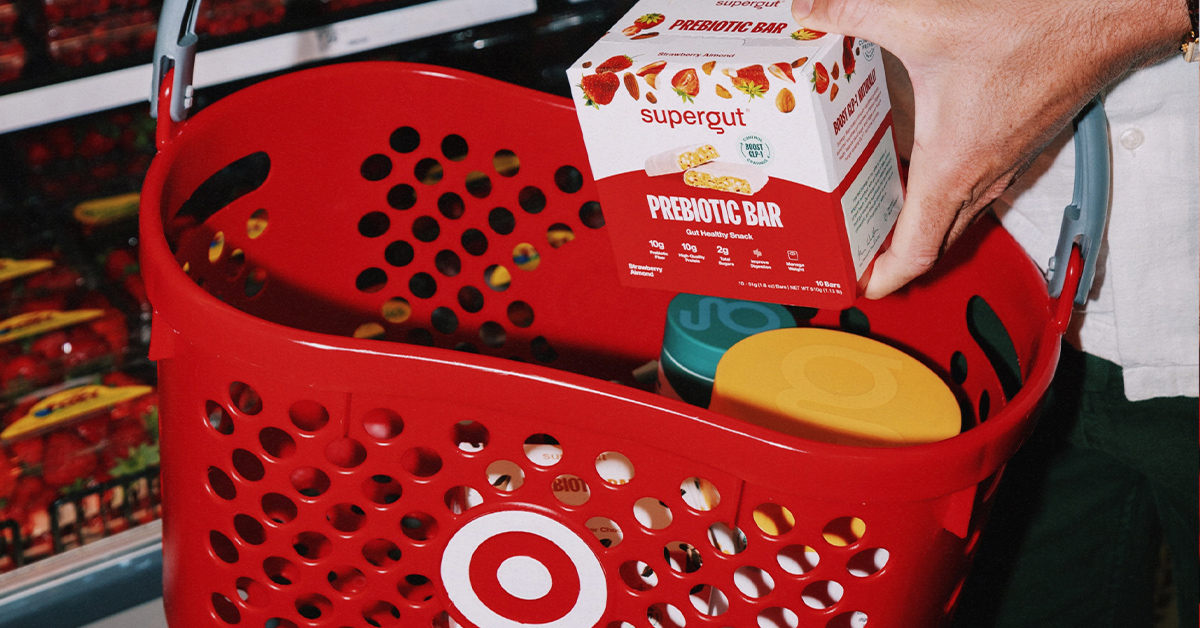
Supergut founder Marc Washington understands that fiber-focused food has garnered a bad rap over the years. His response? Give consumers another taste.
Just a little more than a year into its retail journey – which now counts over 5,000 doors, Washington said – and after cutting its teeth at a handful of regional chains, Supergut started an in-store sampling program at Target locations earlier this month, an achievement that reflects how hands-on taste-testing and education have become a critical part of the six-year-old brand’s omni-channel growth strategy.
“We’re still getting our sea legs [under us] as a small, young brand that’s high growth, but emerging – not just in size, but across channels as well,” he said. “We’re learning, testing, and trying out lots of stuff as we go.”
The Target partnership benefits both brand and retailer, Washington emphasized. He said that one of Supergut’s biggest learnings since entering Target is that the retailer is looking to be “on the cutting edge” and “create experiential settings” for its shoppers. “They’re encouraging brands to be a part of that.”
While sampling is also a new activity for Target – which has a strong reputation for helping direct-to-consumer brands make their first foray into retail – it has the opportunity to now give brands their first experience engaging with customers face-to-face.
For Supergut, the opportunity to offer a taste of its prebiotic fiber bar and powder products – which hail from a category that typically isn’t known for its taste appeal and sits within the “less trafficked” digestive health set – is gold for the GLP-1 supporting, prebiotic fiber brand.
“Out of all these different levers that you have to build an omni-channel brand, we think sampling is going to be an important one for Supergut,” Washington said. “How do you make fiber sexy and a destination? Not just something that people think about when there’s an issue. How do you actually get it to become part of a habit or lifestyle?”
Washington said the costs associated with sampling in Target were comparable to other activations it has done; however, he noted that while Supergut didn’t sample in every store or even every region, just given the larger scale of the retailer, “it adds up quickly.”
The main difference between sampling at Target compared to elsewhere was that the brand had to give up a come direct control as it worked through third-party field marketers contracted by Target.
“It’s the kind of thing a brand should try somewhere else first to get some reps and understand how things go, what kinds of questions people ask, understand the logistics and the experience,” he said. “Then take that experience to a Target[-like retailer]. Because…it’s at a greater scale, and it’s less under your direct control.”
For the emerging brand that is still working to educate consumers on gut health as well as how its items align with the growing use of GLP-1 drugs, giving up some control was daunting. Washington said his team aimed to keep brand guidelines and education simple this first run, focusing on the two most frequently asked questions from consumers at other events.
“The main one was just to educate around prebiotic fiber,” Washington explained. “Then there’s a second part as well, which is that these prebiotic fibers are not just good for gut digestive health, but it actually is really good for cravings control and appetite control. For extra credit, if they understand what GLP-1 is and can speak to that, that’s great. [But] we were a little hesitant to go too deep.”
Washington said for consumers to understand that “extra credit,” they first need to understand the product itself. He believes that is made easier when a full-time Supergut employee is at the table, reducing the potential for inconsistent or inaccurate messaging when leaving education in the hands of an external representative at this stage in the brand’s growth.
Sampling is just one piece of Supergut’s partnership with Target, where the brand is also running endcap displays in a handful of stores as well as promotions tied to New Year’s.
The big win for Washington has been increased exposure not just for customers but also within Target’s ecosystem. While it is still early days, he said it saw a “material uptick” from the end of the year relative to the start of the new one.