
SFEP Acquires Majority of Rustic Bakery

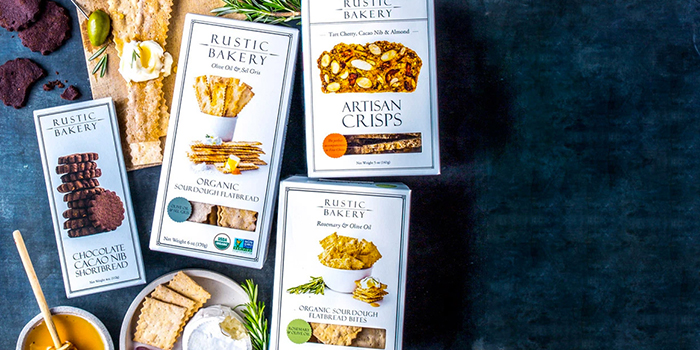
Today San Francisco Equity Partners (SFEP) announced its acquisition of a majority stake in Rustic Bakery, the organic food producer and cafe owner behind the Rustic Bakery line of crisps and cookies.
Terms of the deal were not disclosed. The company’s founders, Carol LeValley and her husband Josh Harris, will remain minority shareholders.
What is Rustic Bakery?
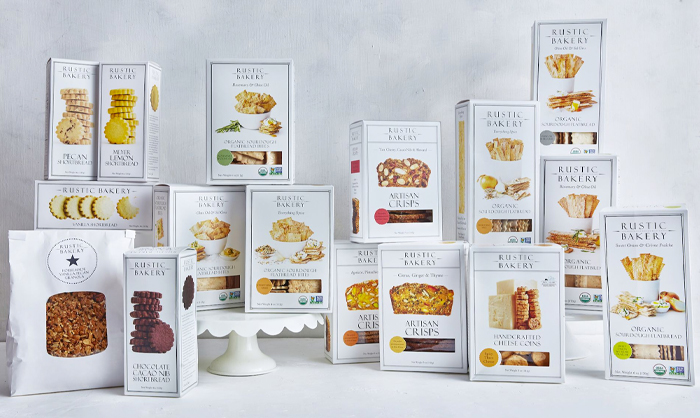
Rustic Bakery’s crisps, cookies and flatbreads are sold in over 5,000 conventional and natural grocery, club and specialty stores in the U.S and Canada, as well as in food service. In addition, the company owns and operates four cafes in Marin, Calif.
Founded in 2005, Rustic Bakery began producing its signature flatbread crackers in 2006. However, the CPG business was secondary to the cafe business until 2019, with the opening of a dedicated production facility in Petaluma, Calif.
The North Bay Business Journal reported in 2019 that the business had $12 million in sales. SFEP managing partner Scott Potter said that the company’s current revenue is now over three times that amount. The business was previously funded via smaller friends and family rounds, and is now “nicely profitable,” Porter added.
Why Did Rustic Bakery Sell?
Porter said that LeValley recognized that a more seasoned executive was needed to scale the business and will transition out of the CEO role in the coming months.
“[LeValley] felt like the next phase of growth would benefit from a little bit more professional management [team] who has done this before,” Porter said. “She also wanted to de risk her entire life’s work, or the last 15 years of her life, by taking some chips off the table.”
Where is the Opportunity With CPG?
According to Porter, the company’s next priority will be to increase distribution of its cookies and crackers, which are the fastest growing and largest revenue driver for Rustic Bakery. The cookies are a newer addition to the portfolio, adding a sweet offering to the previously entirely savory product mix.
“A big part of our investment theme is to continue to blow that business out,” Porter said. “The brand kind of grew up in the perimeter of the store, in the cheese shop and in the deli…[But] we’ve rapidly been getting distribution, usually secondary placement, in the cracker aisle.”
After gaining more distribution for the existing line, SFEP will consider entering new categories like baked goods and “everything you might find on a cheese board,” Porter said. More seasonal offerings will also be added.
What’s the Plan For the Cafes?
The deal marks SFEP’s first entrance into food service, with the company operating four cafes offering “upscale farm-to-table” breakfast and lunch offerings, all produced in a central commissary. SFEP plans to launch more of these locations, generally in a cluster of three to four locations in a given market. Not only are the cafes revenue drivers themselves, Porter said, but sales of the packaged products in retailers in the surrounding areas are also higher.
“We think the concept would play in multiple geographies,” Porter said. “We think it would be a very interesting proof point to open up the next cluster kind of outside of the North Bay…If those are successful, then you could see a more aggressive rollout.”
What’s the Competitive Landscape?
Walk the floor of the Fancy Food Show and there are plenty of gourmet cracker brands that can play in the specialty food set or build a solid business in wine and cheese stores alone. The difference for Rustic Bakery, Porter said, is its ability to successfully play in center store, as well as club channels, simply by changing the pack size or shape of its signature flatbread crackers.
Other cracker brands have tried to make the move with varying degrees of success. Specialty food brand 34 Degrees launched Snaps chickpea crisps and sweet crisps in bags in an effort to expand its reach with mainstream shoppers. Both lines offer more intense flavors, in contrast to the neutral Entertaining Crisps which are meant to pair with cheese.
Still, there’s plenty of competition among larger brands as well, particularly as consumers have looked to bring restaurant experiences into the home during the COVID-19 pandemic. Roughly a year ago, investment firm Eurazeo completed a $25 million minority investment in Dewey’s Bakery, a cookie and cracker manufacturer in North Carolina that offers a similar product mix and positioning, and which also operates retail bakeries. However, unlike Rustic Bakery, it has significant revenue from its private label portfolio.
While Porter said Rustic Bakery’s seasonal offerings and gift boxes are a small portion of the business, relying too heavily on this revenue stream can be risky. In 2019 specialty cookie brand Dancing Deer was forced to declare bankruptcy and shutter its manufacturing plant after losing a reported $1.2 million a year. At the time, The Boston Globe reported that the company’s undoing was the seasonal nature of its business, with a lack of products that could sustain the business the rest of the year.









![[Exclusive] Elavi Goes National with Whole Foods Market; Launches Exclusive SKU](https://d2azl42aua8mom.cloudfront.net/wp-content/uploads/2026/05/28110626/Elavi-970-150x150.png)