Search across the BevNET CPG Media network including BevNET, Nosh, Brewbound, Taste Radio, Nombase and CPG Jobs.
NOSH Live Winter 2023 - Pitch Slam Finals Part II

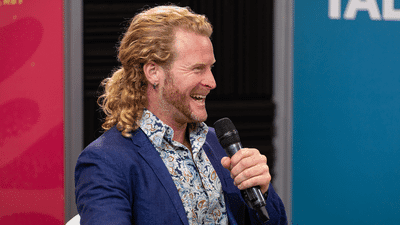
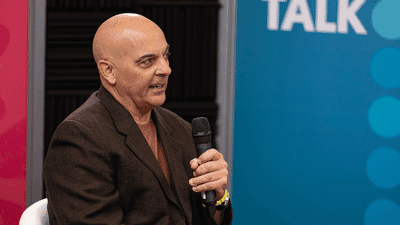
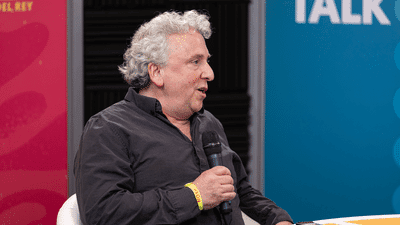
In part II of our NOSH Pitch Slam Finals, hear from Lentiful, Zwita, and Confusion Snacks as they pitch their brands to our industry expert panel of judges.
Featuring:
Aadit Patel of Confusion Snacks
Mansour Arem of Zwita
Transcript
Note: Transcripts are automatically generated and may contain inaccuracies and spelling errors.
Speaker 1 [00:14] All right, let's get to it with our first participant of this round in the Naj Pitch slam. Don't be confused by his name. This man makes lentils for a living. His name is Ben Bacon, the founder and CEO of Lenttiful. How are you? Good to see you. Microphone clicker. Please keep it on your timer,
Ben Bacon [00:33] OK. Hi, everyone. My name is Ben Bacon. I'm the founder of Lentiful. We make delicious instant lentil meals. Just add water stir and microwave, taking a 30 to 45 minute cooking process down to 1 minute letting you eat a healthy on the go meal. Lentils have been around forever, 13,000 years. They, they were in the Bible. Um, they're beloved and eaten all over the world. Here in America, not so much. And it's unfortunate because America actually makes world-class lentils. We even have A lentil belt that spans across Washington, Idaho, Montana, North Dakota, and we grow these amazing lentils that are so nutritious, and we export most of them overseas to places like Italy, Spain, Greece, these countries where they actually eat more lentils. This is not a new story. 26 years ago this weekend, The New York Times published this article, The Lentil Belt, and they interviewed farmers from this region who were lamenting the fact that Americans weren't eating their lentils. One stat they referenced the average person in Spain eats 27 times the amount of lentils every year as the average American. Fast forward to today, it's the same story. Um, Washington Post did this article this year, why Americans should eat lentils every day. They're practically begging Americans to eat more of this nutritious and climate-friendly food, which begs the question, why? Why don't Americans eat more lentils? And the answer, at least to me, is time, time, we're busy. No one understands this better than me and my wife. We have 2 crazy jobs. We have 4 kids at home. Our days and their nights kind of go back to back to back. We're healthy eaters. We're eating more and more plant-based, and lentils are like our number one go to meal, but we don't make them as much as we could or should. Because of our schedules. Um, it was one morning when I was grabbing an instant lentil cup out of the pantry, and I heard that rattle, and I got maybe the dumbest idea of my 47 years on Earth, instant lentils. I would eat that. So with some, some other people too. We launched a year ago, uh, we're at 10,000 orders, half a million sales in the first year. Um, First order um first order break even on Facebook, which allows us to put a lot of money into that platform. We put up these very simple ads, and it's just a picture of a cup, it says instant lentils, and people immediately understand this value proposition of something healthy, fast, and all of these reviews have been the biggest driver of our growth, um, and it lets us know who the lentil lovers are out there and You know, a lot of the obvious people you would think vegans and vegetarians, but maybe some not so obvious ones, which is older customers in some of these suburban places all over the country, very diverse backgrounds, and we have men too. I call them team mentiful, and these are guys who like me are taking those very, very hard first steps of eating less meat and more plants, and they're finding Lentiful is filling that void. Um, the overarching theme across all of our customers is how they're eating it, and they're eating it during their workday for a quick healthy lunch. They're stashing our cups in their desks. These are government workers, teachers, doctors. Um, we have 500 5-star reviews. 195 of them mention the word lunch. We have unlocked a quick, healthy lunch for a lot of people out there. All of this B2C um buzz has gotten us some really interesting inbound retail opportunities. We just launched at the fresh market. We've got a couple of big announcements coming up in the next weeks and months. We retail today for 495. The goal, bar none is to get this down to 3s. At that price point, that's uh, I can eat this 34 or 5 times a week, and we'll get millions of these cups into homes and offices across America, which is the goal. I love this slide. A lot of talk about platform brands. We can't stop at cups. If we're going to change the way Americans look at lentils. We have to keep innovating. I'm going to work with the USA Lentils Council. I'm going to work with lentil farmers across the lentil belt. We're going to have to innovate and get better than just dried lentils on the shelf, and we'll do it. Two companies I admire the heck out of Banza and Cauli Power, they both took niche ingredients at the time and they crossed the chasm into traditional mainstream. Um, the same opportunity exists for Lentils and Leneful, um, because at the end of the day, uh, there's a mission behind Lenels, Lenaful, and it's not just about Lentils. Because lentils are so nutritious, because lentils are so neutral from a taste perspective, because they are so malleable from a product development perspective, lentils are really just the vehicle. Um, they're the vehicle to get more nutrition back into American bodies. They're the vehicle for getting more nutrients back into American soil, which is a separate 5 minute pitch I have. Um, they're the best vehicle for getting people to eat less meat and more plants, as, as my wife and I have experienced and we see other people experience. Um, so if you are a retailer, if you're an investor, if this story resonates with you, I'd like to hear from you. Um, thank you very much.
Speaker 1 [05:36] Well done. Slide over here. The judges have any questions for you. Uh, the lentils were in the Bible?
Ben Bacon [05:42] Uh, Jacob and Esau sold his birthright to Jacob for a bowl of lentils.
Speaker 1 [05:47] I did not know.
Ben Bacon [05:48] I verified this with some kosher rabbis.
Speaker 1 [05:50] OK, well, I, I eat a lot of lentils. I grew up eating a lot of lentils. I, I believe you grew up eating a lot of lentils, but the most important thing with lentils is that they taste good. Did you like what you
Speaker 3 [06:00] tasted? Oh, I loved it. I thought the flavors were phenomenal. I was surprised at how quickly they cooked. We just had hot water, so we didn't have any other, but it was perfect, very utilitarian. Um, and just really flavorful approach to the, I mean, I was surprised with the nutritional profile, so low fat, high fiber, it was very nutrient dense, very impressive.
Speaker 1 [06:21] Wade, clearly you guys are fans over the fresh market of Lent to Full, but what do you think about the product roadmap? What do you think that innovation roadmap?
Speaker 4 [06:29] I think it looks great and, and you know, very, very logical. I mean, the next steps, the way you've lined it out, I mean, obviously we have it on the shelves. I can't, I can't hold that against you, but one of the questions I wanted to ask you was, as you scale or you know as you look at adding more, more shelves and more doors, where do you see the product living in conventional grocery? I know where it lives at the fresh market, but where is it going to live in conventional grocery?
Ben Bacon [06:57] This is why we're going slow into retail, and we're going to have to figure this out because there's a few different answers and Today we're right next to the dried lentils, so if you're going in and shopping for lentils, you can get that bag of lentils you typically get or get the convenient ones 6 inches over. There are other places where it could live. We're working with a big natural retailer and we're looking at the shelf stable vegetables where Hayday and a dozen cousins and a lot of these modern bean brands are. You know, you can make a case for grab and go packaged meals. I'm going to have to work with some retailers to kind of experiment, but we'll do that before we hit the gas.
Speaker 1 [07:33] Elizabeth, Ben made a pitch to investors here at Nash Live, and how about that? You're an investor here at Nash Live. What do you think about the opportunity for Luntiful?
Speaker 5 [07:42] I was really excited about the opportunity here as a consumer and an investor. I think a lot of people are really focused on high protein, nutrient density. ie meals and lentiful did this really well. The early stages of it even reminded me a bit of a company in our portfolio, Oats Overnight, very much like grab and go meals, something that's really easy for consumers to understand, and the flavor was really, really delicious. So really excited about what you're building, Ben.
Speaker 1 [08:09] Jason, do you see this as an intuitive opportunity? I mean, do you see this as something where consumers aren't going to need a lot of consumer education to know that not only should they be eating more lentils, but buying lentil full?
Speaker 6 [08:20] You know, it's funny you asked me that because I, it's actually, uh, I had a question kind of going to your point around Americans are not eating lentils, and I'm wondering like what is your perspective on why that has been the case and what is it that you have kind of done to kind of break through that barrier.
Ben Bacon [08:39] I've asked a lot of people this question. To the point where I'm that weird guy at parties. It really does. I, I hate to get back to this. It does get back to this, and for better or for worse, the, the typical busy American lifestyle. Um, this is why this is so popular at lunch. One of my favorite stats is 60% of Americans don't know what they're gonna eat for lunch 5 minutes before they eat it, and everyone has this like, oh shit, I gotta eat. Um, that's the American way, right? And so it'd be great if America was different. It's not right. So we have to meet people where they are. That's my approach on lentils is how do we make this more convenient to fit more into their lifestyle. Um, and that's the approach we're taking.
Speaker 1 [09:18] Got it. All right, very well done, Ben. Thanks so much. Thank you. All right, before we get to our next presenter, I just want to make sure that we're thanking our sponsor for the Nosh Pitch Slam, that is PepsiCo Ventures Group. Jason, your team, thank you so much again for sponsoring the competition. All right, up next we have Adit Patel, who is the founder and chief snacking officer of Confucian Snacks. Come on up. Hello, good sir. How are you? Microphone clicker, please keep an eye on your timer. Hi, my name is Avi Patel, and I grew up confused. Growing up, I lived at the intersection of two worlds, learning how to care for my Indian roots while also adapting to American culture. Oftentimes I was straddling polarizing identities, either feeling too Indian or too American. I loved both sides, but truly never felt at home. The truth is I'm both Indian and American. I wanted to stay true to my immigrant roots while also embracing the cultural influences of growing up in America, so I decided to build a home for myself the best way I knew how through snacks. I wanted a snack that felt like me, not 100% Indian, not 100% American, but somewhere in that confusing middle that reflected my dual identity, so I leaned in on the snacks I grew up with. Growing up, my dad used to make masala popcorn every weekend during Bollywood movie nights, and as I got older, I joined the black truffle craze and started putting it on everything, but it naturally made its way into my dad's recipe. This led to the creation of what we know today as our black truffle masala popcorn. The combination of the fresh Indian spices and the truffle umami aroma was a perfect fusion of flavors. This was a fusion narrative I wanted to share and inspired the start to Confusion Snacks. Our mission is to celebrate and share the cultural fusion inspired by our cultural confusion as kids of the diaspora. While this was inspired by my personal journey, I recognized it was addressing a larger gap in the market. See, there's a cultural shift happening in America with 3 communities leading the way. First is a growing diaspora, first generation kids just like us, who are looking for snacks that reflect their identities and cultures. Second is the curious snackers who've built a global appetite and are ready for new ethnic flavors. And third is the conscious snackers who want both clean and tasty options. The problem in the market today is that options are either distant, traditional, or diluted in flavor, have stagnated in flavor profile, staying squarely in the bounds of salty, sweet, or traditional, or the options are either just too unhealthy and addicting or too healthy and not tasty. Both observing and experiencing this gap firsthand inspired my vision for Confusion snacks. We want to shake up the snacking aisle with pantry staple snacks for this ever growing community of curious and conscious snackers. To bring this vision to life, we knew we had to do 3 things. First is having cultural integrity. We want to stay true to our South Asian roots by sourcing all our spices from India and using them the same way we'd use them in our own home. There's no dilution of flavor happening here like a chai tea latte at Starbucks. We also want to stay true to our fusion narrative. Even if pink Himalayan salt is trending, we're sticking to our fusion flavors to bring that innovation onto your shelves. When it comes to discovering accessibility, we want to deliver these unique and global flavors in a way that's accessible to everyone. That's why we chose to start with popcorn. It's such a universal and familiar snack which invites curious snackers to give our fusion flavors a try and make them a pantry staple once they fall in love with them. We've even made our packaging culturally loud, proud, and transparent, sparking shoppers' curiosity to pull them off the shelf and helping them make that purchase. Lastly, guilt-free snacking. This is inspired by my personal dilemma. If a snack is addicting enough, I always crush the full bag, but always feel guilty after doing it. So I wanted to fix that with confusion snacks. I wanted to allow people to indulge in a guilt-free tasty experience, which is why we make all our snacks with non-GMO mushroom popcorn, 100% avocado oil, and fresh, clean, and simple ingredients that are vegan and gluten-free. We believe this combination of flavor innovation and guilt-free snacking positions our snacks to become a pantry staple in your home. With that, I decided to bring this vision to life and launched Confusion Snacks last May. We started small with my mom and I making the 1st 15,000 bags by hand and selling at our local farmers' market. Within 8 months of launching, we started shaking up the snacking aisle and hit the top ranks in retail. We opened it to 70+ stores including Arawonan, Pop Up Grocer, DoorDash, and Mother's Market, and are excited to continue that momentum as we grow regionally with target accounts like Whole Foods, Sprouts, Fresh Market, and Thrive Market. To fuel our growth, we built an incredible snacking community with impactful partnerships and events, including our premier with Netflix, collaboration with Boba Guys, and in-store demos and displays. We've also been fortunate to be finalists for Whole Foods Sleep program and Target Forward Founders, which have provided a healthy forcing function to take that next step into regional growth. Our story starts with South Asian American popcorn, but our vision for the future goes beyond that. In the short term, we want to stick to what we know best and expand our South Asian American offerings with new flavors and categories. In the long term, we want to be a home to celebrate other fusion narratives. We kept the name Confusion snacks culturally neutral to open the doors into other diaspora cultures we're excited to explore. Overall, I'm incredibly thankful for our snacking community and excited for you all to be a part of it as we shake up the snacking aisle one kernel at a time. Great job. Well done. You can hang on to that slide over here so the judges can see it. Uh, Wade, you know, what are your thoughts on confusion snacks as sort of fitting into that space, into that popcorn section of the store?
Speaker 4 [15:15] It's, it's unique, no doubt about it. The flavors pop, the truffle especially, I mean, it's definitely unique, I guess. My my question, my concern would be the mass appeal, you know, because obviously the most popular flavors are kettle corn, salt, butter. How do you get past that and make it approachable for the Consumer and how do you get it in their mouth?
Speaker 1 [15:39] Definitely I think where we want to start is more of the demographic that can appeal to these flavors, but as we kind of iterate on like sweet is a very common popcorn flavor. So one flavor we've been iterating on is sea salted jaggery, which caters to like that kettle corn popcorn people are familiar with but still sticks to our fusion narrative. So we're going to introduce it in ways that's familiar but also still sticking to our fusion narrative. Elizabeth Audit talks about the gap in the market for a product like his, for a brand like his, uh, one that has cultural integrity, one that is crushable and guilt-free snacking. I mean, do you see that kind of opportunity in the way that Aadit outlined it?
Speaker 5 [16:14] I do, and I think the question he just asked probably shows that like on the aisle today there's butter, there's sea salt, there's kettle corn, but there really isn't a space right now for like ethnic focused popcorn. What I really like too is your packaging. While the flavors are unique, you very clearly describe what ingredients are in it so consumers can understand what the taste is going to be even before they try it, and I think that's going to be a great way long term to get more mass appeal.
Speaker 1 [16:39] Thank you. Jason, I'm going to inject my quick thought on this for a sec. I'm not going to say too, too much, but when I first encountered Confusion snacks, the packaging really popped for me. Did it do for you?
Speaker 6 [16:49] 100%, uh, the, the, the packaging
Speaker 1 [16:51] is great,
Speaker 6 [16:52] uh, you know, like Elizabeth said, very clear, uh, what
Speaker 1 [16:55] you're about to consume,
Speaker 6 [16:56] uh, you
Speaker 1 [16:57] know,
Speaker 6 [16:57] uh, ingredients,
Speaker 1 [16:59] functional benefits, all of that
Speaker 6 [17:00] really
Speaker 1 [17:01] clear.
Speaker 6 [17:01] So I think in terms of being able to catch the consumer's eye and, and direct them towards something that they're maybe not familiar with or maybe weren't expecting to be looking for, I think you did a great job.
Speaker 1 [17:11] Thank you. Did we not talk about taste yet? Asha, how does this
Speaker 3 [17:15] product taste? It was phenomenal. I also really loved the nods on the front of pack with aunties and like really bringing in the Southeast Asian flair. I thought some of the packaging was some of the most impressive among the group. I thought you put a lot of thought into callouts, flavor profiling, storytelling. Like those are all really, really important as you try to gain trial, especially in something very foreign to the average American. So great job on that. Thank
Speaker 1 [17:40] you. Wade, going back to you, you know, when you're thinking about new snacks, innovative snacks, you know what's the first thing that you're thinking about as a retail buyer, how do you act as a proxy for the consumer when you're evaluating a brand like Confucian Snacks?
Speaker 4 [17:55] The snack category is just, especially in our market, is just a huge driver, right? And I think of how we're going to display it, you know, because that's that's what sells, right? I mean off shelf mass displays and I'm curious as to how that, how that fits in, you know, how your cases, are they knockout cases, you know, and how am I going to make a big impression of it off shelf.
Speaker 1 [18:19] Um, currently right now, we've been relying solely on the packaging itself. So currently it sits in the snacking aisle with the other popcorn. Um, I guess some exciting stuff we've seen just with the packaging itself is maybe. Or not, or not, it's a, um, but like at Arawan, which is where we first launched, um, we didn't spend any ad display. We simply did demos and right there, we've been ranking top 3 since we launched, and we're seeing a shelter velocity of 25 to 30 units per week per store. So that's been kind of a proof point of like, is there a retention there and is that repeat customer, especially within and outside the South Asian audience. So definitely, you know, as we grow, we want to be creative with display options, even partnering with other South Asian brands to meet customers where they're looking for these types of flavors. Great stuff. I'm excited for those roasted peanuts. I got you. Thank you so much. Well done. Thank you. Appreciate it. Thank you. All right. Our final presenter for NOSH Pitch Slam Winter 2023 is Mansour Arem, who is the co-founder of Zwita. Mansour, come on up. Great to see you. Uh, either mic, you're clicker, and please keep an eye on your timer.
Speaker 6 [19:33] Hello everybody. My name is Mansoor, and I'm the co-founder of Zweta, where we craft ancestral Tunisian food products that make your life tastier. you may be thinking to yourself, Tunisian food, what the heck is that and why should I even care, right? Well, in case you didn't know, Tunisia is at the heart of the Mediterranean, but before I really answer that question, let me take you back to the 90s when me and my brother were born in Houston, Texas. And although we were born there, we spent a significant part of our childhood in our native Tunisia. There we got to embrace the Tunisian way of life which revolved around good times, family, food. Just a slow, beautiful way of life. After returning back to the United States, we developed this Tunisian identity that remained with us as our mom continued to cook these delicious family Tunisian recipes at home. People would still scratch their heads at the word Tunisian whenever we uttered it, and so we realized there was a huge cultural gap that we really wanted to fill. Mediterranean food in the meantime, Middle Eastern food started to become extremely popular and trendy in the United States through fast casual concepts, packaged food products, food bloggers, social media, etc. But to be honest, most of the food pretty much looked the same. It was mostly Levantine food kebab, shawarma, donor, hummus, delicious stuff. I have no beef with the Levantine people, but it's just not the Mediterranean food that we grew up with. Eventually we started to notice harissa and shakshuka products becoming more trendy in supermarket shelves, restaurants, blogs. Excitement quickly turned into disappointment though when we realized that most of these products were cheaper, misrepresented, lower quality versions of what we grew up with. And so we realized at that point that we had to take it upon ourselves to launch Zweta, where we craft ancestral Tunisian food products, and it's named after our maternal great-grandmother, and so she represents what we strive for every day, which is preserving our Tunisian heritage by sharing it with you. Now jumping into our first product is the traditional harissa we call it harisa arbi in Tunisian. It's a garlicky sun dried chili paste. It's ubiquitous in Tunisian cooking. It's Tunisia's national condiment. It is extremely tied to our identity. We pretty much use it on everything, and you can too. Chicken sandwiches, cheese boards, heck, Bloody Marys, I don't care. And it's available in mild, spicy, and smoky to accommodate all flavor palates. As I mentioned, it's a thick paste. We use whole sun dried chilies as the base of our product, which is key in its authenticity but also depth of flavor. It's not watered down with water or cheaper filler ingredients like tomato products, bell peppers, chili fresh chili peppers. We use extra virgin olive oil. We don't use cheaper oils like rapeseed or canola. And our products are strategically priced priced between 6 and $8 which is very competitive given the authenticity, but also the higher quality ingredient composition. Our second products are the shakshuka products. These are ready to go meals. We have it in zucchini and potato, fava beans, spinach, and eggplant sweet potato. It's very easy. You just pour it into a pan, crack some eggs, and you have a delicious grandma approved meal ready in minutes. Our shakshukas are veggie bombs. They're not boring tomato sauces. They're loaded with veggies, which means that they have a higher fiber content. They're delicious. They're really good for you. And we, of course, also use extra virgin olive oil like our ancestors did, also strategically priced between 6 and $8 retail. We've been blessed to be featured in multiple, uh, news outlets organically, including Taste Magazine, and more recently, the New York Times by Eric Kim, who wrote, uh, that amazing cookbook, Korean American. We've also racked up a huge social media following organically through recipes, storytelling. Um, and that has helped develop a lot of brand awareness which has led us to our two big box retailers, HEB and over 165 stores in July, and more recently Target, 102 stores. Harris and Shakshuka are becoming increasingly popular as the international foods category continues to grow, and we want to be the go to brand for people who are seeking these products. We're a 100% brother-run bootstrap business, and yeah, thank you so much.
Speaker 1 [24:32] Hold on, slide over here. You can slide it with this X. I gotta get that recipe for the uh chicken angel hair pasta. That looks really, really good, yeah. Uh, OK, yeah, uh, Elizabeth, um, see if you can read my mind and as to what I was gonna ask you about Zvita.
Speaker 5 [24:52] What I wanted to ask you is, as an investor, we typically see two different go to market strategies, either a brand going after incumbents that are maybe outdated and not meeting the modern eater, or building a new category that might be new to a lot of Americans. I think we all agreed shakshuka and Harissa is probably new to a lot of American eaters. How do you intend to educate around that new category?
Speaker 6 [25:14] Yeah, so, um, a lot of storytelling, content creation, really growing our online presence, that's, I think, really the key long term for that. Um, as I mentioned, we're 100% bootstrapped, and we do everything in-house, so we also do the manufacturing ourselves. Uh, so we've actually been focusing the past few years on building our manufacturing system so that we can set ourselves up for success, uh, going forward. So that's what we plan on doing.
Speaker 1 [25:46] Yeah. Jason, how do you feel about that, uh, an early stage brand owning their own manufacturing? Uh, I mean, I think it's, it's, it's quite unique, um, but obviously, you know,
Speaker 6 [25:56] that's, it's, you know, long term going to be something to solve for as you're, as you're scaling, uh, naturally, so, um, I think, you know, it's, it's, it's something that allows you to, to build, uh, some IP, uh, defend it, um, and, and potentially a great strong point to, to sell a story as you continue to grow. Yeah, absolutely, and that's the goal. It's, I mean, this is a long term vision that we have. It's we're not just trying to build a business so that we can sell it a few years after. We really want to blow this up eventually, but we want to do it the right way and we want to iterate and learn as we go because when we started out we didn't have any clue what we were doing, but we've come a long way.
Speaker 1 [26:39] Asha, you knew a lot about using high quality ingredients in your products, and the care that you put into them makes a big difference in terms of taste. First of all, you know, did you see in terms of the presentation today that kind of runway, that path that's going to keep them able to use those ingredients at a reasonable cost? And what do you think the flavor of the products that you tried?
Speaker 3 [26:59] I think it was the most authentic tasting harissa I've ever had because it did have a flavor blend. It wasn't just a tomato base or a red pepper base. It was truly. The seasonings and the spices that really make harissa what it is, right? I think it's been bastardized, you know, with Western culture to make it a red sauce, and it's just not right. So I, I appreciate the authenticity there. I also think you, I really appreciated that the variety of vegetable base was so visible in the mix. So as a consumer, you're trusting that it's not just dried stuff in a powder mix, and like you could really see that there's thought and care in it. I think one watch out as you scale, obviously you're self manufacturing, a lot of it is just how to maintain consistency as you start going bigger and bigger and bigger, right, having figuring out how to not oversell now and then having to make cutbacks later as you scale, but it's
Speaker 6 [27:48] phenomenal. Thank you,
Speaker 1 [27:51] Wade. How do you think about merchandizing products like these and Um, not only getting them on the shelf, but sampling opportunities as well for something like
Speaker 4 [27:59] Shakshuka. Yeah, I think it's going to be essential to the success of the brand. I mean, you have to have people try it, so that educational piece as far as how to use it, you know, your average consumer that you know maybe doesn't know what harissa is, what's the usage, how do I make it, what do I what do I serve it with, etc. So I think demos, sampling are going to be really, really important to the success of the brand.
Speaker 1 [28:21] One last question in the time that we have left. If you were to bring a product or a brand like Zuo onto your shelves, how do you define success for that kind of product or brand?
Speaker 4 [28:30] Well, I think this, this particular category, I mean, it's, it's really depends on what you look at it, you know, to Asia's point, you know, is it, is it, is it a red sauce? Is it, you know, you're not comparing it to a marinara sauce or a pasta sauce, right? So the success is dependent on The sales, but, but what, what, what do you see yourself up against, right, as far as the category goes, like, like your competition? I know you listed a couple, you know, New York Shook, etc. but, but what condiment or what sauce? What, what, what do you see it up against?
Speaker 6 [29:03] Yeah, absolutely. I think Maya Kai Mao, for example, that's like a good comparable product. Because we're marketing it as a meal ready to go meal, so that that would be the category most called and actually at HEB our, our shakshukas and harissa are, they're shelved right next to my kamal and other ready to go Indian. I think
Speaker 3 [29:24] it should be in the dairy aisle next to the eggs. I mean, like I just think it's shakshuka without the egg, it's just tomato base, right? It'd be really interesting if you could get a retailer to partner with you on trying that. I feel like your velocities would go through the roof.
Speaker 6 [29:38] Yeah, that could be a good thing to test for sure.
Speaker 1 [29:39] It could be a good thing to test, Monsieur. Well done. Thank you so much.
Speaker 6 [29:45] Appreciate it. Thank you so much. Thank you.
Speaker 1 [29:48] OK. All right, uh, oh, thanks. This is a tough competition, you know. We saw 6 outstanding presentations, 6 amazing brands, 6 outstanding founders. I want to give a round of applause to everyone who participated today. I kind of feel bad for the judges because they've got a tough decision on their hands, but a decision they will make. We're going to go into our deliberation room, make a decision, come back here at 2:45, and announce the winner of the Naj pitch slam.