Search across the BevNET CPG Media network including BevNET, Nosh, Brewbound, Taste Radio, Nombase and CPG Jobs.
NOSH Pitch Slam 13 Finals - Part II
Transcript
Note: Transcripts are automatically generated and may contain inaccuracies and spelling errors.
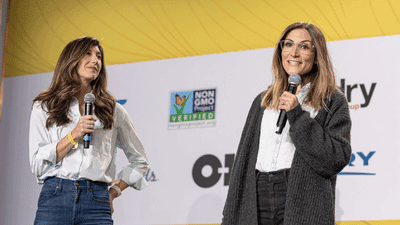
Speaker 1 [00:16] All right. Welcome back, attendees of Nosh Live and viewers at home. Thanks so much for once again joining us. It's time for part two of Nosh's Pitch Slam 13 competition. We're going to hear from three more sets of founders, some incredible, innovative, and disruptive products. Uh, I can't wait, so let's not wait. Up now, we have Lisette Howard and Katie Tucker, the co-founders of Sunny. Come on up. Thank you. Yeah. OK.
Lisette [00:52] Hi, I'm Lisette and I'm Katie, and we are the founders at SUNY. Katie and I met in a mommy me group in 2013 when our eldest were just 2 months old. We now each have 3 kids apiece, all under the age of 9, and Katie and I really just bonded over our love of food and cooking for our families. And when we started sending our kids to elementary school, we realized that we not only had to send them with lunches, but we had to pack them snacks every day. And with 3 kids apiece, that's over 3200 lunches and snacks we send every year. And when we went to the grocery store, we realized that we could find ourselves a fresh salad or sushi. We could find our babies' fresh baby food. We could even find our dog's fresh dog food. But when it came to our kids, we were still left with a lunchable, and that space hasn't changed in the last 30 years. For us, the problem really grew outside of the lunchbox. It was from school pickups to sports practices, road trips to airports, always having to sacrifice nutrition for convenience, and we really wanted to create a product that stood for both so that we didn't have to feel guilty about feeding our families. When you walk into grocery store aisles and or you go to Bigco Marketing, the notion of kid food seems to be a bag of Goldfish or a Pokemon branded snack pack that's just full of junk.
Speaker 1 [02:12] And we are on a mission to change that. So for us, it all started with choosing the right ingredients. So we swapped out canola and soybean. with virgin olive oil, we swapped out white sugars with coconut sugar and dates, but we also didn't want to create a product that was just masquerading as being healthy, but we actually wanted to stand for nutrition. So we brought in an expert. We brought in Jill Cassel, who's one of America's leading pediatric dietitians, and she joined us as an advisor to help us build out the nutrition panels that you see so that when you eat one of our products, you're getting a balance of fiber, protein, and healthy fats. Uh, so here's a, just a quick look at our SKUs. We have 6 SKUs currently, and all of them we're really looking to service everyone in the household. Um, we are looking in our focus is on servicing the modern family. And we also um didn't want to create a product that was like a quinoa wrap or something that was super unapproachable, so you know we make pizza and tacos um we envision our customers when they dip into a sunny getting all of the nostalgia and none of the junk. Uh, so here's a quick look at who we stack up against. Um, you know, all of us are familiar with perimeter snacks or fresh snacks at the grocery store. It's a category that's not new, but it's one that's been low on innovation. And so no, no one who has kind of come into the market has come in with a product that is clean and has the nutritionist-backed piece of it. Um, that's really the white space that we see filling. Um, so as you can see, you know, we are vegan. We lean into organic ingredients. We are also a nut-free company, um, so it's schools safe, and we are gluten-free.
Lisette [03:55] Yeah, and for us, we wanted to create a product for parents, just like us. That includes And that includes, uh, not only just the whole family that we know that we're servicing, but we also have a rise in a secondary market that we've noticed, and that is busy snacking adults, which for us has proven what we already knew, which is you never outgrow snack time. The media and social have also recognized our efforts organically as some refer to us as the better for you Lunchable, or we've heard comments such as to be a kid again, if only for a moment. Here are some of our current partners that we are working with. We have Air One, Bristol Farms, and Hungry Root. And you'll also notice SpaceX, which kind of goes back to that older busy snacking adult that we service. Our channel mix is distributed between e-commerce, wholesale, and food service. Um, and next year we really plan to dig into wholesale as we've learned from our customers that they really want to find us in the store when they're on the go or add it to their cart. And early next year in Q1, we will be launching our Jam Dipper, which will be our ode to the traditional PB&J.
Speaker 1 [05:07] Yes, we have some exciting growth planned for the company next year. We will move from 70 points of distribution this year to over 600, and we are looking to expand that even further as we look at 2025. We envision a world where you can find Sunny everywhere from mainline grocery stores to Costco to Starbucks to Delta Airlines. I mean, we've got to upgrade that, right? Uh, so that's really our focus, but even as we grow in scale, we are so committed to, um, helping those that don't have access to better for you snack options, and we do that through our Spread Some Sunny initiative. We support kids with after school snacks. We visit Boys and Girls Clubs through Greater LA and not only drop off snacks, but also give them some nutrition education. Thank you. Very well done. OK, if you can just slide up here, sir, there would be perfect. Uh, Patrick, all of the nostalgia, none of the junk. I, I can't imagine you were eating Lunchables as a kid, but maybe I'm wrong. No, I think my dad would smack that out of my. Not enough protein. Uh, no. Um, so what do you think of Sunny in terms of, you know, but for those who did eat Lunchables and did grow up eating that kind of product, what do you think about this as sort of that upgrade? I think it's huge. I think it's actually a really addressable market. I literally tweeted this like a couple, maybe a year ago. I was like, why does, why is no one tapping into the healthier Lunchables. So I don't know. There wasn't a slide on your guys' margins and gross margins, product margin, etc. Obviously this is a refrigerated product, right, so the shelf stability and the transportation freight is really expensive. So I don't know if you guys want to touch on that a little bit, but the biggest thing is just for a customer that is in middle America, flyover states, etc. where the bulk of Lunchables might be going. What's the biggest trade off and how much does that opportunity cost? What's the spend that they're going to have to put to get this versus a Lunchable?
Lisette [07:09] Yeah. So currently our margins are anywhere from 26 to 35%, and that's based off of the channel that we're in. We're currently reorging some of our ingredients and going to a manufacturer, and that's going to bring us between 37 to 40%. Um, and then for us, yeah, refrigerated's really tricky, right?
Speaker 1 [07:28] Do you, do you actually make the crackers? Have you guys thought about just Have you found a clean cracker on the market? There's another one, I think, after you guys. That was not a dig at Humble Seed. They're bleed, yeah, no, it's really for us it's, it's a, yeah, it's a cassava flour cracker, so it's a nut-free cracker, and so nut-free is super important to the company, big, big piece for us. Yeah. Ahmed, they had a slide about was Competitive comparison and outside of Lunchables there are some other brands out there. I mean what do you think about that sort of strategy and how they're looking at that competitive landscape? Well,
Speaker 3 [08:05] first of all, I was a Boys and Girls kid, Boys and Girls Club kid, and I did eat Lunchables almost every day. Uh, and so I'm ecstatic about the product. Uh, I think, uh, it's, it's amazing that there's a now a clean label alternative. Um, I, I saw this more like a snack than as a meal replacement. And so for me, um, just given the size versus the long is a little bit bigger, um, I, I, I'm, I'm curious, I saw the price 0.499 to 599, uh, as a, you know, if, if you look at consumers in say middle America. $5 for a snack per kid. You each have 3 kids. $15 a day starts to add up. So to me, I really, I really think about how do you democratize health and wellness, and I'd love for you guys to to share that because I think some of the other products, while, while they're convenient and not clean, are still accessible. And I, I'd love to hear your story on, on what to do there.
Speaker 1 [09:11] Yeah, yeah, so, um, the price point is the SRP is 399 to 499 right now. So it's right in there. We agree with you. We want to make sure that it's available and accessible for families, large families, um, and we see with scale and as time goes by when we're able to get the distribution and kind of like that just general scale, we'll be able to lock in on a price that again makes it available to all families. It takes time. This is kind of where we're at now,
Lisette [09:37] yeah, and we're also looking at making them smaller, so a little bit less guacamole, pizza sauce, and shrinking the packaging slightly so that we can get it really towards that 399, maybe even lower, so it's more accessible.
Speaker 1 [09:49] Uh, in the current iteration of the packaging, you know, what are your thoughts, Twe and we haven't talked about taste yet. How do these products taste?
Speaker 4 [09:54] Oh, I love these. They're really good. I love the pizza one, the guac. They're all really good. I'm excited for the peanut butter one, but I, with the packaging, I also really liked how clear the messaging was. It wasn't too busy, um, but it was, you, you clearly communicated that it's a healthy snack for kids, um, so I really like that.
Speaker 1 [10:14] Jason, final thoughts on Sunny?
Speaker 5 [10:16] You know, honestly, I'm at a loss for words. I think everyone's covered everything. I, I share the sentiment. I think it was, you know, a great product. I really enjoyed both, both skews. I thought the packaging was great, and I, I think, you know, the direction you guys are headed, especially heading into convenience, being in those places where you can really tackle that kind of on the go occasion, that spur of the moment thing that consumers, especially adult consumers will be looking for. Uh, is right on. So, um, you know, I, I, uh, wish you guys the best of luck and super excited with it.
Lisette [10:52] Thank you.
Speaker 1 [10:52] Excellent. Thank you so much. Well done. Thank you. It was really good. Thank you. All right, up next we have Robert Broome, who is the founder and CEO of Mooski. Robert. either.
Speaker 5 [11:13] And then this one. Hey, everyone. Uh, my name is Robert Broome, and I'm the founder of Muski. After spending my entire career working for bar brands including RX Bar and Cleo Snacks, I finally took the leap of faith and started my own at the beginning of this year. The product is a chilled oat bar dipped in dark chocolate. It's a first of its kind fresh granola bar. We have three flavors, peanut butter, banana, chocolate peanut crunch, and cookie dough, all of which are vegan and gluten-free. Our SRP is 299 per bar, and we're currently sold in stores, primarily in the San Diego area. But creating a fresher, cleaner granola bar was not always the plan. The original idea was to create an overnight oat bar, and that picture right there with some very ugly looking bars is the first iteration of muski I ever worked on. I'm pretty sure I'm in my boxer shorts right there, but it didn't take me too long to realize that traditional overnight oats were way, way too runny to form into a bar. And so I pivoted and tapped into my Swiss roots instead and used Swiss style Berkshire moussli. As the base of the recipe, it's a cold oatmeal dish I grew up eating, and the thicker consistency of muesli is just what I needed in order to firm up the bars enough so I could encapsulate them in chocolate. And after hundreds of iterations, muesli in a bar turned into the first ever muski bar. But it wasn't until I really started getting some product feedback that I realized what the true functionality and purpose of the bars was. I would hear over and over again. that they tasted like a fresher granola bar. And so that's when it dawned on me that we really had the opportunity to reinvent and in many ways modernize the antiquated granola bar category by bringing granola bars from the pantry to the fridge. So how do we stack up against your typical granola bar? Well, first and foremost, we don't use preservatives. We're chilled for freshness, whereas the entire granola bar category is shelf stable, and oftentimes a lot of them will use some form of preservative. We use chocolate as a vehicle to hold our oat mixture together, whereas your typical granola bar will use a large amount of binder syrups to kind of stick everything together. We also, if you guys were able to try the bars, uh, have this soft, unique overnight oat-like texture compared to that drier, saler texture that's so synonymous with granola bars. And lastly, because we use a fair amount of water in our formulas due to the soaked oats component, we're able to have lower lower sugar and calories than your typical granola bar. And so we developed a very clear value proposition that was rooted in consumer feedback, and the next question is, well, how big can this opportunity be? And when you look at the market research data out there, the size of the prize looks really promising for Musski. When you look at macro snacking trends, we hit on the top 3 attributes consumers consider when choosing a snack convenience, freshness, and indulgence. But most importantly, 90% of consumers consider freshness when choosing a snack. So by positioning muskie bars as this fresher granola bar alternative, we're able to appeal to a massive audience of granola bar snackers. The category did over 3 billion last year to until now haven't had that fresher option. And then when you drill down into the bar category itself, the number one factor consumers consider when trying a new bar is whether or not it contains oats or oatmeal, and this is taken from the latest Mintel Bar report. They actually go a step further and say replicating the texture of prepared oatmeal appears to be the next iteration of the trend, which is exactly what we're doing with muski. And so all of this bodes really well for us at Muski, but quite honestly doesn't mean anything unless we're getting real results. So we're happy to say that so far consumers have loved the product. They've fallen in love with the taste and the texture of it, and it's still very early on, but we've seen a target market emerge of women ages 18 to 50 with two subsegments young professionals like Gyle, who's a nurse at UCSD who her colleagues are worried she's going to turn into a muskie bar because she's eaten so many of them, and moms like Dana. And these this consumer obsession has translated into really strong sales results. We just got our hands on our first spins data ever and we're turning almost 6 units per store per week per SKU, which puts us right up there with the top players in the category. And because of these strong velocities, we're able to get multiple facings on shelf, which is pretty unique and rare for a small brand. And so to sum everything up, we feel really good about our ability to not just disrupt the granola bar category, but the bar category in general, and we think we can be a major player in fresh snacking for the foreseeable future. Thanks.
Speaker 1 [15:58] You can hold on to that. Thanks. Amit, Robert shows some pretty compelling data at the end there, and I'm wondering, do you think Muoski is that Product that can teach people to shop for that granola bar in the cold case.
Speaker 3 [16:13] Well, I think people, you know, as, as Robert said, people are looking for freshness. They are looking, uh, and they are going to the fresh cold case for snacks. It's obviously a category that's been growing over the last 10 years, and there's more and more space being made for it. So I think what I like about it is versus maybe some of the others. In the space which have just copied the market leader, I think it's truly different, uh, frankly, uh, we all tasted it and then when I finished lunch I had another bar, uh, and so, uh, uh, definitely I, I can see the, you know, the, uh, consumer attraction to the, to the brand. It, it felt like I liked the the, the texture of it, um, um, I do think that cold chain is, uh. Uh, a difficult, uh, supply chain issue, um, and it's, and you know, it's a very crowded and dense space, so if you don't deliver on those metrics, uh, very quickly you get discontinued from a retailer. So just being able to continue to drive awareness and pull through is gonna be very important.
Speaker 1 [17:22] Tweet as a retailer, how are you evaluating this opportunity?
Speaker 4 [17:25] Yeah, well, I mean because it's cold chain it's a little harder for Thrive at the moment, so, um, but maybe in the future, but I, I think that um when I looked at the bar I actually thought it was more of a kids' bar because the packaging was pretty simple. It wasn't calling out any health benefits. It was just granola bar for kids so when you said your market was um women ages 18 to 30 or. Something that surprised me. So when you're doing your marketing, are you aiming it more towards women? Like what, like what what does your marketing look like?
Speaker 5 [17:55] Yeah, no, that's a great question. I think broad strokes what I'm trying to do with Muski as a brand is create a vegan plant-based natural foods product that doesn't feel pretentious, feels welcoming, feels playful, um, and so I think we knew in the back of our minds that we were going to appeal to moms and kids, but. Uh, as we started to get the product out there, we started to realize that like these young, these young professionals were loving the product too, and so you guys didn't get to see probably fortunately the older packaging, but it was even more kind of kiddie, and so we've started to kind of iterate the brand and kind of looked at the mousse, kind of made it a little more mature, kind of like Sunbum-esque, and so we're working on trying to find the balance between appealing to moms but not being a kid line per se so we can appeal to all ages. Yeah,
Speaker 1 [18:42] thank you. Jason, is this something where consumers are going to require some education to understand what this product is, or do you think it's something where it's pretty evident, uh, what they're trying to do with Muski?
Speaker 5 [18:51] I think it's pretty evident. I think, you know, as I'm, as I'm listening to the way you're positioning it as a disruptor to the granola bar, I kind of question that only because, like, if I think about like when I was a kid, you know, digging through my backpack and finding a smashed granola bar in there and still being excited. About it, you know, that's one of those things that you're not going to be able to do with this type of bar, and it almost feels like you're finding incremental incrementality for the total for the addressable market, because there is going to be those kids, those kids that are going to be outside running around. They have the granola bars, a snack that they could take with them. This is going to be something that is going to be perishable. It's not going to be something you know you really have to almost plan to go to your fridge and And have that as a as a kid. So, uh, you know, it's not gonna sit well in a lunch pack, whatever. So, um, you know, I, I think it's, I think it's a super interesting uh concept and great tasting bar. So thank you and, and one quick thing on that is when I, because I worked at Clio Snacks, I was in the refrigerated bar space. I kind of looked honestly at Perfect Bar a lot and I was like, what, what were they able to do? I like to study the brands that have been really successful and I saw that they created a fresher version of a protein bar and so I looked at the same category refrigerated bars and no one had created a fresher version of the massive granola bar category and so I hear you. I think there are some things to work through in terms of like messaging and making sure that usage occasion works for the target consumer, but yeah, I totally agree there.
Speaker 1 [20:20] How long can you go on the go?
Speaker 5 [20:22] We think about up to 8 hours. Um, the other thing is the product can be stored frozen. Um, so the shelf life is 100 days when it hits, uh, like refrigerated temperatures, but that's kind of like a nice little thing that like we can store it frozen. So if you were to put In your kid's lunchbox, it can kind of thaw out through the morning hours and then be good by the time you're ready for lunch. So, so you're slacking it out.
Speaker 1 [20:44] Yeah,
Speaker 5 [20:44] we're slacking it out. Exactly.
Speaker 1 [20:46] Yeah, good point about the backpack. Good stuff. Very well done, Robert. Thank you so much. Many memories
Speaker 5 [20:51] there.
Speaker 1 [20:51] OK. All right. Our final presenter for this edition of the Pitch Slam is Sarah Meese, who is the co-founder and CEO of the Humble Seed. Come on up. I hope I got your last name.
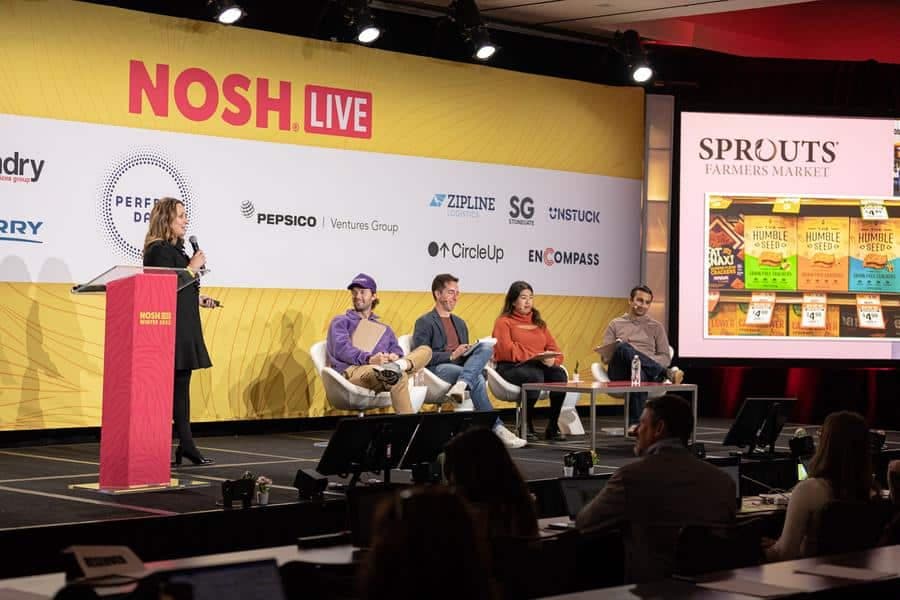
Speaker 4 [21:13] Hi y'all. I am so excited to be here to close out Pitch Slam today. I'm also going to spend the next 5 minutes sharing a quick story about what happens when a team of CPG veterans launch a differentiated snack brand in a large and growing category. So a couple of years ago, I started to have a small obsession with seeds. These little superfoods were nutrient dense, tasted great, and pound for pound require less water to use, or less water to grow than nuts. I started to ask myself, could seeds be the sexy star of the show instead of just sitting on the sidelines? Enter my sister Mary. Mary was also working in the CPG industry and she started to share my obsession with seeds. You see, our mom had been an early health food adopter. We were really the only kids I knew eating millet for breakfast in the 80s. Um, and we, she'd left a huge impression on us. My mom passed away in 2013, but we knew we wanted to launch a healthy snack brand in her honor. And so we created the Humble Seed. It's a seriously seedy snack cracker that's deliciously crisp and perfectly snack sized, so your whole family can snack happy and healthy. Why launch a cracker empire with a CD cracker? Well, first of all, Americans eat a lot of snacks. Crackers are also a big category, $8 billion up 10% versus a year ago, and snack crackers are the largest segment within that category. By making seeds the star of the show, we were able to identify category white space. Most Better for you crackers are made with wheat, rice, or in the case of other grain-free crackers, almonds. By using a nutrient-dense succeed blend, we created a crispy, light texture, and our perfectly snack sized crackers mean that you get to eat more per serving. The humble seed is also grain-free, paleo-friendly, and non-GMO project certified, all attributes that are driving growth within the cracker category. Our first real-world validation point came earlier this summer when we launched on Amazon. I logged in to find a review from a gentleman named, not making this up, Dwight Tugle. Dwight lived in Alabama, and he had a hard time finding the gluten-free foods that he loved to eat. He took a chance and ordered some of our crackers off of Amazon. After eating a box in a single day, the next day he placed an order for $400 worth of our crackers. He posted this 5-star review along with this picture of his pantry. The buyers at Sprouts also recognized the power of the brand and put us in all 380 stores in mid-August. Only a few months in, we're scanning in the top half of the category. And we're looking forward in 2023 to expanding our distribution footprint. There's an incredible team behind the Humble Seed that's made this all possible. Mary and I were joined by our partners Steve and Jennifer. Between the four of us, we have over 100 years of combined experience in the CPG industry. This team has the proven ability to build, scale, and successfully exit businesses. We believe that the future of snacks is seedy and we wouldn't have it any other way. Thank you.
Speaker 1 [25:19] Very well done. You could slide over here, please. Uh, Patrick, you mentioned the Humble Sea a couple of presentations ago. Um, seems like you might have some thoughts on the brand. I thought they were delicious. I thought they were really good. I thought the branding was great. It was simple. It, it looks clean. It looks healthy, um, healthier. And that's what you guys are positioned as. I only brought that up because I just didn't know if one of their large costs was having to manufacture and or, or command the, the crackers and the sauces and the cheese. I thought maybe they could get a cracker from someone else at a, at a cost or a co-branded situation. Maybe I'm wrong. Um, but I thought, I thought they were great. I really did. And your presentation, you guys have a lot of experience. Um, my family goes through boxes of these types of crackers. I'll have to get them these. They do Mary's Gone crackers and
Speaker 4 [26:05] also a great human ones,
Speaker 1 [26:06] but these look great. I really enjoyed it.
Speaker 4 [26:09] Thank you. Thank you.
Speaker 1 [26:11] Yeah, I mean there are a lot of better for you crackers out there, Jason. Um, you know, what do you think about the Humble Seed in terms of its ability to sort of break into that space and maybe be that brand that people are buying instead of another one?
Speaker 5 [26:25] You know, I mean, I think, I think one of the things that really stood out to me and I think would stand out to consumers at the store was, you know, and as Patrick mentioned was the, the, the branding, the packaging is, is great, uh, in, in my, in my opinion, I think it's, you know, it perfectly executes like the cracker is the hero, it stands out on the shelf, it looks like a brand that has been established by folks that have uh years of experience in, in CPG. Uh, and, and clearly, uh, you know, very professional, so I, you know, I'm, I, I was really excited to try the product, it delivered, um, and I think if, if, if you're delivering on the proposition that's, that your packaging is showing, I think you've got a winning product, so it's a You know, I think it was a great, great cracker.
Speaker 4 [27:09] Thank you so much. I also would be remiss if I didn't point out that the packaging and branding was done by Beck's Brands, and if you're looking for an amazing packaging agency, you should talk to Jeremy and Becky. They're here today. I can't take all the credit.
Speaker 1 [27:24] Yeah, well, I mean, you know, I think everyone seemed to like the packaging, you know, when you're talking about the hierarchy, the label hierarchy, and you know what's grabbing the consumer's eye, you know, how are you evaluating the humble Seed?
Speaker 4 [27:34] Yeah, when I look at the packaging, I mean with even with the name, I know it's a seed cracker, a seed forward cracker, but when I think of Seed forward crackers, I think of Mary's Gone crackers and the first question in my head is how does this compare? Like what's the pricing? Like, what are the different aller allergens and stuff? I noticed that you guys have sesame in yours. Are you trying to be more of a like an allergy friendly cracker? And yeah, how do you, how do you compare? Sure, I mean, I think the challenge is always balancing the presence of positives with the absence of negatives. And what we saw in the Spins data earlier today is that consumers are really gravitating. Towards those foods that talk about the presence of positives, um, we do use sesame where you're free of the other top 8 allergens. Um, my belief is that generally people who are looking for those attributes will find us. Um, I want to really focus on talking about being a deliciously crisp, seedy snack cracker, um, but we, we are 3 of the top 8 allergens. You succeeded on the deliciously crisp. Thank you, very
Speaker 1 [28:42] crisp. Thank you. Yeah, Ahmed, uh, you get the last word. I mean, how do you, how do you think about and assess the humble Seed in terms of its scalability?
Speaker 3 [28:50] So, uh, my daughter's a celiac and so we already have 4 boxes of this in our pantry and we had 5 except I ate 1 yesterday, um, and so, uh, you were Dwight
Speaker 4 [29:03] Dwight Dwight. Yeah,
Speaker 3 [29:06] no, I ate one box, not 400, uh, but, uh, and, and so I, I definitely think there's a, the, a market need for a product like this, uh, obviously the team that, that's, that Sarah's put together can, can scale, I think almost any brand, and so, um, I, I think, I think that that match of the right team with the right product is, is sort of what you have in this, have in this brand and so I really think that, uh. I think, I think this brand is gonna scale, um, and I'm, I'm excited for, for Sarah and the entire team to, uh, to, to disrupt and to provide uh a few other alternatives to a category which is growing, uh, which has some brands that, but I think, I think the branding here is so clear, crisp, delivers. I think as a consumer you just know what it is and it and it pulls itself off the shelf, so.
Speaker 4 [30:02] All right, thank you.
Speaker 1 [30:03] It's great feedback, Dwight. Sorry, Ahmed. All right, thank you so much. Very well done, Sarah. Thank you. All right. Uh, wow, wow, wow. These presentations were phenomenal. Um, I don't think we've had a better group of presenters ever at the Nash Pitch Slam, and that's no knock on past presenters. It's just that everyone came up here and gave it their all, and it was all outstanding, all 6, congratulations. Well done. The judges have a tough decision on their hands. They're going to go deliberate right now. We're going to be back here at 3:15 p.m. to announce the winner. You don't want to miss it. In the meantime, we're going to hand over the stage and we're going to make that decision. Thank you.