Search across the BevNET CPG Media network including BevNET, Nosh, Brewbound, Taste Radio, Nombase and CPG Jobs.
NOSH Pitch Slam 11 featuring Mmmly, Marco Sweet & Spices and Munchrooms
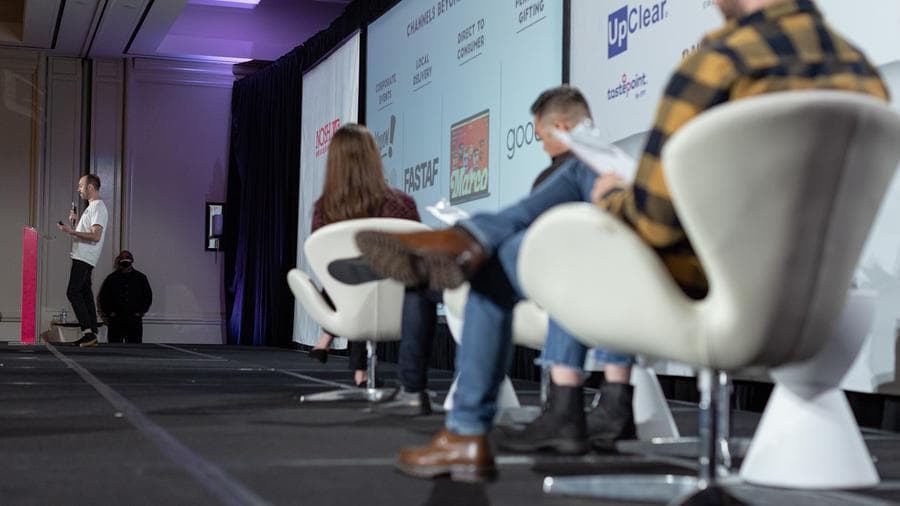
Featuring brands: Mmmly, Marco Sweet & Spices and Munchrooms
Judges for this portion were:
Gavin Konkel, Vice President Of Merchandising, Center Store, Earth FareHeidi Traore, Business Development Manager, National Co+op Grocers
Eugene Kang, Co-founder & CEO, Country Archer Provisions
Carol Ortenberg, Editor, NOSH
Transcript
Note: Transcripts are automatically generated and may contain inaccuracies and spelling errors.
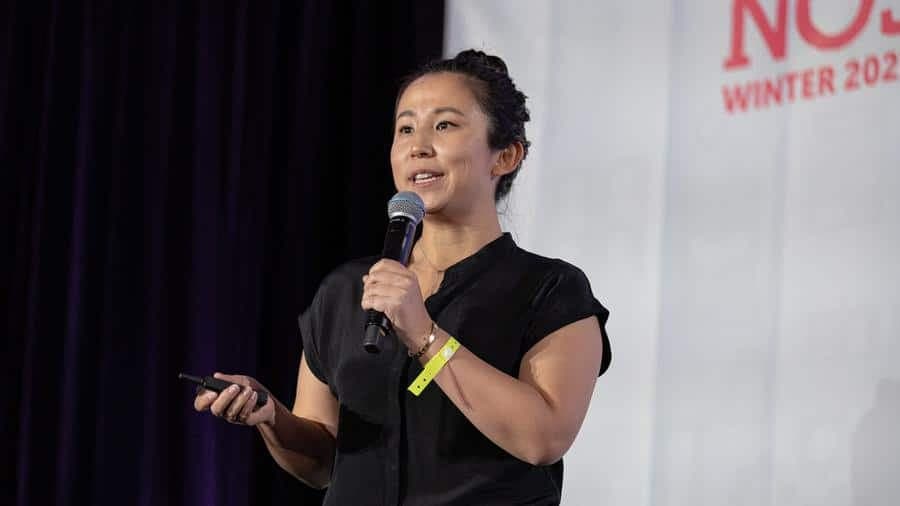
Ray Latif [00:18] Good morning once again and thanks for joining us for the final round of Nosh Pitch Slam 11. I'm Ray Latif, the editor and producer of Bevnet's Taste Radio podcast, the number 1 podcast for the food and beverage industry. Sponsored by 301 Inc. the Nosh Pitch Slam gives early-stage and promising brands the opportunity to present their business plans and products to a panel of expert judges and the audience here and watching on our live stream. The winner of the two-day competition will receive a $10,000 ad package and join a shortlist of brands that have triumphed in the competition, including Beckon Ice Cream, Elite Sweets, Savoorly, Creation Nation, and Bronx Hot Sauce. Out of the 12 semi-finalists presented yesterday, 6 have made it to the final round. Let's talk about the rules for the final round. Each of the six brands will have 5 minutes to present and receive 5 minutes of immediate feedback from the judging panel. We're splitting up the round into two parts. One this morning and one in the afternoon, beginning at 1:30 p.m. Pacific time. After all the brands are presented, the judges will convene and we will announce the winner live at 3:00 p.m. Pacific time. We'll also have a short interview with the winner after the announcement. Just a note, there's no audience voting in this round. All right, let's introduce our esteemed judges. Starting all the way to the left, we have Gavin Konkel, who is the vice president of merchandizing for Center Store at Earth Fair. After studying food and CPG marketing at Western Michigan University, Gavin held roles at PepsiCo, Prairie Farms Dairy, and Fresh Time. He was a senior category manager and the director of grocery at Earth Fair prior to his current position. Next we have Heidi Traore, who's the supplier relationship development manager for National Co op Grocers, a business services and purchasing co op with $2.5 billion in annual sales serving 148 US retail food co op members. Under her leadership, NCG's promotional program revenue grew 69% over a four-year period. And most recently, she is working to establish a supplier diversity system that will seek to diversify NCG's supply chain. Next we have Eugene Kang, who is the co-founder and CEO of Country Archer. Eugene acquired Country Archer at the age of 22 and has led the brand from a small roadside jerky stand to the number one fastest growing better for you jerky brand in the US. He's a Forbes 30 under 30 All-Star alumnus, has been featured in ABC News, Entrepreneur, Fortune, Money magazine, and under his leadership, Country Archer has also been ranked in the Inc. 505,000 list as one of the fastest growing companies in the US for multiple years running. Last but certainly not least is Carol Ortenberg, who is the editor of Nosh. She's held the role since 2015. She previously worked and consulted in several consumer goods companies, many within the food space, and also is on the marketing team for Whole Foods Market in the North Atlantic region. Prior to focusing on the food industry, Carol worked at several tech companies including HubSpot and served as a consumer researcher at AM Agency. I'm very excited to hear from our judging panel, and I'm very excited to hear from our finalists. Let's get to both. Our first finalist is uh Nicholas Nicclerio, who is the founder and CEO of Mmmly. Come on up. Your time. OK, thanks.
Speaker 2 [03:44] Hi, everyone. Hope you all are enjoying your time here. Um, I, I mentioned this yesterday, but I'm pretty sure, uh, cookies are a common household item, um, as it's a huge industry. Um, but I found that classic brands, uh, have a bunch of really bad for you ingredients in their cookies. Um, although they taste good, they're definitely not an all-day treat. Um, so I've also noticed that the healthy brands have took the junk out of the cookies, but they haven't really put anything back in. And that's why I designed Mmmly. Uh, we put good back into cookies that actually taste good at the same time. Um, I think it's a pretty simple concept, but, um, it seems like no one's really done it before. I launched Mmmly and I've wanted to start this brand for many years. I started working on the formula in 2019. Uh, with a culinary background, and I directed the whole branding process myself with about $5000 and $15,000 from an angel investor and my aunt who really believed in me and some of my own cash. My mission is really deep seated. Um, I grew up in an Italian family, and our lives revolved around food. Food, uh, was love, and it is love. But being overweight and gay, I was bullied, so I formed an eating disorder. Um, and through years of therapy, I decided I wanted to change the food industry and become an inventor, create something of value. Uh, I come from a family of entrepreneurs and bakers, and we have a bunch of gluten-filled, unhealthy breads in Italy, and I did not bring those here today. I brought healthy cookies. So, we're a snack brand that makes cookies with fruit, vegetables, nuts, and fruit, targeting, like I said, a huge category. We're in 80 retail stores to date with another 100 on the way, and we're one of the top selling, uh, new cookie brands on Amazon and 5-star reviews everywhere. So, the way I look at it is, A bunch of brands and other categories have been able to reinvent classic treats, but no one has really actually created a cookie that reinvents the cookie category, right? They've removed bad ingredients, but they haven't actually added in anything beneficial. And Uh, that's what I worked on. Um, a cookie that is, is meant for health consumers that can consume products on a daily basis because they're actually good for you and taste good at the same time. So our cookies have balanced macronutrients and only 2 g of low glycemic fruit sugar, and they support gut health. Um, they have prebiotics, and they're immunity sidekick, an immunity sidekick, and they keep you full for an extended period of time. So they're not really like a guilty-free, guilt-free treat anymore. They're more of something that you can eat as you go about your day. So our products are meant for food conscious millennials, health-conscious families, and Gen X. And our goal is to bring healthy and active consumers back into the cookie aisle, because they now have a reason to. So we've been on the, the market for about 6 months and we listened to the feedback and we've been pretty successful so far. Um, and we decided that we are going to add a little bit more protein to the cookies, um, and make them fully plant-based. We're going to remove the eggs, um, so that we continue to be the brand on the, the leading edge. So our retail strategy goal is to go deep and, and instead of narrow and just focus on the northeast region, um, and, and just go slow and steady and build a strong foundation and following in the Northeast. So our repeat purchase rate is above average on ECO. We've had a great month on Amazon and our store in-store performance in the stores that we're in right now is great. Um, just increased our margins, moving in with our co-manufacturer after internally producing for the past 6 months, and we're on a good track. Like I said, people have fallen in love with our cookies. Um, we just won the best cookie and healthiest cookie of 2022, um, with all unpaid press. And this is our team, food industry professionals that are guiding us and leading the way. Thank you.
Ray Latif [08:47] All done. You can stay on stage with me. Judges might have some questions for you. Nicholas, we're back here. No, that was good. You're, you're ready to hear from the judges. Um, taste is so important when it comes to cookies. Uh, Nicholas talked about, uh, his cookies tasting quite good. Heidi, what's your opinion? Sure, um, well, honestly, my, uh, cookie style is a little bit more decadent. Your cookies are very light and very moist, and when I think cookie, it, it's got a little more substance to it. I thought the flavor was good. There was a little bit of aftertaste that lingered for me. I tried the chocolate one, so, um, that's my feedback on flavor, flavor, excuse me.
Speaker 2 [09:33] Thank you. We, we just adjusted that. I just didn't have enough time. We've removed the monk fruit too, so thanks.
Ray Latif [09:39] Uh, Gavin, in terms of the, uh, day part usage, the problem that Nicholas outlined in that Better for You cookies don't necessarily have, uh, a day part usage or uh a more specific one than, uh, they should have, um, you know, what do you think of Mmmly's opportunity to reach those people, uh, on a more regular basis?
Speaker 3 [09:59] Well, I think there's a big opportunity here with this brand. Uh, the packaging stands out. The functionality of the product stands out. It's obviously hitting a low sugar crowd. I would actually disagree on, on the taste. I thought the taste was good, um, you know, for the market that it's, that it's, uh, uh, heading after, and then the scalability of the product too. I think there's a lot of potential there to upgrade from the size. So you, you got a 2 pack right now, 2 cookies in that, um, I think you can scale that and actually make that a bigger package which would appeal to a lot of retailers.
Ray Latif [10:28] Mhm. Eugene, let's talk about the packaging for a second cause there's a lot going on here with Mmmly, um, and you only have a few seconds to really attract that consumer. Uh, do you think it speaks to the positioning that Nicholas has outlined for the brand? Yeah, I mean, I think that, you know, the packaging is super clean. I love the branding. Um, I do think it's, there could be a little bit more heightened around the functionality component of the, uh, the, uh, packaging or the sort of the cookie. Um, the one area where I did sort of was interested in is just like the, the concept itself. It's in a pillow bag and I was curious like how it's gonna get merchandized in the sets today just given. You know, most of the cookies and the cookie set are in like a box, but based on the presentation, it looks like, uh, you're already kind of ahead of the curve there in terms of reformatting that. So
Speaker 2 [11:14] yeah, yeah, we're definitely making some minor adjustments.
Ray Latif [11:19] And I think on the functionality piece, you know, depending on what function you're trying to drive, maybe kind of emphasize that on the front of the pack in a clean way. Um, it sounds like you're gonna go towards like a more protein. Uh, heavier sort of cookie maybe possibly, and I think maybe just highlighting some of those like,
Speaker 2 [11:36] yeah, and we're, we're removing some of the icons, even though it's really clean. There are a couple of busy icons and we're highlighting the use case. So putting enlarge, making the functional attribute larger, and then adding on another icon that says midday fuel and then satisfies hunger. So that consumers actually know what the purpose of the cookie is and, and moms can pick that up and they can see that immediately. I think low sugar is something that they'll immediately see when they look at macros or at the side of the box. And so we're definitely looking to clean that up and make it clearer. So, thanks.
Ray Latif [12:11] And Carol, you know, you've reported on a lot of better for you treats coming to market, uh, with, with respect to cookies. Do you see a a strong point of differentiation, uh, that only has versus other brands in the space?
Speaker 4 [12:24] Well, I really loved your personal story, and I think that's what you really need to talk about because one thing where I think a lot of Better for you products struggles when they use terms like better, like you said, better life, it creates this like sense of shame of what have I've been eating. Why are you making me feel bad for eating a cookie? And so I think by telling your story a little bit and how you came to understand what better means you can really connect with the consumer rather than alienating or making them feel bad, um, and that really could be a point of differentiation.
Speaker 2 [12:58] I hear you. Um, I think I wanna take better for you and change it to great for you, right? Like we're, we're a great for you brand. I mean, obviously if people identify with that, so.
Ray Latif [13:09] Fantastic. Great feedback, great presentation. Well done. Thank you. If I can just grab this, oh, just hand the mic. You can just hand the mic. Thank you. All right. Our next finalist for this round or this part is Avery Henderson, who's the co-founder of Marco Sweets and Spices. Come on up. Thank you. How are you? Good.
Speaker 5 [13:32] Awesome. Hey, so my name is Avery Henderson, and I'm the co-founder and CMO at Marco Sweets and Spices. At Marco we create culinary inspired international ice cream that echoes a love for travel and honors the diversity of ingredients from around the world, taking dishes from plate to pint. The idea for Marco came from a perfect marriage of what I'm passionate about and what we see as a hole in the market. I'm an avid foodie and an avid traveler. I spend more time and money on both than my bank account would like to admit, and. Uh, I'd say my favorite thing to do really is to go someplace, anyplace, and eat and drink like as the locals do, entrenching myself as much as I can in the local cuisine, and although I may be on one end of the spectrum with this, I'm certainly not unique. There's been a widely publicized foodie revolution in America with more people eating foods from around the world, with more of an emphasis on cultural and culinary expressions. In so many words, I like to refer to it as the Anthony Bourdainization of America. In addition, an increasingly diverse consumer set is expecting and craving foods that represent them and what they take home from the grocery store. Yet when we look at the ice cream aisle, the big major brands are still offering the same 6 to 10 flavor profiles they always have. They mix and match these flavors any which way and call that innovation, but at the end of the day, the flavors are really still all the same. Or where there has been innovation in the category, it's to make ice cream, well, a little bit less like ice cream. Such as non-dairy and low sugar offerings. And although there are great reasons for these products to exist, we want to instead first focus on the full dairy core of the category, which is still the lion's share of the of the ice cream aisle and sales, and, but it's by far the most least innovative in sector. So our goal is to pioneer and own the international flavor segment of the category similar to what Talenti did with premium gelato and what Halo Top did with low sugar. In order to do that, we think it comes down to two key factors what you do with the product and what you do with the brand. On the product side, what we do is find flavor profiles that work, uh, in other walks of life and recreate them into ice cream. For example, we have our Thai cocoa lime flavor, which is a spin on a traditional Thai coconut curry flavor profile. On the other end of the spectrum, we have something like, uh, Turkish mocha, which is a play on a sort of a mocha version of a classic Turkish coffee, so fresh ground espresso and cardamom. Our SRP is now at 649 to 699, and we have a clear path to achieve a price point on par with mainstream premium brands like Haagen-Dazs and Talenti as we scale. Now, on the brand side, going back to what I said of eating and drinking like a local, we've built Marco around the persona of the affable local you meet while traveling, the one that introduces you to new flavors and experiences that you might not know how to look for yourself. We think this is especially important in the ice cream category is it's an area where people shop off of nostalgia. You probably don't eat chicken nuggets every night like you did when you were 6, maybe new parents notwithstanding, but you probably still have the same ice cream flavor you did back then. And it's probably tied to a memory like summertime with your grandparents. What we wanna do is be the inviting guide to a world of flavor beyond ice cream's traditional favorites, making new memories there. Fortunately, the product and the brand have really resonated with consumers, the press, and trade alike, garnering features from notable publications such as The New York Times, Forbes, Boston Globe, and even being in an Apple keynote presentation. What we feel though is the most exciting opportunity with Marco is how it can grow the overall ice cream category. We've seen sub-segmentation across many categories in the grocery store, and ice cream is no exception to this as consumer preferences and habits have deepened. First there was the corset, then the introduction of gelato was introduced, followed by dairy alternatives, low sugar, diet, and so on. What we feel is the next major segment of growth is that of international flavors, which is where we aim to champion. We've been fortunate enough to work with some amazing retailers, uh, retail partners across the US such as Central Market, Harman's, Clark's, Citarella, Bristol Farms, and with luck, many more on the way. My co-founder Luke couldn't join me today. He's pitching Kroger King Super like right now, uh, back in Colorado, so send us some good luck, uh. As everyone in the industry will tell you though, the real work starts once you get into a retailer, and we take this point to heart in a big way. We understand that we can never rely on our branding alone to drive trial. We've raised initial friends and family around with the expressed interest of ensuring that when we get into a new retailer, we have the working capital to support it diligently. We also. Oh, there we go. We also recognize that although the ice cream, uh, category is notoriously difficult for product logistics, we need to take an omni-channel approach to consumer acquisition. We've diversified our sales channel beyond retail via running a large amount of virtual, uh, uh, corporate events with partners such as Marco Experiences, Kapao, and Boombox, enabling delivery, uh, locally with Fast AF. I used it yesterday here and had ice cream in 30 minutes. It was amazing. Uh, our own direct to consumer channel and personal gifting with the On Goodie app, as driving trial is paramount for new brands, especially in indulgent categories, we feel that's especially important factor for growth with us. So in summary with Marco, we can have an ice cream category that better reflects the diversity of the consumers that shop it. Thank you.
Ray Latif [18:19] Excellent. Come on, show me. All right. Uh, Carol Avery mentioned that, uh, he doesn't think that the ice cream category has kept up with evolving plates. Uh, do you see it that way? And what are your thoughts on, uh, Marco as a brand, as a position, position in the way it is?
Speaker 4 [18:39] I mean, uh, I agree there is room for creativity. We talked about this a little bit in our breakout yesterday though at the same time there's a reason why some of these flavors are the top sellers because it does evoke that sense of nostalgia and it's what consumers are looking for. I think of someone like Three twins, um, who had these really creative flavors but needed to make sure the business could support it and there was enough revenue in it. I guess one of my questions though is just making sure you know it doesn't come off as a bit of cultural appropriation and also just you know I love the idea of the flavors but who are the people where that are making them where are you sourcing these ingredients from? um I think of someone like a diaspora spice or a burlap and barrel they do a great job of taking these flavors and then saying here's who's making them and I. I wonder about the Marco cat um character and maybe also highlighting like what's behind it. Yeah,
Speaker 5 [19:37] absolutely. There's a ton to unpack there, I think. First off with regards to approachability of flavors within the category, we wanted to make sure that we identified what are the core segments of the familiar flavors, flavors of ice cream, such as vanilla, chocolate, strawberry, etc. and then we did sort of what is our take on each of those areas so we're able to anchor in the familiar and then sort of expand off of that. At Root, we wanna be a brand that celebrates cultures and cuisines from around the world, not claim them as our own. So in addition to this, we source locally the ingredients wherever we can. Um, in each individual pint, sort of where it makes sense from those areas, um, just to make sure that we're telling a unique story there with Marco, Marco is really supposed to be an idea as opposed to a patented person. He's supposed to be the idea of the local you meet, that person that asks you to pull up a chair, share a story, share something, which is something that's so amazing about food in general. I'm sure it's why most of the people here are involved in the food category because it's this amazing connector and that's really what we wanna do with the brand.
Ray Latif [20:33] Uh, yesterday, the judging panel, I, I asked the judging panel about, uh, Marco's ability to bring new sales to the ice cream category as Ay discussed. Gavin, do you see that opportunity? Do you see it that way?
Speaker 3 [20:44] Uh, with ice cream there has been a lot of innovation. I mean, you go back, uh, quite a few years with Halo Top and most recently with some keto flavors and things like that, so there has been innovation there. Um, specialty skews like this do become very tricky, um, because they don't turn at the velocity that a vanilla and chocolate and a lot of those established brands do. So there would be concern there from a retailer's perspective, but I will say the flavor profile of these, if you do get that in the consumer's mouth, some of those flavors do pop, and that that is a good selling point. Uh, but there is, uh, there, there could be some, uh, tricky situations with some of the specialty skews.
Speaker 5 [21:21] Yeah, I think ice cream is an interesting category. It's a $10 billion industry. The, the reported average amount of pints an individual eats in here is something staggering like 30. So we just wanna make sure that an individual trades up, or what we're aiming to do rather, is have its own individual trades up a certain portion of those pints a year for a. More adventurous experience or sort of a more cultural culinary experience we know that not everyone's gonna trade every single vanilla pint that they're ever going for for this. We wanna make sure that it allows an ice cream aisle at a grocery store to reflect sort of the growing diversity of the consumers that are shopping it, um, yeah.
Ray Latif [21:55] And Heidi, um, well, if, if it tastes great, maybe you'll sell a lot more ice cream. How do these products taste to you? Yeah, um, I thought the taste was really good actually. I think, um, it could be a little more, uh, like, um, uh, fatter, right? Like I think of indulgent ice creams. This tasted a little more skewed a little more on the side of like, um. Uh, sorbet, right, it had that lighter taste like a sorbet, but in terms of like the actual flavoring like the van vanilla chai, I'm a total chai person, and I thought the, the, the aftertaste so that you could taste those higher end spices coming out, it tasted like a higher end chai. Same thing with the Thai cocoa lime, um, had those chilies on the back end. I, I just wanted to say also I noticed that your range me profile said that you have social responsibility. I didn't see anything about that, uh, anywhere in the packaging on your website.
Speaker 5 [22:44] Oh yeah, so we recently. Partnered with the one acre fund, uh, which does sort of micro loans to farmers in a lot of the regions where we source our ingredients from. It is candidly something we haven't yet advertised on PAC or on our website, but it's something we're looking to do so in the future as well, um, and I think just to the point that you mentioned before with sort of lingering on the tongue, a lot of what we're really aiming to do is like how can we add depth of flavor that isn't just how many brownies can I shove into this, which is candidly delicious, but we wanna make sure that we're able to sort of have an experience that's a little bit more elevated and and allows for that depth of flavor as well.
Ray Latif [23:15] Eugene, we're out of time, but, uh, I'd love to hear your thoughts on the business strategy outlined by Avery. Yeah, I mean, look, I think the idea of international flavors within the ice cream set is a really cool concept. I think to Gavin's point, you know, velocity is always gonna be a tricky piece because as we all know, like even in our category, like the teriyakis and the originals always do the best and no matter how. Uh, innovative we get from a flavor perspective. Consumers always go back to vanilla. So maybe just having an incrementality story ready on hand when you talk to these retail partners of saying, hey, like we're never gonna replace vanilla, but we're gonna bring in this incrementality to the basket size, which is always what retailers are seeking. So maybe having that type of incrementality story going in might be helpful. Unfortunately, we're out of time. We gotta move on. Thank you so much. Well done, great feedback. All right. Our last finalist for this part of the final round is Ginahi, who's the founder and CEO of Munchrooms. Gina, come on up.
Speaker 6 [24:22] Hi everyone, my name is Gina, and I'm the founder of Munchrooms, a 100% mushroom jerky company based in San Francisco. Growing up I have always loved snacking, especially with any snack that had the label of junk food on it. However, as I've gotten older, I've definitely felt the immediate effects of eating that entire bag of flaming hot Cheetos in one go, not to mention that accompanying guilt that comes right along. Back in 2019 on my quarterly business trip to Asia, I still remember going down to that local convenience store and trying mushroom snacks for the very first time. I was blown away that something so healthy could also be so delicious, and the further that I dived into this journey, I discovered that mushrooms weren't just good for your body but also for the environment as a plant alternative protein. Eating a plant-based diet is one of the most effective ways to battle climate change. Unlike beef products, mushrooms use 1000 times less resources based on water usage alone. We here at Munchrooms wish to make healthier snacking more achievable and sustainable with our delicious plant-based meat alternative snacks. We currently have 4 delicious flavors. We have an original 5 spice, a cracked black pepper, hot and spicy chili pepper, and a smoked teriyaki. Our current micro price is 6.99 a pack, which falls well in line with other plant-based as well as meat-based jerkies. Mushrooms themselves have been used for thousands of years for both their medicinal and general health benefits. One bag of mushrooms will give you 16 g of fiber, 6 g of protein, 50% of your daily vitamin D needs, and unlike beef that actually raises the bad cholesterol, mushrooms have the capabilities to lower that bad cholesterol in your body. The plant-based stock market is huge and continues to grow. It's expected to reach $73 billion by 2028. And not just that, consumer mindsets are shifting. 94% of all US, not all US sorry, um, of people surveyed have mentioned their desire to eat more plant-based foods and not just that, but to eat more plant-based meat substitutes. Munchrooms fits into this category perfectly, and we hope to capture part of that market. Our target consumers are millennials who are stuck behind a desk in front of their laptops in a Zoom meeting after Zoom meeting. They're constantly grazing, but at the same time they want to have snack options that are healthy and also in a better impact for the environment. Our customers love us and they let us know. In fact, just this week we had Katie reach out in our DMs with the following message. You guys are on another level. I love how you can get that stringy bits with this jerky. I will never be able to eat another vegan jerky again, knowing that this exists. I used to eat beef jerky all the time, and it's taken 10 years before I found a suitable substitute. Thank you, thank you, thank you. This makes me feel like a kid again. In addition to our 4 delicious flavors, we have 4 adorable mascots that we want to use as a platform in the future to help educate children and adults alike about sustainability efforts as well as about the wonderful world of mushrooms. Since we launched last summer, we have been growing tremendously. We are currently available in over 40 specialty shops across the nation. In fact, one of our best selling shops is a jerky shop that has over 100 different types of meat jerky. This goes to show that people are looking for more plant-based options even in a sea of meat products. In addition to wholesale, we also sell direct to consumer both on our own website and Amazon.com. We sell through online B2B channels like Hive Brands and SnackMagic, which have been great tools of discovery. In fact, Yelp discovered us on SnackMagic, and Yelp decided that they liked our products so much that they wanted all of their employees to try us. Since COVID started, we haven't really been able to do sampling. However, as of this summer we've been able to do more pop-ups as well as farmers' markets, and this has been a great way for people to try our product right away and give us that immediate feedback where they are blown away that our product is in fact 100% vegan and 0% meat. Right now we are focused on making our product even better. We want to reformulate to make sure that we have lower sugar content as well as to make it preservative free. In addition to expanding our line of jerky flavors, we want to increase our product portfolio to include other mushroom snacks, sauces, beverages, and so much more. Thank you.
Ray Latif [29:25] Well done. All right, you can just slide up here with me. Uh, let's just get this out of the way. Eugene, how are you? Good to see you. Uh, mushrooms, what are your thoughts? Well, I mean, listen, we love plant-based and mushroom jerkies, and we launched one globally of Whole Foods and Sprouts, you know, just two months ago. Our base is obviously not shiitake, it's, uh, oyster mushrooms, but, you know, we're a believer in sort of, um, this movement. I mean, we looked at the data and we knew that plant-based was trending as a category, so, um, I did love the product. Um, I thought that it was just, it ate just like jerky, uh, you know, the texture was great. I thought the packaging probably could use some work as it goes to sort of a more broader appeal, um, you know, obviously, you know, I think the clear film sticker label is obviously good at the size, but I think as you sort of scale that business out, it's probably gonna be harder to scale. So, um, but no, I thought the product was great. Carol, I'm sorry, did you wanna say something, Gina?
Speaker 6 [30:28] thank you.
Ray Latif [30:28] Oh, OK. Uh, Carol, a lot more plant-based, uh, plant-based jerky coming to market. Um, did you see a strong point of fertation, uh, in munhrooms than what we're already seeing?
Speaker 4 [30:39] Yeah, I really like the product as well, and um I thought it was interesting that it tasted like a beef jerky but didn't have a lot of the ingredients that you see products that also really mimic the flavor of beef jerky tend to lean on um that you are seeing discourse around and. With consumers about is this actually better for me, you know, how does it taste? Um, how will it actually be sustainable? I think the only thing that worried me a little was when you listed all the categories you want to enter, um, that's a lot and that's a lot of buyers you have and I would just focus on what's your point of differentiation in in one before you start going abroad.
Ray Latif [31:21] Yeah, uh, Gavin, let's talk about the retail strategy that Gina outlined. Um, do you think she's on the right track?
Speaker 3 [31:26] Uh, so first and foremost, once you, uh, once you reformulate and get preservative free, please call us first. Uh, it is an amazing product. Uh, it has really good texture, really good taste. It will be a game changer, um, so I'll leave it at that. I think I answered that. That is good. Uh, keep on that track but get preservative fee free as fast as you can.
Ray Latif [31:47] And Heidi, you get the last word. Um, Gina touched earlier on in your slides about, um, the benefits of plant-based eating, plant-based diets. Um, how much of that do you think is going to move the needle for mhhrooms as a brand? Yeah, definitely, um, plant-based jerky is a, a trend. It trends high for NCG. Our shopper definitely is in that space, and I think with flexitarians looking for, um, more alternatives in that traditionally meat space that you definitely have that going for you, and I just wanted to throw into. On the packaging, I think, um, you know, your label is really small and I think about the jerky set and I think about the really bold, bright packaging that you see in a jerky set and I would be a little concerned that you could get a little lost in the jerky set. So I just wanted to give you that feedback as well. Gina, did you want to address the packaging or
Speaker 6 [32:36] um that's definitely top of our to do list, but in terms of I guess packaging, we were actually trying to reformulate before like dealing with all the packaging updates and the website updates just so that we didn't have to go back in time and do the same thing but I totally agree with everything that you guys had to share and thank you so much.
Speaker 3 [32:52] Yes, Kevin, on the packaging, so I, I. I kind of like it a little bit because it does make it look more authentic. It looks like it's more made like almost in-house if you will, um, but the see-through is critical because I think on a lot of jerkies you can't actually see what you're buying and I do really like that about this specific product.
Ray Latif [33:11] Carol,
Speaker 4 [33:12] I also love the little characters you showed, and I think that there's not a lot of that whimsy and fun in the jerky category and you know, keeping that and, and perhaps even some of the color scheme could bring in a new consumer who maybe feels alienated by kind of the, the brighter, bolder masculine energy that comes from a lot of the packaging that's out there.
Ray Latif [33:33] All right, we're out of time, but well done. Great feedback, great job, Gina. OK, that concludes part one of the Nash Pitch Slim 11 final round. We'll be back here at 1:30 p.m. for the second part or part two that is. The judges will join me, but right now I'm gonna step off the stage and turn it over to one of my colleagues.