Search across the BevNET CPG Media network including BevNET, Nosh, Brewbound, Taste Radio, Nombase and CPG Jobs.
Pitch Slam Finals - Part II
Transcript
Note: Transcripts are automatically generated and may contain inaccuracies and spelling errors.
Speaker 1 [00:12] Right now, it's time to get to the second part, part 2, that is, of Nosh Pitch Slam 12. We have 3 more presenters to go, beginning with Marilyn Yang, who is the co-founder and CEO of Papaelics. What up? And you can use either microphone. Just keep it on your time, please.
Marilyn Yang [00:38] Hi everyone, my name is Marilyn Yang, and I'm the co-founder and CEO of Fungal Snacks, the parent company of Papaelics. So I thought that the best way to introduce myself and who I am is that absolutely none of my family or friends were surprised at all when I said I was starting a mushroom snack company, and you might think that's because I come from Business background, so of course I would maybe start a business someday, but I'm talking specifically about the mushroom piece of it. So growing up I was a really weird kid. I would order supreme pizza and only pick the mushrooms off of it, and I was also super, super picky. Sorry, mom and dad, but the one thing they could always get me to eat were actually mushrooms. And so, now, actually, let me introduce you to my co-founder, Mike Casale. Uh, the reason he's actually not here today is that he's kind of holding down the fort over at the Javits Center at SFA Summer Fancy Food Show. Hopefully, some of you guys had the chance to stop by our booth 7533. Um, and so as you can see, as a two-person team, sometimes we quite literally have to be two places at once. Um, and actually, Mike and I are both partners in business and in life. And so how, one reason how I knew we would be, that we were meant to be actually was that we really bonded over our mutual love of mushrooms when we first met actually over mushroom pasta, of course. And so, growing up, you know, I was that weird friend, right, who liked mushrooms, but it seems like that other people are finally catching on. You know, mushrooms are in furniture these days. They're even getting into fashion. But then you walk into the grocery store aisle and you know, you see a lot of kale and cauliflower, but there's really not mushrooms out there yet, and specifically mushroom chips or something crunchy. And the stuff that's out there today that are mushroom-based are largely unflavored, unbranded, and just kind of unexciting. And so naturally, like a lot of couples during COVID, we decided to take the next step in a relationship and start a company. So that's how Papaelics and Fungal Snacks was born. And so with Papaelics we're reimagining shiitake mushrooms for the modern superfood snacker. We really wanted to create a fun, modern, edgy brand that actually got both mushroom lovers and mushroom doubters excited about eating mushrooms. More importantly, we wanted to create a snack that actually tasted good. Papadelics aren't just a snack, they're an experience packed with incredible flavor and a dense, crispy texture. Our snacks will have you tripping off the taste. We also really wanted to create some distinct culinary inspired flavors, and we've actually found that between these three flavors, the public is pretty evenly split, so there's really something for everyone. So our first flavor is trip and truffle parm, and we really couldn't actually resist the temptation to go double mushroom with this one. So there's truffle on top of the shiitake, but if you like truffle parm french fries, and this is the one for you, it's also some of the best vegan parmesan you'll probably ever have. The next is twisted Thai chili, and for this one we actually wanted to create a spicy flavor that was actually spicy but not too spicy. So this has some of those smoky notes that you maybe might find in a really nice barbecue as well. And our final flavor, red rosemary, and salt was actually inspired by stuffed mushrooms, kind of what you might find in an Italian restaurant. It has a lot of those herbal notes to it, simple but super flavorful. So how are pappadelics made? We use a unique cooking method called vacuum frying, which allows foods to cook at a much lower temperature, which allows them to retain much more of the nutrients, color, texture, and flavor. We've also been blown away by all of the positive support and actually fans that we've gathered along the way, including some organic support from influencers Ilana Hadid and Rumer Willis. And actually we just soft launched in February, so and actually just started shipping in April, so a lot's really happened in just two months. We're currently building out D2C including our website on Amazon, and we're actually currently carried in 8 states in independent natural food stores and growing. And because Papaelics is such an experiential snack, we're also very focused on the Events Channel and in particular we will soon be announced as the official snack of a top 10 music festival that's happening later this year. So we're super excited to be sharing that hopefully very soon. So what's next? We eventually want to expand into national natural food chains and possibly look into brand extensions for other types of mushroom-related products under the Pappadelics brand. But as for our parent company Fungal Snacks, we want to become a platform for not just mushrooms, but other innovative snacks that leverage other under-loved veggies. And along with our parent company, we actually also founded a charitable foundation, the Fungal Snacks Foundation, which we hope to support other types of causes related around health and wellness. But in the meantime, I can't wait for all of you to transport your taste buds to a new dimension in snacking with Pappadelic's crunchy mushroom chips. Thank you.
Speaker 1 [05:28] Well done. You can hang on a sec. Cool, um, Papaelics, you know, uh, Marilyn talked about Fonel Snacks as having, you know, uh, as becoming a platform for better for you snacks, but as it stands right now, do you see Papaelics as, uh, reaching mainstream consumers, as being attractive to mainstream consumers, Holly? Yeah, we, um, first I want to say it tasted delicious. We tried 2. We didn't try the truffle parm, but the other 2 had a great flavor and a great crunch, and also liked the fact that it was a whole mushroom versus pieces. Um. Well, I have to say that one of the concerns is the name in terms, it's really fun and it could be really catchy for some, and then it could really turn some folks away because it's I know I saw on your website FAQ is saying there's no psychedelics or anything included in it, but, um, that was a little bit of a concern is that it could be some, you know, maybe it wouldn't be appropriate in some stores that people might have felt comfortable carrying it for that sake while others would be really excited because it's fun and different
Marilyn Yang [06:27] yeah and I think we really wanted to create something more modern and edgy to really draw people in. I mean, to be honest, there are a lot of media. Mediocre mushroom snacks out there and a lot of people claim not to like mushrooms and so we kind of wanted to overcome that barrier through the shock value. So we really went all out with something like this and again we're pushing hard into the events channel and we feel that having branding like this, we almost view ourselves like an alcohol brand where we really want to go hard after music festivals, you know, live sporting events and whatnot, and have that branding behind that as well.
Speaker 1 [06:57] Ibrahim, fellow Whartonite over here, you know, I'm interested here, given your backgrounds, both of your backgrounds, what you thought of the presentation?
Marilyn Yang [07:05] Yeah, first of all, I'll second that I love the product. The twisted chili, excuse me, twisted Thai chili was particularly really strong. I would say two things. One, just to build on the dialogue you guys had about the question of naming and edginess, I think you could actually keep the like poppadelics lean into the seventies motif. I would just then be super explicit on the front panel that this is not going to get you high. Like I probably 2 minutes just double checking before I, before I ate it and so like in store you don't want to have people have that level of investigation or what can we say our flavors are actually out of this world, so you might actually have a bit of a flavor trip got it. So that's the first thing I would say. And then the second thing is I'm curious to maybe talk a little bit more about the cooking methods. So you talked about vacuum frying. that was that the right term? Yeah, vacuum frying. So it's actually it's more of an industrial cooking method. You can't do this at home. It requires very specialized machinery. I don't know if anyone's been to an oil and gas refinery, but that's kind of what you're kind of what you should picture. It's this large cylindrical tank. What it does is it essentially sucks all of the air out of a vessel. It kind of lowers the pressure within that space, and I'm not a scientist, but apparently if the pressure is low, you can actually cook foods, the boiling. Point of water, for example, is lower temperature and so you are cooking kind of in a traditional, you know, frying in this case with oil, but because of the low pressure and the low temperature, it's allowing the food, in this case the mushrooms, to retain much more of their nutrients and it's a pretty common cooking method in Asia. It's not broadly used here domestically. The big player that uses it here would be taro chips. Got it. So my only comment there would be that I would take a second look at the types. Oil you're using, I think right now the one we tried had 3 different oils. I think it was like palm, canola, maybe 1 other. I might look at something that's a little less refined because I think it detracts somewhat from like the better for you positioning. But that's a great point. We are actually in the midst of an ingredient reformulation. We are actually in the process of making all of our seasonings organic as well as replacing the palm oil and getting rid of the canola oil. Very cool. But yeah, overall I thought the positioning and the branding was great.
Speaker 1 [09:08] Carol, how do you consider papaelics in this, uh, growing sphere of better for you snacks, better for you snacking? I mean, I agree with the, uh, questions around is it a psychedelic. I remember the four sigmatic guys saying like they would get stopped at demos like, is this mushroom coffee going to get me high. Um, I do think a lot of people also associate mushrooms with like adaptogens and things like that, so there might be confusion around functional benefits. My other comment is just you're trying to build two brands at the same time, Fungals and Poppadelics, and I might just kind of focus on one to start. To me, Poppadelics has A lot more leeway in terms of what you release, whereas fungals is kind of mushroom focused. So maybe you just lean into that and just do poppadelics
Marilyn Yang [09:56] actually we see poppadelics as more of a test case for what we could do, kind of an example of what we might do in the future. In particular, we think there's an opportunity with applying the vacuum frying cooking method to other vegetables that you might not commonly find in the aisle.
Speaker 1 [10:10] Mia, you get the last word. You know, Marilyn talked about poppadelics solving a problem that is out there on the market. Do you agree with that sentiment?
Marilyn Yang [10:17] Um, I, my concerns were similar to Ibrahim's with regard to the ingredient. Um, same with the packaging. It seems as though, you know, it, it's geared towards natural specialty, but, um, the ingredients don't, don't actually sort of go that route as well. So I'm glad to hear that you're changing those. My other question was the SRP on it. What is your suggested retail price on the bag? Yeah, so this is the 4 ounce pack. It's 1099, but then we're coming out with a 1.4 ounce pack. That's 599.
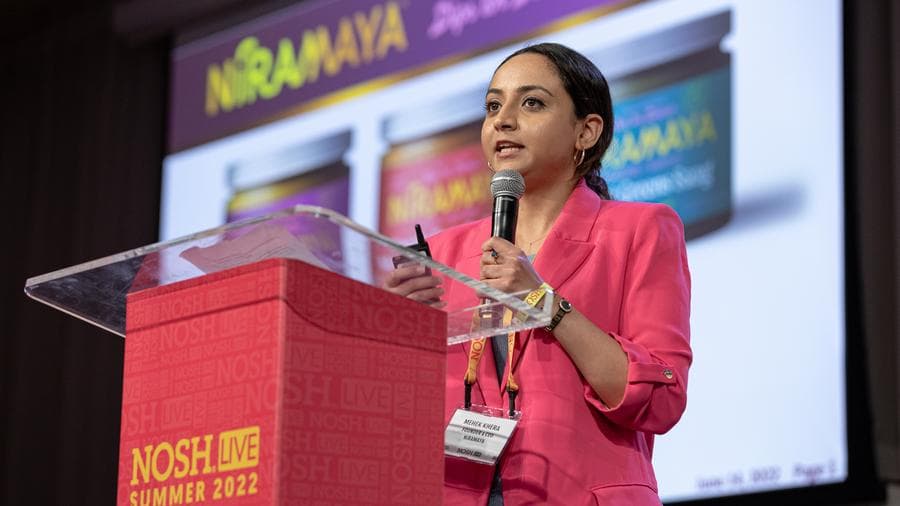
Speaker 1 [10:44] OK. All right, great stuff, great feedback, your presentation. Thank you. Yes, thank you. All right, our next finalist that will be presenting right now is Mahik Kara, who is the founder and CEO of Neremyah Foods. Come on up. If your microphones, please keep an eye on your timer.
Speaker 3 [11:18] Hi everyone, I'm the founder and CEO of Niramaya Foods. My name is Mehek Kera, and I'm here today to introduce you to our first line of products which we call dips for Dinner that you see on the screen right there. We make nutrient-dense plant-based, Indian inspired dips for dinner. Our consumers can use to just dip, you know, heat and eat or build nutrient dense dinners with them by just pairing them with carbohydrates of their choice so that they can really build dinners that are based on their dietary preference, are assembly in nature, and are quick. So I moved to the United States when I was 24 years old and I literally fought with my mom to move 8500 miles away to do my MBA. She was not ready for it, but I was, and I saw dreams with wide eyes. When I was doing my MBA, I got a job with Walmart e-commerce. And I loved my job. I learned so much, but I also led a very stressful life to the point where there were so many headwinds in my life at that point, ranging from visa, immigration issues, where where I work and how many hours I work was not governed by me but the US government. And so standing here today to be able to present something that I've built from the ground up is a huge privilege for me, and I'm grateful for it. One day when I was traveling to LA on a work trip, I passed out, and that day I knew that I was stressed, and that stress was causing me to become more sick every day. And so I realized at that point that that was not just me. A vast variety of the US population is stressed today, and they're sick because of it. Either their existing health conditions are getting accentuated or new ones are getting created. And they rarely have time to build, you know, good nourishing meals for themselves, and so they look for quick options that are often empty calories, right, so they are left overfed and undernourished, which is again pointing towards a bigger pandemic of diseases which is obesity, diabetes, chronic ailments that have been here for decades but are increasing every day. But they don't have to do that. See, I grew up on a plant-based diet. My mom made meals for me 3 times a day because North Indian cuisine is inherently very plant-forward, so it was a gift of culture. It was not a trend for me. Our products as they sit today are made with real plants. The nutrition, density, and the protein all comes from nature's bounty and not a lab. We make these blends with healing herbs like turmeric, cumin, caraway that are good for digestion, but also other boosting herbs like moringa, ashwagandha, spirulina, you know, reshi mushrooms, and no one can tell that these exist in these plants given the decadent nature and the buttery consistency of these dips. Niramaya actually sits at a very unique intersection, and we continue to plan to build on this intersection. So when I started studying about the quick dips and the convenient foods category, it was a very growing category with the plant-based section being at $83 million based on a Mintel report and Good Food Institute. And people were really looking forward to options that were nutrient dense, were different in flavors, and were not completely moving away from the snacking category, but were indulging into fuller, filler dinners but still being convenient so that they could have it on the go or when they want to have it slow. So we started thinking about how we can do it using the vehicle of Indian cuisine because I had been eating plant-based, plant-forward dinners all my life. So we innovated in these two categories to actually serve a bigger need, which is the consumers' need today to build plant-forward meals, and many people had been. Doing that by using terms like curry bowls and curry dinners, but then we realized that curry is an umbrella term that actually shields the West from the intricacies of the East, where most of the products that we find are American versions of British adaptations of Indian food, and we really wanted to hone in to the actual flavors that I grew up eating and not mellow them down or make them easier to read or pronounce. So we build on those two categories to actually serve that bigger need which is a $500 million market and growing given the penetration of the want to eat plant forward meals being at 63% on an average American household today. So it was very important for us to do some beta testing and find out who our target customer is so that we can strategically plan to grow our business. I found that after speaking with so many folks and reading thousands of reviews online about different companies, the consumer that we were actually looking for was the wellness whisperer of the family, that person in your family that encourages you to eat healthier, to look for cleaner labels, to buy better food, and to go for wellness goals.
Speaker 1 [16:32] Well done, and just wanted to say, uh, it's an honor to have you on stage, and it's so great to see what you've accomplished as an immigrant. Thank you so much. I appreciate it. Thank you. Mr Um, Ibraheem, let's start with you. Um, you know, I think dips for dinner, uh is an interesting way to position this brand. I mean, what do you think about that use case or the suggested use case for this product?
Marilyn Yang [16:57] Yeah, first of all, I'll say I love the packaging. I love the flavor. We had a chance to taste two of them backstage, so the product is great. I think you should hone in on the dip side, which is what I think you're trying to do, right, of like a unique savory, more filling dip. I actually think calling it a dip for dinner is slightly confusing because it then makes you want to use it as like a cooking sauce. So when I was tasting it, the thing that felt unique and different to me is like more of like a hummus usage, right, where it's like It feels filling. It has that savory element. It feels like more than just a dip, um, but I do think the risk you need to watch out for is like will people see it as a cooking sauce based on the flavor profiles, the jar that it's in, where you might end up in store, and so I'd be really careful about where you want to position it and then make sure you kind of build the rest of the messaging around that.
Speaker 1 [17:42] It makes sense. Thank you Carol. Earlier in the sampling room you dipped into some Niramaya, seemed to be pretty happy with the taste. I, I mean, I think we heard from Whole Foods that global flavor profiles, things that make meals easy, um, you know, are both trends. Uh, I certainly love them. I think, uh, you know, to the point about dips, like if you are going to go that dip route, do you want to package it in like the traditional hummus container? Um, if you want to go the cooking sauce way, I feel like it needs that like taller container or pouch sort of format. Um, but thinking about like slotting fees and turns and things like what you're expected for both of those categories would be really important.
Speaker 3 [18:22] Absolutely. Uh, so the idea behind branding them as dips for dinner was to really make it accessible for the larger American audience because the data showed us that Indian foods lose dollars to say Mexican foods, other ethnic foods, Asian foods, and that's been going on despite the popularity of the South Asian cuisine. And so we wanted to make it as accessible and easy for the consumer to be able to be creative with it and not shy away from buying the sauce just because they had alien names on them. So I completely agree with where you're going, but it's a trial and we're up for it.
Speaker 1 [18:59] We saw concentric circles. We saw plant-based meals. We saw Indian food. We saw dips, Niramaya meeting in the middle of all of it. Mia, what do you think about that sort of positioning, that way of considering a business strategy for this brand? I think I,
Marilyn Yang [19:13] I
Speaker 1 [19:13] agree with what's been said here.
Marilyn Yang [19:14] I think the dips is misleading.
Speaker 1 [19:16] Um, first of all, the product tastes amazing. Both, both of the flavors that we tried were awesome.
Marilyn Yang [19:22] It was interesting because the sog did not say spicy on it, but the masala did, and I found that the sog was way spicier. So just something to note. Um, and then I think as far as the use case, I really do feel for me, I feel as though it is more of a sauce type of product that I could see doing like with stir fried veggies, um, and your, your serving also kind of represents that because it's a 1/2 a cup versus in dips. It's normally in the tablespoon measurements. So I think that is one thing that I would just kind of either, you know, lean into either a dip or a sauce, and you know, but um, but they're amazing and I love your packaging too.
Speaker 3 [19:59] Thank you. I really appreciate it.
Speaker 1 [20:01] Yeah, from a merchandizing standpoint, Holly, I mean, do you think this is something that could easily fit into retail shelves or retail stores? I, I think everything we've all said leads to some people might be confused where to put it, right, obviously, um, and to go over the conversation we're saying, it does, it was thick and really dense, like a dip, and if it was used, I thought it would be great with chick chicken. I know it's. that I would love to combine it with other ingredients, but then it seemed really thick for that. So if people were to cook with it, we thought it could be in a smaller container, but I can't recall. Is it shelf stable or refrigerated?
Speaker 3 [20:36] It has a shelf life of 3 years,
Speaker 1 [20:39] and that's fantastic because that might open up the ability to place it in certain areas, but I agree with everything we thought was so delicious. It could be confusing to some.
Speaker 3 [20:47] No, that's great feedback. Thank you.
Speaker 1 [20:49] From a nutrition standpoint, did you see what you wanted to see out of the front of the pack, uh, on Niramaya? Um, I remember thinking I really liked the packaging. Well, like the packaging, but it might, um, might be part of it, right, is explanation as to how you use it. There might have been a lot on the back if I remember correctly. So there might be a slight way to even clean up the packaging to drive home the main message when, when you pick, might have to pick a lane. Absolutely, yeah,
Speaker 3 [21:14] so, uh, with the first round of the, so the products that you all sampled were last week, so it's the first actual production run that you guys tasted. So it's definitely a trial and definitely something that the consumer comes up and tells us and then we hone into the messaging and get ready for retail. So our primary channels would be DTC and e-commerce for now and then going into retail, select partners, strategic partnerships and all of that good stuff.
Speaker 1 [21:40] Fantastic. Well done. Thank you so much. All right. Our final presenter of Pitch Slam 12, Nash Pitch Slam 12 is Kyle Rood, who is the co-founder of Start Right Foods. Kyle, come on up.
Speaker 4 [22:01] Sounds good. Thank you, Ray, and thank you everyone here for giving me the opportunity to present today. I'm very excited to be at the Natural, organic, Sustainable and Healthy Food show because I'm talking about a product that lives in an aisle that you guys might not be well traveling these days, and for good reason. But before I convince you to go down the frozen breakfast aisle, I want to give you a story, a story of how we got into the frozen breakfast aisle. So my co-founder and I got fresh out of college. We're athletes, and thought we need to solve the problem of getting something easy to eat in the morning that's filling and doesn't leave you feeling pretty terrible in a while. So we started Start Right back in 2015 and launched a convenient high protein breakfast and started with protein waffles. Here we are at our very first demo at Hy-Vee in Columbia, Missouri, armed with our 3 waffle irons and Clint's pickup truck for distribution, knowing absolutely nothing about what we were getting ourselves into. And yeah, we learned a lot. In the 3 years, we started growing into a couple of different chains and learned that finding co-manufacturing from our brand was actually going to be way more of a challenge than we thought. Turns out waffles are hard to make, especially those that are high in protein, gluten-free, and don't look like that other waffle brand. Anyway, we learned a lot, so we decided, let's build our own custom waffle manufacturing facility. So we did that in 2018. But by the time we had that up and running, it was actually a bit too late. There was a lot of frozen waffles saturating the market that were high in protein, and a lot of times it was. Into the thing as a brand. So we decided to do what any nimble entrepreneurs are. We sort of pivoted. We reconfigured our machinery to be able to also make these waffle slider breakfast sandwiches, and we really leaned into this as an even more convenient on the go breakfast option. And so we launched in Sprouts in 2020 with these two flavors, and we're really excited, getting kicked off. Then it was 2020, and, uh, things kind of ground to a halt pretty quickly. But we were able to say let's focus on what does it look like at the end of this tunnel, so we really reformulated our product, we refreshed our branding to really stand out in the sea of red and yellows that are in the case, and we reinvested in our machinery. We got more efficient. We focused on making sure that we could do this even in supply chain issues that we possibly could be facing so that way we'd be ready to grow. And we really have been growing lately. In the past 9 months we went from those 400-ish Sprouts chains plus our local to now we're in about 1700 stores and we're ranging from the Walmart mass markets of the world with conventional consumers all the way to Sprouts and Wegmans and a couple of other retailers in between. And what we're really focused on is using our capacity to make sure we stay in stock. We have a 98% in-store stock rate. That's what we're really focused on selling to the buyers. We didn't overextend our brand. But right now we have a waffle machine headed in and it should be set up and running by next week, so we're really excited to keep growing. But we're definitely in a right time, right place kind of moment with our brand and where we're at, but it wouldn't mean anything unless we had the right product to go along with it. So we're from the Midwest, St. Louis, Missouri, and we're really focused on that health-curious consumer that's wanting to do better, wanting to eat healthier. We want to give them that first step. So our packaging conveys a familiar and comfortable product. It's deliciously appealing, and it's at a competitive price point for the set. Once the product is in their hands, they're able to taste it and say, Oh, these are real clean ingredients. It does have a standout flavor, and every time I eat this, I'm full till lunch. It's an excellent source of protein. That's our key focus on. And what we offer is 4 different varieties that have a wide range of consumer interests. We have our indulgent chicken and waffles that can be an anytime meal, classic sausage and egg, and then we have the healthier conscious ones, the turkey sausage and egg white, and just recently launched a plant-based sausage with egg. That way we get the consumers who are trying to make that first step, which leads to better nutritional decisions throughout the entire day, all the way to those who are meal prepping for every meal but want to have the ability to fill those holes, especially in early mornings. So I want to show you guys something. This is not breakfast. Public service announcement. Coffee is not breakfast. You guys really need to be eating something in the morning, and it's so hard. Entrepreneurs, business professionals, especially moms with kids, getting everybody to eat something that actually enjoys and fills you up throughout the day, that's our goal. We want to be that platform to deliver those convenient, high protein breakfasts at that morning crunch point where it's most hectic. And so when you get down the freezer aisle, now that I've convinced you all to go down there, you'll see that we do have competition that's very similar as far as nutrition and flavor profile, but we see two promises on the packaging in the aisle. First promise is this is going to be delicious. Second promise is this is extremely healthy for you. Rarely do we see that promise that's followed through in both of those categories, and we really hope to be the one that also can say we're delicious and we have the nutrition to back it up. So I want to return to these two. These are my co-founder's daughters, and yes, they are staged. They were told to stand there for my social media account, but as Clint likes to say, this is a real morning. They really wanted to eat those sliders, and they kept badgering him to eat those sliders. Luckily he eventually said, Yeah, go ahead, eat the sliders. We're done with this. But what I want to say is what we want to do is make that easy family decision, make your morning meal easy, convenient, out the door, so that way with Start Right, breakfast is solved. Thank you guys.
Speaker 1 [27:11] Nicely done, slide up over here so our camera can catch you. Um, Carol, waffle sliders, um, what do you think of that descriptor for this type of product? It seems pretty intuitive, right? Yeah, I mean, I, I know you started by saying the frozen breakfast aisle is kind of slow, but I'll be honest, on my side, I feel like I'm getting pitched a frozen breakfast item at least once a month, and everyone says it's super hot and exciting. The only thing I'd say about the term sliders is that it feels like it's going to be small and it is really filling. So I don't know if that actually, like, and that's the messaging you just talked about. I'm not sure slider is the right word. Need to get to try these products and if so, you know, what do you think? We heard a lot of good things coming out of Kyle. I was like, maybe I should have had a few of these. Yeah, you know, I really enjoyed them. We had the chicken,
Marilyn Yang [28:00] was
Speaker 1 [28:00] it turkey or the turkey turkey sausage, turkey sausage with, yeah, and, um,
Marilyn Yang [28:04] it
Speaker 1 [28:04] was great. I think the consistency is awesome. It did taste,
Marilyn Yang [28:09] the waffle tasted like it just had a hint of sweetness.
Speaker 1 [28:12] Maybe it was my imagination because it was a waffle, but it was, it was the, the flavor and the taste is really on point. Holly, I, I think I asked this, uh, yesterday as well, but I mean, you know, the breakfast aisle, uh, it seems like there's some traction going on there, and it seems like, you know, start right could fit in pretty well, but that's just my opinion. What do you think of that opportunity? I agree. I, I wanna add to it. We thought it was delicious. What I really liked about it was, um. You know, a Belgian waffle, a real Belgian waffle has like sugar in it, you know, those little cubes and or maple syrup if you go to McDonald's, let's say. So I also love that it didn't have a strong taste either way. So I think about your chicken and waffle. I could add buffalo to that, which is big in Cincinnati for everyone who loves Taste of Belgium. Chicken waffles is great. One thing about the flavor I just want to note is I think a few of us said the turkey could use a little more flavor to it, but I love that you could taste each flavor as mild. I want to say, I say all that because I do think you have a great little cut out there for being healthy and providing the waffle with the egg white only in turkey. I, I think is really meaning a, a little gap that we have in the market for sure. And I also agree with the slider because I think that could uh turn someone like me away that I, I like uh something hefty, like the, one of the examples on there, and you, it's a really, it's a good size. So perhaps, uh. The thought of that word could really help as well, but what I would say is especially great, not only the flavor, but your packaging. You nailed it, that you could merchandise it either way. You go along, you go up depending on the shelf and the needs. So I think that was really great. The image is great and the package orientation options are really great too.
Speaker 4 [29:51] Thank you for all of that. Yeah, and with the waffle sliders we debated that for the longest time. Do we say breakfast sandwich? Do we say waffle sliders, and it was really a how do we stand out moment, but we,
Speaker 1 [30:00] it's good feedback. Can I say one thing just to add on to Holly's is I was really impressed with your price point as well, and I think that's a key lesson for a lot of people in the audience is you're thinking about the every consumer and not just a premium consumer. So when you're talking about the frozen aisle and really fitting in, to me, that is such a key part of the product. One more add to that, I would reconsider line pricing to have your one skewed. Different that internally just causes challenges for some retailers and promotional opportunities. If there's an opportunity to do that differently, it
Speaker 4 [30:33] might be good. We were line price until we launched the Plant-based and that became a big challenge, but you're right, having our own manufacturing, as much of a pain and challenge as it was, has allowed us to be a little bit more efficient and get the product into the right places at the right price point, and we really have been growing on that. We're able to deliver that price point.
Speaker 1 [30:51] Ibrahim, um, coffee is not for breakfast. I 100% agree with that, but to start right, articulate why it belongs in your hands for breakfast every morning.
Marilyn Yang [31:02] I think so. I think first of all, the, the food photography is great. I think the packaging is great, so kudos to the team that worked on it. Um, I do have one question on the, on around the gluten-free and why you chose that as like the core attribute on the waffle side.
Speaker 4 [31:15] Yeah, and that was a vestige from the original launch of the protein waffles. We found a recipe that had a gluten-free recipe that just tasted better and performed better in a frozen category we're reheating that becomes very challenging to get that crisp waffle that still is not dry and still tastes pretty good. And so it carried alongside, and we did have Gluten-free large on our packaging when we started, we've moved it a little bit less, uh, visible. I think someone in the audience or some speaker today said if you promote gluten-free, you're really limiting your audience. So the fact that it is gluten-free does help us get into more doors, but we don't actively advertise that it is. And one of our skews, chicken and waffles, is not gluten-free. So it's one of those things that
Marilyn Yang [31:55] you might even consider just putting it on the back because I do think you don't want to necessarily narrow that down, but the people that are looking for it will look for it. And and find it there, but I, I have the same concern or question regarding gluten-free. I know I have one second, but I might, I might take a slightly stronger approach and say you could either get rid of gluten-free or you could go for a higher protein, lower carb waffle. It seems like it's just sitting in between two options right now. If you think it's that unimportant that you want to deemphasize and maybe even move it off the front panel, I then question, do you need it and could you get even better price points without it,
Speaker 1 [32:28] so.
Marilyn Yang [32:29] That's my, that's my 2 cents. It's a great, great product and positioning.
Speaker 1 [32:32] I appreciate that. Fantastic. Thank you so much, Kyle. All right.
Related Videos
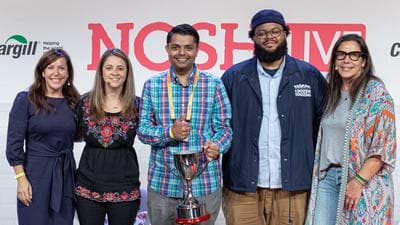
Pitch Slam 12 - Winner Announcement
The competition features 11 of the hottest startups in packaged food, all creating innovative products spanning a wide range of categories including confection, prepared meals, and more.