Search across the BevNET CPG Media network including BevNET, Nosh, Brewbound, Taste Radio, Nombase and CPG Jobs.
Pitch Slam Finals - Part I
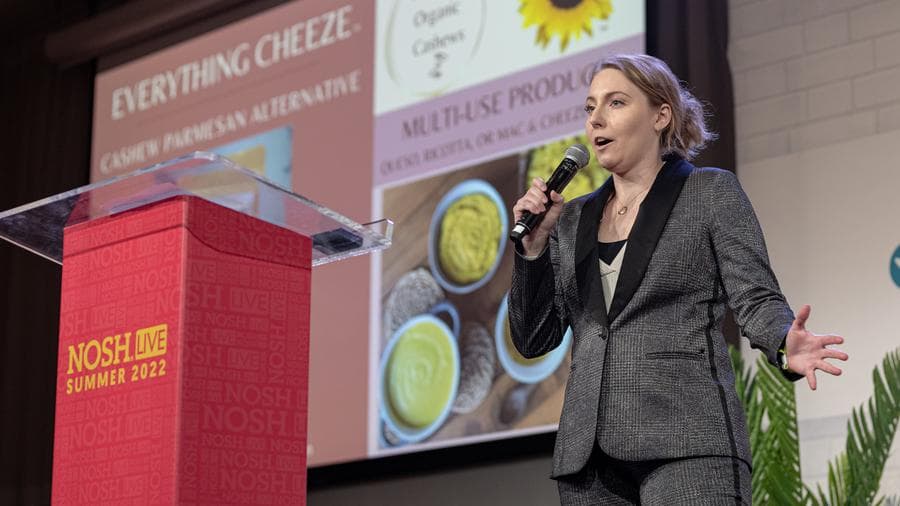
Finalist:
Ibraheem Basir:
Ibraheem Basir is the founder and CEO of A Dozen Cousins, a natural food brand that makes convenient meals and side dishes inspired by traditional Creole, Caribbean and Latin American recipes. The brand is inspired by his childhood growing up in the culinary melting pot of Brooklyn and is named after his daughter and her 11 cousins. Prior to launching A Dozen Cousins, Ibraheem obtained his MBA from the Wharton School of Business and served as a Marketing Manager on a number of natural food brands including Larabar and Annie's Organic.
Holly Adrien:
Holly Adrien is the Natural and Organic Strategy and Innovation Manager for The Kroger Co, the nation’s largest traditional grocer. With a deep background in customer insights, analytics and merchandising, Holly leads development of The Kroger Co’s strategic focus for natural and organic, and is responsible for execution of top activations to meet customer’s needs in natural and organic across the total store. In her role, she has the privilege of collaborating with all Kroger banners and both established and emerging brands to continuously innovate in terms of new items, promotions, and communication to customers. Her passion for natural products started as an opportunity to improve health and performance in athletics, then blossomed when she was responsible for the Baby department for Kroger and recognized the opportunity that existed to provide the best to The Kroger Co. customers!
Mia Medina:
Growing up in Mill Valley, CA, where natural foods were a staple long before it was mainstream, I’ve always been drawn to natural products, local fresh foods, and exploring new and different flavors. I’m especially fortunate that my passion for clean healthy food has not only been a lifestyle, but also the core of my career in the Natural Products industry. While spending the last 20 years as a wife and a mother to our 5 amazing children, I have also had the opportunity to grow with and navigate through the CPG industry, with a primary focus on the Natural Channel. I’ve worked on the Broker side of the business with Acosta/NS Sales, the manufacturer side with Coca-Cola/Odwalla, and the distribution side where my husband and I expanded our local distribution company nationally, to become Whole Foods Market’s #1 DSD distributor in 8 of their 11 regions. It was here, I realized, that helping small businesses launch, grow, and expand into multiple regions and retailers was not only a career, but a calling. Weaving together the unique threads of my early exposure to clean and healthy food, my personal resonance with the natural products industry, and a passion for helping start up brands grow and flourish in this space, it seemed time to start a consulting company and take that approach one step further; to help women owned brands and women entrepreneurs succeed in this male dominated space. Thus, Gather Brands was born!
Transcript
Note: Transcripts are automatically generated and may contain inaccuracies and spelling errors.
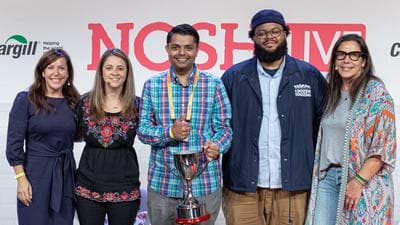
Ray Latif [00:14] Welcome back and thanks for joining us for the final round of Nosh Pitch, Nosh's Pitch Slam 12. I'm Ray Latif, the editor and producer of Bevnet's Taste Radio podcast, the number one podcast for the food and beverage industry. I love it. Uh, once again, the Nosh Pitch Slam gives early-stage and promising brands the opportunity to present their business plans and products to a panel of expert judges in the audience watching on our live stream. The winner of the two-day competition will receive a $10,000 ad package and join a shortlist of brands that have triumphed in the competition, including Beckon Ice Cream, Elite Sweets, Kolata, Savoly Creation Nation, and Bronx Hot Sauce. Out of the 12 semi-finalists presented yesterday, 6 have made it to the final round. Let's talk about the rules for the final round. Each of the 6 brands will have 5 minutes to present, receive 5 minutes of immediate feedback from the judging panel. We're splitting up the round into two parts, one this morning and one in the afternoon, beginning at 2:00 p.m. Eastern time. After all the brands have presented, the judges will convene and we'll announce the winner live at 3:30 p.m. Eastern time. We'll also, also have a short interview with the winner after the announcement on the Tas Radio studio. Just a note, there will be no audience voting in the final round. Let's introduce our esteemed judges, beginning with Holly Adrian, who is the natural and organic strategy and innovation Manager for the Kroger Company, the nation's largest traditional grocer. With a deep background in consumer insights, analytics, and merchandizing, Holly leads development of the Kroger Company's strategic focus for natural and organic and is responsible for execution of the top activations to meet customers' needs in natural and organic across the total store. Next we have Ibrahim Basir, who is the founder and CEO of A Dozen Cousins, a natural food brand that makes convenient meals and side dishes inspired by traditional Creole, Caribbean, and Latin American recipes. Prior to launching a dozen Cousins, Ibrahim obtained his MBA from the Wharton School of Business and served as a marketing manager on a number of natural food brands, including Larabar and Annie's Organic. Next we have Carol Ortenberg, who is the editor of Nosh. Naj stands for Natural Healthy, Sustainable, and Organic Food Companies. I don't know why I have that in my notes. Carol previously worked and consulted for several consumer goods companies, many within the food space. She was also on the marketing team for Whole Foods Market in the North Atlantic region. And finally, we have Mia Medina, who is the founder and CEO of Gather Brands, a full-service sales consulting agency focusing on women-owned and women-run companies in the CPG industry. She has extensive experience in the food and beverage industries, and her career includes roles in manufacturing, brokerage, and distribution. I'm very excited to hear from all of our judges, and I'm excited to hear from our first presenter today, that's Ned Momtora, the founder and pastry chef of Verwai. Come on up. So, once again, please keep an eye on your timer.
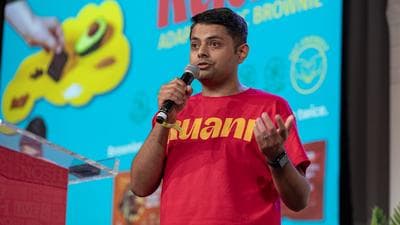
Speaker 2 [03:26] Hi, everyone. Uh, anyone who doesn't know me from yesterday, I'll just let you know, I'm a pastry chef, and uh I'm the founder of Roani, and we are on a mission of creating uh better for you desserts. And high quality scrumptious desserts that are made with high quality ingredients that are joy to your taste buds while focusing on gut health. I'm so sorry about that. We are here to create a taste revolution, by the way. Um. So I've been a pastry chef for the better part of a decade now. I've worked across several different continents, different locations. I've worked on cruise ships, fine dining restaurants. I worked in a lot of different organizations to hone my pastry skills. I've made from the smallest of the pettifores to the biggest of the wedding cakes, and that wedding cake is, by the way, made by me for my wedding, and the flowers are real, just for your information. So I have deep knowledge of pastry and so I wanted to take it a step further from here. What you, what does Ruani mean, you might ask. So Ruani literally means from the soul, and it's actually me and my wife's name. You have the wedding picture there. It's me and my wife on the wedding day, and I just wanted to have both of us on the brand itself because we both have contributed towards, you know, what I am today and so I just wanted to have like a symbolic gesture towards that. The pain points and the biggest inspiration for me was over the years I've consumed so much of sugar and junk in my pastry career as being part of Pastry Chef, the perks of it, I started developing this gut issue. I used to get skin reactions any time I ate something with a high amount of sugar. I would get 90 seconds of bliss and 90 minutes of excruciating pain. So I wanted to address that, you know, headaches, skin reactions, bloated stomach. So the challenge and the concept was to create an irresistible gut-friendly dessert that was yummy and good for your tummy. Make it adaptogenic by adding ashwagandha, which is an ancient Ayurvedic rejuvenator that helps release stress for anyone who doesn't know that, and also which should be free from dairy, refined sugar, gluten, grain, soy, and should be non-GMO. So this was the premise that I built my R&D for the product. Building the product, I had 4 main cornerstones in my head when I wanted to create it. It was uncompromising quality, clean, simple, organic ingredients catering to the conscious consumers and creating gut-healthy deliciousness in every single bite. So I'm proud to present the 1st 3 offerings from Dhani. Decadent coffee, decadent coffee, dashing dark chocolate, and delightful peanut butter. We are actively bridging the gap between healthy eating and sinful snacking. Just for comparison's sake, the brownies that we've been all eating since our childhood, we know what all goes inside. We wanted to change something in that. We replaced all the bad ingredients with the good ones, so we use low glycemic coconut sugar, non-GMO almond flour, ashwagandha for relaxation, hyalaic acid, avocado oil, and does not have any gluten or no added junk. Who are our core consumers? Anyone who reads the package, who wants to know what they're putting into their system, any active family, it's good for your friends, families, kids, elders, everyone, and the gen next who's always looking for that next big thing, you know, something to cheer on, to root for. Our business model is pretty simple. We're online D2C. We just recently launched a month back. We're into other online retailers. We are also distributing via a regional distributor in the DMV area and we are also trying to make a mark into the brick and mortar stores slowly. Along with all this, we also wanted to keep in mind that we give something back, so we always Whenever I wanted to create something of my own, I thought, you know, what if I could make a mark by doing something for the betterment. So I reached out to the sources. So we are in direct contact with farmers in the Southeast Asian continent and we are trying to source all our ingredients from there and build a healthy relationship, trying to get them a better fair trade. We're into, you know, online. We're into union kitchen stores. We're also part of their accelerator program. We would love to get into these specialty stores and for 2023 we want to go into rainforest. Our roadmap here looks like this. We want to get investment. We want to get more flavors in. We want to get a blondie and replace eggs. Our brownies are so nice you'll want them twice.
Ray Latif [08:34] I, I you just step up here to these. There you go, perfect. Um, well, yesterday, our semi-final round judges were raving about the flavor of these products. Um, Mia, what's your thoughts?
Speaker 3 [08:46] Uh, they taste awesome. I, I will say they were really, really delicious.
Ray Latif [08:50] Yeah, and Carol, also, you know, a point that came up yesterday was about this idea of more and more better for you sweets, functional sweets coming to market. I think about Elite Suites, which won this competition, uh, last year or a couple of years ago. Um, how do you think Ronnie kind of fits into that growing interest? Um, you know, you mentioned elite sweets. I think one of the interesting things is that you say, you know, low sugar, and for a lot of consumers, like an elite sweets consumer, they associate that with alt sugars and the compromises you have to make on taste in an alt sugar. So I think it's hard to sometimes explain, yes, we're low sugar, but we're not like Xylitol or monk fruit. And the other thing too is that You know, your packaging is very adult, and when you showed the Little Debbie bars, I was sort of thinking like, is there a way to make it more fun because a lot of these other sweets are kind of trying to have more playfulness in them. Ibrahim, uh, we talked about, uh, how to, you know, create a premium tier for categories that people know well, uh, a lot about or are pretty familiar to most people, um, you know, you've done that. How do you think Roni kind of has, does, does Ruwai have the ability to do that as well?
Speaker 4 [10:01] Yeah, for sure. First of all, I think the product was great, so kudos to you for the development work. I think it's delicious. I think building on something that that she just mentioned. I would just play with the positioning a little bit so seeing like the full family and the comparison to Little Debbie actually doesn't feel like the sweet spot of this to me, right? Like I think playing with flavors and going after that adult premium consumer more wholeheartedly feels like the right move and I know you had a few consumers on the on the page, but to answer your question, I think that the key to kind of developing a premium tier would be to make sure you're going after consumers who are willing to pay and and see the value in it.
Ray Latif [10:34] Sure, and Holly, you know, I think there was a question yesterday about where these fit into the store. Um, you know, what are your thoughts? How does this, how does this product, does it fit into stores like Kroger's? Yeah, um, absolutely, that I don't think it's only, I mean, I think it's fantastic, great mention. You start. What a great area to start. I think it's, uh, not limited to that. Obviously we meet Kroger meets the needs of various shoppers, including natural organic. That's why I'm here. But, um, can I ask a question related to that for in-store placement? Do you need to be refrigerated?
Speaker 2 [11:03] Yes and no, both, so it's better refrigerated, but it is shelf stable for 45
Ray Latif [11:08] days, right? OK. Yeah, and Mia, you know, I think that's, that's one of those questions is about like, well how do you get into stores most efficiently? How do you create an easier sell for that retail buyer? Did you hear what you wanted to hear? I mean, let's say it puts you in the retail buyer's shoes. Did you hear what you would want to typically hear from the presentation today?
Speaker 3 [11:29] Yeah, I think the concept is there. I do see where, you know, there is a niche for that, for the for the gut healthy piece of it. I think one of the questions that I had was around sort of listing the functionality. You have ashwagandha listed, but not everybody really necessarily knows what that is or what what is going to make it gut healthy. The other concern that I had was when we spoke actually before, so I know that the SRP on this is going to be around that 449, which I think it might be just a bit high. So those were, you know, that was some of my, my questions around that.
Ray Latif [12:02] Can I add something to that as well? I'm sorry. Did you want to address that? OK. Just, you know, I think hearing about Kroger as well as selling, you have to think about your packaging and where it's going to be on the shelf, and right now you're kind of wide, whereas a lot of the other refrigerated bars are vertical and a lot skinnier. And so a retailer is going to have to say, well, I'm going to give you more. Space on shelves, so they might just give you like one facing. So you kind of need to think about that as well and it's a great point. It seemed like you had room in your packaging and what looks nice, it definitely seems like it could be leaner or positioned differently. One more comment along with that is we love the call you made. I think there can be some concerns at times if you use the word gut health or gut friendly and what it really means, and it seemed like as you explained it. Clean or the challenges you had with sugar, but to others being gut friendly or gut health might mean prebiotics, probiotics. So I think there could be some terminology to think of on your packaging that could help explain you even further. Um, Ibrahim, we have about 30 seconds left, you know, uh, we heard about the story behind the brand, and, you know, telling the story is really, really important. Um, do you think it has, Veroni has like the foundations to tell that story really effectively and in a way that's going to move consumers to buy the product?
Speaker 4 [13:15] Um, for sure, I thought it was really cool to hear the story about you and your wife and, um, kind of your own experience. I think there's just something interesting about a pastry chef who's trying to avoid sugar, right? And so like I think bringing that story forward even more, I think would be compelling.
Speaker 2 [13:29] Sure, yeah, that was, that was my main point, like trying to avoid sugar and trying to get rid of gluten, the main two things.
Ray Latif [13:36] Fantastic. We're out of time. Well done. Thank you so much. Thank you. All right, up next on the stage will be Grace Middle and Eli Bank, the co-founders of Absurd Snacks. Come on up. You have 2 microphones, please just keep it on your timer.
Speaker 3 [14:11] Good morning everyone. Thank you so much for the opportunity to be here. We're so excited. This is why we do what we do. But you know what's absurd? Tell me, Eli. 1 in 4 American families have a family member with one of the top 8 common food allergies. You know what's even crazier, Eli? What we were undergrads at the University of Richmond when we found a really great solution. So before I tell you what we do, I'd like to start with how we got here. We were lucky enough to be part of an inaugural program called Benchtop Innovations at the University of Richmond, which enabled us to create a packaged food product in just 6 months. The inspiration for the product came from a fellow student. His name is Dan. He has a severe peanut and tree nut allergy. So what are absurd snacks? We are an allergy friendly snack company that creates unique, delicious, and accessible snacks for people with common food allergies. We are allergy friendly. We have the top 9 allergens. We're also gut friendly as both of our mixes are only sweetened with pure maple syrup, and we are vegan as we are powered by plant protein. So we use simple yet striking ingredients. Chickpeas, fava beans, and green peas are the stars of our show, and we've coupled them with a seed-based granola consisting of hemp seeds, flax seeds, sunflower seeds, and even sprouted quinoa. We have our two flavors maple, cinnamon, chocolate, just sweetened with pure maple syrup, so they're just subtly sweet, making them a super versatile snack. So this is Grace. I'm Eli, and our third partner Maeve, who unfortunately couldn't be here today, are so excited for the opportunity to go full time on Absurd Snacks. We want to give a huge shout out to the local Richmond community that's been so supportive, our mentors and network that have helped us get to where we are today, as well as the CPG F space as a whole for being so generous with their time and providing us with very key insights that have helped us get to where we are. So since our launch at the end of March, we've done about $36,000 in gross revenue with a 28% blended margin. Uh, we started in independent retailers, many of which are focused on local and healthy food options. Uh, we also sell online D2C on our website, and, uh, catch us at the farmers' markets on weekends, interacting with our customers. The community engagement has been really important in helping us turn cases. We also experimented with, with B2B options, selling into corporate offices uh for them to stock their stack, stock their snack shelves. Uh, in the stores, our prices are about 999 cents for a 10 ounce pouch, uh, and 399 cents for our smaller 4 ounce pouch. And online, you could purchase for, uh, it's uh, we sell in packs of 210 ounce pouches for $20.99 with shipping included. So these are the people that we're serving. Our target customers are young to middle aged adults who prioritize the products they put into their body. They also enjoy outdoor sports, and they also identify with having one or more of the common top 9 allergies found in the US, particularly nut allergies and gluten allergies. Our fans have found really creative ways to enjoy absurd snacks, of course, by the handful as a traditional trail mix, but also on top of their yogurt with fruit on a smoothie bowl in a cereal, as well as a crunchy topping on top of their salad. We've also been able to leverage this as part of our marketing tactics. So we're still experimenting with our go to market strategy, and we continue to optimize our efforts to where conversions are most efficient. We are going to continue to maintain and grow our relationships with independent local grocers, keep engagement as high as possible to maintain those repeat sales, and we hope in the future to mimic the strategy in lookalike markets all across the United States to grow our footprint but maintain that small brand feel. In order to achieve this, we are creating meaningful relationships with new distribution partners, uh, while leaving plenty of white space for growth. Over the next 8 to 12 months, we plan on continuing some customer discovery to learn more about the needs and desires of our target customer, uh, test and experiment with new recipes as well as iterate on our current ones. We are giving our brand a little refresh and helping it be more mature, as well as fostering this really engaging community around our brand. To wrap up, we have big plans for the next 3 to 5 years with achieving a $10 million run rate, being top 25% in our category, and achieving a 40% target margin. Um, of course, we'll maintain our independent retailer relationships and continue to grow in that respect, but to be more accessible, we'd love to sign on with a new regional retailer and do a nationwide rollout in the next 3 to 5 years. Thank you for your time and really appreciate your, your insights today.
Ray Latif [19:08] Nicely done.
Speaker 3 [19:09] Thank you.
Ray Latif [19:10] Uh, yeah, you can, you can slide up over here. There you go. Um, so I thought that was a great presentation, but Holly, you know, uh, what do you think of it? Did you see anything in there that you really liked, or was there anything there, in there, in there that was a little absurd? Nothing, nothing too absurd. It was great. Um, we all thought that fla flavor was great too. Um, strong flavors, we would say could be a little stronger. I think we got a, a great flavor in the cluster in the chocolate and love the cluster. And then, um, otherwise it was very heavy chickpea flavor, but really liked the flavors and thought the packaging was great as a start to the conversation. Let's stick with the packaging, Ibrahim. You know, in terms of the label hierarchy and what you saw from the slides and what you saw when you were doing the sampling, what do you think of absurd snacks packaging?
Speaker 4 [19:55] Yeah, I have two comments and actually a question for you guys. So first of all, I love the packaging. I think it's fun. It's kind of playful and colorful, and so that that part resonated with me. What I do think might be missing from the packaging currently is kind of the key point of difference versus traditional trail mix. So you're kind of left to assume, is it protein? Is it lower sugar? Is it you know, lower carbs, and you guys. Mention that you actually have a brand refresh underway, so I'm just curious, what are you looking at in that process and what are the things you want to change?
Speaker 3 [20:22] Yeah, absolutely. We've been doing a ton of customer discovery. We have a survey with about 200 respondents and in-depth interviews with retailers and prospective and current customers, and you'd be surprised how many, how much time people spend in the grocery store. Ingredients and the greatest piece of feedback that we've gotten is our customers want to read the front of the label and not have to think twice about what's in it, especially our customers with gluten and nut allergies. So you know we want it to scream nut-free, allergen friendly from a mile away so our customers can make the easy conversion and go right to the checkout line. Very
Speaker 4 [20:54] cool. I think that's smart,
Ray Latif [20:56] yeah. And Carol, I mean, you know, the trail mix space, uh, it doesn't feel like there's a ton of innovation in that space, but what do you think about Absurd Snacks as sort of bringing new, newness and fun and playfulness to that category? Well, I think just to the packaging point, it does, it's really nice to have a strong point of view in a set that's like often very bulk or private label. However, I'm not actually sure if a. Trail mix is the right name for it because of the four ways you showed it, like they were, it seemed like it would also be easier to use, you know, trail mix is something you eat on the go. This might be a little difficult, um, unless you kind of did the, I've seen some long shot packs that you can kind of pour into your mouth. Otherwise, I just think it gets a little tricky to eat, um, and so maybe it should be somewhere else in the store. And Mia, I mean, you were asking about price point when we were in the sampling room. Yeah, we got the price point here. I mean, is that in line with where you think people are willing to spend that kind of spend for this kind of product? Yeah,
Speaker 3 [21:55] I mean it's obviously high on the high end of things. I think if you could get to like the 799 or but I also agree with what Carol was saying where I think it could be, you know, where is it going to live? Is it going to live with the granolas because I think Your use cases are more similar with that of a granola than a trail mix necessarily, so I think that's something to think about as well, um, but I'm glad to hear that you are doing a package refresh to call out because I think that was one of my things too is is just like you really want to make sure that that it's all about the, you know, allergy free because that will be your differentiator for when you have to be a little bit more of a premium price. Yeah, absolutely, thank you.
Ray Latif [22:32] Holly, um, you know, we saw a go to market strategy sort of outlined that they were still in development. Um, anything that you would recommend in terms of where that go to market strategy should be highlighted or focused? I thought that was great and I, I should have taken more notes of exactly what it said on that slide because it did. I think you, you hit an approach. I obviously think what you're doing with getting direct feedback is so important. And I think because you mentioned DTC, I think you could do more with getting people to write reviews, incentivize them to give you even more information from the buyers you work with to your customers. I would continue to get feedback so I can go a long way as well as, I mean, I know we mentioned the price point and getting under 999 could be good for the 10 ounce, but I actually thought the 399 was pretty strong for a 4 ounce. And so I think continue to look at what your peers are doing too to help influence where you might pivot as you as you go forward. Absolutely. I think Holly mentioned taste, but I can't remember if anyone else did. Ibrahim, did you mention the taste?
Speaker 4 [23:28] I didn't, but I thought it tasted very strong. I think Holly's point was a good one in that they're like the granola chunks, so I think that maybe they're quinoa, they tend to have the strongest flavor, and then the beans are just, they're lightly dusted, right? So I'll just think about, you know, whether that's through application or making those pieces even stronger in their flavor, right, so that the chocolate can carry through a full handful. That would probably be my only comment.
Ray Latif [23:50] Can I add something to Holly? So when you said with the go to market strategy, I think $10 million run rate and 45% margin, um, I think as you present this to investors and retailers, explaining how you think you're going to achieve those metrics is really important because those are impressive numbers. So if you want to seem like a sustainable business, you kind of need to, and I know, I know we're limited on time, but I would focus on that a little bit too. All right, great feedback, great presentation. Well done. Thank you. All right, I will, our final presenter for the morning session of the pitch slam is Allison Elliott, who's the CEO of Farmer Foodie Everything Cheese, and there she is. Come on up. one of them and your timer's right over there. This one right here. Yep.
Speaker 5 [24:50] Thank you so much for having me here today. Hello, everyone. My name is Ali, and I'm the founder and CEO of the Farmer Foodie, and I'm here to talk to you about my delicious everything cheese product. I'm a product and recipe developer, and I just recently graduated from Brandeis University with my MBA in Social Impact. I have industry experience as the education manager on an organic farm for nearly 4 years. My social media network has actively contributed and supported the development of everything cheese. I'm also a social entrepreneur. The farmer foodie values the triple bottom line people, planet, product and puts sustainability at the forefront of all business decisions. We aim to provide consumers with the most delicious, healthy, sustainable, convenient, multi-use plant-based dairy alternatives possible, like our delicious everything cheese product. Everything cheese is filling a need in the marketplace right now. All plant-based and even traditional animal-based cheeses have to be refrigerated. Well, everything cheese is primarily a plant-based cashew parmesan alternative. It's raw vegan, gluten-free, and soy-free, and it's shelf stable, inherently sustainable, and made with organic fair trade cashews. It's also a multi-use product. You can use it like a Parmesan cheese on your favorite dishes like pizza or pasta or risotto, or you can hydrate it with boiling water and blend it into a creamy umami, queso, ricotta, or mac and cheese sauce in 30 seconds. Across the board, everything cheese is the gold standard. In 1 tablespoon there's 2 g of protein and 1 g of fiber. It's made with 7 simple, healthy, delicious ingredients that are all recognizable to the consumer, and of course it's delicious. Right now, one pack of everything cheese is 7 ounces, and it's sold for $14. It has 1224, 25 servings of Parmesan in each bag. The opportunity is clear. In the United States, the plant-based cheese industry has increased from $190 million in 2019 to $270 million in 2020, which is a 42% increase in the plant-based cheese market, which the farmer foodie everything cheese is strategically positioned to take advantage of. In the United States, 6% of the consumers identify with a vegan diet. This number has actually increased by 500% since 2014. More than half of the United States population have been eating more plant-based foods. Dietary restrictions are people who, you know, have issues with lactose intolerance, which actually in 2018 was over a third of the United States population. Additionally, a third of the population also identify with special diets like vegan, soy-free, and gluten-free, all of which our product identifies. Right now, we're selling at 7 farmers' markets in the Massachusetts area, and we're strategically doing this so that we can market test our product, packaging, pricing, and really chat with the consumers about what they think about our product identity. As well as, of course, the flavor and branding. Right now, we're leveraging our social media network with the launch of Everything Cheese direct to consumer in recent months. We actually developed this idea in March, and um we're also planning on hitting the Uh, direct to consumer e-commerce Amazon channel as well. We'll be in some specialty stores, and in 2023, we're gonna introduce everything cheese to the natural channel, specialty channel, and then down the line in 2024, the grocery channel. We've received a lot of press to date. We've been on a lot of podcasts and articles, and we have a lot of support through winning the first place prize in the WeWork Plus Oatley Sustainability Changemakers pitch competition, which was in April, where we won a free private WeWork office for 1 year and mentorship from the top 7 Oatley executives for an entire year. Thank you so much. Everything cheese is filling the gap in the rapidly growing plant-based industry, and we hope to receive some similar positive feedback today.
Ray Latif [29:45] Well done. Uh, Mia, Ali talks about how the opportunity for plant-based cheese is clear and that Farmer Foodie is strategically positioned to meet that opportunity. Do you agree?
Speaker 3 [29:57] I, I will say, uh, yes, and that it's a growing category. I think that, um, and I know you heard this yesterday as well, but I think the, the use case for this is totally lost on the packaging. Um, it was not clear sort of how to make the certain things, but I didn't necessarily see it as a Parmesan alternative. That being said, it tasted amazing. I really, really enjoyed the flavor, so I think if you know, you could somehow make that more clear on the packaging of, you know, these are the things that you can do with it, and this is how you can do with it, how you can make that out of it.
Speaker 5 [30:32] Yeah, I really love that suggestion, and I'm actually currently working with my graphic designer, and we're creating a mockup of what a pre-printed on bag would look like, and we're going to be bringing that to the farmers' market, most likely 3 different versions, and market test that with our consumers so that we can really get a feel for what they want and what will succeed. In retail and going off of that, I think I might include queso, one of our best recipes, you know, an example, and then scan for more recipes. And right now we do have the images of the mac and cheese pizza with ricotta and chips and dips sort of to get consumers, you know, thinking about it,
Ray Latif [31:08] yeah. Um, Carol, as, uh, as consumers are willing to pay a premium price for plant-based cheese, I mean, do you think the pricing for Farmer Food is in line with that sort of premium pricing? I definitely think you need a product that drives more trial initially. That's like, that's a lot of Parmesan cheese alternative in a bag. And so I don't think you, you need to put that much in, um, as well as kind of like, what if I just want to try it one-off? I would almost wonder, could you do like a clip strip of little pouches in the pasta section for mac and cheese or clip strip it in. Um, chips and salsa, though I know everyone wants to clip strip, uh, products, so that's, that's hard to get into retail.
Speaker 5 [31:51] Yeah, that's a great idea. I'm actually thinking of moving away from the stand up craft bag into a cylinder shaker container so your mind automatically thinks, Oh, OK, this is a shelf stable parmesan. You can just simply shake it out on whatever you're eating, or you can hydrate it. Like I said, we'll have more straightforward messaging on that packaging. I really value your feedback and of course I'm going to take this into consideration. Hopefully with the nosh Live marketing money move forward with some of these things.
Ray Latif [32:18] I do think I do think also with the premium price point, just, um, you know, we just saw with Miyoko's they pulled out some of the products that they felt weren't clean label enough and couldn't carry that price point. So making sure you explain why you're more premium than some of the other options. Ibrahim, Ali talked a lot about versatility, the versatility of this type of product, and again, you know, your products represent. A versatile way of making dishes for entrees or side, uh, side dishes as well. It feels like that's a key point for this brand. Um, you know, how much do you need to highlight that? How much do consumers really care about that part of the business though?
Speaker 4 [32:57] Yeah, I think it's a really tricky balance right between giving people too many options so that they don't know what to do with it and giving them like, hey, here's the three things people love when they're trying the product and to that point I actually have two just general comments. Number one, I'm not sure why you're anchored so strongly on Parmesan. Like to me it doesn't, that's not the core taste or maybe The strongest use of it and so the thing that's most compelling to me is the wet applications that you can do. And so like I'd even play around with like if you mix this with almond milk or oat milk or people use this in lasagna like I try to play with where are the pain points for the, you know, vegan cheese market. It feels more like the melty wet. Applications are actually maybe stronger than the Parmesan ones, so that's just something to think about, right, of like how do you, how do you create a little sandbox for people to play in that's not too expensive.
Speaker 5 [33:44] Yeah, so we're going to be introducing 4 more skews. One's going to be a buffalo, a caua pepe, a truffle, and a taco. All of which, of course, cater to adult palates. We have received a lot of positive feedback about the products being mixed with milk for children actually who, you know, now they eat their vegetables because everything queso is the solution for that. Um, so yeah, I really appreciate what you're saying.
Ray Latif [34:06] Hall, you get the last word. I saw Kroger, Kroger's label, or logo on the, uh, last slide there. Um, do you think Allie's on the right track when it comes to her retail strategy? I think that's great because, one, I just want to say congratulations on winning that opportunity. I think that could be truly massive for you to have 7 brains of executives at Oly thinking. Um, that year should be a great easier time for everything that was said because again it has a great flavor, but there's all these questions that we had. Um, and if you're going that direction of other, other flavors and sustainability is so important, maybe it's not a shaker. I mean, I love the idea of maybe moving from a bag, but if you think about that profile and, and the usage of it and those great comments that you just made. That could even dictate is a glass jar that's or something else that is still in the right framework of where you want to be and maybe on a plastic shaker, uh, but I think, I think the direction you're going is great and I really think that team should be fantastic to help continue in a great direction.
Speaker 5 [35:02] Thank you so much. Yeah, we're committed to sustainability, hoping to become carbon neutral as soon as possible with, you know, sustainable business model and strategic choices along the way. So thank you
Ray Latif [35:12] all. Fantastic. Thank you. All right, that concludes, concludes part one of our pitch slam for today. We'll be back here at 2 p.m. The judges are going to exit the stage. We're back on here at 2 p.m. as I mentioned with the three final finalists. Um, until then, I'm going to turn over the stage for our next discussion. Thank you.
Related Videos
Pitch Slam 12 - Winner Announcement
The competition features 11 of the hottest startups in packaged food, all creating innovative products spanning a wide range of categories including confection, prepared meals, and more.