Search across the BevNET CPG Media network including BevNET, Nosh, Brewbound, Taste Radio, Nombase and CPG Jobs.
Elevator Talk NOSH Live Day 1 Winter 2023
Transcript
Note: Transcripts are automatically generated and may contain inaccuracies and spelling errors.
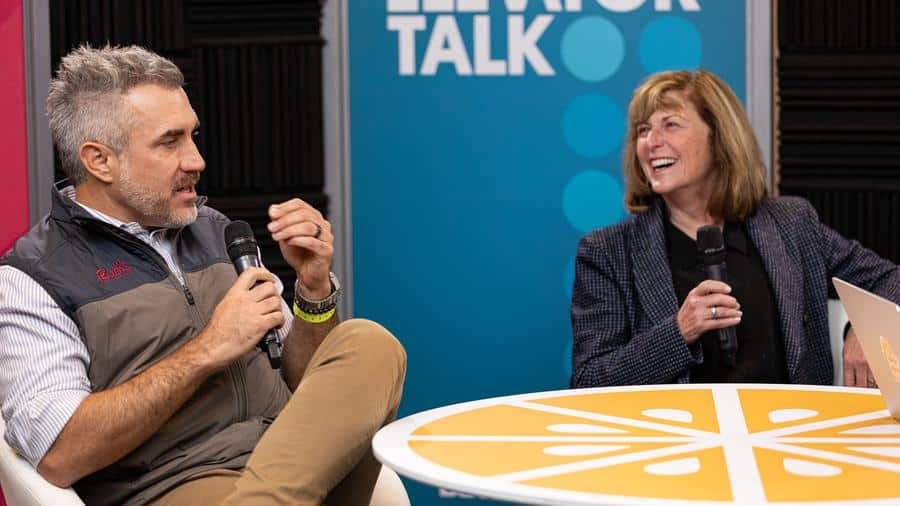
Ray Latif [00:13] Hey, folks, I'm Ray Latif, the editor and producer of Bevnet's Taste Radio podcast, and you're watching us here at Nosh Live Winter 2023 in Marina del Rey. And this is Elevator Talk Live, a live version of our series that profiles early-stage and disruptive brands from across the food and beverage industry. Seated to my right is the one and only Lee Keith, the co-founder of Perfect Snacks. And we have our very first entrepreneur for the afternoon. That's Scott Zimmerman, who's the Founder and CEO of Loly's Foods, Scott Lee, great to
Speaker 2 [00:41] see you. Nice to see you, Ray. Pleasure.
Ray Latif [00:44] Now I, I don't want to like make a big thing of this, but you know, everyone knows that Lee is a superstar. She's probably like the most awesome person here at Notch Live.
Speaker 2 [00:52] So sweet.
Ray Latif [00:52] No, it has been so amazing having you here. Thank you so much, uh, in the business for almost 2 decades, right?
Speaker 2 [00:57] Yes, I started the business when I was 19, and that was 19 years ago. So half of my life,
Ray Latif [01:02] yeah, Amazing. Amazing and it's just amazing to see what Perfect Snacks represents for entrepreneurial brands. I mean it just represents hope and perseverance and some of these great things that uh people need to be successful in our industry and I'm so happy that you're here to share some of your experience with our entrepreneurs today. Thank
Speaker 2 [01:20] you. Thank you so much for having me. Yes,
Ray Latif [01:22] well Scott, uh, we all want to hear about Loly's uh very excited about your brand. Uh, tell us all about it.
Speaker 3 [01:29] So Loly's Food started in 2021, uh, proudly named after my grandmother. Um, we make refrigerated sauces, dips, and salad dressings just like you're gonna make at home. No junk, no gum, starches, and no unwanted preservatives. Um, we make about four skews. Um, we have a ranch, a lemon garlic, a green goddess, and a Caesar. Um, we are out of Pasadena, California, but we, uh, launched in San Diego, so we kind of have a home, um, away from home in, in both areas. Um, we've grown from the, uh, Southern California market all the way up to Nor Cal market. Um, on the slide there, you'll probably see that, uh, we have those 4 SKUs, but you also see below that, um, we have, um, our food service line. We've gotten so popular. Um, a lot of the retailers like us and have seen us in. In the salad bar as well. Um, but more importantly, it, it really all culminated and started with, uh, my grandmother. Um, she had 9 kids. So I grew up cooking with her, um, in the kitchen, and she encouraged me to, um, She encouraged me to pursue a culinary career where I worked in Michelin-starred restaurants in New York. And then around that time, um, well, she also had type 2 diabetes, so we're always looking at the ingredient list. We're always trying to reduce the sugars and making the best products possible, obviously for the health of the family and for just, um, overall, um. Making everybody smile at the table as well. Um, fast forward to, uh, working in the kitchens in New York. Um, I got into gut health. I, um, found that the kombuchas were a little too sugary to support the gut health, and I also, um, ran out of ways to put kimchi and sauerkraut on, didn't want to take another supplement, so I wanted a, a kind of a functional way to, um, support my overall, um. Gut health, immune health, digestive health, and just overall well-being. And so, um, that's why you'll see in, um, excuse me, let me do the slide. That's why you see what's uh kind of set us apart is we've been more than just a sauce dip and dressing, um, where I've mentioned that we're organic. We're really clean ingredients. We have zero sugars, um, and then we also are gluten-free and dairy-free. Uh, we use flaxseeds as a flaxseed replacement. So we're actually a creamy dressing. I think a lot of people in the marketplace have seen a very watered down. Um, salad dressing with, uh, with dairy alternatives and that's where we're, we're, um, changing that in the taste profile. And then, um, on top of that, we're also just, um, We are, we have a lot of personal ingredients. We use apple cider vinegar, has a mother culture, the probiotics are, uh, clinically proven to support immune health, gut health, and digestive health. And, um, we've just seen a lot of traction, uh, growing from up from San Diego. Then we launched into Hawaii, and then we, um, launched into NorCal earlier this year. Uh, our biggest, um, Our biggest retailer being Ray's up in the north. They've been a great partner for us and then obviously all the small independents, and we're just growing, uh, in that refrigerated category that you find in the, in the refrigerated department, in the produce department. And then, um, yeah, that's been, uh, a blink of 2 years, but that's been, that's been our story.
Ray Latif [04:53] Yes, well, 2 years and 3 minutes, I think you did quite well there, Scott, very well done, um, you know, interesting refrigerated. Brand refrigerated brand um lots of complexities to being in that cooler case, uh, I, I imagine that you have some thoughts on this type of business, Lee, uh, and what you heard from Scott.
Speaker 2 [05:14] Certainly being in the refrigerator you have to earn earn your keep maybe more so than anywhere else, right? And you can't do off shelf promotions right? Certainly in your category I think as a bar that's what a lot of ambient bars are used to and so I think we liken ourselves to maybe a beverage or even your category right? where you really have just your space your couple inches on shelf to play with um so what what's your um. How are you guys in measuring your tactics on really driving velocity? You guys are spread out. You're having a good launch plan here. Quite a few retailers. I see still not in Whole Foods. I think that's probably next in the horizon.
Speaker 3 [05:51] Right? I mean that would be the, the early Christmas wish list, um, but, um, I think what we've done with, especially in our category and it'd be interesting to know um if it was a lot of demoing and a lot of trial basis. I think it was um. Because you're, you're kind of taking one arm or one hand away by not being able to Do NA promotions. You're not able to do a lot of shelf stable things that are, that are beneficial. So being in the refrigerate set is harder, but that's exactly what the consumer is, is seeking and, and, um, it is a sleepy category, and we're bringing that, uh, not only that functional consumer, but we're bringing a, a cleaner product that hasn't really been seen in that set, um, just like, just like yours. You just didn't have it, you know, a, a refrigerated bar in, in that set. Um, so the challenges also bring a lot of opportunity and working with buyers and, um. I think it would be great to know also is how do you get maybe a buyer to um who sees. Something that is the status quo or traditionally and how to get them to think out of the box as a promotional way and that's our biggest challenge too is hey this set this category could be so much more or or and how the promotions can replicate that it's it's been
Speaker 2 [07:05] I think finding ways um even if that feels like breaking the rules a little bit like in your retailers here um you can get behind demo tables in a lot of ways I think um. Scaling a demo program is no easy thing, right? And so patience and getting the right people, certainly at the top of that structure that are really fired up, the right people leaders, um, starting with yourself, of course, like that's where you do most of your consumer, you know, findings in the beginning is just listening to your customers one on one, but certainly scaling a demo program takes, it's like ugly, it's terrible work but it's. Going up and being able to do that
Speaker 3 [07:44] great people as well.
Speaker 2 [07:45] Cause I see your probiotic proposition and I think to be able to educate consumers as I'm sure you're doing. You know, one on one to really show your point of difference. And what is your price point compared to uh uh for life
Speaker 3 [07:57] product? Yeah, so the biggest we're usually a dollar over your next um product. So um if you know generally the highest price point you see in the set is $699 we're about $799. And we're um all organic and what's not in the, in the bottle, which is um on that second slide, it shows um a lot of xanthan gum is obviously used uh in a lot of sauces and dips, which is devaluing the customer because it's not real ingredients. It's just a, it's just a filler. So with the proposition of justifying that price, um, we say organic, the probiotic functionality of it, and the, um, and it's all real ingredients just like you make at home. I think
Speaker 2 [08:38] that's really fair.
Ray Latif [08:39] Yeah, well, Lee, as you pointed out, you know that probiotic component is important for Lolis, but for you, I'm curious as to what you think the hierarchy of importance is for consumers. Is it that probiotic? Is it taste? Is it organic? And I want to see if that lines up with what Scott has seen.
Speaker 2 [08:56] I'd say taste we've always just seen as number one as I think especially well probably almost in any category except for maybe a supplement or something more performance but taste um and then that USDA organic uh logo that we just continue seeing that kind of reign supreme for us in bars it's it's, um, taste protein USDA organic uh really is our. Top 3 and then Superfoods and and Project Verified non-GMO right behind that. So I'd say have that USDA organic loud and proud on there and then of course like making sure that your packaging is conveying taste which I think you do well.
Speaker 3 [09:32] Yeah, I I and that that perfectly aligns with what we are doing, you know, and maybe change our um second or third to 3rd or 2. It's it's been Um, it's been USC organic, obviously taste because, um, yeah, our biggest compliment, um, is actually, um, 4 year olds going up and trying our ranch with the new parents and then the, the moms or, or the, the, the dads are, are really surprised that they're seeing their kids eat veggies and it's, and they don't want them to eat Hidden Valley Ranch and they want them to actually eat as many, um. You know, carrot sticks, snap peas, um, you know, cherry tomatoes as possible, and so, and it's a great way to get probiotics into their diet early. They're not using supplements. They're not using kombuchas, and so those three things, uh, I would say is taste, USD organic, and clean ingredients are
Ray Latif [10:20] usually if you get kids. To eat it you got hit on your hands. Uh, we're almost out of time, but I could ask about plant-based as well, um, you know, for a Caesar ranch and a green goddess for them to all be plant-based is pretty awesome, um, but how much does that move the the needle these days do you think Lee, for a product like that for a brand like this?
Speaker 2 [10:38] I, I think if taste is there then plant based is a is a nice to have for sure I think for uh Perfect Bar um we've done plant-based in the past and I think it compromised taste to some extent and so really just um leaning in on our hero kind of formula which does include dairy um so. I think if it doesn't compromise your taste, it's absolutely I think in this day and age continues to be a nice benefit to consumers
Speaker 3 [11:06] and really to be honest, we, you know, I was hesitant at first to because obviously we can go through with eggs or we can use a a whole dairy product but when we did some R&D testing. People actually preferred the flaxseed, which was the biggest surprise to me. Um, I think I'm probably like most people are probably uh our families like most families is um we're between um Some of them are vegetarian, some of them are, um, uh, still carnivores. And so, um, what we are is kind of a flexitarian brand. We're just trying to make everybody happy at the table. And we're really more about just putting, you know, we're just happy if we get more and more plants on the plate. Um, and, um, when we looked at the plant-based, we do, um, we do a flaxseed. So it's like a flax egg replacer and that gives us that nice creamy consistency. And then we're also um on the Caesar, yeah, you, if you look at a Caesar skew or even a ranch, you either get a lot of heavy buttermilk or you get a lot of um heavy cheeses or, uh, or sometimes anchovies, but we've used that with, we've sup supplemented that with um coconut aminos and then also um. We, um, people who've really liked, uh, dairy ranches, um, or don't like dairy ranches or the artificial flavors really liked our ranch because it's fresher, lighter, and, um, just better, better tasting and better ingredients.
Ray Latif [12:29] Well, I'm excited to taste your products, Scott. Uh, thank you so much for being with us on Elevator Talk. Really excited for the future of your brand. Please stay in touch and let us know how we can help in any way. 100%. Thanks so much. You can hand your microphone over to Amanda, and we're gonna bring up our next guest for Elevator Talk Live. Once again, you're watching. Elevator talk here at Nosh Live Winter 2023. Now coming to the table is John Allotti, who is the co-founder and CEO of Jibare. John, great to see you again. It's on. Yeah. All I have to do is speak into it. Hi, Ray, good to see you. Good to see you as well. You both know each other being from San Diego, I
Speaker 2 [13:02] assume? Not yet, no.
Ray Latif [13:04] Oh, how about that? Well, there's more than just, there's a connection deeper than just uh being from a certain region of the country. It's that you both started out and you both market. Bars, uh, yours is refrigerated, yours is not. So, uh, tell us all about your barre, John.
Speaker 4 [13:20] Chibari is a father-daughter brand and uh to tell the story, I gotta kind of rewind about 10 years. I was taking a um I think we're back one slide here. There we go. Um, I was taking a gym class and uh some of the guys brought protein bars into the class one day. I'd never tried a bar, but I understood the benefits of ingesting protein following exercise, and um I tried 11 day. It was not a perfect bar, and I thought it was awful.
Ray Latif [13:55] Obviously, if it wasn't a burger, come on.
Speaker 4 [13:57] And, um, and that really, I know my way around the kitchen a bit. Uh, I started playing around um over the course of the next year, year and a half with different nut butters and protein types and fruit bases and eventually came up with a repeatable recipe that I was happy with, my co-workers enjoyed. Uh, my gym partners were, were asking for these bars. And um I would have been just completely content to continue on that path forever. And um back in about 2019, 2020, my, my daughter, who's now become my business partner, who does have a background in CPG and product development, she approached me and she said, Dad, uh, what do you think about adding probiotics to that bar and bringing it to market? And that began. A 2 year quest to scale the recipe, locate suppliers, and in September of 2022 we launched Chobari, and cibari is an Italian word. It means to nourish and it aligns with our mission which is to provide Uh, delicious probiotic snack bars for our consumers, and, um, and that's, that's how we got to today.
Ray Latif [15:21] You know, I can confirm that these are delicious bars for sure. They are very great tasting, and you know, when I think about protein bars, I don't often think about another functional component which is probiotics, probiotics, which is gut health. How do you feel about that combination, Lee? You know, do you think it is a good differentiator for the vast number of brands that are on the market today?
Speaker 2 [15:44] I, I think probiotics continue to be Something consumers are looking for um and to try and find it in ways outside of dairy heavy products um I think there's space for that so I think you're onto something that your branding is beautiful so nice well done maybe your daughter gets some of that credit. I don't know, but, um, well done. I think being in this a very crowded category, bars, of course, as you know, um, your point of difference, really leaning in on what your point of difference is, right, to really stand out among the among the noise is will be
Speaker 4 [16:19] key. Thank you, thank you. Yes, it is a, a very crowded space as, as we knew coming into it, um, we're finding that out almost on a daily basis. There are a lot of, uh, very successful, very large brands that are, that are all vying for. You know, the consumer's dollar.
Ray Latif [16:39] On that note, retail buyers are inundated with pitches daily from brands that are competing in very, very Um, in, in categories that are just packed with all different kinds of brands, um, and I'm curious to hear about some of those pitches that you've made to retail buyers, what the reaction has been like, and then I'd love to hear from Lee about how you should pursue those buyers if you hear no or if they wanna hear more. What's the what's that next stage of conversation?
Speaker 4 [17:08] Well, you know, to, when we, when we created this bar, when I created this bar, I'm not a food scientist. I don't have a, a PhD in, in food science or have any understanding, uh, other than I understand what tastes good. And we created, I created a date-based bar with as simple a set of ingredients as possible. Um, and when I approach a retail buyer or any other Prospect, uh, what I'm trying to explain to them is that your food really should not be that complicated. It, it really, you, if I got to get a phone out to Google an ingredient that's on my ingredient list because I don't understand it, I've done something wrong, uh, the consumer should be able to understand what that food is and where it's coming from very easily, and that's what we tried to do with Shibari. Um. So, we're not adding any sugars at all to the bar. The bar is only getting its sweetness from organic dates. Um, the taste and texture, uh, is something we really tried to work on as we scaled that recipe up. Um, and, and the message is quite simple really to these retailers. Try the bar, tell us if you like it, and if so, um, we'd love to, we'd love to partner with you.
Ray Latif [18:33] Sometimes that works, sometimes it doesn't. Uh, again, when you hear no or when retail buyers, uh, are maybe hesitant, you know, what should you do next, Lee?
Speaker 2 [18:43] Well, certainly appreciating, you know, they're gatekeepers of this busy category and you know they're there to read whether it's they think it's worth the squeeze or not and so once you do get your foot in the door on a retailer I think we're always very ambitious to get more and more and more I think just making sure you're giving proper. Focus to the ones you are in, however big or small, and have it be your noisy, loud, aggressive proof point because that's gonna be your sell story for uh to continue selling your products so whether that's an Araw or a mom's or whoever you step into um. It's, it's like let's just break records. Let's stand behind demo tables. That was our route in the early days just getting in one Whole Foods Market. Berkeley Whole Foods gave us a 30 day test just that one store, uh, this was back in 2006, so a lot of things have changed since then. This is when it was very regional and flexible, uh, or a bit more than it is today, but, um, so we did a demo for. Sign up to sundown for those 30 days and and sold $30,000 you know, so it's like, oh you don't need much but to make your point, um, and then take that story and it's like you're you can start a movement right and I think what also is, uh, the name of the game today that we didn't have 20 years ago is social media so I think and obviously the revenue you can generate D2C and owning that narrative and owning. That sale with your customer, um, and really using them as your like quick and easy way to test products and ideas, um, that's something that obviously is very different than 20 years ago and, and if you build up any type of book of business online or direct with consumers, I think retailers that just, that's another way to have a proof point if not in retail.
Ray Latif [20:32] What about brokers? I mean, can you talk about a broker strategy. That maybe has worked for Perfect Snacks and that might be applicable to John and folks watching.
Speaker 2 [20:42] Certainly I think finding the right size broker for your brand um is super important it's like anything right the right branding agency size for your business and so on and so forth so finding the right broker that's gonna that's large enough um to get the meeting or have some sway on an. Obviously give you good direction and support uh but also isn't at the bottom of their list and so um you know they're more than ever there's you know, industry folks that have been there done that that are I feel like it's now with LinkedIn and everything you're so it's so much more accessible than it seems like uh years ago and so um it's like I think it's asking it's asking questions to the right people and being at events like this quite honestly that's why I continue to. Really enjoy jeez, I,
Ray Latif [21:32] I 100% agree with you, Lee about these events, and I say that with a little bit of um I I I'm not joking, I mean I think I'm a little biased in saying that, but being able to network and network effectively and meet people that can help you and truly believe in your brand uh is the most important thing that I've heard from entrepreneurs and I've interviewed hundreds if not thousands of entrepreneurs to this point. Um, that being said, you know, how are you building out your team, John? Uh, you, you and your daughter, is it just still the two of you at this point?
Speaker 4 [22:02] It is, uh, we have some, uh, contractors that are, that are helping us for things like social media and, and, uh, some of the advertising that's going on online just to try and get the word Jabari out to people. Um, I completely agree with what you were saying about, about in-store demos. I think that is, we found that to be a very uh effective way of getting product to people for no charge on their part. Um. The challenge is getting people then to um to come to your website or, or to really get that organic traffic coming in to, to convert on the website.
Ray Latif [22:46] Well, I hope people are now aware of the website. What is the website again, John?
Speaker 4 [22:50] We are at www. Chibarifoods.com, and we did have a QR on that last slide. All
Ray Latif [22:58] right, well, maybe the QR isn't there, but you still, you still should head to Chibarifoods.com. John, it's been great, so great speaking with you. Head upstairs, please network. Thank you. It's very important. All right, see you soon. Thank you. All right. Up next on Elevator Talk, we have Tucker Garrison, who's the CEO of Q Foods. Tucker, great to see you. Likewise, thanks for having me on. I feel like to see you both. Yes, do you know each other. We've met
Speaker 2 [23:18] in the past. Yes, for
Ray Latif [23:19] sure, yeah, nice to see you again. Terrific. Chief Foods, tell our audience all about what you guys do. Yeah, so, uh, my name's Tucker Garrison. I am the co-founder of Chi Foods. We are the first line of organic plant-based meat in the known universe, uh, which is unbelievable that we are actually the first in that arena. Um, and we really are a food tech company. Um, we invented a texturized protein, which for those of you whose eyes glazed over, that's the part that gives plant-based meat its chew and its bite. Um, and, uh, we have a hero ingredient called sachainchi or the chi nut, which is where the brand name comes from. And we invented a texturized protein that has allowed us to create an amazing product and you know, I think this is a group of industry leaders and experts and so obviously plant-based kind of reached this fever pitch a year ago, 18 months ago, and you know blew open the doors and so many people are talking plant-based, which I think is amazing. I think the issue is that that halo effect has worn off, right? And that we're in an environment where these kind of hyper-processed GMO, what I would call sketchy ingredients, um, consumers are, they're over it, quite frankly, and they, um, they want to eat real food and, uh, that's exactly what we've done here at Cheap Foods is actually create a super clean label high quality product, um. So you can see on this slide, um, some of the major attributes are that it is organic, certified organic. Um, it's actually truly keto, um, and paleo. It's the only plant-based meat we know of with zero net carbs. Um, it's high in omega 3s, it's low in sodium, um, it's a complete protein. Uh, the chi nut naturally has all nine essential amino acids, um, and it has healthy fats in it. Um, it's also top 9 allergen free, so in terms of schools and kids and a lot of the food service work that we're doing, that's been a really great attribute. So There you go. Uh, where are these products sold? So actually let me go to the last slide. Uh, so we're in, uh, Meyer and H. Uh, we launched into Arawan, Earth Fair, um, a number of other kind of medium sized, uh, independent retailers, and we are very excited to announce on Nosh that we just launched into 270 Whole Foods this week, 6 regions. So thanks Whole Foods. Well, I thank you very much for sharing that. Um, I'm curious about your Uh, plan your path to getting into Whole Foods. What was that like? You know, I, I, uh, yeah, I, uh, this is the 2nd company that I've run, right? Our parent company is Imlakesh Organics, a direct trade superfood company, so I have a relationship with Whole Foods. Um, really what's been amazing about this, I think is we came to market at the exact right moment about a year ago, 1 year and a half ago, and buyers are honestly. They're, they're actually quite grateful we're showing up and I don't want to sit here and toot our own horn, but I think that there are so many challenges with these kind of Me Too products that hit the shelves and just more soy and more vital wheat gluten and more methyl cellulose that they're like, oh my God, finally, like some real innovation and this is what consumers are looking for. So, um, actually those meetings have been delightful, um, and a lot of the buyers have been really, um, inspired and excited and I think they see our value proposition, so it's, it's actually been refreshing. Yeah, Lee, are you a consumer of plant-based meat?
Speaker 2 [26:38] Uh, I am, uh, to some degree, although I haven't found this product yet. I'm excited to try it. Um, I steer sometimes away from soy, right, or the artificial long and lengthy ingredients, so I'm more on the real side of food is where we lean in our household. So this would kind of meet our demand space,
Ray Latif [26:59] which is great, no pun intended. So I think Tucker you talked about this that halo effect has kind of worn off and I think when people are thinking about plant-based meat sometimes they're lumping everything into the same category. They assume that if it's X brand it's, you know, it's going to be the same thing with your brand, um. That's a tough thing to find your way out of, uh, and it maybe it's the sort of PR social media kind of grassroots effort to fight it back fight back on that, but I mean what's been your approach? Yeah, it's a great question and I do feel like uh we're swimming upstream in a way because of the, the perception in the industry overall, um, you know, like you'll be at a trade show and you'd be like, hey, would you like to try a plant-based meat and they just kind of walk by and then you're like, it's organic and there's nothing sketchy in it and they kind of turn and they're like, Oh, and then, then you have them, right? Then you can catch them and so um we've been really focused on an in-store demo campaign um and are going to continue to invest in that and doing just events and trade shows and I think the The education piece because once um we've engaged, we're having a really strong level of repeat purchasing and we're seeing those velocities really steady um so I think that that's, that's the key, but you're right is like how do we get that, what I would call that second sentence or that kind of like qualifier of hey we're different and this is why. Communication is so important and listening to what your consumers are saying about your brand and incorporating that into your message is so important. Um, you know, how do you do that effectively, Lee? Any tips for Tucker?
Speaker 2 [28:31] Well, certainly behind the demo table, right, as a founder you hear and learn so much from your consumers, um, I think you know just being ready to iterate, not pur not pursuing trends, right? I think that's something at Perfect Bar as well where we launched during the Atkins era where it was a high fat or low fat was, you know, the name of the game and we were assatiating fairly high fat healthy fat product and then really fat education came around I think. There's, you know, the world in sugar education right now as well. We're low glycemic, so I think figuring out your point of difference, which is we can see that clearly no junk, no sketchy ingredients. I love that with great taste, um, that is absolutely your point of difference in this category which would make me steer away from it originally so demos would probably make a lot of sense because I would hear that and maybe try a category that I've left behind because we. You've like you said, rebounded back to real ingredients, um, and so I, I caution with demos as well that it's such a it's such a a grueling uh way to market your product but so effective if done right and and even at Perfect Bar with our size still it's like to not lose focus on on you can't just set it and forget it like really making sure every demo matters and figuring out the way you're training your team members and. Making sure you have people that are equally as passionate and like just the focus and rigor if if put behind that it can be a powerful engine that's right at your point of purchase because so and also social media of course to really build that grassroots following and create that awareness and buzz, but there's nothing like standing at your shelf and handing it into somebody's basket,
Ray Latif [30:15] so yeah, absolutely, uh, great packaging helps as well. Um, can I put you on the spot and uh. Ask you about cheese packaging sort of the hierarchy of what you're seeing here and we have it on the slides as well. Any thoughts about things that really stand out for you, things you think maybe need to be highlighted a bit more? I know you're a big fan of organic, that's that, that, uh, seal, uh, but you know your thoughts.
Speaker 2 [30:36] I would say protein needs to be louder for sure. Um, we see protein, however you're getting it, right, uh, uh, your protein count, um, although maybe it's assumed in this category because it's meat, I think still having even with your packaging, I, this is gonna help me create a meal at home. OK, what's my protein delivery for, for even the value of for my dollar, right? So you have some really powerful protein content. I would really elevate that along with organic as, as kind of the main two. That that you read and of course your flavor is already beautiful. I think that's really done,
Ray Latif [31:15] done well. Great, thank you. I really appreciate that advice. It's been amazing to watch. Yeah, I mean there's 44 g of protein in the box, so 11 g per serving. I'm I'm not gonna say it like from this distance it looked like 4, so yeah, 4 dial up 44, yeah.
Speaker 2 [31:30] I knew that's what you were thinking. Yeah, right and it's get credit for that.
Ray Latif [31:36] Yeah, thank you. Um, Tucker, at the price point of 11.99, do you get any pushback from folks who are flexitarians and saying, well, I can buy a ground, uh, an animal-based ground pork, um, for significantly less? I mean, how do you address that? How do you talk to people about that? You know, we haven't really seen a lot of pushback on price. I think people get that there's a value proposition for what we're offering. I mean, this is really superfood plant-based meat, right? It's, it's functional food. It's super high quality. The fats are healthy. You know, and we've seen brands like Primal Kitchen and Miyokos and Perfect Bar say we can have a price point that intersects with the customer's values that really works and so you know we've been having those conversations with Whole Foods and with Sprouts and all the retailers that we're in and you know we haven't really had a lot of pushback on price. Again I think it's about making sure that the buyer and the retailer and the customer kind of understand the value proposition of why. Well, it seems like you're on the right track, especially having gotten into 270 Whole Foods, did you say? Congratulations once again. Yes, that's totally, it's such a great validation for what you're doing and the strategy that you've laid out for the brand. So congratulations, Tucker. Um, and please stay in touch. I want to see where this brand goes from here because, uh, you have some exciting stuff on your hands. Absolutely. Thank you so much. Really appreciate it. Thank you very much. You can hand your microphone over to Amanda. We're going to bring up our next guest for this episode or this session of elevator Talk that is Melissa Tobin, who's the founder and CEO of 470 Baking Company. Melissa, great to see you. Nice to meet you both. All right, Maya, you've been Trying to figure out in my mind like what does 470 stand for? What does 470 stand for? OK. Do you want to know?
Speaker 5 [33:17] I would love to know where I start the pitch. Um, so it's actually the address of where I was living when I first started baking sourdough bread. OK, um, so that will, that goes a little bit into the pitch. Most people think it's the temperature of the oven, but that would be
Ray Latif [33:30] much too hot. That's what I thought it was actually,
Speaker 5 [33:32] yeah, it would be much too hot, but Um, I can give a little more background on the company. As you said, I'm the founder and CEO of 470 Baking Company, um, which is the home of Melissa's Sourdough Crisps. I'm Melissa, and that is really our core product line that we're starting of original sourdough goods, and they are endlessly craveable, um, because of that sourdough. That has the umami flavor that you just can't get anywhere else, shatteringly crispy because they're baked to perfection and then of course it's real sourdough which you don't find everywhere. So a little bit more background on how we got here. As I said, I was baking sourdough in my kitchen in San Francisco, the home of sourdough, back in 2014, and I just kind of stumbled upon the recipe from seeing all the waste that was coming from the sourdough starter. And I was working in the food industry, so I started making this product and I couldn't stop snacking on it. My friends couldn't stop snacking on it. It became the product. It's deliciousness goes great with cheese, it goes great on a charcuterie board, looks Beautiful as well, um, and it's great for dipping and of course just snacking on its own because it's simple, very few ingredients, um, and it's all about the sourdough. Um, I said before, it's real sourdough and that's what it's all about. So, um, most sourdough you get in a grocery store is actually a lactic acid that's meant to mimic that flavor. So you don't get the health benefits or it's such a little amount of sourdough that once again, you don't get the flavor or the health benefits. So that's what we're trying to do. This is just our first product line of sourdough goods and we want to bring sourdough to everyone. And so we've started doing that um with our sourdough crisps. They're vegan friendly, uh, whole grain, no preservatives, um, only 6 ingredients, and we are just local to Philadelphia at the moment, but now is the moment where we're gonna move beyond that and grow a little bit. So, uh, we're also direct to consumer as well, 470 baking.com. Uh, follow us along on our story, um, but yeah, we're I'm right now just looking for partners to help me grow to, uh, the right retailer to make the right steps forward, um, and go beyond Philadelphia.
Ray Latif [35:53] Great stuff, Melissa. Um, I'm, I'm very curious as to what these things taste like. I hope I, I can taste them afterwards, yeah,
Speaker 5 [36:00] I'll leave the sample with
Ray Latif [36:01] you. Please do. Thank you so much. Um, San Francisco or Philadelphia via San Francisco. I love that you talked about, uh, San Francisco's being the home of sourdough. Um, you know, when you're sharing this story with consumers, what's resonating most with them?
Speaker 5 [36:17] I think it's really the sourdough aspect of it. Um, during COVID, everyone started baking sourdough and they saw how amazing it was that you could take flour and water and create something that you thought you had to buy at a store and they saw how delicious it is and a lot of people got very discouraged because they saw it takes a long time. So I think that sourdough flavor and the enjoyment that people have gotten from both the process and the um the health benefits too. It's great on the gut, which I think people realized who maybe couldn't tolerate gluten in the past. Um, so I said a few things there, but at the core, it's just that sourdough flavor, the sourdough benefits, that's what's resonating with consumers and I think what most food founders find Once consumers try your product, if you have a good product, that's what really resonates and so getting them to try it with the sourdough name and then once they try it they're hooked. So
Ray Latif [37:15] when we've talked about the importance of taste over and over and over in this session, um, I think it's also a bit about how you talk to your retailers about how to merchandise it, um, how they should be talking to customers about your product and convincing them, retail buyers and. Um, operators in those stores to get people to try them, um, Lee, what's been your approach? What's been effective for Perfect about getting retail buyers on your side, getting store employees excited about the brand?
Speaker 2 [37:43] Uh, certainly those are your, uh, frontline consumers, uh, the folks that work at every one of those grocery stores, and so we used a tactic of, uh, tons of product, free product, um, to, well, actually we would give free coupons for bars so just depending on your price point if you can do that or not or if there's a way you can create a sample pack of some sort, um, with a coupon behind it so coupons can continue being. a really um a really nice strategy so you can kind of decide how much value to offer whether for a perfect bar, a free bar, or a $1 off for 50 cents, kind of depending on the tactic or to build baskets later and it's a boat a buy one get one or it's, you know, buy two get one free, right? So you can really take some doing and there's a lot of, uh, a lot more options these days for clearing houses. And things like that, but having a coupon strategy as you head into retail just gives you some flexibility, um, and so it's like thinking, stepping back and looking at what your category is doing for promotion and figuring out how can I get through, breakthrough this noise short of demos and certainly on your demo table having that basket building coupon it's like don't even do a demo if you're not gonna have a BOGO coupon or some way to just turn that one sale into two, And, and then of course stepping back and saying OK, what are all the other ways to your point, get the employees behind it by they every single employee that you absolutely can reach, especially if it's the mom and pops or the natural food stores, they're your ambassadors and um so we just would do tons of sampling. You can even do education events depending. I mean, Whole Foods is amazing at this Jimbo's down in San Diego, but education events and sponsor a snack time or something like that and get to speak in front of 50 employees and they are able to get some snack or charcuterie sponsored by you and then you know you now have 50 ambassadors walking around that retailer.
Ray Latif [39:44] I love that. Um, I'm not an entrepreneur, much less a successful entrepreneur, so my feedback is going or might be a little off here, but I would also think that, um, you know, maybe, uh, uh, packaging is one way to really differentiate yourself from competing brands, and I wonder, Melissa, um, you know, about your use of plastic packaging and whether or not that's something you're thinking about changing.
Speaker 5 [40:10] Yeah, actually that's an awesome question because I am about to kick off a bit of a rebrand. So my packaging right now, one of the big complaints I've gotten from more of the natural grocers is that presence of plastic and Um, this was always meant to be kind of version one of the packaging, and so I'm currently working on a bit of a change to the format and the packaging so that the sourdough aspect still stands out and I can put more of those really important features on the packaging while also being more sustainable because though the the plastic is recyclable, it doesn't, when you see it, it's plastic and I'm sure it rarely gets recycled by the time it. Gets home. So, um, it's definitely on the top of my list and then I just want to say I'm a huge fan of your product. I don't like most bars, but perfect Bar is always the one that
Speaker 2 [41:02] I
Speaker 5 [41:02] love.
Speaker 2 [41:03] Thank you. And I agree with the plastic and I think the investment in whether it's craft or crepe paper or the see-through window or a U board to put them in, like it probably will, may may come at a cost, but elevate, um, elevate your product, right? To be to look more premium.
Ray Latif [41:22] Any thoughts on what Melissa should highlight on that packaging, because if you're looking at it right now, Melissa Sourdough Crisps are all in the same size font on the front. You have your logo on the top, um, you have flaky salt and black pepper as the, the, uh, the, well, I'm looking at one of your flavors that is, um, but you know what would you want to see on front of pack that would really entice you to buy the product?
Speaker 2 [41:43] I think you do give a lot of room for the, the little grain or. Um, there where you may want to elevate your flavor, uh, a bit more, um, so of course you wanna see your branding and I think sourdough crisp is a is a great explanation of what the food is and I do agree sourdough continues to have a moment, um, and, uh, but I would elevate and really lean in on how tasty, however tasty that can be made to look.
Ray Latif [42:11] Great advice as always, Lee. um, and I'm so sorry that we haven't gotten you lunch just yet, but Melissa is leaving some amazing, yeah, that's what I'm saying like we are going on these
Speaker 2 [42:21] crackers. I was here for the food, Ray.
Ray Latif [42:24] Come on, I'm so sorry. I think we have samples of everything and you know.
Speaker 2 [42:28] Better I'm not sitting here, uh, crunching. That's fine. They
Speaker 5 [42:31] are loud because they are shatteringly crispy.
Ray Latif [42:33] Oh, I love that. Well done, Melissa, and thanks so much for joining us on Elevator Talk today. Please stay in touch. Please let us know if we can help in any way as you continue your journey.
Speaker 5 [42:41] Awesome. Thank you so much. Nice
Ray Latif [42:43] to meet you. Nice to meet you as well. Thank you so much. All right, as Melissa hands off her mic, we're gonna bring to the stage Kendra Bennett, who is the CMO of Bon Bee Honey. Kendra, great to see you.
Speaker 2 [42:54] It is wonderful to be here.
Ray Latif [42:55] Hi. On brand. I love it. Well done. Please tell us all about Bonbon Honey. I'm sorry, Bon Honey. Excuse me.
Speaker 2 [43:04] Bonbon would be good too though. Uh, so the company name is actually Honey Buny LLC. We're producers of Bon B Gourmet honey bars, and you might wonder what a gourmet honey bar is, and it is a bar exploding with honey. 42% of every honey of every bar is pure honey. Wow. Oh, and I see we need to scootch. There we go. There we go. So 42% of every bar is pure honey. That is the biggest differentiator, um, of our bar among the entire category. We make two varieties. We make a peanut pecan and a coconut almond bar. They're made with all natural simple ingredients that you can recognize and pronounce. They are gluten free, grain-free, and soy-free. Coconut almond is also dairy-free and peanut-free, so it really meets a lot of consumer dietary needs, which is wonderful. But most importantly, they taste amazing, absolutely incredible. It's an amazing salty sweet combination. And it's packed with energy now, not protein. We're not a protein bar. The energy is coming from the honey, so it's that instant energy. A lot of athletes really like it for a quick boost. It's a great midday energy bar, um, just an awesome all-around snack. Um, so we've been in business since 2010. We've been retailing since 2013 and actually I'm gonna, oh, I skipped this whole slide. So here you can see some of the attributes we were on Shark Tank. Mark Cuban really, really, really, really liked it, um, as well as all the other sharks, so it was nice to get their seal of approval. Um, we are a family business, um, I work with my mom, my dad and my brother. Um, we're veteran owned woman owned, we make all of our bars in-house so we're vertically integrated, which adds all kinds of fun challenges and keeps things interesting. We make our products in Colorado by hand. Each batch actually takes 3 days to make, so not an easy process, but we've got it down obviously. Um, and today we are in about 3000 doors. We, uh, just launched nationally with Kroger this summer in 1300 locations, but we are also in Whole Foods, Rocky Mountain region, almost all the natural grocers, and something I like to point out is that. We're very much omni-channel. We do not only focus on grocery, so you'll find Bonvi Gourmet Honey bars in airports or museums, zoos, um, schools, so we're, we're in a lot of locations. It does very well, um, and let's see, yeah, it's just, it's been, it's been a journey, it's been an adventure and true entrepreneurship and grit.
Ray Latif [46:00] Well, you, you need grit to be an entrepreneur in the food and beverage industry. Uh, very well done. Thanks so much for sharing that. I'm curious to see your price point, especially at 42% of your bars are honey. What are you selling at?
Speaker 2 [46:11] Actually, very reasonably considering the quality of the ingredients and that much honey, we're anywhere from $299 to 329 on the shelf, so we're on the higher end of the spectrum, but it's not, it's not out of the ballpark of what would be expected in the bar set.
Ray Latif [46:27] Lee, do you intuitively, um, align energy with honey? And you know, when you're seeing and when you saw the slides and you saw the product, do you get the sense that if you eat the bar, you're going to feel energy?
Speaker 2 [46:42] I, we, we love our honey at Perfect Bar. It is our only sweetener to our product, so, um, we are pro honey around here, I think the, uh, as I mentioned earlier, a lot of education we continue to put out and I and many other. Brands that are like us, low glycemic, um, that may be a claim you might be able to use low glycemic if you looked into that. It depends. Um, but just the type of sugar, because of course sugar, there's just a lot of heat, right, for sugar and so I think, um, Being on the forefront of that and leading on what type of sugar it is because when I see honey I'm pro honey. I love that. I've sweetened things in my home with honey. We go through a lot of honey, so we actually grew up only ever eating honey to sweeten anything ever. My parents were hippies and it was a gallon of honey floating around the back of the motorhome. Is what was in our oatmeal or whatever it was so and how we made Perfect Bars only sweetened by honey so um I see that with energy for sure I I think there could be really interesting angle working in the uh endurance space in the running community I know we found a lot of benefit in the early days. Really anchoring ourselves closely and going deep in the CrossFit community where they appreciate obviously the endurance um aspect and we we deliver the protein, so also the running community I think is really pro honey. So figuring out, um, you know, it where and how to lean in there uh could be a unique angle for sure. Yeah, I completely agree. As a matter of fact, um, early on we learned that many of our customers are actually endurance athletes, runners, hikers, climbers, cyclists, um, and we weren't trying to at the beginning we didn't know, we just got the product out there and. And it was amazing to see how many athletes were gravitating towards it, you know, it's, it's a very vocal community. CrossFit absolutely is, um, also the running community, so it's just you could maybe lean in there with like influencers that are unique to even that that running community.
Ray Latif [48:48] I'm curious as to your thoughts about using the word gourmet uh on the package because when I think about gourmet I it feels like a specialty item uh but I I that could just be me individually.
Speaker 2 [48:59] Um, I, I think as you continue to refine your message over time and really zero in on the consumers that are really putting this in their basket, you can ask them directly, would that matter? I think for me, would that matter to me? I probably would elevate, um, maybe finding the right phrasing for that endurance part of your energy. Right, that comes from honey or the clean or nature's or what what claims you wanna make around energy as opposed to gourmet, but I know being in the manuf coming up in the manufacturing business you want to get credit for how gourmet this is. You're like this is gourmet people, uh, but your consumers will tell you if that matters to them because every bit of that real estate matters, of course.
Ray Latif [49:42] Kendra, have you ever thought about using um a clear package because when I'm seeing the bar as it is right now I am like my mouth is watering it looks amazing, um, obviously it's covered up with the labels you have right now but you know, any thoughts on going to a clear package?
Speaker 2 [49:56] I would love. To be able to do a clear package because we use so much honey, each bar is unique. It's like a snowflake, so when it warms up a little bit, the bar moves around. Um, and so that's been the primary reason we haven't done the window, um, because they're not going to look the same and actually maybe that's something that we would just need to embrace but for a long time we were worried about that. We are starting to turn a corner and actually we have some new packaging. Um, that is not here right now but uh it actually calls out how unique every bar looks, um, so perhaps as we start to embrace that, that, um, characteristic of our bar we may, we may do something like that because I agree once people see it they understand it better that's one of our big challenges is what is a gourmet honey bar. Is it hard? Is it soft? Is it sweet? Is it salty, you know, so people can see it, it goes a long way and it does look really good.
Ray Latif [51:03] Yeah, I mean, on that note, when you aren't necessarily able to do demos and we've talked so much about the importance of demos, um, you might have shelf talkers that are there to help a customer understand what this product is and why they should be buying it, um, but they have to be well spoken shelf talkers. Any thoughts on that, Lee?
Speaker 2 [51:20] I agree and I think certainly a picture of your product, right? And and if the window isn't an option, then potentially a little corner of your food right on the front of your package, we see that with some products makes space for that, some bars in particular, um, because the I think it may explain more of what you're getting, right? I wouldn't maybe expect that much delicious texture from something that's a honey bar that kind of feels one dimensional where OK, peanut, pecan, of course there's more to that. So I think just figuring out whether it's by a visual picture or your description on the front. There's a lot to that product with honey is the hero, but I think you're you're maybe not getting benefit of of how delicious that food looks. Maybe just by how you're explaining it on the front. If a picture can't be delivered. Certainly on a shelf talker though, to your point or anywhere else you show up, I see you have it on your box, um. Yeah, gotta highlight that.
Ray Latif [52:17] You see how Lee was looking at the box like I'm going to house 3 or 4 of those after this episode, and I'm gonna do the same thing because they look amazing and I am starving specifically for Bonbi honey. Kendra, thank you so much for being with us on Elevator Talk. It's been a blast. Um, and please keep us informed about that new package design and let us know if we can help in any way.
Speaker 2 [52:37] Oh, I will. I really appreciate it.
Ray Latif [52:39] Thank
Speaker 2 [52:39] you so much.
Ray Latif [52:40] Thank you so much. Hand your microphone to Amanda, and we're gonna bring on our final guest for this session of Elevator Talk. That person is Josh Schroeder, who is the founder and CEO of South 40 Snacks. Josh, great to see you.
Speaker 6 [52:52] Hi, thanks for having me. Hi. Hi, nice to see
Ray Latif [52:55] you. I am very excited to meet you, Josh, because you were so kind. You and your team in sending so many samples of your product to our offices in Boston and San Diego and it's a huge hit. Awesome thank
Speaker 6 [53:08] you so much. That's what we do, yeah, gotta share the love,
Ray Latif [53:11] right? Absolutely. Well, please share the love about your brand to our audience. All
Speaker 6 [53:14] right, well thanks, thanks again for having me.
Ray Latif [53:16] We're gonna need a new slide there as soon as we, I think you have to, you have to hit the green button there. here we go. There we go.
Speaker 6 [53:23] Oh, that. All right. Well, so real quick, just by way of background, I'm, uh, I was the one of the co-founders of Sahali Snacks and, um, now South 40 Snacks, and I gotta say that, you know, there's only one reason why I do this stuff and it's really because there's an opportunity, I think, to, you know, kind of bring true innovation to a category. In the case of Sahali and Trail Mix, I didn't like the trail mix that was out there. With all due respect, I, I'm not a bar eater or never was a bar eater just because they didn't really appeal to me and so, you know, when there's an opportunity to kind of bring something to market that doesn't exist, um, you know, I was all over it. So we have, you know, these ultra premium nut bars and fruit bars as well now that we're gonna be launching in January and, you know, I think what we are doing is really trying to. Take this notion of simplicity and transparency to a whole new level to really, you know, we've got some great predecessors out there that have done a great job in terms of simplicity of ingredients, simplicity and transparency of packaging, uh, but I think we're kind of next level and next level in the sense of ingredients, only 4 ingredients in our nut bars, but the fruit bars 1 ingredient or 3 ingredients. But also, you know, as we like to say, what you see is what you eat. It's a transparent bag. Like there's not a lot of claims plastered all over the packaging. It's really just, you know, straight at you. And in the case of the nut bars, you can see, you know, we have more nuts and more premium whole nuts than any other bar in the market.
Ray Latif [55:07] So I'm sure Lee is gonna say the same thing that I'm gonna say, which is when you mention your predecessor, uh, Josh, I feel like it's, it's gonna be hard to get through a conversation with a retail buyer or a consumer without saying kind. Um, is that possible? I mean, do you, do you always have to kind of, I, I guess how do you address that point of the conversation?
Speaker 6 [55:26] There's a lot of bar fatigue out there. And when you talk about bar fatigue, Kind Bar is usually the first one that pops into people's mind, you know, it's, it's really, um, I mean, yes, they, they would be our closest competitor, I would say Kind Bar, because they are kind of the nut bar. Um, that's it bar is a fruit bar, um, but you know, when you look at kind of just, just break it down and deconstruct it, it's, there's really no comparison in terms of premium whole nuts or whole tropical fruits. With our fruit bars, there's no apple. We don't add apple, um. The way I think about it is no cheap fillers really, um, and one of the challenges, but it's also, I think an opportunity, is our cogs are all over the map. You can imagine, you know, the cost of a pistachio bar when it's mostly pistachios and not much else versus say a peanut bar, very different cost structures associated with it. And so, you know, but I, we just want to be absolutely transparent. Yeah, there is a price difference between pistachios and peanuts. And we're not going to line price. We can't line price. And so, you know, that makes a bit of a challenge in the retail environment, but you know it's, that's the way we roll and we'll just deal with that. So,
Ray Latif [56:46] well, that brings up a good point. I mean, if you can't line price because of the ingredients from one line to another, is that, have you run into that issue, Lee, and you know how have you addressed it with retailers? Yeah,
Speaker 2 [56:57] it's, it adds some complexity for sure, especially when promoting your product, um. How many price tiers do
Speaker 6 [57:05] you offer? So we just have a 2. We have a premium price tier and then kind of a core tier, um, and a lot of retailers will line price, right? They're gonna average it out and cost it out. And so if customers walk in and they see a pistachio bar and a peanut bar at the same price, what do you think they're gonna buy, which is why our pistachio bar is like flying. Yeah,
Speaker 2 [57:24] we had two tier pricing, uh, in the early days with our almond butter line versus our peanut line and to your point they'll margin up to um just either make more margin on your peanut product or lose a little bit of meat in the middle and so then that would really drag your revenue of your peanut product which is a much stronger seller for us than the almonds so we ended up just finding. Finding a place that we were happy with a margin that was comfortable enough for our almond product and then we line priced it, but you know, you really have to figure out like you said with pistachio like you macadamia, you have some really beautiful, beautiful varieties, um, how that's possible, uh, but certainly 2 isn't out of the question. I feel like if it's different enough, um, and then just figuring out your promotion strategies. So it's not adding too much complexity for consumers when cause you do want to promote them all at one time. I would imagine, but then you're putting up different tags and different price opportunities and maybe you just find a promotion and then everything moves at a however many bars for $5 or whatever.
Speaker 6 [58:29] And there are some retailers that are really price sensitive, you know, and so it's like, OK, well great, these are not for you, but you know we can do a lot with the peanut bar, the mixed bar, and the almond bar. Um, one more point. Um, OK, we've moved along to, um, this picture. So I think another really important piece of what we're doing because our bars, we're not pushing functionality, right? We're just all about taste. Our bars have excellent protein because we have more nuts than any other, you know, than any other bar. So the protein is excellent, but we don't add functional fillers, we don't add functional powders, um, we just, you know, those items just don't taste that good, so we don't add them. But the other piece that's important is, I think, how do, how we go to market. So, uh, you know, our whole grocery strategy is produce. So we just launched in almost 2000 Kroger stores nationally. Um, we're in multiple Safeway divisions, and it's really all about produce and it's about merchandizing the product in a way where it really pops and, you know, big bold displays and we can provide kind of incremental revenue to, you know, produce departments where they're kind of looking for exactly, you know, those kinds of opportunities. So we're very much kind of retail driven thinking about how. What solutions can we bring our retail partners that help them achieve their goals and one of the main goals is also um you know if we jump to the next slide is kind of sustainability and helping them reach their ethical sourcing objectives uh and what we are doing with each and every one of our bars is, you know, we can. We have a very deep supply chain partnership where we know exactly where our nuts are coming from, origin, origin stories, who the suppliers are, and kind of what are they doing, you know, in terms of ethical sourcing and sustainability, and so that you're going to see a lot more of that as we go forward. We're going to be adding QR codes to every one of our bars. So you can go to origin and learn more about the nuts, where they come from, how they're sourced, and kind of what, what are sort of the value equations associated with each and every one of those ingredients.
Ray Latif [1:00:33] I'm really glad that you brought up the produce component of what you do, Josh, because this is something that's very applicable to folks in our audience who want to have their product merchandized in a certain part of the store. How do you convince a retail buyer to get In a place that you want your brand to be in, and this is also a question for Lee, because when you guys started out the idea of having a bar and a cooler set was just unheard of. So I mean let's start with Lee actually you know when you are asking a retailer to put your products in a certain place in the store, what's most effective in getting that message? What's most effective in getting them to do that?
Speaker 2 [1:01:07] I think it's very smart what you've done here we saw like pistachios take over those beautiful displays um in produce produce has a lot of flexible space and they're not as schematically driven um as other parts of the store and so we're in produce um in quite a few of our retailers across the country, otherwise in dairy, um, but produce gives a lot of flexibility and space and so I think that's super smart um we. I, I, and it, it's all about then that incremental sale like they don't want a messy floor, but what is that offering them and so um and what is that offering their consumer and to also make sure that it isn't gonna upset kind of the person that maybe would want your product over in their aisle that maybe it makes more sense, right? but I agree with you what that picture I just saw there is way more disruptive and so if you can find your angle to share that it makes sense then. Um, you can really stand out. produce wouldn't seem like the natural place originally for Perfect Bars, um, but it offered, uh, that's where you find a lot of now these beachheads for refrigerated snacking because they kind of have the space to be a bit more flexible.
Ray Latif [1:02:18] Absolutely. We've got 30 seconds left, Josh, but you know, what was your approach to talking to retailer, retailers about getting that space?
Speaker 6 [1:02:25] Yeah, I mean, I think first and foremost, I, I don't bring to them commodities, right? And then, you know, you can look to to the future we're gonna be doing other nuts and fruit again because of the supply chain relationships that we have developed. I'm not just bringing them another cashew, right, or another cashew bar. Um, there's a story behind it, and I think with the clear transparent packaging, kind of the solution, uh, you know, kind of solution provider mentality that we have when we talk to retailers, they want to talk, right, because it's again, it's, it's not just a commodity, it's not just some co-packed product that you know you're pitching, it's really about solutions, and I think that's my approach.
Ray Latif [1:03:06] I love that we ended there. It's about solutions for the consumer, for the retail buyer. Um, and giving them a reason to say yes, and I love that that that we're ending kind of here on that. Josh, thanks so much for joining us. Lee, thank you so much. Yes, you now you get to eat. Thank you so much for all your contributions to this session. This is amazing. Once again, the most awesome person. In here, no, no, no offense, Josh, but the most awesome person here at Naj Live. Thank you. Thank you so much for doing this with us. Of course. Thanks everyone watching at home or in their offices, but don't go anywhere. We'll be back in just a couple of minutes with another fantastic well presentation interview coming up soon. Don't change that dial.